 metaboliq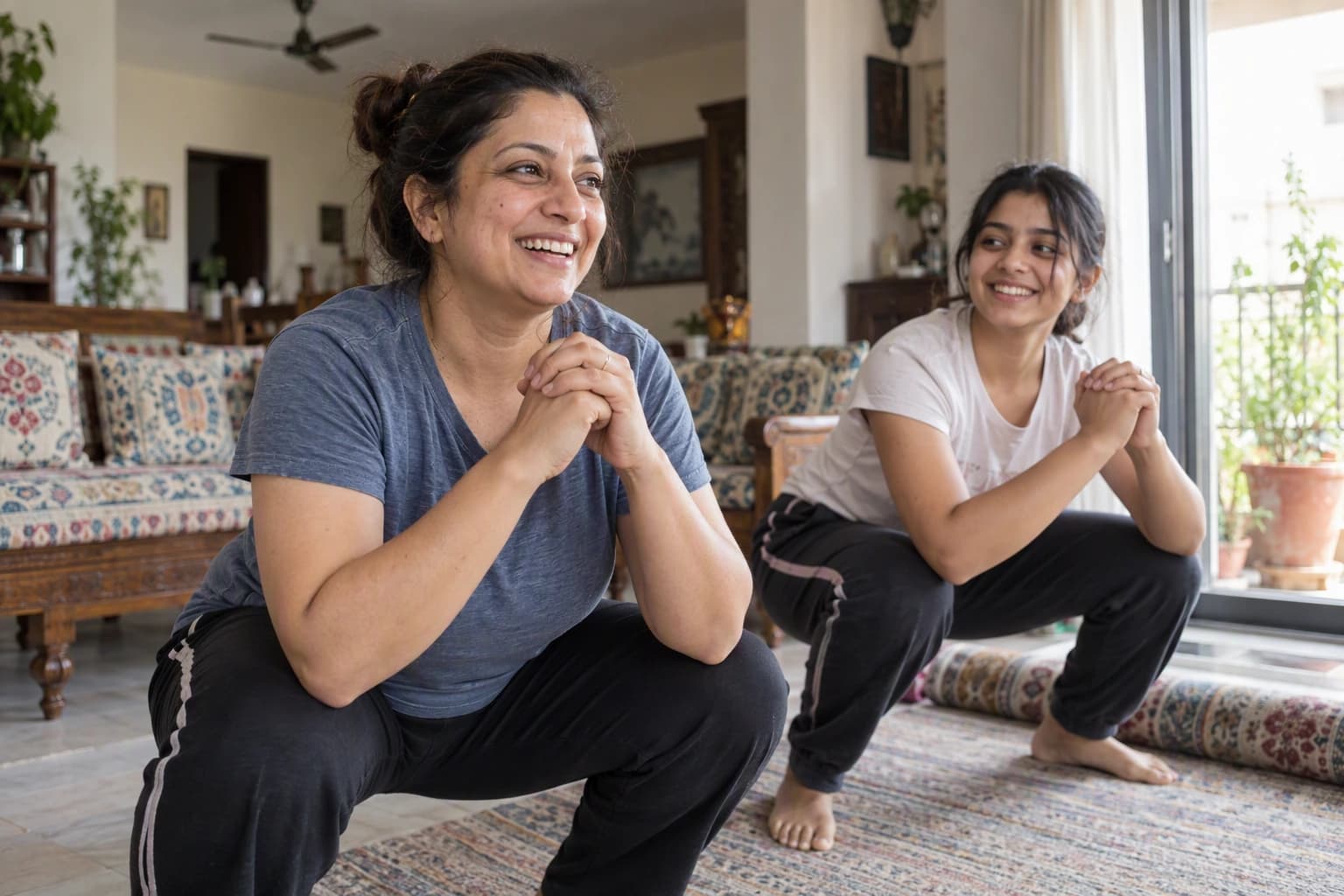
Say your annual check-up comes back with a fasting insulin of 22 and a note about insulin resistance. By Sunday your mother has suggested methi water, a colleague swears by apple cider vinegar and your phone is full of ads for berberine capsules. The things that have held up in research are plainer and need almost no shopping. Strength work at home with a chair and a school bag will do more than any of them. So will a walk after dinner, more dal and less rice, and an earlier bedtime.
Exercise helps fastest, because one session improves insulin sensitivity for about a day. Over months, the biggest change comes from losing belly fat while keeping or building muscle. A walk after meals, more protein and fibre, fewer refined carbohydrates and enough sleep all add to it. Vinegar, cinnamon and capsules have much weaker evidence.
What does improving insulin sensitivity actually mean?
When your muscle, liver and fat cells respond well to insulin, a modest amount of it clears the sugar from a meal. When they respond poorly, the pancreas has to pour out more to do the same job. Improving insulin sensitivity means moving back towards the first state. On a report that usually shows up as a fasting insulin that comes down, triglycerides falling and HDL rising, and an HbA1c that stops creeping up from one year to the next.
The body works on two clocks here. A brisk walk or a strength session improves sensitivity within hours, and the effect fades within a couple of days unless you do it again. Losing deep belly fat or putting on muscle moves the baseline itself, slowly, over months, and that change lasts. A man who walks every evening but keeps his 40-inch waist gets the first benefit and misses the second. His wife, who lost six kilos on a diet but never exercises, has the opposite problem.
Sources: [1]
Why is strength training at the top of the list?
After lunch, most of the sugar from the rice and roti ends up in your muscles. Researchers who have measured glucose uptake directly describe skeletal muscle as the main place it goes, and resistance to insulin in muscle as a central problem in type 2 diabetes. In a large US national survey, adults with more muscle for their body size had less insulin resistance and lower odds of prediabetes. Two people of the same weight, one with strong legs and back and one with thin arms and a soft middle, handle the same plate very differently.
You don't need a gym to start. A first week at home might be sitting down to a dining chair and standing up again ten times, and push-ups against the wall or kitchen platform. Add lunges holding the counter and rows with a school bag of books, two or three times that week. When ten chair squats feel easy, hold a filled water bottle in each hand, and when that gets easy, slow the movement down. For someone who hasn't done any strength work since college, that's real resistance training.
How much exercise makes a difference?
Less than people fear, as long as there's a plan behind it. A JAMA review pooled trials of exercise in type 2 diabetes and found that structured training lowered HbA1c, with aerobic work, resistance work or a mix. More weekly time tended to do more. Advice to "be more active", with nothing set down, did far less.
A 45-year-old who tells himself he'll walk more usually stops by the second week. One who writes "Monday, Wednesday, Friday, 7am, thirty minutes round the park; chair squats Tuesday and Saturday" on the fridge calendar has something to check himself against. If you've been inactive for years, a fifteen-minute walk and one short strength session in the first week is a fine place to begin. Anyone with heart disease, bad knees or complications from diabetes should get a doctor's go-ahead first.
Does a walk after meals really help?
A meta-analysis of studies that broke up long periods of sitting found that light walking or standing breaks lowered glucose and insulin after meals, compared with sitting straight through. The walk works on the meal you've just eaten, which makes it one of the cheapest habits you can pick up.
In practice that's ten minutes on your feet after lunch and after dinner. Plenty of Indian families already do it as the evening stroll round the colony, and it's worth bringing back. At an office desk it can be as small as standing up every half hour, walking to the water cooler or taking a call on your feet. At home, walk to the sabzi vendor instead of ordering on an app, climb the stairs to the third floor, or pace the terrace while you talk to your sister. Nobody needs a fitness tracker for this, only the habit of getting up once the plate is empty.
Sources: [5]
Can better sleep improve insulin sensitivity?
In a controlled study, healthy men were limited to about five hours of sleep a night for a week, and by the end of it they were noticeably less sensitive to insulin. Nothing about their diet had changed.
Five hours is a normal night for a lot of people who would never link sleep to their sugar. Think of the parent up at 5.30 to pack tiffins after working till midnight, or the young engineer on US hours. A fixed bedtime helps, and so does a dark room with the phone charging somewhere else. Loud snoring with heavy sleepiness during the day can be sleep apnoea, which breaks up sleep all night without you knowing. Mention it to a doctor, because treating it tends to make every other change on this page easier to keep up.
Sources: [6]
What should you change on your plate?
Most of the benefit comes from three changes. The first is more protein at each meal, because higher-protein meals keep you fuller and make it easier to eat less refined carbohydrate. A heap of rice with a thin katori of dal can become a smaller portion of rice with thick dal, curd and some paneer or egg.
The second is more fibre and whole grain. A series of reviews for the World Health Organization linked higher fibre and whole grain intake to lower rates of type 2 diabetes. In an Indian kitchen that means whole moong, rajma, chana and phulka made from whole wheat atta. The third is the order you eat in. In a small study, eating the vegetables and protein before the carbohydrate lowered glucose and insulin after the meal, so start with the sabzi and dal and finish with the rice.
Cinnamon, vinegar and similar remedies have small or inconsistent effects in studies, and none of them comes close to what a changed plate and a walk can do.
Why does losing belly fat matter so much?
Ask an endocrinologist which fat worries her and she'll point at the waistline. Fat stored deep inside the abdomen, wrapped around the gut and packed into the liver, is the kind most strongly linked to insulin resistance. Fat on the thighs and hips is comparatively harmless. Conveniently, the deep fat also tends to go first when people lose weight through food and activity. So the first four or five kilos often show up clearly on the next lipid profile and fasting insulin.
How long does the benefit last? The Da Qing study in China is the best answer anyone has. Adults with impaired glucose tolerance who changed their diet and activity for six years were followed for thirty. Diabetes came later for them than for the people who changed nothing.
How will you know if it's working?
A tape measure usually gives the first signal. If your waist is shrinking while the scale moves slowly, fat is probably going and muscle staying, which is the pattern you want. The 3pm slump after lunch, or feeling hungry again an hour after eating, often eases early too, although those are softer signs.
Reports give the firmer answer. In research on overweight adults, triglycerides and the ratio of triglycerides to HDL tracked insulin resistance well, so those two numbers on an ordinary lipid profile are worth watching. Fasting insulin and HOMA-IR can show change too, but only if you test at the same lab each time, because different insulin assays give different values. A fasting insulin from one chain and a repeat from another can't be compared.
Retesting every few weeks mostly measures noise, while a repeat after a few months of steady change tells you something real. Keep your old reports together in one folder, or one WhatsApp chat with yourself, so the trend is easy to see.
How do you lose fat without losing the muscle you need?
A lot of well-meant diets go wrong at this point. Someone cuts to two meals a day, drops the dal and eggs to save calories and does no strength work, and a good part of what comes off is muscle. The scale looks better. But they've shrunk the tissue that clears sugar, and that makes it easier for the fat to come back. A review on preserving muscle during weight loss names enough protein and regular resistance exercise as the two main defences, and steadier loss helps too.
A word on who's writing this, since it's our site. Metaboliq is a doctor-led programme, and its aim is "Lose up to 20% of your body weight — and keep your muscle". Results vary; your doctor decides what is right for you. The muscle half is there for exactly the reason above. Before any plan, a doctor reads a ₹1,699 blood test taken at home, because the right pace depends on what your insulin, lipids, liver and thyroid show.