 metaboliq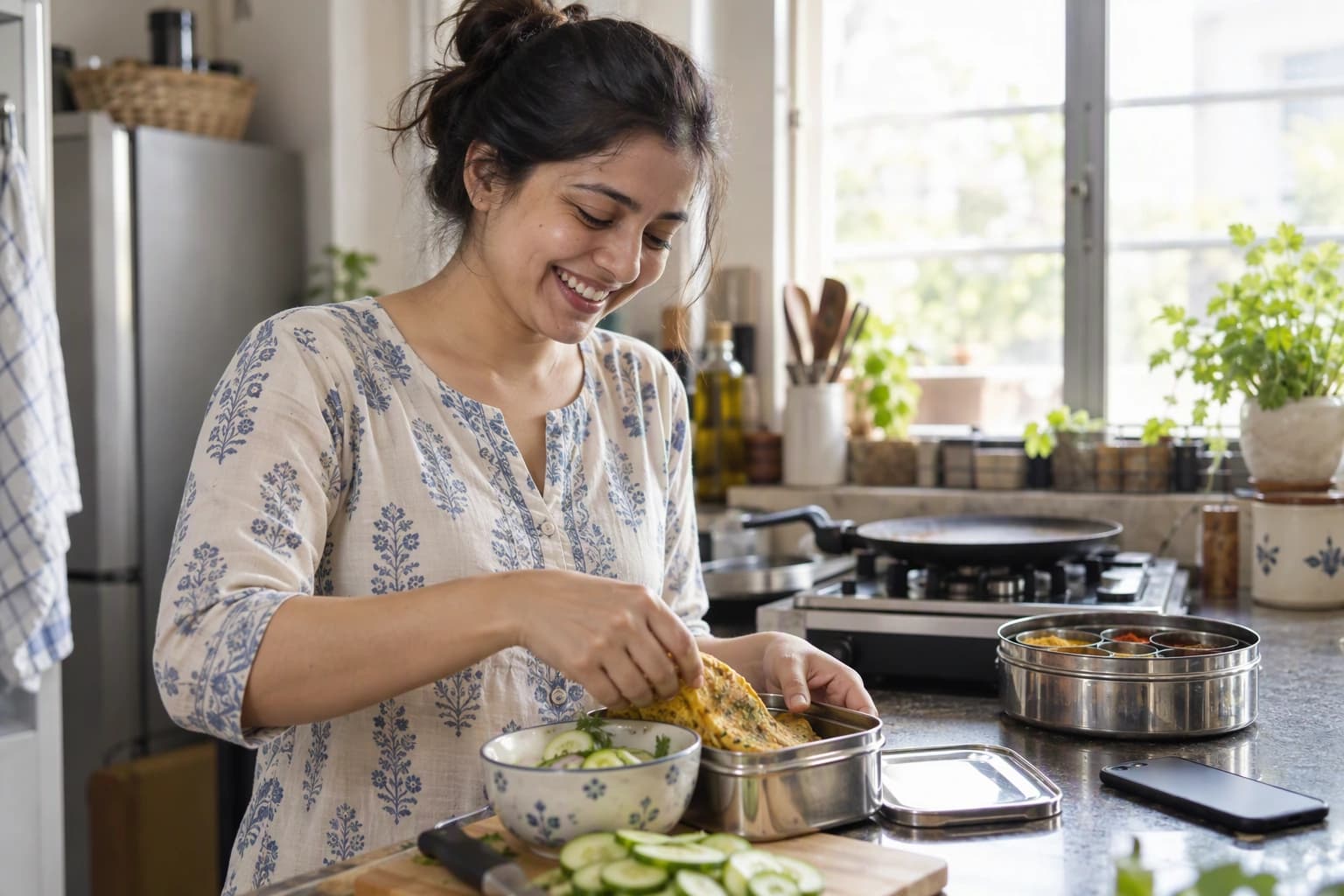
If you've been sent a PCOS diet chart on WhatsApp, it probably banned milk, wheat, rice, fruit and sugar in one go. Most of those charts are copies of each other, and most get abandoned within a month (we'd have given up too). The international guideline is far calmer about food, and the plate it points to looks a lot like a good thali with the portions moved around.
No single diet has been shown to be best for PCOS. What helps is eating in a way that keeps insulin lower and that you can keep up for years. In practice that's a protein at every meal, such as curd, paneer, dal, eggs or a besan chilla. Add a big katori of cooked sabzi, keep to a smaller bowl of rice or one or two mixed-flour rotis, and eat far fewer biscuits and namkeen. Milk and fruit can stay.
Is there a best diet for PCOS?
No, and researchers have looked hard. Low-carb, high-protein, low-glycaemic, Mediterranean-style and plain calorie-cut diets have all been tested in women with PCOS. A systematic review written to inform the guidelines found that losing weight improved symptoms on most of them, and that none clearly beat the rest.
The 2023 international PCOS guideline took that at face value. It recommends healthy eating and regular activity for every woman with PCOS, and says outright that there's no evidence to favour one type of diet. What counts is a way of eating you can stick with for years, one that suits your tastes, your family's cooking and your budget.
We find that freeing (and cheaper). You don't need almond flour or quinoa from the gourmet aisle. A PCOS diet chart can be written almost entirely from dal, sabzi, curd, paneer, eggs, millets, roti and rice, with the amounts and the order you eat them in doing most of the work. If your mother cooks for the family, she shouldn't need to make you a separate dinner.
Why does insulin sit at the centre of a PCOS diet?
Many women with PCOS make more insulin than usual to keep their blood sugar steady, slim women as well as heavier ones. High insulin nudges the ovaries to make more androgens, the hormones behind the acne, the chin hair and the periods that turn up late or not at all. A review in Endocrine Reviews lays out that chain in detail.
Food is one of the few things you control every day that moves insulin. White rice with a thin dal, followed by a piece of mithai, asks for a big insulin response. Rajma, a mixed-flour roti and a big katori of bhindi ask for a smaller one, because the protein and fibre slow everything down. Every sensible PCOS diet chart comes back to that (and it's why we'd ignore whichever seed or powder is trending on Instagram this month).
If you'd like to know where you stand, ask for a fasting insulin alongside your fasting glucose the next time you're at the lab. Seeing your own number tends to make the plate advice feel a lot less abstract.
Sources: [3]
What does low glycaemic eating look like in an Indian kitchen?
One randomised trial compared a low glycaemic index diet with a conventional healthy diet in women with PCOS. Weight loss came out about the same, but the women on the low-GI diet who finished the trial had better insulin sensitivity and more regular cycles. It's a single trial, so we wouldn't call it proof. We like it because the food in it is the kind people actually eat.
In an Indian kitchen the swaps are pretty ordinary, and most of them cost nothing extra. Use whole moong, chana and rajma more often than a thin dal. Make phulkas from wheat mixed with besan or jowar. Have brown or parboiled rice in a smaller bowl, cook poha with peanuts and plenty of vegetables, and eat fruit whole instead of juicing it.
The order of the plate helps as well. Eating the salad, sabzi and dal first and the roti or rice after tends to soften the sugar rise compared with starting on the starch. It costs nothing, and nobody at the table has to know you're doing it.
Sources: [4]
How much protein should a PCOS diet chart include?
A lot of vegetarian women with PCOS eat less protein than they think. Take a hypothetical but very ordinary day: poha at eight, dal-chawal at one, chai and two Marie biscuits at five, roti and aloo sabzi at nine. It's plenty of food. Most of it is carbohydrate, though, and the dal is usually the thin kind, so you're hungry again by eleven (the biscuit tin knows it). Reviews of protein and weight have found that higher-protein meals keep people fuller and reduce how much they eat later in the day.
We'd fix it one meal at a time. Swap plain poha for a besan or moong dal chilla, or put a bowl of curd next to whatever breakfast you already have. Make the lunch dal thick enough to stand a spoon in, or have rajma or chole instead. Dinner is where vegetarian protein tends to vanish, so put paneer, tofu, eggs or a bowl of sprouts on that plate before anything else.
Muscle is the other reason to bother. A review on keeping muscle during weight loss found that protein together with strength exercise is what stops lean mass going along with the fat. A few sets of squats in the living room count.
Which foods belong on the PCOS avoid list?
Milk, fruit and wheat don't belong on it unless a doctor has found a specific reason. We'd put the foods that push insulin up fast and are easy to overeat on the list instead. That means sweetened drinks and packaged juices, the rusks and biscuits that come with tea, namkeen, bakery puffs, fried snacks, white bread, and mithai on an ordinary Tuesday.
A controlled trial on a clinic ward showed how much these foods matter. People given an ultra-processed diet ate more calories and gained weight compared with a minimally processed diet, without anyone asking them to overeat. The study wasn't about PCOS, but we'd say it applies with extra force when your insulin already runs high.
You can still have sweets. A chart that bans Diwali mithai gets abandoned at Diwali (usually by the second box of kaju katli). Keep it for festivals and birthdays, in a small katori, and you'll actually stick to the rest.
Sources: [7]
What does a day on a PCOS diet chart look like?
Here's one vegetarian day that follows all of the above. Breakfast is a moong dal or besan chilla with mint chutney and a bowl of curd, or vegetable poha with peanuts and a boiled egg if you eat eggs. Mid-morning, have a whole guava or an apple with a handful of roasted chana.
Lunch is two mixed-flour phulkas, a thick dal or rajma, a big serving of cooked sabzi, and a salad you eat first. At tea time, swap the biscuits for a glass of chaas and a bowl of sprouts chaat. Dinner can be paneer or tofu bhurji with vegetables and one phulka, or a small bowl of rice with dal and a lot of greens.
How much of each depends on you, how active you are and whether you're trying to lose weight. A review of diet composition in PCOS notes that modest weight loss improves many symptoms in women carrying extra weight. If you're slim, eat off the same plate with portions set to hold your weight where it is.
We should say where we stand, since you're reading this on our site. Metaboliq is a doctor-led weight programme. The line we lead with is "Lose up to 20% of your body weight — and keep your muscle". Results vary; your doctor decides what is right for you. The first step is a ₹1,699 blood test at home that includes insulin and glucose, read by a doctor before anyone writes you a plan like the one above.
Sources: [1]
Do lean women with PCOS need a different diet?
The food is the same; the portions and the goal change. A large Indian study led by the ICMR PCOS task force found PCOS common across the country, in several forms, and plenty of the women who had it were at a normal weight. Many of those slim women still had raised insulin or abnormal lipids.
So if you're slim with PCOS and someone hands you a chart that has you eating less than you already do, we'd hand it back. Eat off the plate from the day above, with portions that keep your weight where it is. Protein at every meal, more fibre and fewer refined carbs improve how your body handles insulin whatever the scale says. Strength work helps too (a few sets of squats and wall push-ups in the living room is a fine start).
The blood tests matter more for you than for most. A normal BMI won't show raised insulin or poor lipids, so ask for a fasting insulin and a lipid profile along with the usual hormone panel.
Do seed cycling, keto or PCOS teas help?
Seed cycling, where you eat flax and pumpkin seeds in the first half of your cycle and sesame and sunflower in the second, has no trials behind it. The seeds are perfectly good food, and a spoonful on your curd won't hurt. They just don't regulate hormones the way the reels say they do.
Very low-carb and keto diets can bring weight down in the short term, and some women do feel better on them. The guideline doesn't recommend them over other ways of eating, and they're hard to keep up on an Indian vegetarian plate (try going keto at a family wedding). Most of the teas, powders and supplements sold for PCOS lack evidence, and a few can interact with treatment, so we'd show the label to your doctor before buying.
What we'd spend the money on instead is better groceries: paneer, curd, sprouts, a second kind of dal. Kept up for a year, that does more than any trend tried for a month.
Sources: [2]