 metaboliq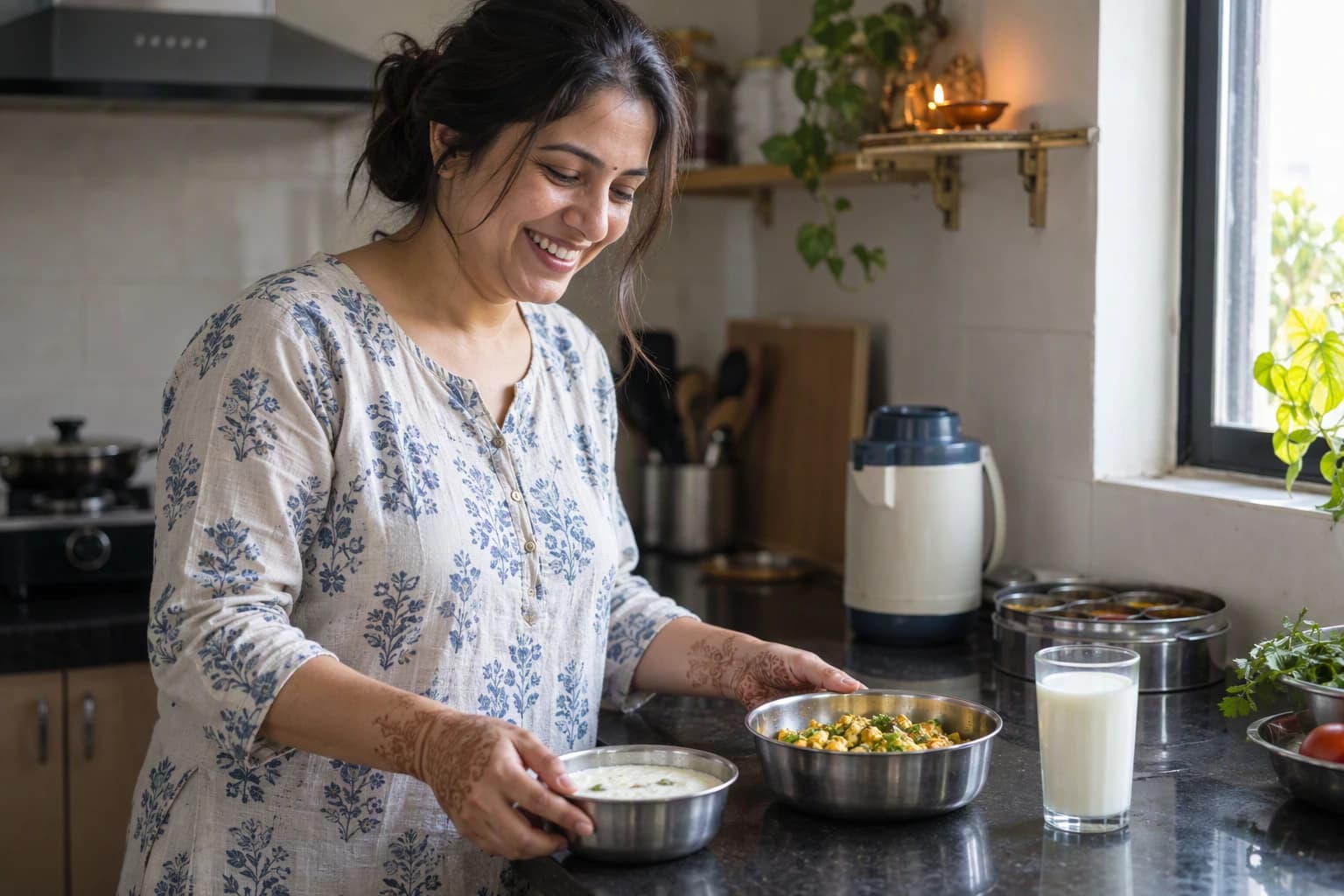
Type "vitamin B12 foods" into Google and the first list opens with liver, clams and tuna. Handy if you live in Kochi. Not much use to a Jain family in Ahmedabad, or to a Lucknow kitchen where the fridge holds a steel dabba of dahi, half a block of paneer and last night's dal. Your mother-in-law, who has never eaten an egg in her life, needs a different list.
Milk, curd, chaas, paneer and cheese reliably supply B12, and so do eggs if your family eats them. Dal, spinach, sprouts and most of the superfoods sold online have little or none in a form your body can use. That's why so many vegetarians in India run low. If dairy is rare at home or you already feel the symptoms, a blood test will tell you more than any food list.
Which vegetarian foods contain vitamin B12?
Fewer than you would hope. B12 is made by bacteria; cows and hens pick it up and store it, which is how it ends up in milk and eggs. Plants have no use for it. When Fumio Watanabe and colleagues in Japan went through the plant foods vegetarians rely on, almost all of them contained none, or only traces.
Which leaves milk, curd, chaas, paneer, cheese and khoa. Eggs too, if your family eats them.
Rajma, palak, methi and moong don't make the cut. Plenty of diet charts doing the rounds on family WhatsApp groups put "green leafy vegetables" under B12, and they're wrong about it. Greens are excellent for iron, folate and fibre, which is presumably where the mix-up starts.
How much do you need? Around 2.4 micrograms a day for an adult, which is a speck. Hitting it is hard only because a vegetarian diet has so few foods that contain any.
Sources: [1]
Why do so many vegetarian Indians run low?
Say your father-in-law has been vegetarian all his life, eats well, and has started complaining that he's tired by four in the afternoon. B12 is one of the first things worth wondering about. Roman Pawlak and colleagues pooled the studies on vegetarians in 2013 and found deficiency in every group they looked at, worst of all in vegans. The liver keeps a store that lasts a few years, so the shortfall builds slowly and almost nobody connects it to what's on their thali.
A 2018 study of vegetarian Indians in the British Journal of Nutrition found high rates too, along with something more awkward. The blood markers used to diagnose a shortage often disagreed with each other. If his report has "borderline" printed next to B12, that's the finding that applies, and the section on reports further down explains it.
Then there's how much milk he really drinks. Two cups of chai with a splash in each comes to perhaps a third of a glass. Dahi with lunch three days a week is a long way from dahi every day. Ask a family to write down a week of meals and most are surprised how little dairy shows up.
How much milk, curd and paneer does it take?
Dairy works, as long as it turns up every day. An Indian trial from 2013 tested the obvious fix. Young vegetarians were given milk every day, and their B12 markers measurably went up.
It helps to spread it through the day, because the gut only absorbs so much from any one meal. Think of your college-going son who skips breakfast and eats a huge paneer dinner. He'd do better with a glass of milk before he leaves, a katori of dahi or a tall glass of salted chaas with lunch, and paneer or an egg at dinner. That's three small chances to absorb some instead of one big one.
People ask about paneer a lot. It does carry B12, though part of the milk's share drains off with the whey when the milk is split, so curd keeps more of it. Barfi and peda made from khoa have some B12 too, along with enough sugar to wipe out the benefit.
What does a B12-friendly vegetarian day look like?
Start with breakfast. A glass of warm milk works, or poha with a bowl of curd on the side. If your house eats eggs, a two-egg bhurji with a roti will do more for B12 than the fortified cereal on the supermarket shelf. The mid-morning chai hardly counts.
Lunch can stay as it is, dal, sabzi and two rotis, with dahi or chaas added. If you're from the South, the curd rice at the end of the meal is already doing real work. Dinner could be paneer bhurji, palak paneer or a few pieces of paneer tikka with a big salad.
If your family eats no dairy and no eggs, the picture is different. No mix of dal and vegetables will close that gap, so fortified foods or a supplement chosen with a doctor are the realistic options.
Do spirulina, mushrooms and fermented foods count?
Your cousin who went vegan last year has probably been told spirulina covers it. Sadly, the evidence is thin. Watanabe's review found that spirulina contains mostly pseudo-B12, a close relative of the vitamin that the human body can't use. Worse, it can push a blood test up while the body's real status stays low, so she'd look fine on paper and still be short.
Some dried seaweeds such as nori do contain the active form. Certain mushrooms and fermented foods carry small amounts that depend on how they were grown or made. None of that is steady enough for a family in Pune to build a daily routine around, and someone who already has symptoms shouldn't try.
Sources: [1]
B12 levels in plant and fermented foods vary widely from batch to batch, and a figure published for one product doesn't apply to another.
What does low B12 feel like?
Say your wife has been yawning through every afternoon since the monsoon. She gets breathless on the two flights up to your flat, and the other day she said her tongue felt raw when she ate achaar. She blames the weather. A 2017 review in Nature Reviews Disease Primers would make her think again. Tiredness, breathlessness on stairs, pale skin and a sore, smooth, red tongue are the early signs of low B12 it lists.
Leave it long enough and the nerves get involved. Her feet start to tingle, she wobbles on the way to the kitchen in the dark, and she keeps forgetting why she walked into a room. Nerves that go short of B12 for a long time don't always recover fully once the level is back up, so this is one to check sooner rather than later.
Low iron, a slow thyroid, bad sleep and low mood can all feel exactly the same, so she won't be able to tell which it is. A blood test will.
Sources: [5]
Who runs low even with a good diet?
Your grandmother can drink two glasses of milk a day and still be short. Before the gut can absorb B12 it needs stomach acid and a protein made by the stomach lining. Anything that gets in the way of either leaves someone low however much dairy they have. The same review names older age, stomach surgery and several gut conditions.
It also names some long-term medicines, including certain acid reducers and some taken for blood sugar. So if your father has had his acidity tablet and his sugar tablet every morning for ten years, ask at his next check-up whether anyone has ever looked at his B12. Pregnancy raises the need too, which is why it appears on so many antenatal panels in India.
Sources: [5]
Is a normal B12 report the end of the question?
Not always. Say your mother's B12 comes back just above the lower limit printed on the report. The lab calls it normal. Her feet still tingle at night and she's been tired since Holi. The standard test counts all the B12 in her serum, but much of it is stuck to a carrier protein her tissues can't use. So a low-normal number can sit alongside a real shortage inside the cells.
The Indian study ran into the same thing when its markers disagreed with each other. Homocysteine and methylmalonic acid go up when usable B12 runs short, and holotranscobalamin measures the active part directly. Take her report and her symptoms to the doctor in the same visit and ask whether one of these is worth doing.
Why does B12 matter when you are trying to lose weight?
Because the first foods most vegetarians cut on a diet are the ones that carry it. Milk, paneer and the evening bowl of curd feel heavy, so they go. Those three were bringing most of the B12 and a good share of the protein. A few weeks later the afternoons drag, the evening walk has quietly stopped, and some of what's coming off the scale is muscle.
A review on holding on to muscle during weight loss found that enough protein, with some resistance exercise, is what protects lean mass while calories come down. The same katori of dahi brings protein and B12, so keep it and cut the second helping of rice instead.
This is close to home for us. Metaboliq is a doctor-led weight programme whose aim is "Lose up to 20% of your body weight — and keep your muscle". On a vegetarian diet the muscle half often comes down to details like the curd. Results vary; your doctor decides what is right for you. We start with a ₹1,699 home blood test that includes B12, so a doctor can see a shortage before a diet makes it worse.
Sources: [6]