 metaboliq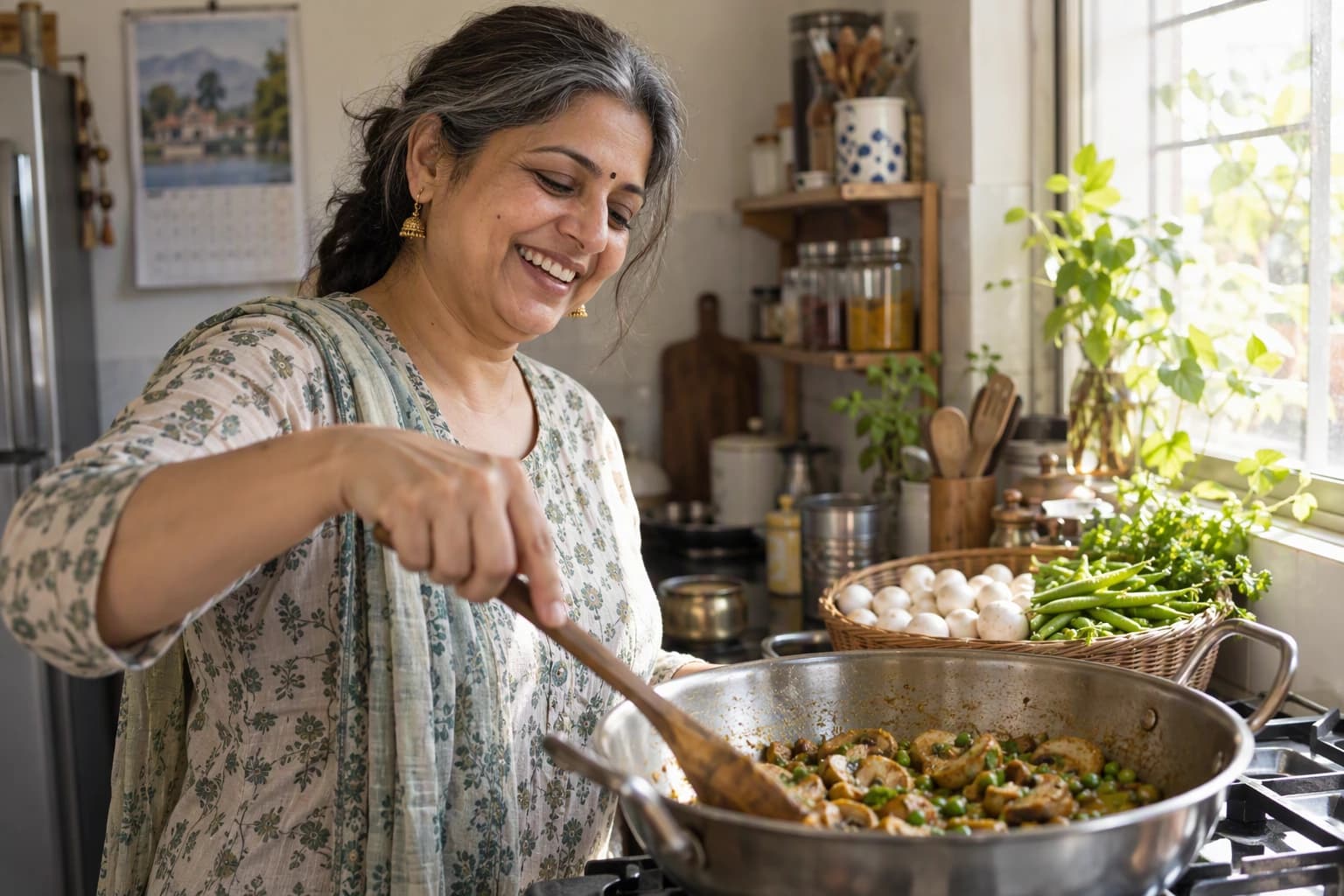
Search for vitamin D foods and you get salmon, sardines and cod liver oil. For a vegetarian family in Jaipur or Ahmedabad that leaves a very short list. It helps to know how short before you start buying almond milk and imported mushrooms to fix a low report.
Very few vegetarian foods carry much vitamin D. The useful ones are fortified milk and cooking oil, egg yolks, and mushrooms that have been in sunlight or under UV light. Paneer, ghee and curd have only a little. For most people, sun on the skin supplies far more than any food, and a clear deficiency usually needs a supplement chosen with a doctor.
Which vegetarian foods have vitamin D?
Very few, if you only count what grows or comes from the cow. Michael Holick's review of vitamin D deficiency in the New England Journal of Medicine notes that hardly any foods contain the vitamin naturally. The ones that top every list, oily fish and fish liver oils, aren't on a vegetarian table.
That leaves a vegetarian with milk and cooking oil that have been fortified, meaning vitamin D was added at the factory. Egg yolks count for people who eat eggs. Mushrooms count too, but only if they've been in sunlight or under a UV lamp, which most supermarket packs haven't. Paneer, curd and ghee carry a little vitamin D, and you'd have to eat far more of them than is sensible for it to change a low result.
Why can't food alone fix a vitamin D deficiency?
Most of our vitamin D has always come from skin, which makes it when UVB light falls on it. Food adds a little. The Endocrine Society's guideline is written around that, treating diet as a minor source and relying on sun and supplements when a level has to come up.
Take a hypothetical software engineer in Bengaluru whose annual health check shows a vitamin D of 12 ng/mL. If he switches to fortified milk and adds a few eggs a week, he will very likely still be deficient when he retests. Those foods are worth having, because they help hold a level once a supplement has brought it up. For someone who hardly goes outdoors, like his mother who no longer manages the stairs, they may be most of what she gets. Correcting a level that low is a supplement's job, with the dose set by a doctor.
Sources: [2]
Do mushrooms really contain vitamin D?
Some do, and they're the most interesting option on a vegetarian list. Mushrooms contain ergosterol, which turns into vitamin D2 when UV light hits it, much as our skin makes vitamin D in the sun. Glenn Cardwell and colleagues reviewed the research in 2018. Mushrooms that had been exposed to UV light carried useful amounts. Mushrooms grown in the dark carried very little.
The button mushrooms in a plastic punnet at your sabzi shop are usually grown indoors and sold without any UV treatment. The review reports a simple fix you can try at home: slice them and leave them in direct midday sun for a while before you cook them. Sun-dried mushrooms work the same way. How much vitamin D you end up with depends on the variety, how strong the sun was and how long they sat out. Nobody can give you a number for a batch dried on your balcony.
Sources: [3]
What about fortified milk and oil in India?
Look for the FSSAI "+F" logo. India has been adding vitamin D to everyday staples for some years now, and packets of milk and edible oil carrying that mark are on most supermarket shelves. A 2019 review of vitamin D fortification in India traced how this came about. Its authors argue that fortifying foods people already eat every day is one of the few realistic ways to lift vitamin D levels across the country.
The loose milk the doodhwala brings to the door usually isn't fortified, and not every packaged brand is either, so turn the packet over once. If the logo's there, the switch costs nothing extra.
Plant milks are hit and miss. Some soy and oat milks in Indian supermarkets have added vitamin D and calcium and some don't, and almond milk made at home has none. In a vegan household a fortified carton may be one of the only food sources available, so read the label before you settle on a brand.
Sources: [4]
Are eggs, paneer and ghee worth counting?
Eggs are the most useful of the three. The vitamin D is in the yolk, so an egg-white omelette misses it, and two whole eggs a few times a week add a modest amount.
Paneer, curd, cheese and ghee carry small amounts, and how much depends a lot on whether the milk was fortified to begin with. They're good foods for protein and calcium, and Holick points out that calcium needs vitamin D to be absorbed, so a bowl of curd and a morning walk in the sun go well together. Paneer and ghee won't bring a low level up by themselves, however much of them goes into the kadhai.
Sources: [1]
A vegetarian day with vitamin D in mind
Start with a glass of fortified milk, or masala oats cooked in it. If your family eats eggs, make it a two-egg bhurji and keep the yolks. Then get some time outdoors before the day gets busy, even if it's just the walk to the bus stop or chai on the balcony with your sleeves pushed up.
For lunch, try a mushroom and matar sabzi with mushrooms you've sliced and left in the sun outside the window glass for a while, along with dal, roti and a katori of curd. Dinner can be palak paneer cooked in fortified oil. A day like this helps hold your level steady once it's back in range. If a test has shown you're clearly deficient, it won't replace the supplement your doctor suggests.
How much sun does an Indian city actually give you?
On paper, plenty. Very little of it reaches the skin of a city office worker, though. The reviews of Indian vitamin D studies point to indoor jobs, clothing that covers most of the body, air pollution and darker skin. Anyone who has spent a November in Delhi knows how much light the smog takes out of the sky.
Timing matters as well. UVB is strongest around midday, which in May and June is exactly when sensible people stay inside, and glass blocks it, so the sunny window seat at work does nothing. Holick recommends short, regular exposure of the arms and legs, without sunscreen for those few minutes and without burning. For most office workers that means a deliberate walk outdoors in the late morning or at lunch, sleeves rolled up, on as many days as you can manage.
Why does vitamin D matter for muscle and weight?
Vitamin D does a lot for muscle as well as bone. Jenny Gunton and Christian Girgis reviewed that research in 2018 and described weakness and more falls in people who are deficient. Thighs that ache on the stairs make strength training hard, and strength training is what decides whether you lose fat or muscle when you diet.
Cava and colleagues, in a 2017 review on keeping muscle during weight loss, found that protein and resistance exercise are what protect lean mass when calories come down. On a vegetarian plate the protein part means dal, chana, rajma, paneer, curd or soy at every meal, in amounts bigger than a token katori. If low vitamin D is sapping your strength, the exercise part gets harder than it needs to be.
We should say where we stand, since you're reading this on our site. Metaboliq is a doctor-led weight programme, and the aim we give members is "Lose up to 20% of your body weight — and keep your muscle". Results vary; your doctor decides what is right for you. Vitamin D is on the ₹1,699 home blood test we start with, and a doctor reads it alongside thyroid, sugar and lipids before suggesting any change to food or training.
When is food not enough?
Once your report shows a clear deficiency, food can't do the job in any reasonable time. The Endocrine Society's guideline treats it with a supplement for a period, then lets sun and diet hold the level. How much and for how long depend on how low you are and on your health, so that's a decision for your doctor. Vitamin D taken in large amounts for months without a check can build up to harmful levels.
Supplements on Indian chemists' shelves come in very different strengths, from small daily tablets to large weekly sachets, and the packs are hard to compare. Buying on a friend's say-so can mean too little to matter, or a strong sachet every week for far longer than you need.
Get a 25-hydroxyvitamin D test before you buy anything. When your doctor writes the prescription, ask when you should be retested, and write the date down.
Sources: [2]