 metaboliq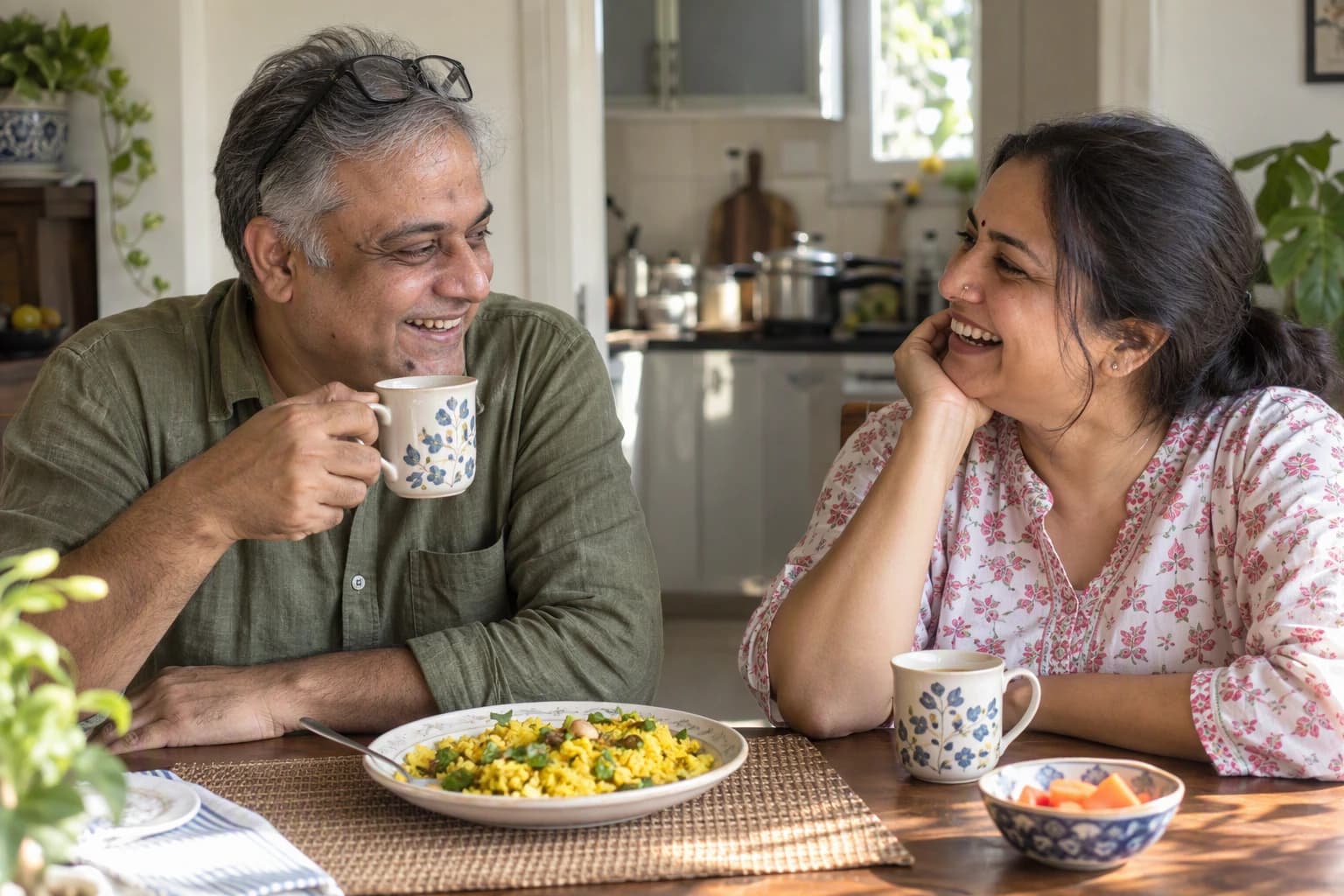
Every year around Diwali, half of urban India gets its annual health package done. Then a message lands in the family WhatsApp group: "Fasting sugar 108, is that bad?" Someone usually replies that theirs was 115 and the doctor said nothing. Whether 108 is a problem depends on which rulebook the lab used, what you ate the night before, and what the number was last year and the year before that.
For most adults, a normal fasting blood sugar is below 100 mg/dL. Two hours after the standard glucose drink it should be under 140 mg/dL. An HbA1c below 5.7% is normal under the standards most Indian labs print. A fasting value of 126 or more, or an HbA1c of 6.5% or more, points to diabetes once a repeat test agrees. The band in between is prediabetes.
What is a normal fasting blood sugar?
The cut-offs printed on most Indian reports come from the American Diabetes Association. Below 100 mg/dL after an overnight fast of at least eight hours is normal. From 100 up to 125 is impaired fasting glucose, one of the two forms of prediabetes. At 126 and above, a doctor will want a second test, or a second marker that agrees, before using the word diabetes.
The World Health Organization starts its middle band at 110 instead of 100. So the same 108 earns a little H from one lab and passes quietly at another down the road. Both labs are applying a published standard, and whoever reads your report should know which one was used.
Taken alone, 108 says surprisingly little. Three annual reports in a row reading 91, then 97, then 108 say a lot more. So does a waist that has moved two belt holes since the last check-up, or a father who was diagnosed at forty-five. Indian physicians take the drift seriously for a specific reason. Their consensus statement on prediabetes notes how common it is here, and that the move to diabetes tends to be faster among Asian Indians.
What should blood sugar be two hours after eating?
The textbook test is the oral glucose tolerance test: 75 grams of glucose dissolved in water, with blood drawn two hours later. Under 140 mg/dL is normal. From 140 up to 199 is impaired glucose tolerance, the second form of prediabetes, and 200 or more is in the diabetes range.
The PP sugar that many Indian labs sell is a looser cousin, where you eat your own breakfast and come back after two hours. It is handy as far as it goes. But a plate of poha with sweet chai is a very different challenge from two aloo parathas with white butter, and the result mostly reports on the breakfast.
Continuous glucose sensors have shown what an ordinary healthy day looks like. Adults without diabetes in one multicentre study averaged about 98 mg/dL and stayed between 70 and 140 for roughly 96% of the time. A rise to 150 after rajma chawal that settles within the hour is normal physiology. Spending most of the afternoon above 140 is something healthy people in that study did not do.
Plenty of people show trouble after meals years before the fasting number moves. That is why a doctor in India will often ask for the two-hour test as well, rather than trust a reassuring morning value on its own.
A random sample is taken whenever you happen to be at the lab, with no fasting and no fixed meal. Because it depends so heavily on the last thing you ate, there is no neat normal range for it. Most healthy adults will read somewhere under 140 mg/dL at a random moment, and often well below that.
The standards use the random test for one specific job. A random value of 200 mg/dL or more, in someone who also has the classic symptoms of very high sugar, is enough on its own to diagnose diabetes. Those symptoms are heavy thirst, passing urine often and unexplained weight change. Without symptoms, a high random reading is a reason to book a proper fasting test or HbA1c, not a diagnosis.
Where does HbA1c fit in?
HbA1c is the share of haemoglobin that has picked up glucose. A red cell lives about three months, so the number behaves like a rolling average, and you don't need to fast for it. Below 5.7% is normal, 5.7% up to 6.4% is the prediabetes band, and 6.5% or more points to diabetes once a confirming test agrees.
The trouble in India is anaemia. The World Health Organization's consultation on HbA1c warns that the result is unreliable when red cells are made or lost at an unusual rate. Iron deficiency, recent blood loss, pregnancy, kidney disease and thalassaemia trait are all on its list. A young woman with low ferritin, an HbA1c of 5.9 and a fasting sugar of 88 has two numbers telling different stories. The sensible next step is to check her iron and repeat the glucose before anyone calls her prediabetic.
The diagnostic lines are the same at every adult age, so a fasting 120 means the same thing at thirty-five as at sixty-five. What shifts a little is the ordinary day. In the sensor study, people over sixty averaged about 104 mg/dL, while every younger group sat close to 98. Charts online that print a separate "normal" for each decade usually mix those lines up with treatment targets. Doctors set looser targets for older people already on diabetes treatment, because a dangerous low is the bigger risk for them, and a healthy sixty-year-old's report should be read against the ordinary adult lines.
When fasting glucose and HbA1c disagree, neither automatically wins. A doctor will usually repeat the test that looks out of place, or add a glucose tolerance test.
Can a normal sugar report still hide a problem?
Someone can have a fasting sugar of 94 three years running and still have insulin resistance building underneath. When muscle, liver and fat cells start responding less to insulin, the pancreas makes more of it. A European group that measured this found insulin output rising to match falling sensitivity while glucose barely moved. For years that extra insulin holds sugar inside the normal band, and the report looks fine while the pancreas works much harder than it used to.
India's ICMR-INDIAB survey found prediabetes on a very large scale across the states, and much of it had never been diagnosed. Take a person with that 94 who also has a 36-inch waist, triglycerides of 190 and a mother with diabetes. A fasting insulin is worth adding to their next blood test, because those details fill in what one glucose number can't.
Skeletal muscle clears most of the glucose that insulin moves out of the blood after a meal, and it's the main place insulin action fails in type 2 diabetes. In a large American survey, people with more muscle for their size had better insulin sensitivity and less prediabetes. So a crash diet of two meals a day that strips muscle along with fat can leave glucose handling worse, even while the scale is going down.
We should say where we stand, since you're reading this on our site. Metaboliq is a doctor-led service, and its aim has muscle in it: Lose up to 20% of your body weight — and keep your muscle. Results vary; your doctor decides what is right for you. Before any plan is made, a ₹1,699 blood test is drawn at home and a doctor reads the glucose next to insulin, HbA1c, lipids and thyroid.
How far can you trust a glucometer, or a lab sample?
A home meter reads a drop from your fingertip, while the lab measures plasma from a vein, so the two rarely match exactly. The meter standard, ISO 15197, accepts readings within 15 mg/dL of the lab value below 100, or within 15% above it, for 95% of results. A meter showing 112 on a morning when the lab later reports 100 is working as designed.
An independent evaluation of eighteen meters on sale in Europe found that most met that standard and some did not. Meters are good at showing patterns, such as how idli compares with upma, or what a walk after dinner does. Diagnosing prediabetes or diabetes from one is a different matter, and a doctor will not do it.
Eat a normal dinner, then nothing but water until an early-morning draw. A sweetened tea, a biscuit with morning tablets or chewing gum in the car all push the number up. Skipping dinner to look good pushes it the other way and tells you nothing useful.
Blood cells keep using glucose after the needle comes out, which is why labs collect sugar in a grey-capped fluoride tube. A home-collection sample that spends the morning in a warm bag on the back of a scooter can read lower than the blood in your arm did. Ask for an early slot and a quick hand-over.
Avoid testing in the week after a fever, a stomach bug or a run of bad nights, because illness and stress lift glucose for a while. And keep every old report in one folder, since the trend across years usually says more than any single value.
Sources: [4]
What pushes the numbers up in an ordinary Indian day?
The ICMR-INDIAB diet analysis found the typical Indian plate heavy on low-quality carbohydrate, meaning white rice, milled grains and added sugar, and light on protein. People eating the most carbohydrate had higher odds of prediabetes and of newly found diabetes. Swapping refined flour for whole wheat or millet while eating the same amount did not lower that risk. Moving from white rice to an equally full plate of brown rice changes less than people hope.
When the researchers modelled replacing some carbohydrate calories with protein from dal, dairy, eggs or fish, the odds of prediabetes fell. On a weekday that could mean one katori of rice with a big katori of thick dal and some paneer or curd. It used to be two helpings of rice with a watery dal. Breakfast is often where the protein goes missing altogether, with a plate of poha and a cup of sweet chai. A couple of eggs or a besan chilla in its place moves the day towards the balance the researchers modelled.
Sources: [10]