 metaboliq
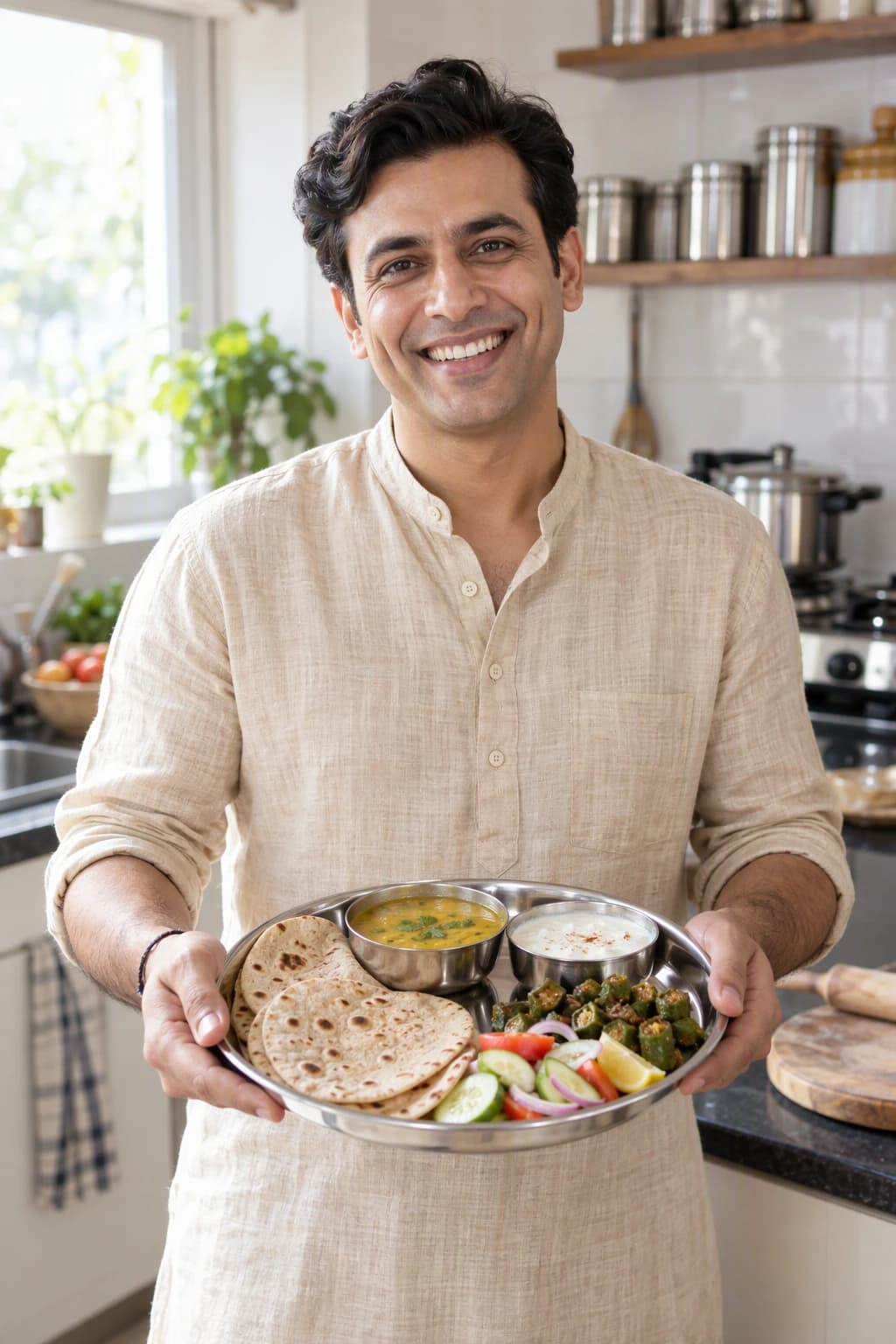
GLP-1 is a hormone your own gut makes after a meal. You will not find it in any food, but certain foods make your gut release more. Fibre that gut bacteria can ferment is the best studied: oats, rajma, chana, whole moong, onions and garlic. Protein is the other big one, from curd, paneer, eggs, dal and fish. Dahi, whole grains, berries, green tea and oily fish have smaller amounts of evidence. Eating vegetables and protein before the roti or rice raised GLP-1 in a trial at Weill Cornell.
Each meal gives a short pulse of GLP-1, which helps you feel full sooner and softens the sugar rise afterwards. It is far smaller than what GLP-1 treatments from a doctor achieve. Used every day, these foods make meals more filling and sugar steadier, and that is where their value lies.
What is GLP-1 and what does it do?
GLP-1, short for glucagon-like peptide 1, is made by L-cells, which sit mainly in the lower small intestine and the colon. Jens Holst at the University of Copenhagen, who has studied the hormone for decades, describes its main jobs in a 2007 review. It tells the pancreas to release insulin after a meal and holds back glucagon, which would otherwise push sugar up. It also slows the stomach and the gut, part of what physiologists call the ileal brake.
That slowing is one reason a meal with dal and sabzi keeps you full longer than a plate of white bread. GLP-1 also signals the brain to reduce appetite. Steinert and colleagues, reviewing the gut hormones in 2017, list GLP-1 with CCK and PYY as the signals that end a meal and keep hunger down for the next few hours.
Holst also points out how short-lived the natural hormone is. An enzyme called DPP-4 breaks it down within minutes, much of it before it leaves the gut. So the GLP-1 you make from food acts close to where it is released, through nerves in the gut and liver, and then fades.
Which foods raise GLP-1 naturally?
A 2026 review in the journal Nutrients by Tkaczenko and colleagues pulled together 25 years of research on foods and GLP-1. The foods with the most support were fermented dairy, fermented vegetables, whole grains such as oats, legumes, fibre-rich roots like onion and garlic, berries, grapes, green tea and oily fish. Whole foods tended to do more than the isolated nutrients taken from them.
Most of that list is already in an Indian kitchen. Dahi and chaas count as fermented dairy. Rajma, chana, moong and masoor dal are legumes. Onion and garlic go into nearly every tadka. Oats, jowar, bajra and ragi are whole grains, and jamun, strawberries or black grapes stand in for berries. For oily fish, mackerel (bangda) and sardines (mathi) are cheap and widely sold on the coasts.
Two cautions. Much of this research is in cells, animals or small groups of volunteers, so the size of the effect in a person eating normal meals is uncertain. And a food can raise GLP-1 while still carrying a lot of calories, so oat halwa cooked in ghee and sugar is still a dessert.
Sources: [3]
How does fibre turn into GLP-1?
Some fibre is not digested in the small intestine. It travels on to the colon, where bacteria ferment it into short-chain fatty acids such as acetate, propionate and butyrate. Gwen Tolhurst and Fiona Gribble's group at Cambridge showed in 2012 that these acids switch on receptors called FFAR2 and FFAR3 on L-cells, which then release GLP-1. Mice lacking those receptors released less GLP-1 and handled sugar worse.
Patrice Cani's team in Brussels tested the idea in people. Ten healthy adults took 16 g a day of a fermentable fibre or a dummy powder for two weeks. The fibre group had higher GLP-1 and PYY after a test meal, felt less hungry and had a smaller rise in blood sugar. The more their gut bacteria fermented, measured by hydrogen on the breath, the higher the GLP-1.
The study was small, and it fits with what the Cambridge lab work found. In practice, the fermentable fibres in Indian food are in rajma, chana, whole moong, oats, onions, garlic, slightly green bananas and cooled rice or potatoes. Build up slowly over two or three weeks. A sudden jump in beans and onions tends to bring gas and bloating, which fade as the gut bacteria adjust.
Does protein raise GLP-1?
Yes, and the effect can be large in the short term. Daniela Jakubowicz's group in Israel gave 15 adults with well-controlled type 2 diabetes 50 g of whey protein in water, or water alone, before a high-sugar breakfast. After the whey, total GLP-1 was 141% higher and intact GLP-1 nearly three times higher. Blood sugar over the next three hours was 28% lower.
Fifty grams of whey is a big serving, roughly what two scoops give, so treat the trial as proof of a mechanism. The everyday version is a protein food at the start of each meal. That might be a bowl of curd, a couple of eggs, a katori of dal, some paneer or chicken. Sunita, a 44-year-old school administrator in Indore with borderline sugar, now starts lunch with her dahi and moong sprouts and keeps the roti for later.
Protein also helps with the other half of weight loss. Eating enough of it, alongside strength exercise, is what keeps the body from burning muscle when calories come down.
Sources: [6]
Does the order you eat your food in matter?
It seems to. Alpana Shukla and Louis Aronne at Weill Cornell gave 16 adults with type 2 diabetes the same meal on three days. On one day they ate the bread and juice first; on another, the chicken and salad first, with the carbohydrate ten minutes later. On the third day they ate everything together.
Carbohydrate last lowered the blood sugar peak by 54% compared with carbohydrate first. Insulin needs fell, and GLP-1 over three hours was about 38% higher. An earlier pilot from the same group, published in Diabetes Care in 2015, found a similar drop in sugar.
On an Indian plate this is easy to try. Start with the salad or sabzi and the dal or curd, then move to the roti or rice. Anoop Misra and Seema Gulati in Delhi tested a related idea in 60 adults with prediabetes: 20 g of almonds, around 16 nuts, eaten 30 minutes before each main meal. Their post-meal sugar on a glucose test fell by about 18%, and three days of glucose monitoring showed steadier readings. That trial did not measure GLP-1, but it points the same way.
How much can natural GLP-1 help with weight?
The effect is modest, though it still counts. Holst's review explains that your own GLP-1 is broken down within minutes, so a meal gives a short pulse rather than a steady level. The GLP-1 treatments doctors use are built to resist that enzyme and stay active for a day or a week. Food cannot copy that, and no trial has shown GLP-1 foods on their own producing the kind of change those treatments do.
What the pulse does do is useful. It slows the stomach, so a lunch that starts with dal and sabzi keeps you going until evening instead of sending you to the biscuit tin at four. It blunts the sugar spike after rice or roti. Over months, that means fewer snacks, smaller second helpings and steadier sugar readings, and those add up.
Sunita is an illustration rather than a patient, but her situation is common. Her fasting sugar is borderline and her waist has crept up since her forties. Eating order and more fibre give her a better base. If her sugar or weight keeps climbing anyway, that is the point to add medical care. At Metaboliq that starts with a home blood test and a doctor reading the sugar, insulin and thyroid results with her. The aim is to lose up to 20% of body weight while keeping muscle, and the meals on this page stay as the foundation of that plan.
Sources: [1]
A day of GLP-1-friendly Indian meals
Here is how Sunita's weekday looks now. Breakfast is a bowl of dahi with a spoon of soaked flax seeds and half a guava, and then two moong dal chillas with mint chutney. On Sundays she has two eggs with a slice of whole-wheat toast, eating the eggs first.
Lunch goes into a three-section tiffin. The first section holds cucumber, carrot and a cooked sabzi such as bhindi, lauki or cabbage. The second holds rajma, chole or dal. The third holds one roti made from wheat mixed with jowar or bajra, and she eats it last. A glass of chaas replaces the sweet she used to have in the staff room.
At five she has green tea or chai without sugar, with a small handful of roasted chana or almonds. Dinner is fish curry, paneer bhurji or tofu with a big serving of vegetables, and a small portion of rice if she wants it. Rice cooked earlier, cooled within an hour, kept in the fridge and reheated until steaming hot once, has more resistant starch, a fibre gut bacteria ferment. Leftover rice left out on the counter overnight is a food poisoning risk, so the fridge step matters.
If dal and rajma bring on gas, she keeps the portion small and soaks the beans overnight before cooking. Most people find the bloating settles within a few weeks of eating legumes regularly.
Sources: [3]