metaboliq
What does endocrinologist mean?
An endocrinologist is a hormone specialist.
Read the full section
The word is Greek, from endon, within, and krinein, to separate: endocrine glands release their hormones straight into the blood instead of through a duct. Endocrinology is the study of those glands.
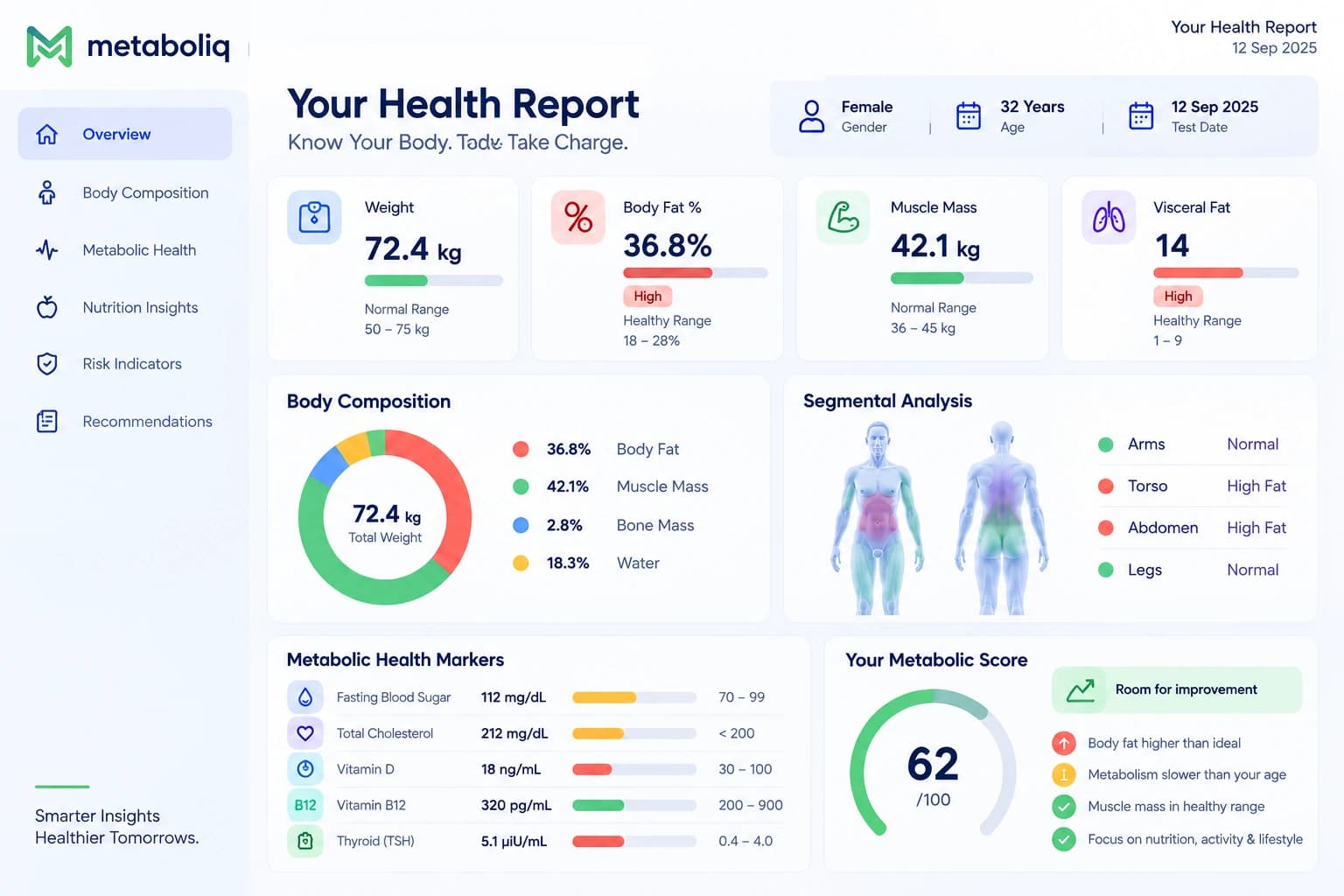
Most people have already met the speciality without noticing, through a thyroid test. The pituitary, a pea-sized gland tucked under the brain, sends TSH to the thyroid in your neck, and the thyroid replies with T4 and T3. If the reply is weak, TSH climbs, which is why a high TSH on a report usually means a sluggish thyroid. Insulin from the pancreas, cortisol from the adrenal glands and the sex hormones run on loops of the same kind.
The loop explains why endocrinologists distrust a single number. Carrying extra weight can itself push TSH up a little, so before calling it hypothyroidism a careful doctor looks at TSH alongside the free T4 and, often, the thyroid antibodies, and may simply repeat the test in a few weeks.

How an endocrinologist trains in India
Becoming an endocrinologist in India takes about eleven years after school: MBBS, then a three-year MD or DNB, then a three-year DM or DNB super-speciality in endocrinology.
Read the full section
Any doctor's registration can be checked on the National Medical Commission's Indian Medical Register.
MBBS takes five and a half years with the internship. Most endocrinologists then do the general physician's MD, or a paediatric MD if they are heading for children's hormone care, followed by three years of DM training on diabetes, thyroid, adrenal, pituitary, bone and reproductive hormones. The DNB, run by the National Board of Examinations through accredited hospitals, is the parallel route.
On a clinic board or letterhead, look for DM (Endocrinology) or DNB (Endocrinology) after the MBBS and MD, and for a registration number. Typing that number into the Indian Medical Register takes a minute and confirms the doctor is who the board says.
Plenty of physicians without that DM run excellent diabetes and obesity clinics, often after a fellowship in diabetology, and for someone with no hormone red flags they are a perfectly good first stop.
- 5.5 yearsMBBS
With the internship year.
- 3 yearsMD or DNB
The physician's degree.
- 3 yearsDM or DNB
Endocrinology itself.
- AlwaysRegistered
On the NMC register.
- 11+Years of training after school
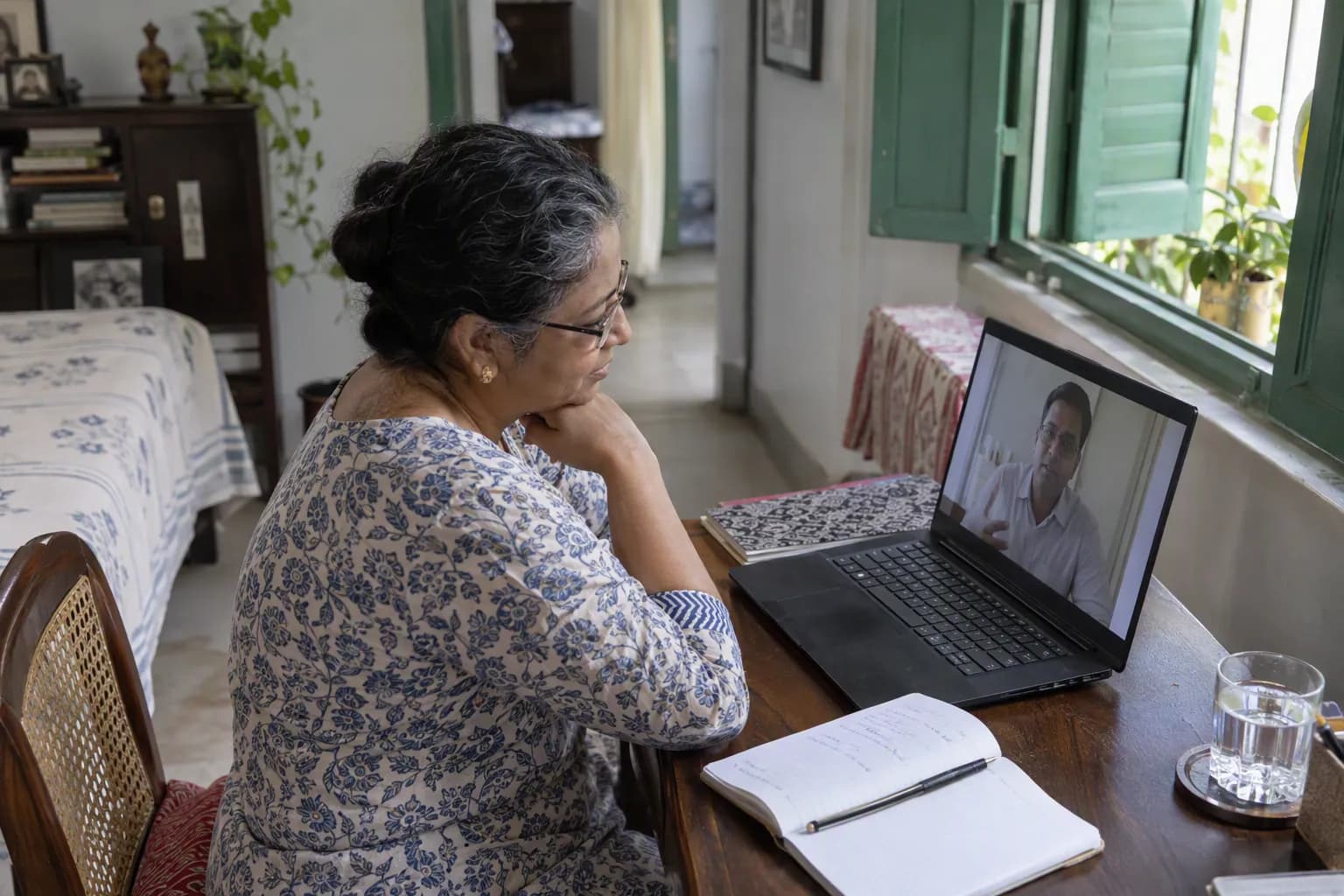
Why Indian weight problems reach endocrinologists sooner
An Indian adult tends to develop diabetes and other hormone-linked trouble at a lower weight than a European, so the endocrinologist often enters the story earlier here, frequently through a blood sugar report rather than the bathroom scale.
Read the full section
The reason has a famous illustration from Pune. In 2004 Chittaranjan Yajnik of KEM Hospital and John Yudkin compared two men in a letter to The Lancet: same BMI, one Indian, one British. The Indian man had far more fat on him and much less lean tissue. A WHO expert group reviewing Asian studies the same year saw diabetes and heart risk rising from a BMI somewhere between 22 and 25.
Five years later Indian specialists, led by Dr Anoop Misra, set the country's own lines, obesity from a BMI of 25 and a waist warning at 90 cm for men and 80 cm for women. The ICMR-INDIAB survey shows what that biology adds up to: among 113,043 adults, 11.4% had diabetes and 15.3% prediabetes. For a lot of families, the first visit to an endocrinologist is about a parent's sugar, and the weight conversation comes after.

- 25Indian BMI line for obesity
Hormone conditions that cause weight gain
When weight climbs, an endocrinologist runs through three hormone causes: an underactive thyroid, polycystic ovary syndrome (PCOS) and, much more rarely, Cushing's syndrome from too much cortisol.
Read the full section
Each has its own test, and finding one changes the plan.
The thyroid comes up in almost every Indian clinic, and with reason. Of 5,360 adults tested across eight cities, from Kolkata to Ahmedabad, 10.95% had an underactive thyroid, and 3.47% learned it only because the study checked. It brings tiredness, cold hands, dry skin and constipation, plus a few kilos at most. A 2016 review in the Indian Journal of Endocrinology and Metabolism found that putting the thyroid right moves weight only a little, and that thyroid hormone does nothing useful for weight when the gland is normal.
PCOS is the one that brings young women in. Periods stretch to six or eight weeks apart, acne lingers past college, hair appears on the chin, and the weight settles around the waist. The 2023 international guideline, which runs to 254 recommendations and practice points, puts lifestyle care at the centre and asks for regular checks of weight, blood pressure and sugar.
Cushing's syndrome is rare, and the Endocrine Society suggests testing for it only when several features turn up together and keep getting worse: a rounder, redder face, a pad of fat across the upper back, wide purple stretch marks, easy bruising, weak thighs, and new high blood pressure or diabetes. The first test is a late-night saliva cortisol, a 24-hour urine cortisol or an overnight suppression test, and an abnormal result goes to an endocrinologist.
| Shows up as | First test | |
|---|---|---|
| Underactive thyroid | Tired, always cold | TSH |
| PCOS | Irregular periods, acne | Hormones, scan |
| Cushing's | Purple stretch marks | Cortisol |
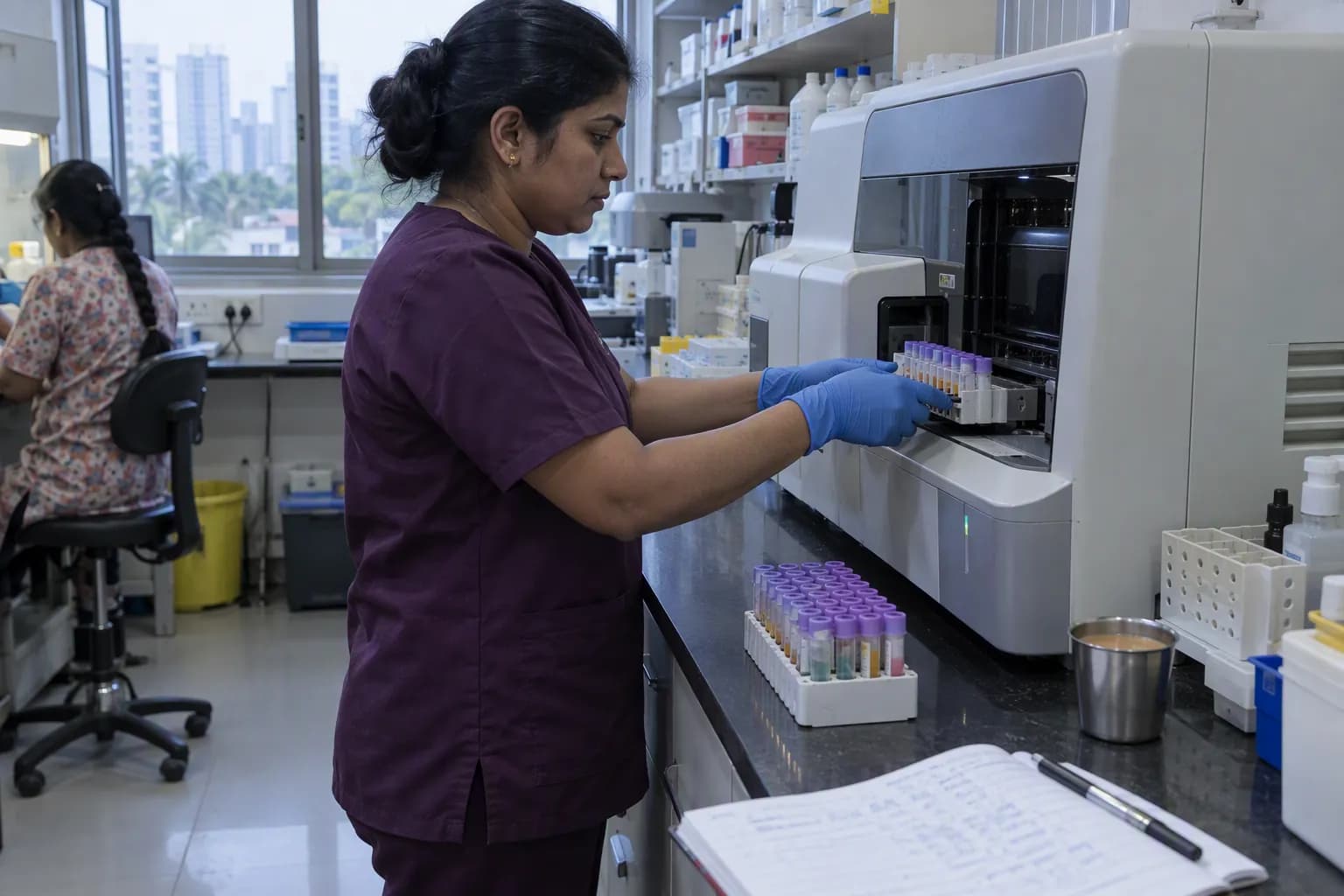
When should you see an endocrinologist for weight loss?
If you suspect a hormone is involved, or your weight comes with diabetes or a thyroid problem, book the endocrinologist.
Sources: [8], [11], [12], [13]
Read the full section
If not, a good physician can start the work-up and will send you on if a test points that way.
Two people make the point. A 28-year-old in Nagpur notices her periods now come every six or seven weeks, there is new acne along her jaw, and she is plucking hair from her chin; she should be checked for PCOS before anyone hands her a diet chart. A 50-year-old in Lucknow has watched his face round out over a year, bruises if he knocks a table, and finds the stairs hard because his thighs feel weak; he needs a cortisol test. Weight that arrives over a few months with no change in eating, or tiredness with feeling cold all the time, earns a hormone work-up first as well.
Endocrinologists in the United States stage obesity by what it is doing to the body as well as by BMI, and their guideline asks doctors to look for secondary causes at the very first assessment. In India the same thinking runs on the Asian BMI and waist cut-offs, so the closer look starts at a lower weight.
Children are a separate case. If a child with obesity is growing tall at a normal pace, the Endocrine Society suggests skipping routine hormone tests, and keeping them for a child who is also short for their age or has slowed down.
- Fast gain without eating more
- Irregular periods, acne or facial hair
- Purple stretch marks or easy bruising
- Diabetes or thyroid disease as well

What does an endocrinologist do on the first visit?
Set aside more time than for a routine consultation.
Read the full section
Expect questions about your weight over the years, your periods and sleep, and diabetes or thyroid disease in the family, then measurements, an examination and a list of blood tests.
Bring your old reports, even the scrappy ones from an office health camp, and a list of everything you take, supplements and ayurvedic products included. It also helps to jot down roughly what you weighed at 20, at marriage, after each pregnancy and today; doctors find that timeline more telling than most single results.
After weight, height, waist and blood pressure, the doctor looks at the skin for clues: dark velvety patches on the neck that suggest insulin resistance, stretch marks, acne or extra hair. The usual blood tests are fasting sugar and HbA1c, a lipid profile, liver and kidney function and TSH, with insulin, vitamin D or reproductive hormones added when the history points that way.
Most people leave without a hormone diagnosis, which is useful to know. The plan can then concentrate on food, protein, strength work and sleep, with GLP-1 treatment considered by the doctor where it suits you, and follow-up visits to watch the numbers.
- FirstHistory
Weight over the years.
- ThenMeasure
Waist, weight, BP.
- ThenExamine
Skin, thyroid, signs.
- LastBlood tests
TSH, HbA1c, lipids.
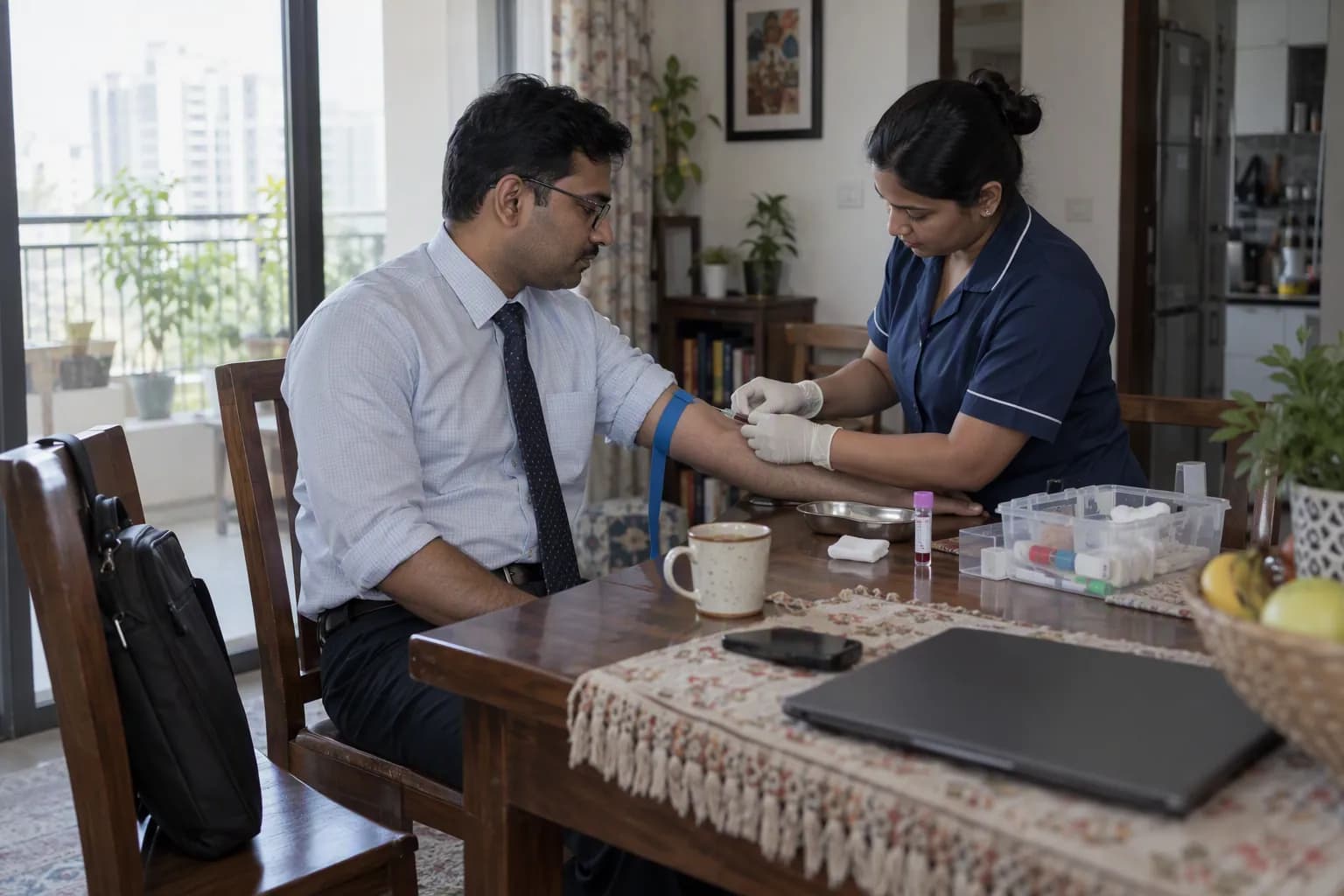
Endocrinologist, physician, dietitian or bariatric surgeon?
Most people with obesity need a doctor and a dietitian working together.
Sources: [8]
Read the full section
The doctor, a physician or an endocrinologist, handles diagnosis and anything medical; the dietitian works out what goes on your plate; a bariatric surgeon comes in only once surgery has been agreed.
Ask a dietitian how much rice, roti and dal fits your day, how a vegetarian gets enough protein without living on paneer, or how to eat around night shifts at a call centre. Ask the same person to interpret a thyroid report or change your diabetes treatment and a good one will send you back to the doctor.
Bariatric surgeons usually see people at higher BMIs, with lower thresholds for Asian Indians under the Indian consensus, or people whose type 2 diabetes will not come under control. An operation can bring large losses, and it also means lifelong follow-up, so a physician or endocrinologist normally helps you decide.
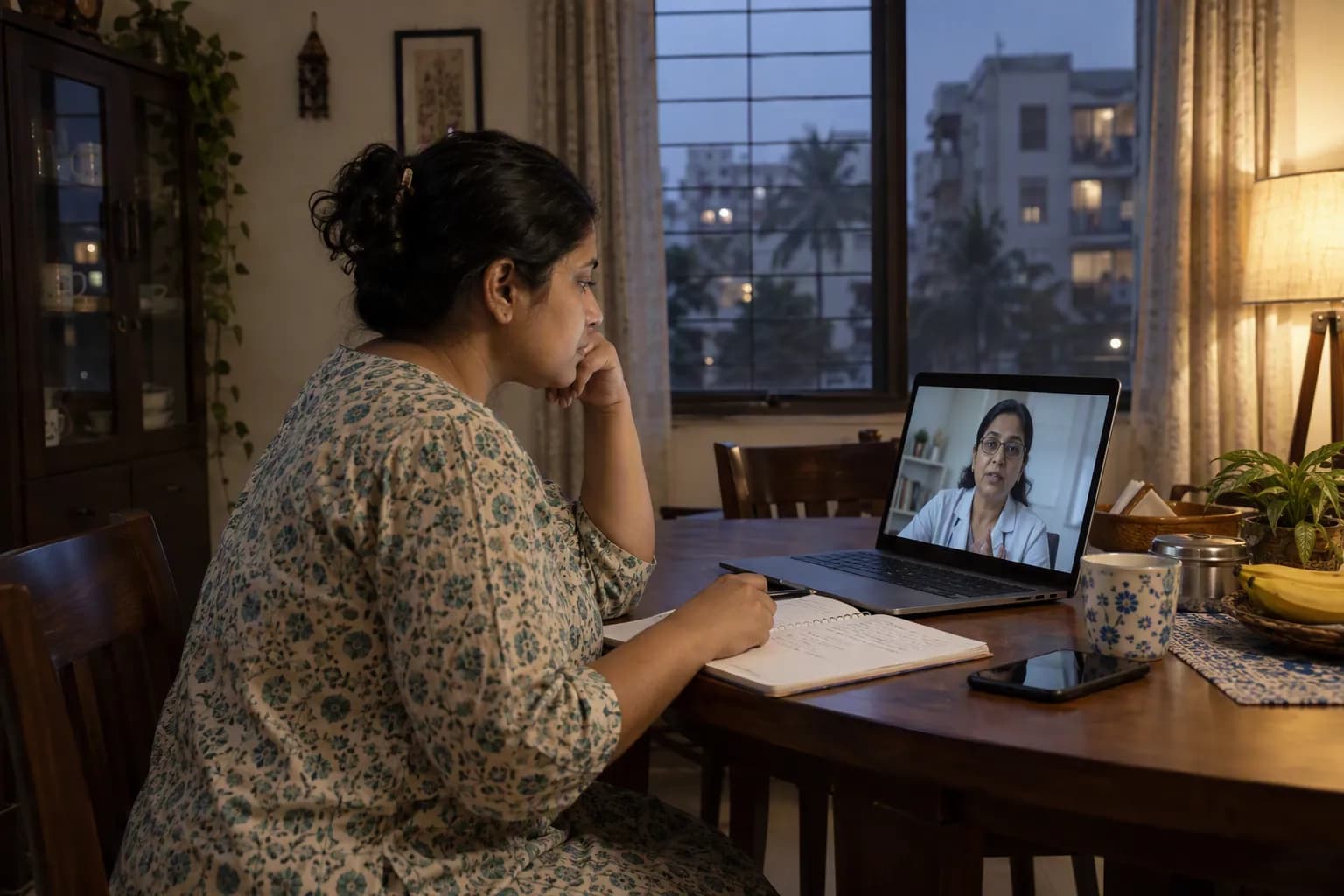
In good clinics they work as one team, with a doctor reading the blood and deciding on treatment, a dietitian planning meals and a coach keeping the strength work going. Metaboliq is set up like that: a registered doctor from our panel reviews a home blood test first, and the plan that follows puts keeping your muscle first.
| Their focus | See them for | |
|---|---|---|
| Endocrinologist | Hormones, diabetes | Red flags, complex cases |
| Physician | The whole body | A first assessment |
| Dietitian | Food and meals | A plan you can keep |
| Bariatric surgeon | Surgery | High BMI, with a doctor |

Which blood tests to start with, and how to prepare
For most people the first hormone check is a single blood draw.
Sources: [1], [10], [11], [12]
Read the full section
An endocrinologist usually starts with TSH, fasting sugar and HbA1c, a lipid profile and liver and kidney function, and adds free T4, reproductive hormones or cortisol only when your history calls for them.
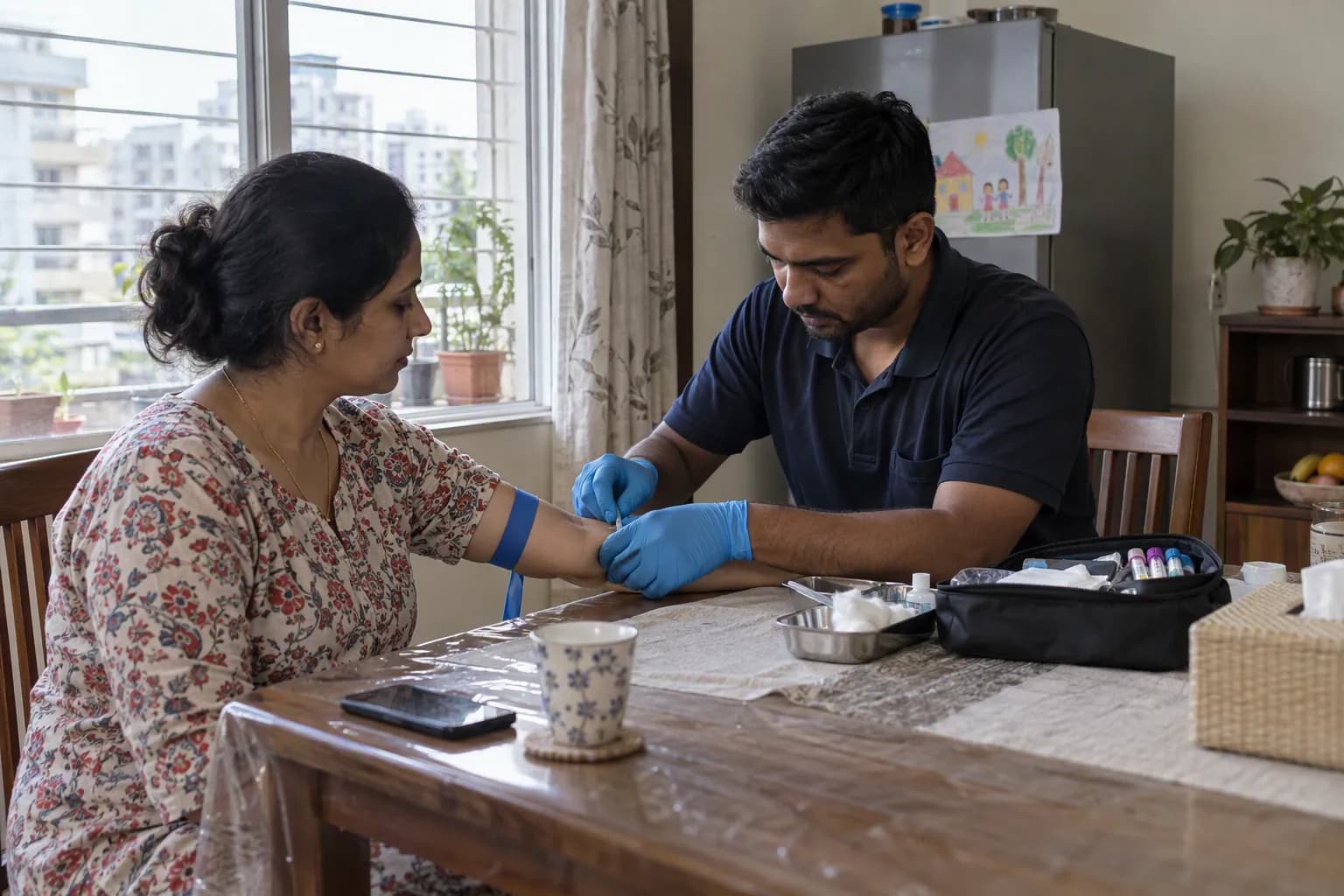
Getting the sample right matters more than people expect. Labs want fasting sugar and lipids after 10 to 12 hours without food, so an early slot before breakfast works best; the phlebotomist who rings the bell at 7 a.m. is doing you a favour. If you have periods, note the date the last one began, since some reproductive hormones are read against the day of the cycle. Keep a list of everything you take, supplements included, for whoever reads the results.
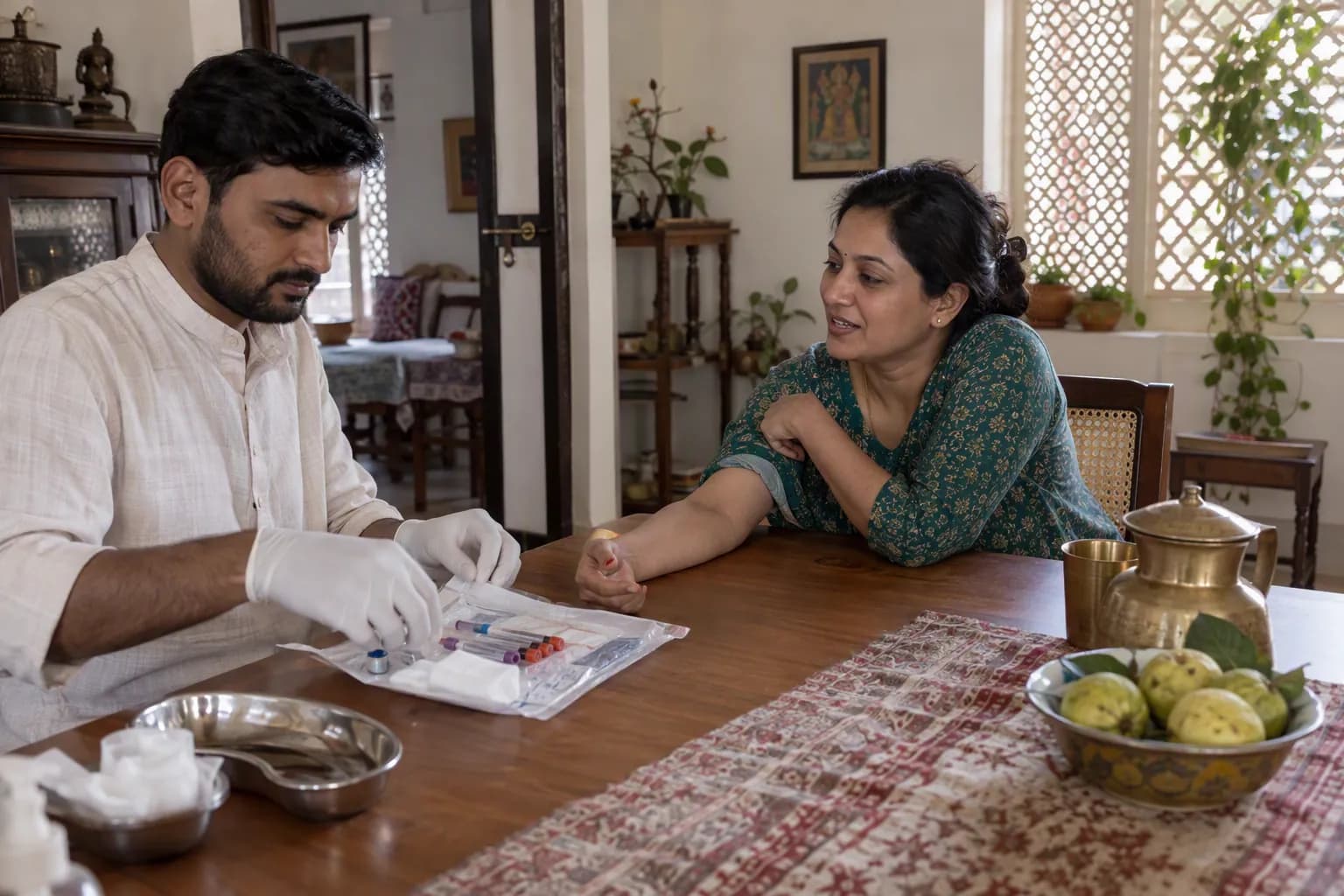
Then the results need reading together, with your history. A TSH a little above the lab's range in someone carrying extra weight can settle as the weight comes down, so a careful doctor repeats it and checks thyroid antibodies before starting thyroid hormone. A fasting sugar inside the range can sit beside a raised HbA1c, and the HbA1c still counts. The draw itself can happen at home: Metaboliq's assessment collects 45+ markers at your door for a doctor to read with you.
45+ markers, one home blood test
- HbA1c
- Thyroid test
- Fasting insulin
- HOMA-IR
- Fasting blood sugar
- Lipid profile
- Liver function test
- Kidney function test
- 0Panel doctors, DM in endocrinology
Every source, in full (13)
[1] Sanyal D, Raychaudhuri M. Hypothyroidism and obesity: an intriguing link
Indian Journal of Endocrinology and Metabolism, 2016. Overt hypothyroidism is linked with modest weight gain; a raised TSH can follow obesity rather than cause it; treating overt hypothyroidism has at most a modest effect on weight, and thyroid hormone has no supported role when the thyroid is normal.
Read the source[2] Unnikrishnan AG, et al. Prevalence of hypothyroidism in adults: an epidemiological study in eight cities of India
Indian Journal of Endocrinology and Metabolism, 2013. Of 5,360 adults tested in eight Indian cities, 10.95% had hypothyroidism (15.86% of women, 5.02% of men), and 3.47% had it undetected until the study's blood test.
Read the source[3] Medical Council of India. Regulations on Graduate Medical Education (Amendment), 2019
Gazette of India, Extraordinary, Part III, Section 4, 2019. Clause 7.1: every MBBS learner undergoes certified study over 4 1/2 academic years, in nine semesters, followed by one year of compulsory rotating internship.
Read the source[4] National Medical Commission. Post-Graduate Medical Education Regulations, 2023
National Medical Commission, Government of India, 2023. Sets the duration of post-graduate courses, including the examination: broad-speciality degrees such as MD 3 years (2 after a recognised diploma in the subject), and super-speciality courses such as DM 3 years.
Read the source[5] National Medical Commission. Indian Medical Register
National Medical Commission, Government of India, 2026. The public register of doctors registered to practise in India, searchable by name and registration number.
Read the source[6] Yajnik CS, Yudkin JS. The Y-Y paradox
The Lancet, 2004. Two men with the same body-mass index, one Indian and one British, had very different body fat: the Indian man carried far more fat and less lean tissue at the same BMI.
Read the source[7] WHO Expert Consultation. Appropriate body-mass index for Asian populations and its implications for policy and intervention strategies
The Lancet, 2004. Many Asian populations carry a high risk of type 2 diabetes and heart disease below a BMI of 25, with observed risk starting between 22 and 25; it kept the international cut-offs and proposed action points at 23, 27.5, 32.5 and 37.5.
Read the source[8] Misra A, et al. Consensus statement for diagnosis of obesity, abdominal obesity and the metabolic syndrome for Asian Indians and recommendations for physical activity, medical and surgical management
Journal of the Association of Physicians of India, 2009. Set the Indian adult bands: BMI 18.0-22.9 normal, 23.0-24.9 overweight and 25 or more obesity, with abdominal obesity at a waist of 90 cm or more in men and 80 cm or more in women.
Read the source[9] Anjana RM, et al. Metabolic non-communicable disease health report of India: the ICMR-INDIAB national cross-sectional study (ICMR-INDIAB-17)
The Lancet Diabetes & Endocrinology, 2023. Across 113,043 adults in 31 states and union territories, generalised obesity was 28.6%, abdominal obesity 39.5%, hypertension 35.5%, diabetes 11.4%, prediabetes 15.3% and dyslipidaemia 81.2% of those tested; all except prediabetes were more frequent in towns and cities than in villages.
Read the source[10] Teede HJ, et al. Recommendations from the 2023 International Evidence-based Guideline for the Assessment and Management of Polycystic Ovary Syndrome
Journal of Clinical Endocrinology & Metabolism, 2023. The international PCOS guideline, 254 recommendations and practice points, covering diagnosis, metabolic risk, weight and lifestyle care for women with PCOS.
Read the source[11] Nieman LK, et al. The diagnosis of Cushing's syndrome: an Endocrine Society Clinical Practice Guideline
Journal of Clinical Endocrinology & Metabolism, 2008. Advises testing for Cushing's syndrome when several progressive features appear together, starting with one accurate test (late-night saliva cortisol, 24-hour urine cortisol or an overnight suppression test), and sending an abnormal result to an endocrinologist.
Read the source[12] Garvey WT, et al. American Association of Clinical Endocrinologists and American College of Endocrinology comprehensive clinical practice guidelines for medical care of patients with obesity
Endocrine Practice, 2016. Builds a plan for obesity as a chronic disease staged by its complications, starting with an assessment that includes the patient's history, measurements and a search for secondary causes.
Read the source[13] Styne DM, et al. Pediatric obesity: assessment, treatment, and prevention. An Endocrine Society Clinical Practice Guideline
Journal of Clinical Endocrinology & Metabolism, 2017. Asks doctors to check children with obesity for prediabetes, high blood pressure, cholesterol, fatty liver and PCOS, to involve the whole family, and to skip routine hormone tests unless the child is short for age or growing slowly.
Read the source