metaboliq

What is type 2 diabetes, and how is it different from type 1?
Type 2 diabetes is a long-term condition in which sugar builds up in the blood because insulin stops working well, a state called insulin resistance, and the pancreas slowly loses the ability to make up for it. Type 1 is a different disease. The immune system destroys the cells that make insulin, so the body makes almost none.
Read the full section
Type 1 usually appears in children and young adults, often over a few weeks, and needs insulin from the first day. Type 2 creeps up over years, mostly in adults, and in its early years it responds to food, movement and weight change as well as to treatment. Type 2 accounts for 90 to 95% of all diabetes. There are other forms too, such as diabetes in pregnancy and rarer inherited types, which is why a doctor confirms the type rather than guessing it from a person's age.
The numbers in India are large. The ICMR-INDIAB study tested more than 1.1 lakh adults in 31 states and union territories and found diabetes in 11.4% of them and prediabetes in a further 15.3%. Diabetes was more common in cities. In several of the less developed states, people with prediabetes outnumbered those with diabetes, which tells you where those states are heading.
Symptoms of diabetes and high blood sugar
High blood sugar, called hyperglycaemia, can go unnoticed for years, and plenty of people in India first see the word diabetes on an annual office health check. When symptoms do appear, they tend to be thirst, getting up at night to pass urine, tiredness, blurred vision, and cuts or infections that take weeks to heal.
Read the full section
The thirst comes from the kidneys, which pass the extra sugar into the urine and draw water out with it. Losing weight without trying, while eating more than usual, points to very high sugar or to type 1. Women may get thrush or urine infections that keep coming back. Tingling, burning or numbness in the feet usually means the sugar has been high for a long while.
Some situations need a hospital the same day: very high sugar with vomiting, confusion, heavy drowsiness or fast, deep breathing. One of these emergencies, the hyperosmolar hyperglycaemic state, mostly affects older adults with type 2 and builds over several days of high sugar and dehydration. For the milder signs, book a blood test this week rather than trying a home remedy first.
Sources: [2]
- Thirst and a dry mouth
- Passing urine often, also at night
- Tiredness and blurred vision
- Cuts and infections that heal slowly
Diabetes range: the numbers that diagnose it
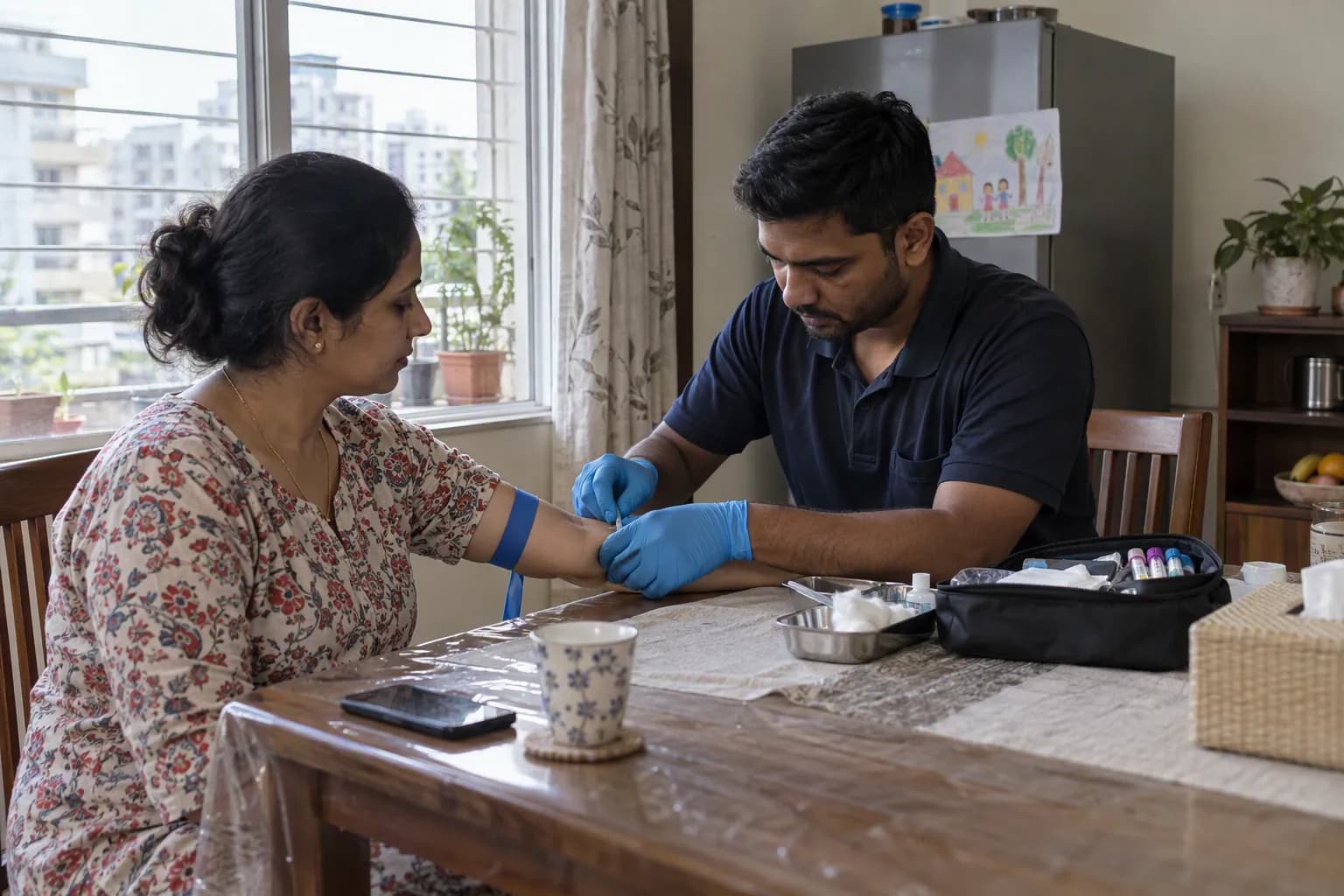
Three tests, three fixed cut-offs. A fasting plasma glucose of 126 mg/dL or more is diabetes, so is an HbA1c of 6.5% or more, and so is a reading of 200 mg/dL or more two hours into a glucose tolerance test. Prediabetes is the band just under each: fasting 100 to 125, HbA1c 5.7 to 6.4%, two-hour glucose 140 to 199.
Read the full section
Normal means a fasting sugar below 100 and an HbA1c below 5.7%. A random reading of 200 or more counts too, but only when the classic symptoms are there as well. Otherwise one bad result gets repeated, on the same test or a different one, before anyone writes the word diabetes on your file. Many Indian labs print their own reference ranges and colour a result red or green by them, and those ranges don't always match the cut-offs above. Go by the numbers, not the colour.
Every figure here is for plasma glucose measured in a lab. The glucometer at home is good for watching how your sugar moves through the day, after a heavy wedding lunch, say, but nobody diagnoses diabetes on a finger-prick. Our separate guides go deeper on normal blood sugar levels, readings after meals and the HbA1c range.
Sources: [2]

Which blood tests diagnose diabetes, and which come after
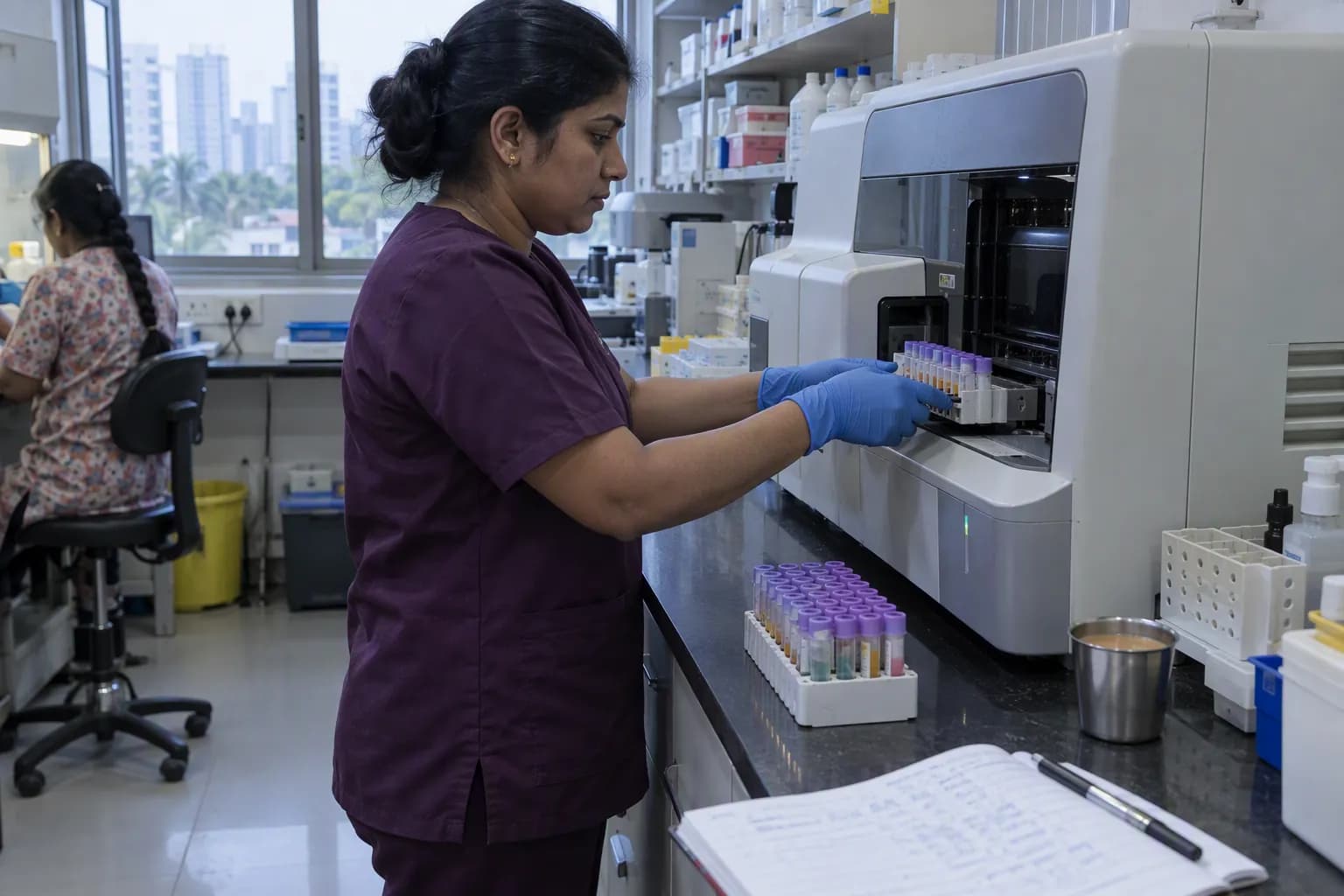
The diagnosis rests on one of three tests: fasting glucose, HbA1c or an oral glucose tolerance test. HbA1c needs no fasting and reflects your average sugar over roughly three months, which makes it the easiest to get done. The tolerance test picks up the most cases but takes two hours at the lab.
Read the full section
HbA1c can mislead in some people. Anaemia, which is common among Indian women, certain haemoglobin variants, recent blood loss and pregnancy can all push it up or down, and then a doctor leans on the glucose tests instead. A fasting insulin level, or the HOMA-IR score worked out from it, is not part of the diagnosis. It can, though, show insulin resistance years before the sugar itself starts to climb.
Once diabetes is confirmed, a few more checks set your baseline: kidney function with a urine albumin test, a lipid profile, liver enzymes, blood pressure, an eye examination and a foot check. They are repeated at least once a year, because the damage diabetes does to small blood vessels stays silent until it is well advanced.
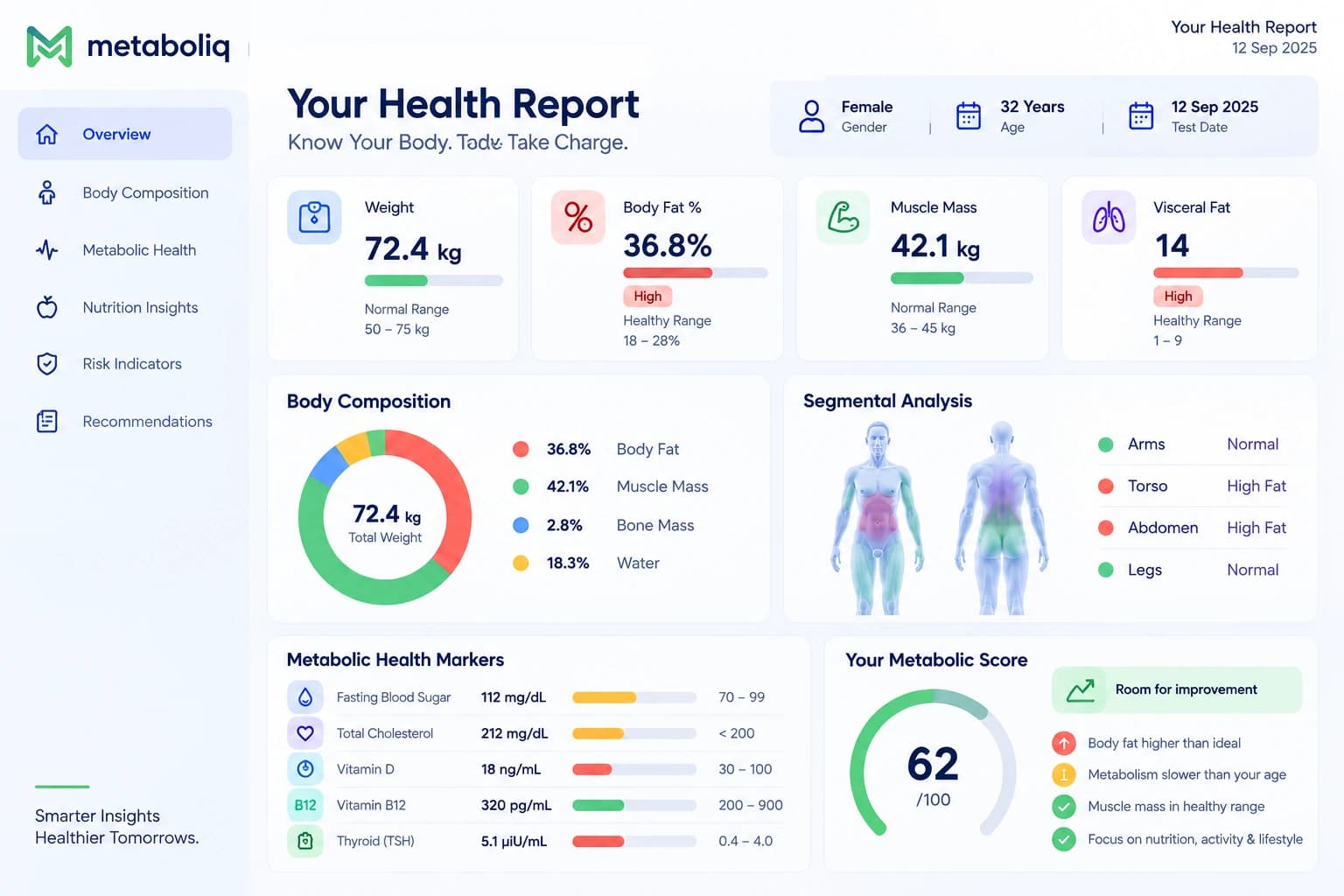
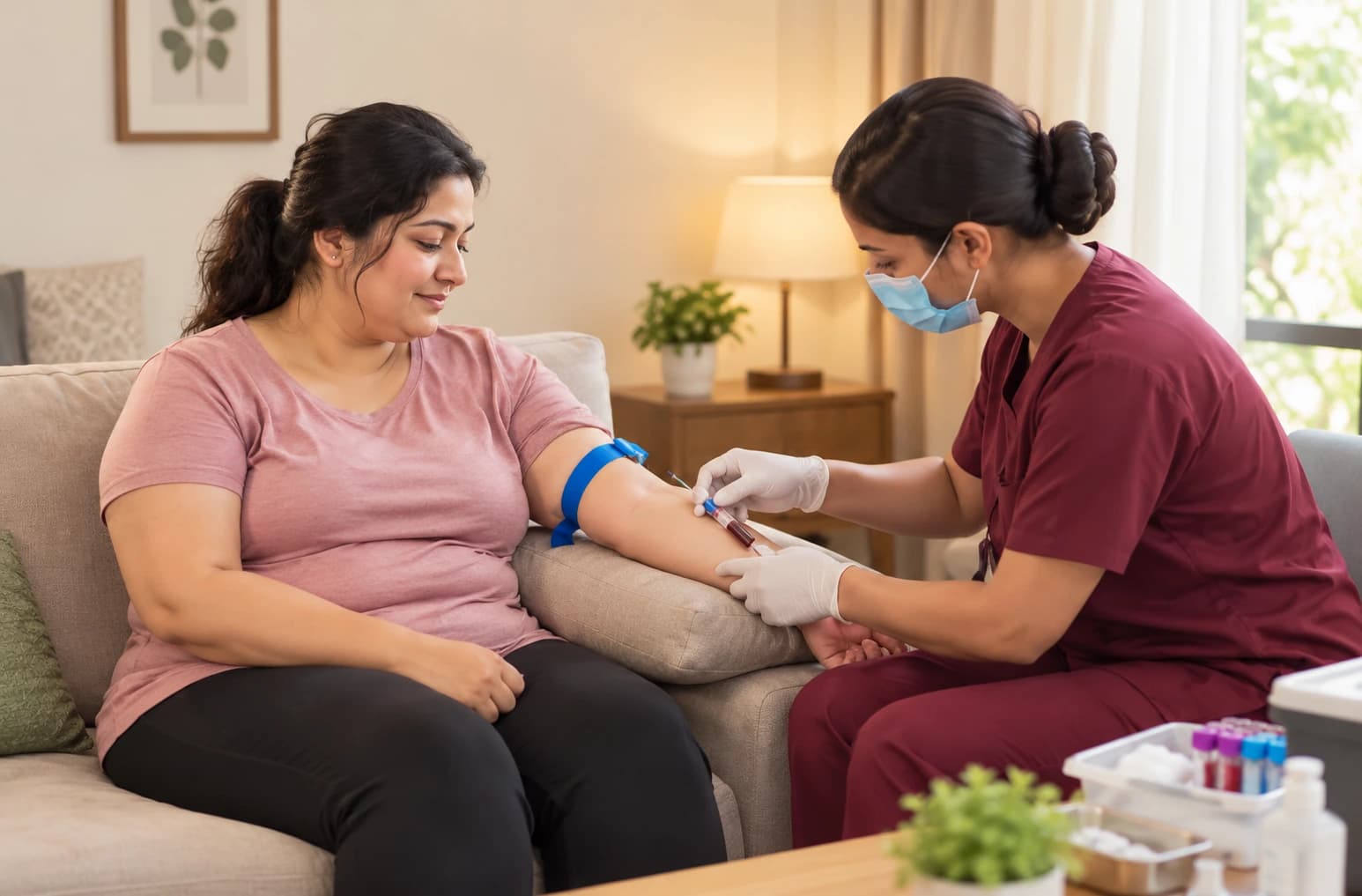
45+ markers, one home blood test
- HbA1c
- Fasting blood sugar
- Fasting insulin
- HOMA-IR
- Lipid profile
- Kidney function
- Liver function
- Thyroid test
What causes type 2 diabetes, and why Indians get it at a lower weight
Two problems build together in type 2 diabetes. Muscle, liver and fat respond less and less to insulin, and the beta cells in the pancreas that make it slowly wear out under the extra demand. Family history, age, long hours sitting, short sleep and weight gained around the middle all add to the risk.
Read the full section
Indians run into it at a lower body weight than Europeans. In a comparison that became famous, two men with the same body-mass index, one Indian and one British, had very different bodies: the Indian man carried far more fat and less lean tissue. A WHO expert group later found that diabetes risk in Asian populations climbs at BMIs well below the usual overweight line of 25, and Indian guidelines treat a BMI of 23 as overweight, and a waist above 90 cm in men or 80 cm in women as abdominal obesity.
A normal-looking BMI therefore does not rule diabetes out in India. Slim people with a thick waist, anyone whose parent has diabetes, women with PCOS and women who had diabetes during a pregnancy should all get tested, whatever the scale shows.

How excess weight drives high blood sugar
The clearest account of how weight drives type 2 diabetes comes from Roy Taylor's work in Newcastle. Fat that overflows into the liver makes it ignore insulin and keep releasing sugar into the blood. Fatty acids reaching the pancreas blunt the beta cells. Each makes the other worse, which is why he called it a twin cycle.
Read the full section
The cycle also runs backwards. When people with type 2 diabetes eat a lot less, liver fat falls within days, and the liver starts listening to insulin again. Pancreatic fat comes down more slowly, and in people who have had diabetes for fewer years, the beta cells can recover some of their output. Muscle insulin resistance, where the trouble often starts, improves much less with dieting alone. Exercise and muscle have to do that part.
This is also why the waist tells you more than the scale. Fat packed inside the abdomen and liver behaves very differently from fat under the skin of the hips, and at the same weight many Indians carry more of the inner kind.
Can weight loss put type 2 diabetes into remission?
For many people, yes, especially in the first few years after diagnosis. In the DiRECT trial, run through UK family doctors, 46% of those on a structured weight-management programme were in remission after a year, against 4% on usual care. Remission followed the weight: 86% of those who lost 15 kg or more got there.
Read the full section
Remission has a precise meaning. An international expert group defines it as an HbA1c below 6.5% measured at least three months after all glucose-lowering treatment has stopped. That stopping is done by your doctor as your numbers allow, never on your own to see what happens. Remission is not a cure, either. The tendency stays, the sugar can climb again if the weight comes back, and people in remission still need their yearly eye, kidney and foot checks.
The benefit is not limited to strict meal-replacement programmes. In the American Look AHEAD study, 11.5% of those in the intensive lifestyle group reached partial or complete remission in the first year, against 2% of those given education alone. Smaller losses pay off as well: dropping 5 to under 10% of body weight gave three and a half times the odds of a meaningful fall in HbA1c, along with better blood pressure, triglycerides and HDL cholesterol.
A diabetes diet chart on Indian food
No single diabetic diet exists, but the pattern that works on an Indian plate is consistent: less rice, roti and sugar, more dal, vegetables, curd, paneer, eggs, fish or chicken. A simple way to build it is to fill half the plate with vegetables, a quarter with protein and a quarter with grains.
Read the full section
Indian data back the shift. Using the diets and blood results of 18,090 adults in the ICMR-INDIAB study, researchers worked out that people with newly found diabetes would need carbohydrate at about 49 to 54% of their calories, protein at about a fifth and fat at 21 to 26% to bring HbA1c into the remission range. For most households that means a smaller mound of rice and more dal and curd, not unfamiliar food.
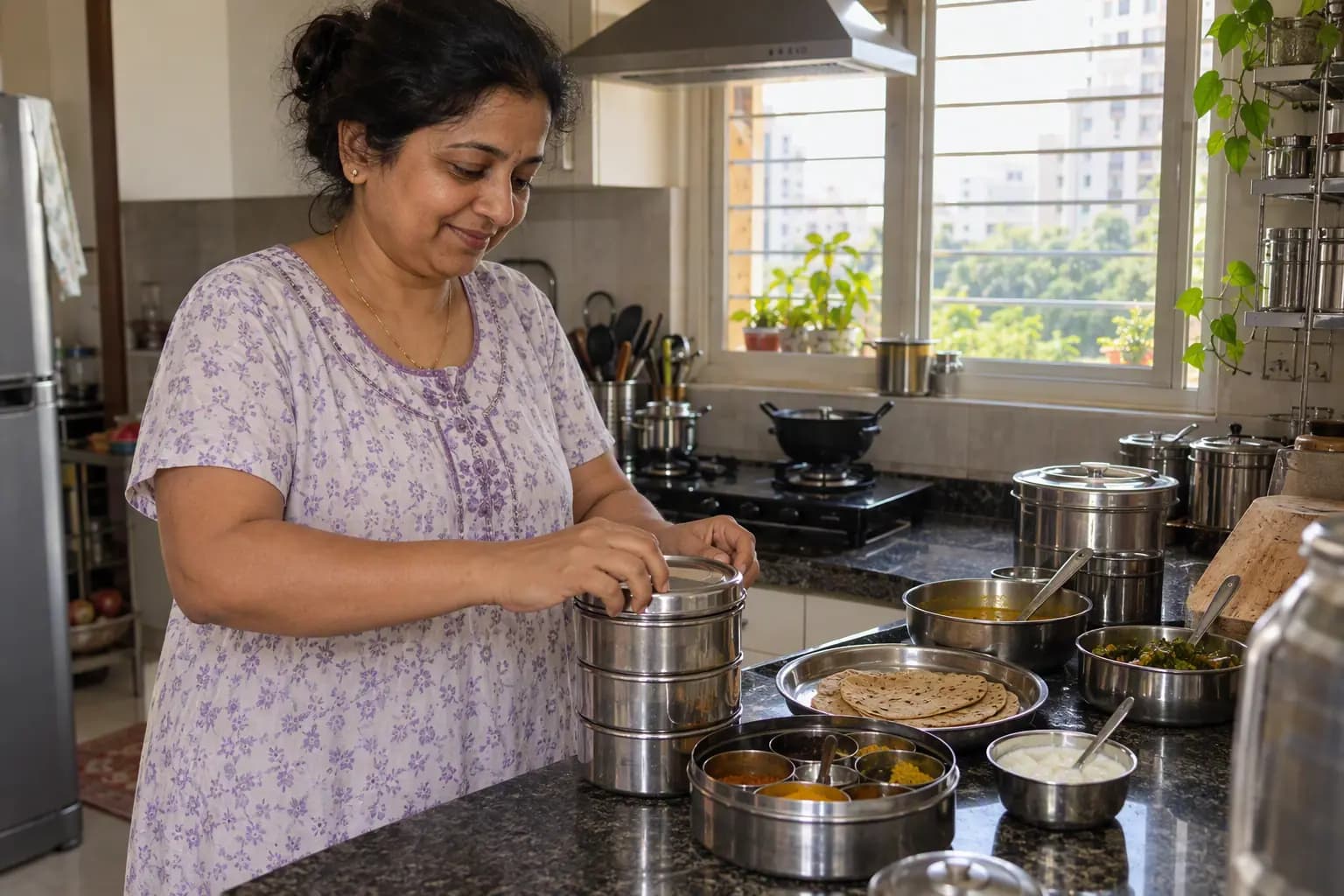
A day might look like this: besan chilla or eggs with vegetables for breakfast; two phulkas or a small katori of rice with dal, sabzi, salad and curd at lunch; roasted chana or a fruit in the afternoon; fish, chicken, paneer or tofu with vegetables at dinner. Millets help when they replace rice rather than join it. Whole fruit in a fist-sized portion suits most people, and guava, apple, orange, pear, papaya and jamun are easy picks. Juice is the form to skip.
- Work out your daily protein range
- Carbohydrate in a katori of white rice
- Brown rice against white, by the numbers
- Calories and carbs in one roti
- Jowar roti: fibre and carbs
- Protein in a besan chilla
- Protein and fibre in moong dal
- Protein in paneer
- Calories and fibre in a guava
- A full Indian diabetes diet chart, meal by meal
- Glycemic index of Indian foods
- Half: vegetables and salad
- A quarter: dal, paneer, eggs, fish or chicken
- A quarter: rice, roti or millet
- Fruit whole, never as juice
Exercise for diabetes: what moves the number
Exercise lowers HbA1c on its own, before any change to the plate. A JAMA review of 47 trials put the average fall from supervised training at 0.67 points: 0.89 for people who trained more than 150 minutes a week, 0.36 for those who did less. Walking counted. So did weights.
Read the full section
Why should a walk change a lab number? Most of the sugar your blood clears after a meal ends up in muscle, and muscle that stops answering insulin is one of the earliest faults in type 2 diabetes, often years before the report turns red. A working muscle pulls glucose in even when insulin is struggling, and a bigger one has more room to store it. That is why our own programme's goal reads the way it does: "Lose up to 20% of your body weight — and keep your muscle". Results vary; your doctor decides what is right for you. Everyone on it gets a protein target and strength sessions from week one.
The guideline numbers are modest: 150 minutes of brisk walking a week spread over three days or more, two or three strength sessions, and fewer hours sitting in one stretch. The cheapest habit on this page is a ten to fifteen minute walk after lunch and dinner, even a slow one round the society compound. Trials that broke up long sitting with short, light walks found a smaller rise in sugar and insulin after the meal.
- Every dayWalk after meals
Ten to fifteen minutes.
- Three daysBrisk walking
150 minutes a week.
- Two or three daysStrength work
Squats, bands, push-ups.

Diabetes complications: feet, kidneys, eyes and heart
Years of high sugar damage small blood vessels and nerves. The places to watch are the feet, the kidneys, the eyes and the heart, and in each of them the early damage is silent, so regular checks matter more than waiting for symptoms.
Read the full section
Feet are the most preventable. Nerve damage takes pain away, so a blister from a tight chappal or a crack in the heel can turn into an ulcer without being felt. Between a fifth and a third of people with diabetes develop a foot ulcer at some point, and ulcers often come back after healing. Look at your feet every day, do not walk barefoot outdoors, and get them examined at least once a year.
Diabetic nephropathy, the kidney damage, first shows up as albumin leaking into the urine, which is why a urine albumin-to-creatinine ratio and an eGFR are checked every year. The eyes need a retinal examination at diagnosis and every one to two years after that. Blood pressure and cholesterol are checked alongside the sugar, because they add to the damage in all four places.
- Foot examination
- Urine albumin and eGFR
- Retinal eye examination
- Blood pressure and lipid profile
Treatment for type 2 diabetes, and which doctor to see
Diet, walking, sleep and weight are where every doctor starts, and for most people a glucose-lowering treatment joins them within a few years. It gets adjusted report by report. Doctors aim for an HbA1c under 7% in many adults, but the target moves with the person: a 75-year-old who lives alone and might fall at night is usually given more room than a 40-year-old diagnosed last month.
Read the full section
Which treatment, out of the several classes available, depends on your kidneys, heart, history and budget, and you and your doctor decide it together. People get into trouble when they quietly stop because a few readings looked fine. Tell your doctor early if you are getting lighter, because the treatment may need trimming to keep your sugar from going too low.
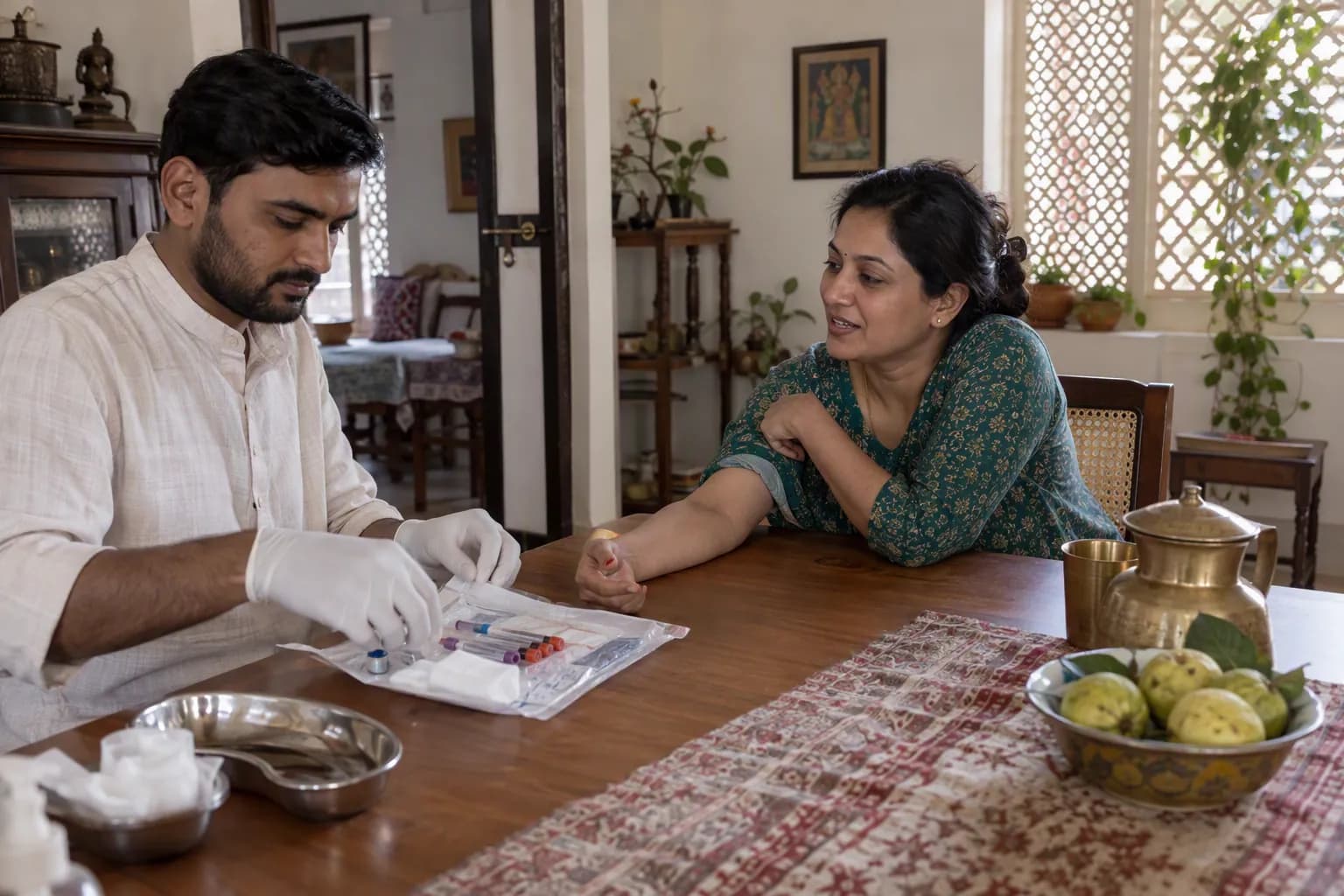
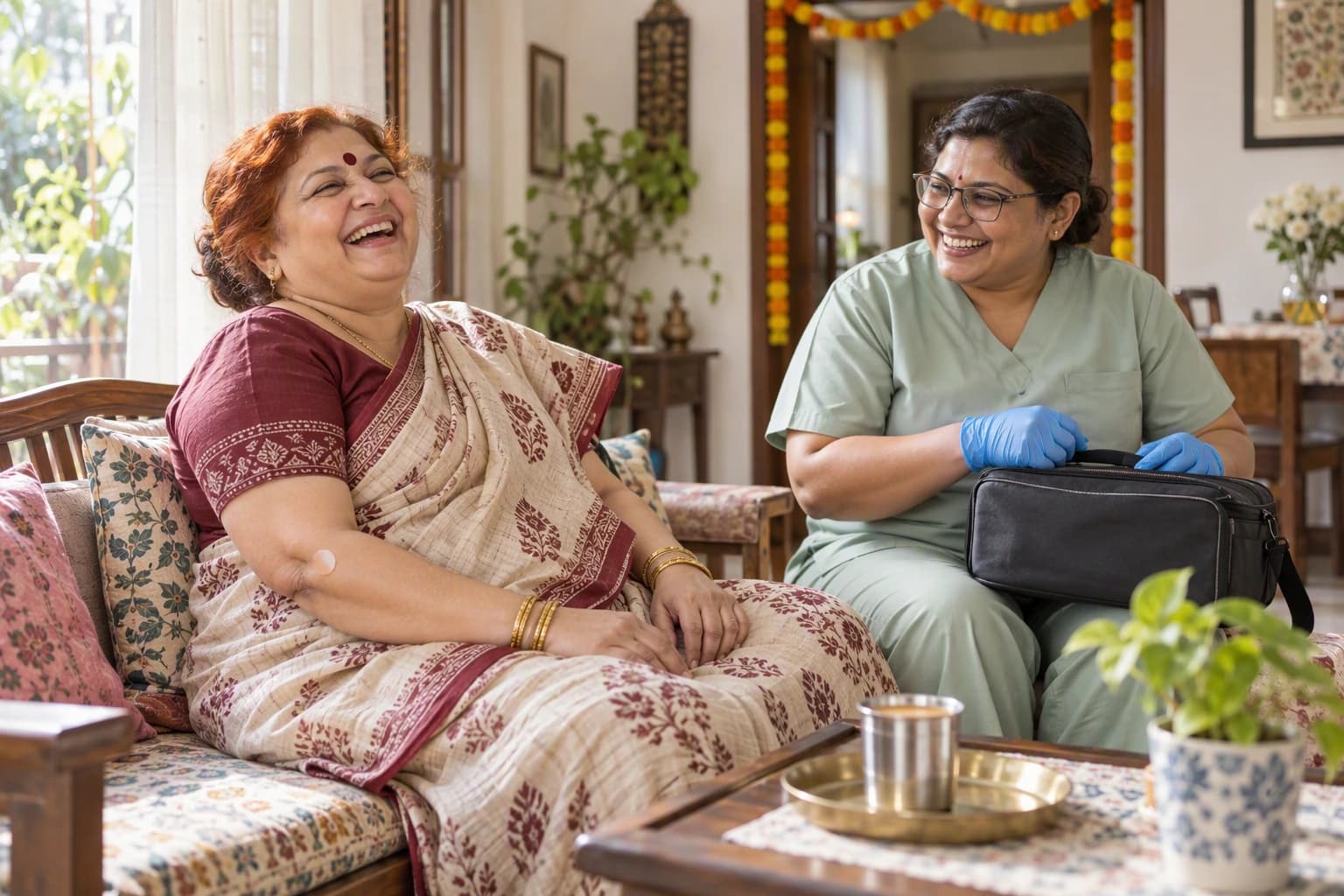
A physician or diabetologist looks after most type 2 diabetes in India; an endocrinologist comes in for thyroid disease, PCOS or numbers that won't settle. If weight came first and you want a plan around both, Metaboliq starts with a health assessment: blood drawn at home for HbA1c, insulin, kidney and lipid markers, then a doctor who reads every result with you before anything changes.
- Step 1Book
Two minutes, on your phone.
- Step 2Home test
45+ markers, collected at home.
- Step 3Doctor
Reads every marker with you.
- Step 4Your plan
Built from your own results.