metaboliq

Obesity and type 2 diabetes: how the two are linked
Fat stored inside the liver and around the pancreas is the bridge.
Read the full section
It makes the liver resist insulin and release too much sugar, and it slowly wears down the cells that make insulin.
Roy Taylor at Newcastle University called this the twin cycle. Extra calories over years fill the liver with fat. A fatty liver ignores insulin's signal to stop making glucose, so fasting sugar rises, and the extra fat it exports settles in the pancreas, where it blunts the insulin-making beta cells. When people eat less, liver fat falls within days and the liver starts responding to insulin again.
Indian bodies run into this earlier. At the same BMI, an Indian adult tends to carry more fat inside the abdomen than a European one, which is why India's consensus marks abdominal obesity at 90 cm for men and 80 cm for women. The ICMR-INDIAB survey of 113,043 adults found diabetes in 11.4% and prediabetes in 15.3%, with abdominal obesity in 39.5%.
Not every person with diabetes is overweight, and some lean Indians develop type 2 diabetes too. But for the majority who carry extra belly fat, weight is the part of the problem they can change.
- 1Fat in the liver
Insulin ignored.
- 2Sugar rises
Liver keeps releasing it.
- 3Fat in the pancreas
Less insulin made.
- 11.4%Indian adults with diabetes

How much weight loss lowers blood sugar
Losing 5% of your weight is the threshold where trials start to see HbA1c fall.
Read the full section
Between 5 and 10%, the chance of a half-point drop is about three and a half times higher, and blood pressure and cholesterol improve too.
Rena Wing's analysis of Look AHEAD, a US trial of 5,145 adults with type 2 diabetes and extra weight, compared people by how much they lost in the first year. Those who lost 5 to under 10% were 3.5 times as likely to cut HbA1c by 0.5 points as those whose weight held steady, and their triglycerides, blood pressure and good cholesterol improved. Those who lost more did better still.
Marion Franz's review of 11 lifestyle trials with 6,754 adults with type 2 diabetes looked at the other end. Programmes that took off less than 5% of body weight at a year made no significant difference to HbA1c, cholesterol or blood pressure. The programmes that got past 5% combined eating less, regular activity and frequent contact with a health professional.
For a person of 85 kg, 5% is about 4 kg and 10% about 8.5 kg. That is a realistic target over six months, and it is also the range where some people can come down on their sugar treatment, a change only their doctor should make.
| Study | Effect on HbA1c | |
|---|---|---|
| Under 5% | Franz review | No clear change |
| 5 to 10% | Look AHEAD | 3.5x likelier to drop |
| Over 10% | Look AHEAD | Larger gains |
- 3.5xlikelier HbA1c drop at 5-10%

Sudden weight loss in type 2 diabetes: when to worry
Losing weight without trying, while you are thirsty all day and up at night to pass urine, is a classic sign of very high sugar.
Sources: [6]
Read the full section
It calls for an HbA1c and fasting sugar test this week.
Here is what happens in the body. When blood sugar stays far above normal, the kidneys can no longer hold it back, and it passes out in the urine, taking calories and water with it. People find they are drinking glass after glass of water, waking two or three times a night, and losing weight while eating as they always have. The American Diabetes Association lists these as the classic symptoms of high blood sugar. They often mean diabetes has just started, or has slipped out of control.
The diagnostic lines are a fasting plasma glucose of 126 mg/dL or more, an HbA1c of 6.5% or more, or 200 mg/dL or more two hours into a glucose test. With these symptoms, a single random reading of 200 or more is enough for a diagnosis.
Kavita, the Lucknow teacher we meet further down, noticed she had dropped 3 kg in a month during the summer holidays without trying, and put it down to the heat. Her HbA1c that month was 8.1. If your sugar turns out normal, a doctor will look for other causes, such as an overactive thyroid.
- Weight falling without trying
- Thirsty all day
- Up at night to pass urine
- Tired or blurred vision
- 126fasting sugar, mg/dL, diabetes line
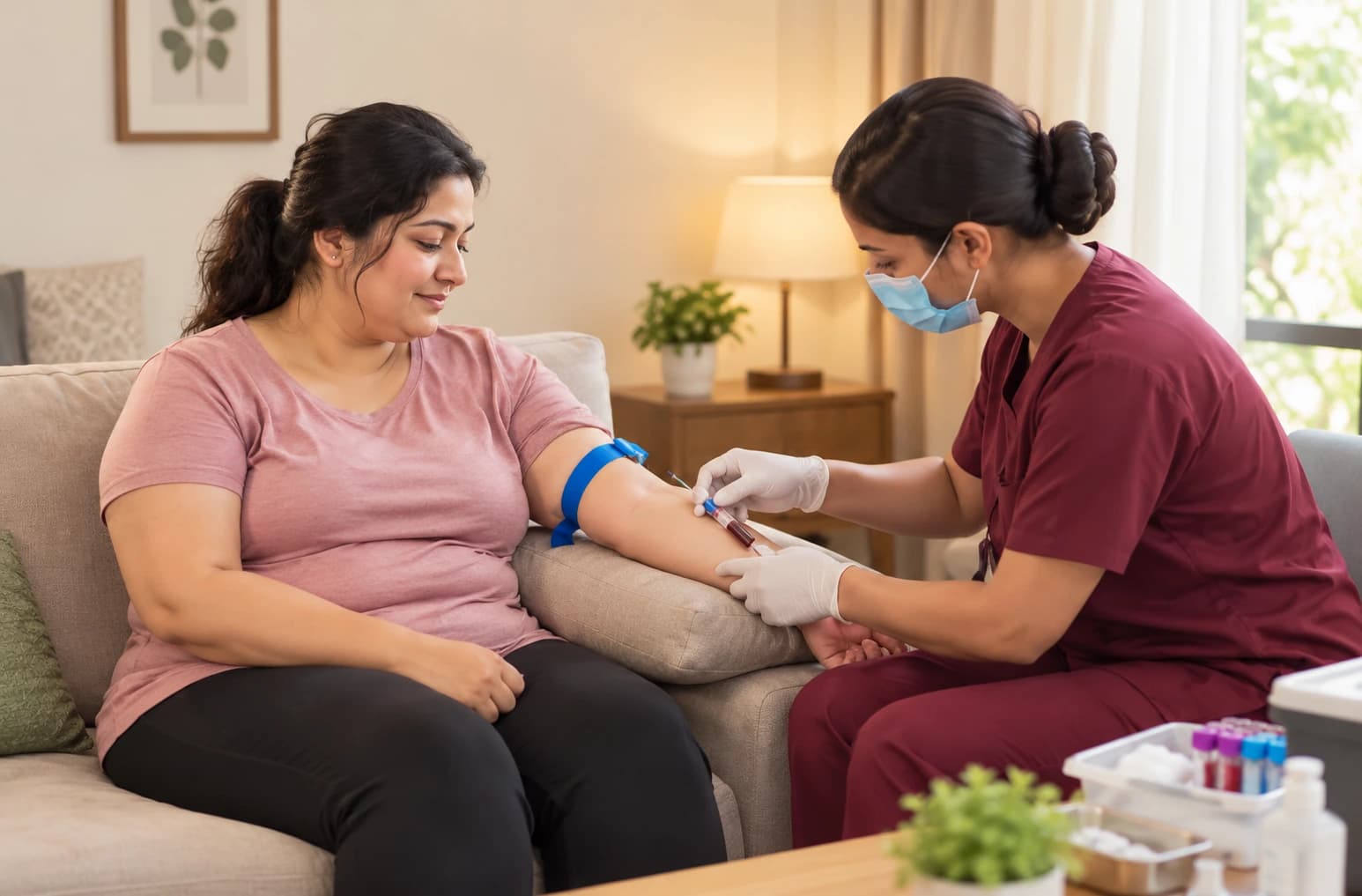
A diabetic diet plan to lose weight, for Indian kitchens
Cut the refined grain and add protein.
Read the full section
In an ICMR model built on 18,090 Indian adults, the mix linked with remission of new diabetes was about half the calories from carbohydrate and a fifth from protein.
The usual Indian plate leans hard on rice, roti and sugar. When R M Anjana's team at the Madras Diabetes Research Foundation modelled the INDIAB diet data, the mix that matched remission in newly diagnosed diabetes was 49 to 54% carbohydrate, 19 to 20% protein and 21 to 26% fat. A separate INDIAB analysis found that swapping white rice for whole wheat or millet flour in the same quantity did not help. Swapping some of the grain for protein did.
In a kitchen, that looks like one katori of rice or two rotis instead of three or four, a full katori of dal, a bowl of curd, and paneer, eggs, chicken, fish, soya or chana at every meal. Vegetables fill half the plate. Breakfast moves from poha or upma to besan chilla, moong dal chilla or eggs. Sweet chai, fruit juice and biscuits go first, because they raise sugar fastest.
Kavita, 52, a schoolteacher in Lucknow, is a composite of the readers who write to us. Her HbA1c was 8.1 and her waist 96 cm. She kept her rice at lunch but halved it, added a second katori of dal and curd, moved dinner to 8 pm and walked after it. Her doctor tracked her sugar through the plan and adjusted her treatment when the readings called for it.

Exercise for diabetes and weight loss
Structured exercise lowers HbA1c by about two-thirds of a point on its own, and by nearly 0.9 when it adds up to more than 150 minutes a week.
Sources: [9]
Read the full section
Walking and strength training both work.
Daniel Umpierre's meta-analysis in JAMA pooled 23 trials of supervised exercise in type 2 diabetes. On average HbA1c fell by 0.67 points against people who did not train. Aerobic exercise brought it down by 0.73, resistance training by 0.57 and a mix of both by 0.51. More than 150 minutes a week did better than less, 0.89 against 0.36. Advice to be more active, without a structured plan, helped only when it came with diet changes.
The practical version is 30 minutes of brisk walking on five days, plus two or three sessions of strength work: squats to a chair, wall push-ups, a resistance band, or weights at a gym. A 10 to 15-minute walk after the biggest meal of the day blunts the sugar rise that follows it.
Muscle matters in diabetes for a second reason: it is where most of the sugar from a meal gets stored, so losing muscle while dieting makes sugar harder to control. Kavita's doctor asked her to keep up two band sessions a week for exactly that reason. It is the thinking behind the aim Metaboliq sets with every member, "Lose up to 20% of your body weight — and keep your muscle", with a note that matters as much: Results vary; your doctor decides what is right for you. The plan begins with a home blood test that includes HbA1c.
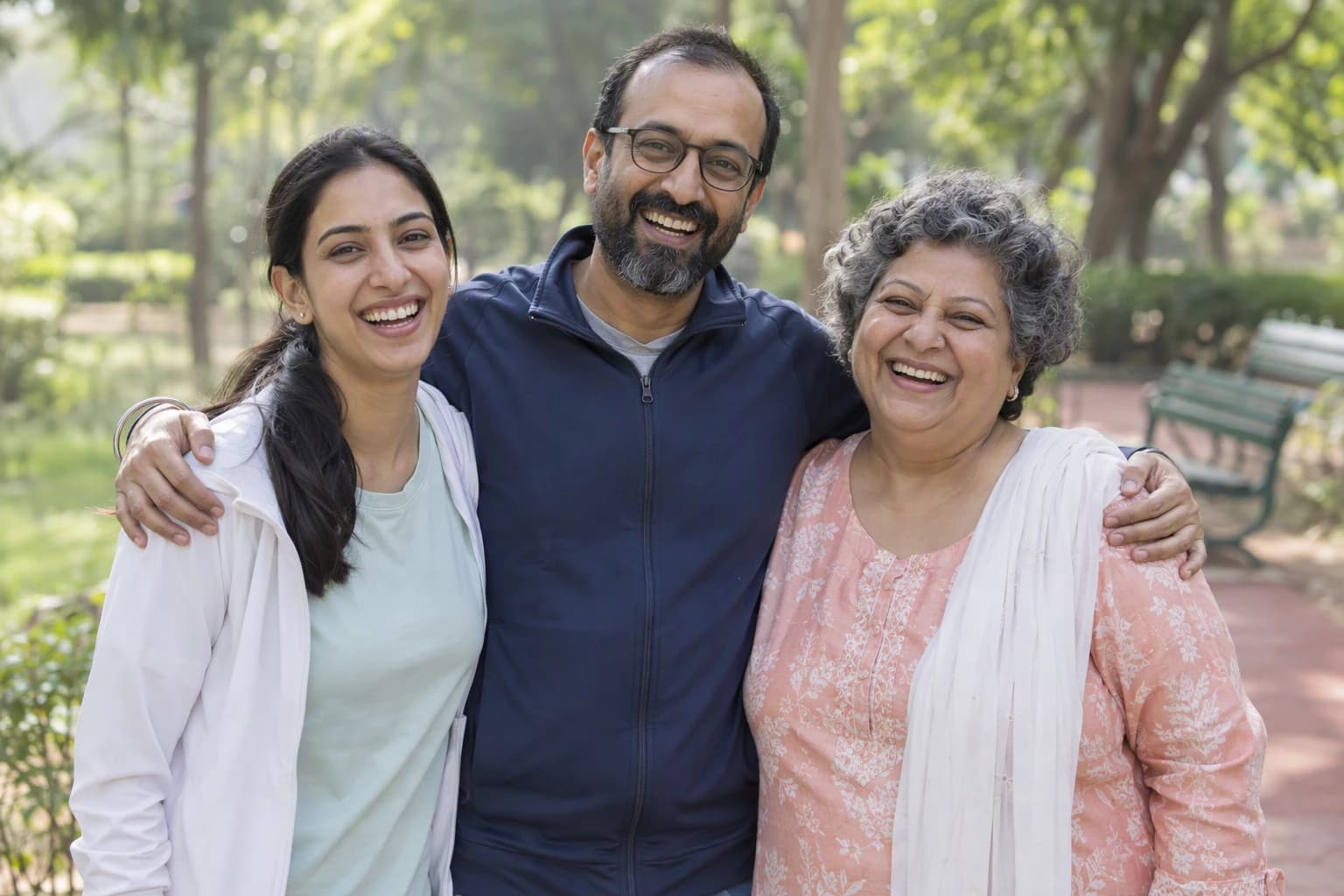
Losing weight safely with diabetes: low sugar and your treatment
The same diabetes treatment that was right at 80 kg can push sugar too low at 74 kg, once the rice is smaller and the evening walk is a habit.
Sources: [10]
Read the full section
Shaky hands, sweating, a racing heart or sudden hunger are the signals to check your sugar and take 15 g of glucose.
Insulin and some older sugar-lowering treatments keep working at full strength whatever you eat. The American Diabetes Association's standards set an HbA1c goal below 7% for many adults, adjusted up or down for each person, and treat low blood sugar as a risk to plan for.
Kavita's doctor asked her for fasting and after-dinner sugar readings three times a week in the first two months, and to expect her treatment to come down step by step if the readings fell. Her HbA1c was due again at three months. She was told to keep glucose powder sachets in her school bag the whole time, for days like a long Saturday walk.
Some newer diabetes treatments, the GLP-1 class among them, lower weight as well as sugar. Whether one belongs in a plan is a doctor's call, made with the reports in front of them. The rule that does not change is that nobody should stop or change a diabetes treatment on their own.
- Shaky or sweaty
- Heart racing
- Sudden hunger
- Confused or irritable
- Under 7%HbA1c goal for many adults

Can weight loss put diabetes into remission?
For some people, yes.
Read the full section
In the DiRECT trial, 46% of those with recently diagnosed type 2 diabetes were in remission a year after a weight-loss programme, against 4% on usual care.
Remission means an HbA1c below 6.5% without any diabetes treatment. In DiRECT, which ran through ordinary general practices in Scotland and northern England, the chance of it climbed with every band of weight lost: 7% of those who lost under 5 kg, 34% at 5 to 10 kg, 57% at 10 to 15 kg and 86% of those who lost 15 kg or more. The trial took only people diagnosed within the past six years, and remission can end if the weight comes back. Our page on type 2 diabetes remission covers who reaches it and how long it lasts.
Prevention follows the same pattern. In the US Diabetes Prevention Program, people with raised sugar who aimed for 7% weight loss and 150 minutes of activity a week cut new cases of diabetes by 58% over about three years.
For Kavita, eight years after her diagnosis and with an HbA1c of 8.1 at the start, remission is less likely than for someone diagnosed last year. Her doctor's targets were an HbA1c under 7, a smaller waist and fewer treatments, which for her would already be a large change.

Every source, in full (12)
[1] Taylor R. Pathogenesis of type 2 diabetes: tracing the reverse route from cure to cause
Diabetologia, 2008. Fat in the liver makes it resist insulin and overproduce glucose, fatty acids blunt the beta cells, and with energy restriction liver fat falls within days and liver insulin sensitivity returns, while muscle insulin resistance persists.
Read the source[2] Misra A, et al. Consensus statement for diagnosis of obesity, abdominal obesity and the metabolic syndrome for Asian Indians and recommendations for physical activity, medical and surgical management
Journal of the Association of Physicians of India, 2009. Set the Indian adult bands: BMI 18.0-22.9 normal, 23.0-24.9 overweight and 25 or more obesity, with abdominal obesity at a waist of 90 cm or more in men and 80 cm or more in women.
Read the source[3] Anjana RM, et al. Metabolic non-communicable disease health report of India: the ICMR-INDIAB national cross-sectional study (ICMR-INDIAB-17)
The Lancet Diabetes & Endocrinology, 2023. Across 113,043 adults in 31 states and union territories, generalised obesity was 28.6%, abdominal obesity 39.5%, hypertension 35.5%, diabetes 11.4%, prediabetes 15.3% and dyslipidaemia 81.2% of those tested.
Read the source[4] Wing RR, et al. Benefits of modest weight loss in improving cardiovascular risk factors in overweight and obese individuals with type 2 diabetes
Diabetes Care, 2011. In 5,145 Look AHEAD participants with type 2 diabetes, losing 5 to under 10% of body weight in a year made a half-point fall in HbA1c about 3.5 times as likely, and improved blood pressure, triglycerides and HDL cholesterol.
Read the source[5] Franz MJ, et al. Lifestyle weight-loss intervention outcomes in overweight and obese adults with type 2 diabetes: a systematic review and meta-analysis of randomized clinical trials
Journal of the Academy of Nutrition and Dietetics, 2015. Across 11 trials with 6,754 adults with type 2 diabetes, programmes that took off less than 5% of body weight at 12 months did not significantly improve HbA1c, lipids or blood pressure; more than 5% appeared necessary, and reaching it took energy restriction, regular activity and frequent contact with health professionals.
Read the source[6] American Diabetes Association. 2. Diagnosis and Classification of Diabetes: Standards of Care in Diabetes-2024
Diabetes Care, 2024. Sets the diagnostic cut-offs (fasting plasma glucose 126 mg/dL, HbA1c 6.5%, two-hour glucose 200 mg/dL, or a random glucose of 200 mg/dL with classic symptoms) and the prediabetes ranges below them, and covers the classic symptoms of high blood sugar, the conditions that make HbA1c unreliable, and who should be screened.
Read the source[7] Anjana RM, et al. Macronutrient recommendations for remission and prevention of diabetes in Asian Indians based on a data-driven optimization model: the ICMR-INDIAB national study
Diabetes Care, 2022. From 18,090 Indian adults, remission of newly diagnosed diabetes was modelled at carbohydrate 49-54% of energy, protein about a fifth and fat 21-26%: fewer carbohydrates and more protein than the usual Indian diet.
Read the source[8] Anjana RM, et al. Dietary profiles and associated metabolic risk factors in India from the ICMR-INDIAB survey-21
Nature Medicine, 2025. In 18,090 Indian adults, diets were high in low-quality carbohydrate (white rice, milled grains, added sugar) and low in protein; the highest carbohydrate intakes went with more abdominal obesity (odds ratio 1.15), swapping refined cereal for whole wheat or millet flour at the same quantity showed no benefit, and swapping carbohydrate for protein went with lower odds of diabetes.
Read the source[9] Umpierre D, et al. Physical activity advice only or structured exercise training and association with HbA1c levels in type 2 diabetes: a systematic review and meta-analysis
JAMA, 2011. Of 47 trials reviewed, the 23 of structured exercise lowered HbA1c by 0.67 points on average, by 0.89 with more than 150 minutes a week and by 0.36 with less; aerobic training by 0.73, resistance training by 0.57 and both combined by 0.51.
Read the source[10] American Diabetes Association. 6. Glycemic Goals and Hypoglycemia: Standards of Care in Diabetes-2024
Diabetes Care, 2024. Sets an HbA1c goal below 7% for many non-pregnant adults, individualised up or down, and covers the risk of low blood sugar on glucose-lowering treatment.
Read the source[11] Lean MEJ, et al. Primary care-led weight management for remission of type 2 diabetes (DiRECT): an open-label, cluster-randomised trial
The Lancet, 2018. At 12 months 46% of the weight-management group were in remission against 4% of controls; remission was reached by 7% of those who lost 0-5 kg, 34% at 5-10 kg, 57% at 10-15 kg and 86% at 15 kg or more.
Read the source[12] Knowler WC, et al. Reduction in the incidence of type 2 diabetes with lifestyle intervention or metformin
New England Journal of Medicine, 2002. In 3,234 adults with raised blood sugar, a lifestyle programme aiming at 7% weight loss and 150 minutes of activity a week cut new cases of type 2 diabetes by 58% over an average of 2.8 years.
Read the source