metaboliq
How much weight is normal to keep after delivery?
More than Instagram suggests.
Read the full section
In an American cohort of 774 mothers, about 75% were still heavier on their baby's first birthday than before pregnancy, and almost half were more than 4.5 kg up.
The first fortnight sets false expectations. The baby, the placenta and the fluid account for several kilos straight away, and the swelling in your feet drains over the next week or two, so the scale moves fast. After that it slows to a crawl, because what remains is mostly fat the body stored on purpose as a reserve for feeding.
Where you are at six months seems to matter more than where you are at six weeks. Rooney and Schauberger weighed 540 women again about eight and a half years after delivery. Those back to their pre-pregnancy weight by six months were 2.4 kg heavier a decade on, and those still carrying weight at six months were 8.3 kg heavier.
- 6-12Months, a realistic window

When can you start losing weight after a normal delivery?
In most Indian homes the answer you will hear is "after forty days".
Read the full section
The evidence says you can start walking within days of a normal delivery, with proper exercise once your doctor has seen you at around six weeks.
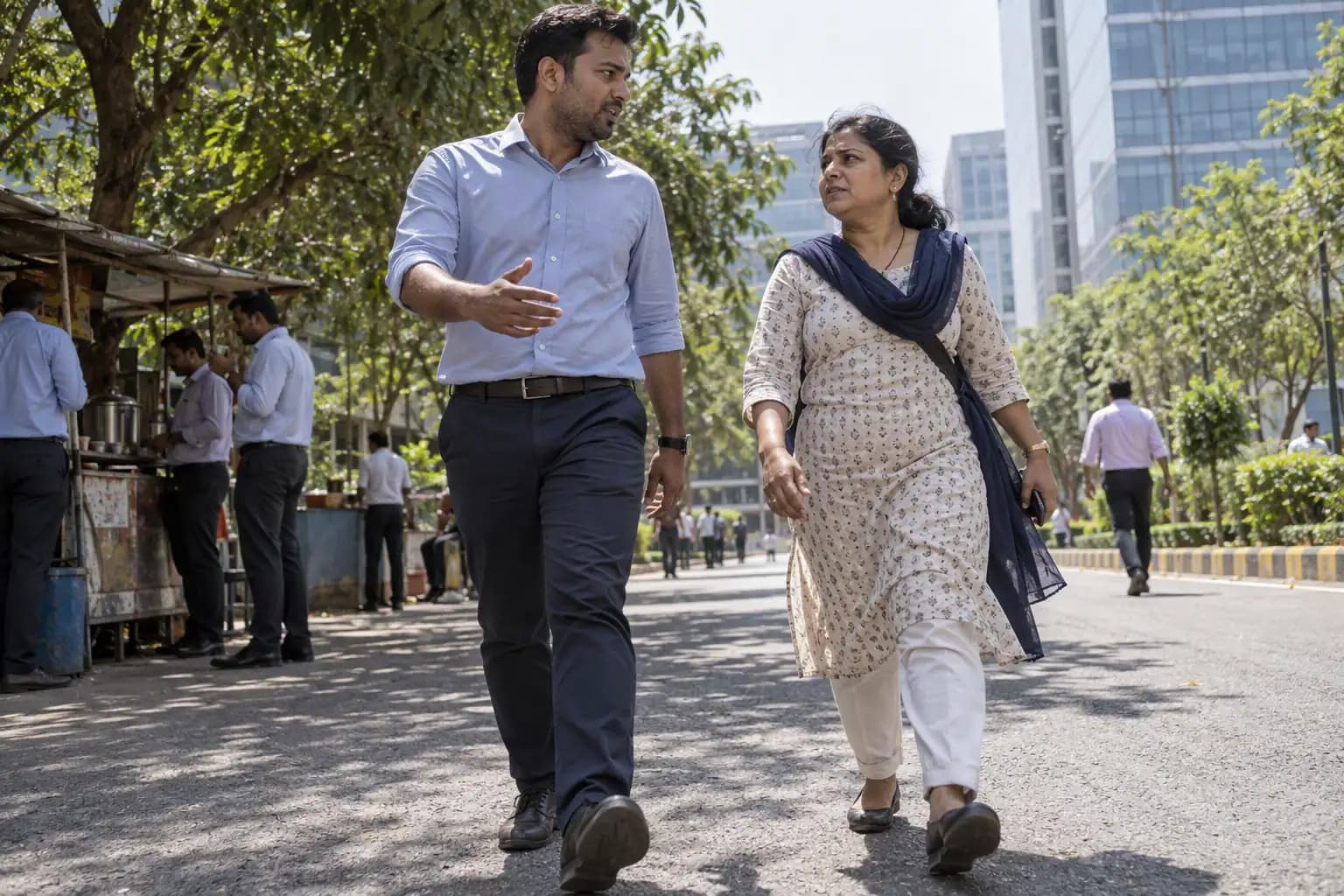
The six weeks is a check-up date. It comes from the routine postnatal visit, and nothing magical happens to the body on day 42. ACOG, whose guidance American obstetricians follow, says women can begin or go back to exercise gradually as soon as it is medically safe, which after an uncomplicated vaginal birth usually means a slow walk in the first week. Ten minutes around the colony park is a fine start.
The forty days of rest make sense for healing and for feeding. Staying flat in bed for all of it does not, and the evidence offers no support for that part of the custom. Slow rounds of the house, a few times a day, keep the blood moving and rarely start an argument with the elders.
Fitness reels make the opposite mistake, with "snap back" workouts at three weeks. The WHO's 2020 activity guidelines mention women after childbirth by name and give them the same target as other adults, 150 to 300 minutes a week, to be reached gradually. Brisk walks most days and two short strength sessions a week, done while the baby naps, get you there over a couple of months.
- Week 1-6Walk and rest
Short walks, pelvic floor.
- Week 6Doctor's check
Clearance to do more.
- Month 2-6Build up
Brisk walks, two strength days.
- Month 6-12Settle in
150 minutes a week.
- 150Minutes a week, from WHO
Weight loss after a C-section: what changes
After a C-section the steps are the same as after a normal birth.
Read the full section
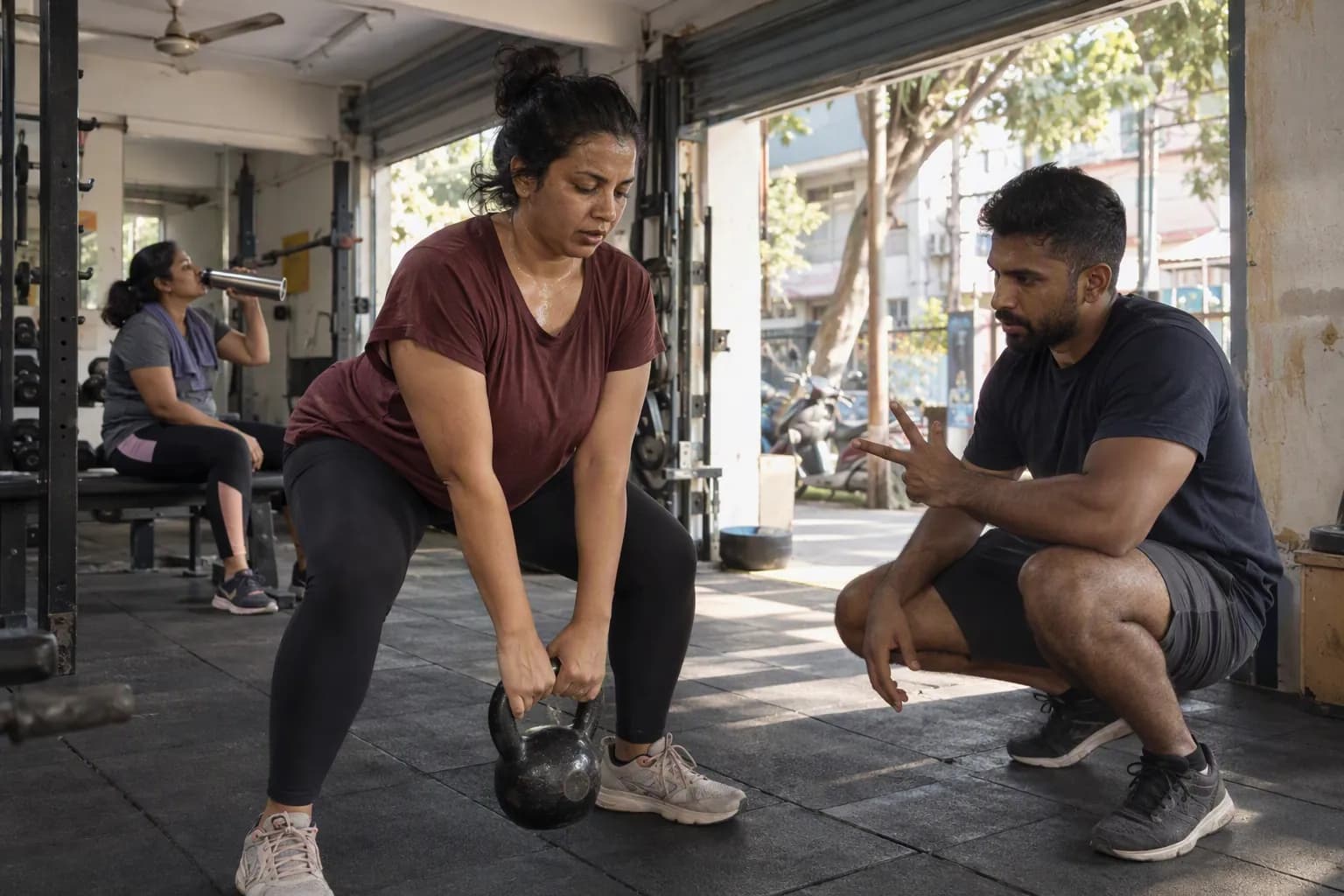
The difference is that the first six weeks belong to the wound, so walking starts early and anything that strains the belly waits for your obstetrician's check.
ACOG's guidance on exercise after childbirth covers caesarean births and asks for a gradual return when it is medically safe, which in practice means your own doctor's word at the check-up. Walking is the one thing to begin straight away, since it lowers the risk of clots and gets the gut moving.
Then there is the pooch. Many women find a soft bulge down the middle of the tummy that will not go, and assume it is fat. Often it is diastasis recti, a gap between the two halves of the six-pack muscle. A Norwegian study of 300 first-time mothers found it in 60% at six weeks and in about a third still at a year, more often in women who lifted heavy things twenty-odd times a week. It is ordinary, not a complication, and a women's health physiotherapist can measure the gap with two fingers and teach you what to do about it.
- 60%Have a separation at six weeks
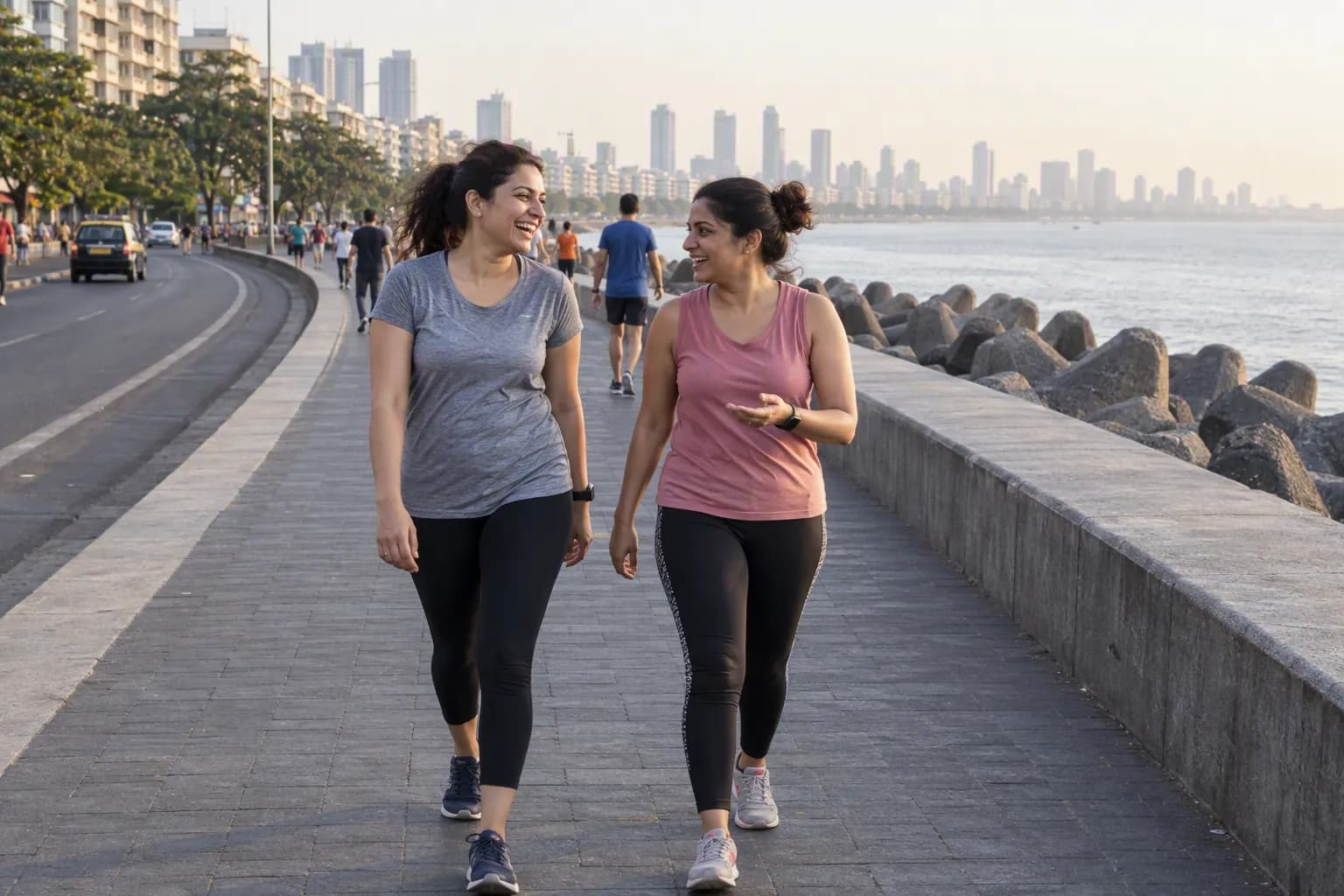
Does breastfeeding help you lose weight?
A little.
Read the full section
Exclusive breastfeeding for at least three months went with about 1.5 kg more weight lost by the end of the first year in one large study, and many studies find no clear link at all.
Making milk does use energy, which is why the idea is so popular. But appetite rises to match, and a nursing mother who is hungry at 2 a.m. is not going to reach for cucumber. Jarlenski's analysis of American mothers found that exclusive breastfeeding for three months or more meant 3.2 lb, roughly 1.5 kg, more loss at twelve months. Breastfeeding that was mixed with formula made no measurable difference.
A systematic review by Neville and colleagues went further. Of the studies they could find, 27 (63%) reported little or no link between breastfeeding and weight change, although four of the five best-designed ones did find a positive association. Their honest conclusion was that breastfeeding by itself should not be sold as a weight plan.
Breastfeed for your baby's sake, and treat any weight it takes off as a small bonus. The trials of diet and exercise after childbirth found that a modest calorie cut did not reduce milk supply, so you do not have to choose between the two.
| Finding | |
|---|---|
| Exclusive, 3+ months | 1.5 kg more lost by month 12 |
| Mixed feeding | No measurable difference |
| Studies reviewed | 27 (63%) found little or no link |
- 1.5 kgExtra loss with exclusive feeding

Ghee laddoos, panjiri and the confinement diet
Every region has its version, and every version is built for energy.
Read the full section
Gond laddoos in Punjab, methi laddoos in Gujarat, panjiri across the north, ellu urundai in Tamil Nadu: the new mother goes home with a tin of something rich, usually made by her own mother.
There is nothing wrong with that tin in the first weeks, when you are healing and feeding through the night. The trouble is that the tin keeps getting refilled. The table here comes straight from the Indian Food Composition Tables, and it explains why. A hundred grams of dry coconut carries over 600 kcal, almonds and cashews are close behind, and the ghee and jaggery that hold a laddoo together come on top of that.
By month five, two or three laddoos a day with a glass of full-cream milk and badam add up to an extra meal that nobody counts as food. ICMR-NIN's dietary guidelines describe exactly this, noting that women tend to gain weight after childbirth from less activity and extra calories.
Arguing with your mother about it rarely works. Accepting the tin and eating one with breakfast, instead of after dinner, usually does, and once the confinement weeks are over the evening dry-fruit milk can quietly become plain milk or a bowl of curd.
| kcal | Protein | |
|---|---|---|
| Dry coconut | 624 | 7.3 g |
| Almonds | 609 | 18.4 g |
| Cashews | 583 | 18.8 g |
| White til | 520 | 21.7 g |
| Dry dates | 311 | 2.4 g |
| Wheat atta | 320 | 10.6 g |
- 600+kcal in 100 g dry coconut
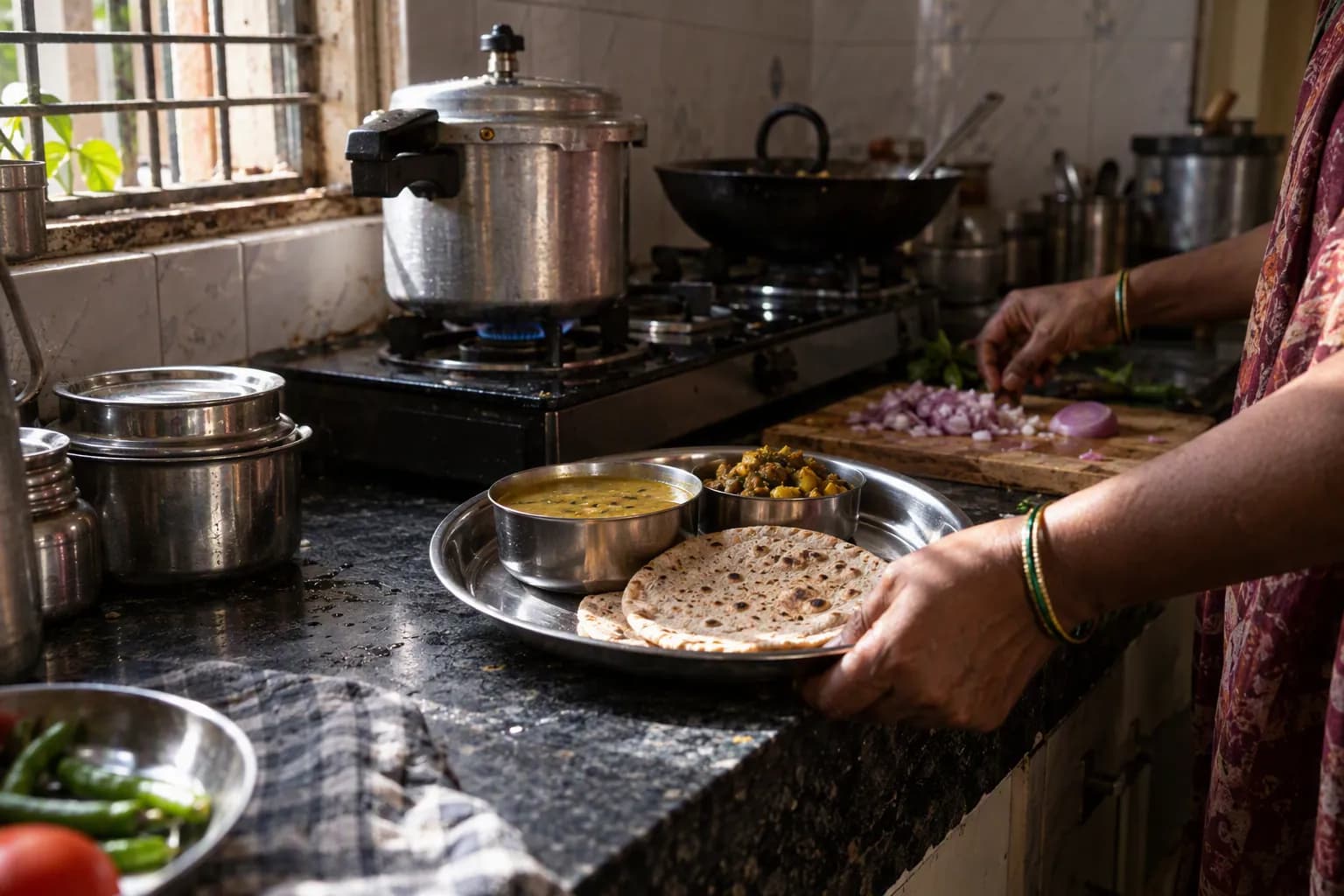
What to eat to lose weight after delivery
Regular meals with protein and vegetables at the centre, smaller portions of rice and rotis, and no crash diets.
Read the full section
Of everything tried in trials, diet together with exercise did best, and it was the only approach that kept muscle.
The Cochrane review of 12 trials and 910 women after childbirth settles a few arguments. Women who changed their diet and exercised lost about 1.93 kg more than those given usual care, and diet alone gave 1.70 kg. Exercise without any change in eating did almost nothing, 0.10 kg, which surprises the many mothers who sign up for a gym first. Diet alone also took some fat-free mass, mostly muscle, while diet with exercise held on to it.
On an Indian plate this looks unremarkable: a katori of dal or some paneer, eggs, chicken or fish at lunch and dinner, a bowl of curd in the day, and half the plate as sabzi, with rotis or rice cut back to what you actually need. ICMR-NIN asks for slow, steady weight reduction and warns that extreme approaches can harm health, which counts for more while you are feeding a baby.
Muscle is the part people forget. Losing weight without it leaves you lighter and weaker at the very age when you are lifting a child forty times a day.
- 910Women across 12 trials
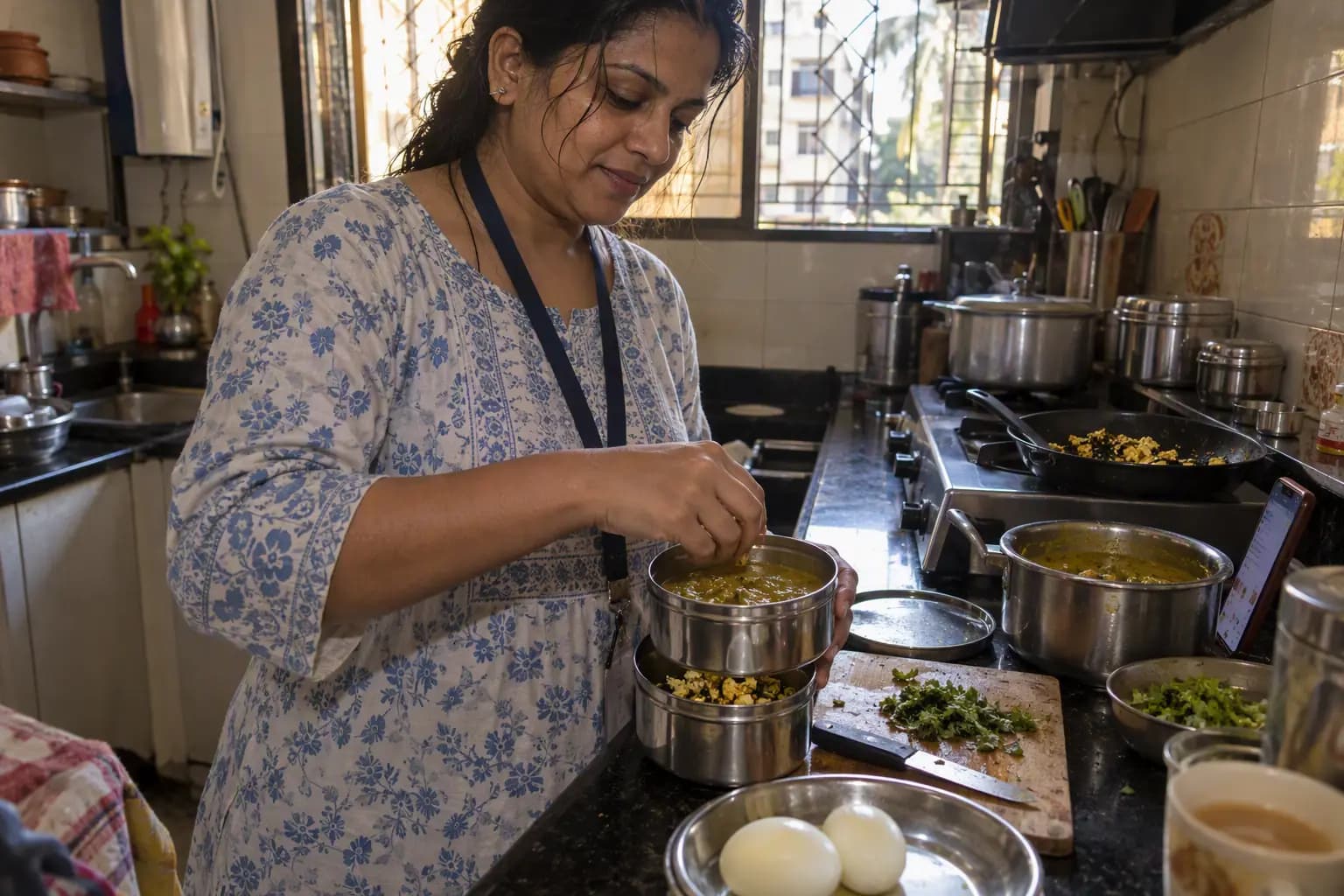
Sleep, night feeds and the weight that stays
Mothers sleeping five hours or less a day at six months were about three times as likely to keep 5 kg or more at a year.
Read the full section
Sleep is hard to fix with a baby, but every extra hour you can claw back seems to count.
Gunderson's team followed 940 mothers in Boston. At six months after birth, 12% were sleeping five hours a day or less. Compared with women sleeping seven hours, they had 3.13 times the odds of carrying at least 5 kg extra on their baby's first birthday, even after allowing for diet, activity and weight gained in pregnancy. Six hours or eight hours made no difference against seven.
Short sleep raises appetite and the pull towards sweet, quick food, which anyone who has eaten biscuits at 4 a.m. over a feed will recognise. The Indian joint family can be a real help here: a grandmother or a husband taking the early morning shift with expressed milk, or the baby after the last feed, can give a mother one longer block. ICMR-NIN's own guidance asks for six to eight hours a night to avoid unhealthy eating.
If you cannot get more sleep, nap when the baby naps at least once a day, and keep easy protein snacks within reach so the night-time choice is roasted chana instead of rusks.
- 3.13xOdds with 5 hours' sleep
When the weight will not move: thyroid, sugar and iron
If you are doing the work and the scale is stuck, get tested before you blame yourself.
Read the full section
About one woman in twenty gets thyroiditis in the year after birth, and gestational diabetes raises the later risk of type 2 diabetes about seven-fold.
Postpartum thyroiditis is easy to miss because its symptoms look exactly like new motherhood. Stagnaro-Green's review puts it at 5.4% of women in the first year. Almost half of them only ever have the underactive phase, with tiredness, dry skin, a foggy memory and weight that will not shift, and between 20% and 40% end up with a thyroid that stays underactive. A TSH test sorts it out in a day.
Gestational diabetes deserves more follow-up than it usually gets. Bellamy's meta-analysis of 675,455 women found it raised the later risk of type 2 diabetes 7.43 times. If you had it, ask for a sugar test a few months after delivery and an HbA1c every year or so.
Low haemoglobin is the third to rule out. ICMR-NIN asks for the iron-folic acid supplement to continue through breastfeeding for a reason, and a mother short of iron is breathless on the stairs and in no mood for a brisk walk.
| How common | Test | |
|---|---|---|
| Postpartum thyroiditis | 5.4% of mothers | TSH |
| After gestational diabetes | 7.4x later diabetes risk | HbA1c, fasting sugar |
| Low iron | Common after delivery | Haemoglobin |
- 5.4%Get thyroiditis after birth
When a doctor-led plan makes sense after pregnancy
The first birthday is a good moment to take stock.
Read the full section
If feeding has stopped or slowed and your BMI is still 25 or more, or your waist 80 cm or more, a doctor-led plan is worth considering.
Those lines are lower than the ones on Western websites, and deliberately so. The Indian consensus led by Dr Anoop Misra counts a BMI of 23 to 24.9 as overweight and 25 or more as obesity, and a woman's waist of 80 cm or more as abdominal obesity. Plenty of women who still call it baby weight have crossed both by then, often with a fasting sugar or a cholesterol figure that has started to drift, and usually without anyone in the family having noticed.
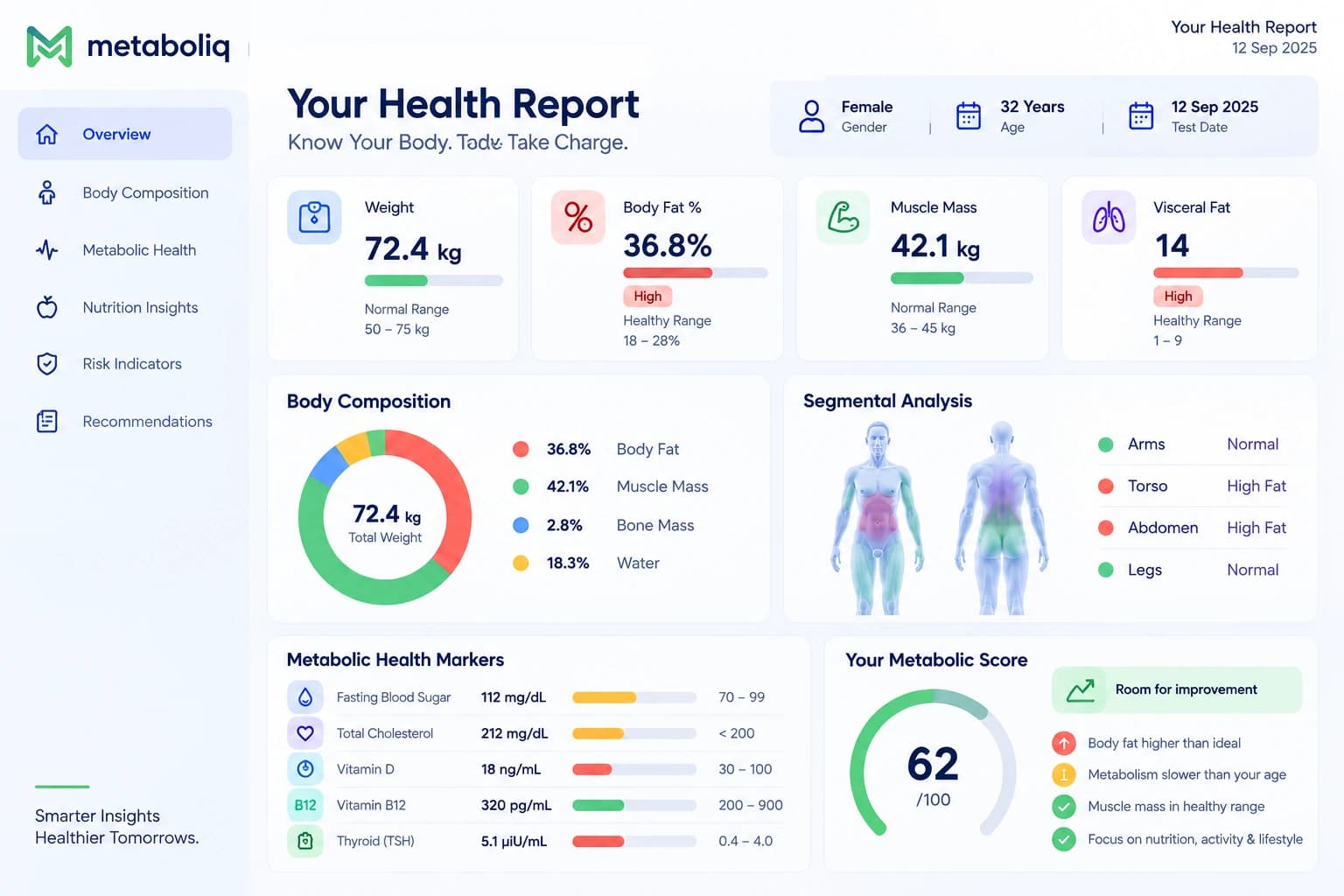
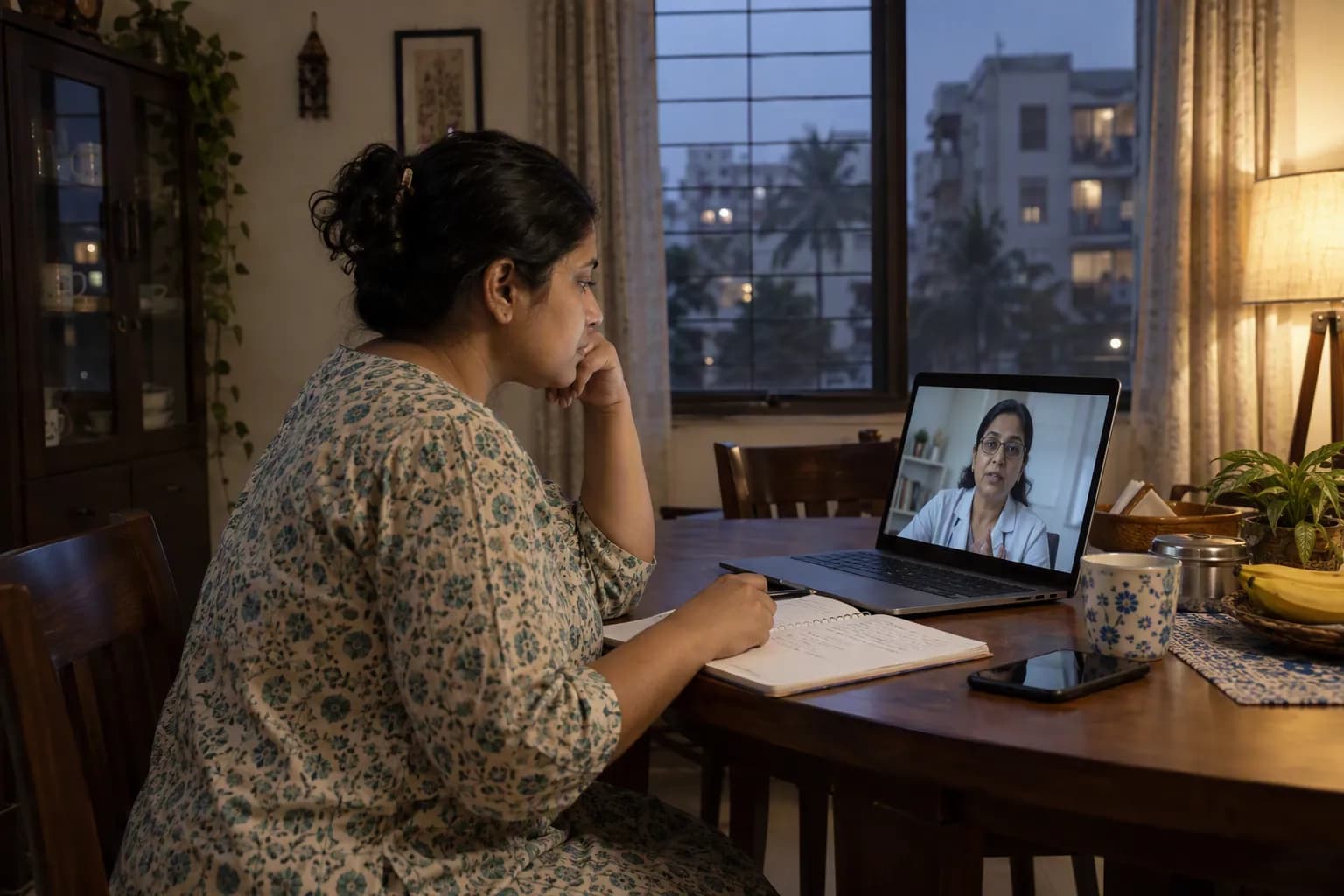
If that is you, start with the blood rather than another diet. Metaboliq's programme begins with a home blood test covering thyroid, sugar, liver, cholesterol, iron and vitamins, and a doctor goes through it with you knowing you had a baby recently. The plan is then about fat loss with your muscle intact, with protein targets and strength work you can do at home, and the longer aim is to lose up to 20% of your body weight — and keep your muscle.
If you are still breastfeeding, medical treatment for weight is usually off the table until you stop, and a doctor who has examined you makes that call in any case.
- 80 cmWaist line for Indian women
Every source, in full (15)
[1] Endres LK, et al. Postpartum weight retention risk factors and relationship to obesity at 1 year
Obstetrics & Gynecology, 2015. Among 774 women followed after birth, about 75% were heavier one year postpartum than before pregnancy; 47.4% kept more than 10 lb (about 4.5 kg) and 24.2% more than 20 lb (about 9 kg). Breastfeeding at 6 months and moderate exercise weakened the risk.
Read the source[2] Rooney BL, Schauberger CW. Excess pregnancy weight gain and long-term obesity: one decade later
Obstetrics & Gynecology, 2002. 540 women weighed again a mean 8.5 years after delivery: those who had lost all their pregnancy weight by 6 months were 2.4 kg heavier than before pregnancy, against 8.3 kg for those who had kept weight at 6 months. Breastfeeding and aerobic exercise went with smaller gains.
Read the source[3] ACOG Committee Opinion No. 804. Physical activity and exercise during pregnancy and the postpartum period
Obstetrics & Gynecology, 2020. Women can begin or resume exercise after childbirth, gradually and as medically safe, including after a caesarean delivery; activity speeds recovery and may help prevent postpartum depression.
Read the source[4] Bull FC, et al. World Health Organization 2020 guidelines on physical activity and sedentary behaviour
British Journal of Sports Medicine, 2020. Adults should do 150 to 300 minutes of moderate activity a week, or 75 to 150 minutes of vigorous activity, plus muscle-strengthening work; the guidance now includes women after childbirth.
Read the source[5] ICMR-National Institute of Nutrition. Dietary Guidelines for Indians
ICMR-NIN, Hyderabad, 2024. Notes the tendency of women to gain weight after childbirth from less activity and extra calories; advises slow, steady weight reduction, 6-8 hours of sleep, a 30-45 minute brisk walk, fresh fruit rather than juice, buttermilk, coconut or lemon water over soft drinks, and added sugar under 5% of energy.
Read the source[6] Sperstad JB, et al. Diastasis recti abdominis during pregnancy and 12 months after childbirth
British Journal of Sports Medicine, 2016. Separation of the abdominal muscles was found in 60.0% of women 6 weeks after birth, 45.4% at 6 months and 32.6% at 12 months; heavy lifting 20 or more times a week raised the odds.
Read the source[7] Jarlenski MP, et al. Effects of breastfeeding on postpartum weight loss among U.S. women
Preventive Medicine, 2014. Exclusive breastfeeding for at least three months went with 3.2 lb (about 1.5 kg) more weight loss at 12 months postpartum; breastfeeding that was not exclusive made no significant difference. The authors call the effect small.
Read the source[8] Neville CE, et al. The relationship between breastfeeding and postpartum weight change: a systematic review and critical evaluation
International Journal of Obesity, 2014. Of the studies reviewed, 27 (63%) found little or no link between breastfeeding and weight change, though four of the five highest-quality studies found a positive one; the evidence challenges the common belief that breastfeeding by itself takes the weight off.
Read the source[9] Amorim Adegboye AR, Linne YM. Diet or exercise, or both, for weight reduction in women after childbirth
Cochrane Database of Systematic Reviews, 2013. Across 12 trials (910 women), diet plus exercise led to 1.93 kg more weight loss than usual care and diet alone 1.70 kg, while exercise alone made no significant difference (0.10 kg). Diet alone reduced fat-free mass; the combination preserved it. Breastfeeding was not harmed.
Read the source[10] Longvah T, Ananthan R, Bhaskarachary K, Venkaiah K. Indian Food Composition Tables 2017
National Institute of Nutrition (ICMR), Hyderabad, 2017. Table 1, Proximate Principles and Dietary Fibre: energy, protein, fat and carbohydrate per 100 g edible portion, the mean of the regions sampled. Every per-100 g food figure on this page comes from it.
Read the source[11] Cava E, Yeat NC, Mittendorfer B. Preserving healthy muscle during weight loss
Advances in Nutrition, 2017. Weight loss removes some muscle along with fat; adequate protein and exercise, resistance exercise in particular, are the best-supported ways to limit the loss and keep strength.
Read the source[12] Gunderson EP, et al. Association of fewer hours of sleep at 6 months postpartum with substantial weight retention at 1 year postpartum
American Journal of Epidemiology, 2008. Among 940 mothers, those sleeping 5 hours a day or less at 6 months postpartum had 3.13 times the odds of keeping 5 kg or more at one year, compared with 7 hours (6 hours: 0.99; 8 hours or more: 0.94).
Read the source[13] Stagnaro-Green A. Approach to the patient with postpartum thyroiditis
Journal of Clinical Endocrinology & Metabolism, 2012. Postpartum thyroiditis affects 5.4% of women in the year after birth; 48% have only an underactive phase, with fatigue and dry skin, and 20-40% go on to permanent hypothyroidism.
Read the source[14] Bellamy L, et al. Type 2 diabetes mellitus after gestational diabetes: a systematic review and meta-analysis
The Lancet, 2009. Across 20 studies and 675,455 women, those who had gestational diabetes had 7.43 times the risk of later type 2 diabetes of women whose pregnancy sugar was normal.
Read the source[15] Misra A, et al. Consensus statement for diagnosis of obesity, abdominal obesity and the metabolic syndrome for Asian Indians and recommendations for physical activity, medical and surgical management
Journal of the Association of Physicians of India, 2009. Set the Indian adult bands: BMI 18.0-22.9 normal, 23.0-24.9 overweight and 25 or more obesity, with abdominal obesity at a waist of 90 cm or more in men and 80 cm or more in women.
Read the source