Skip to content
metaboliq

Chicken breast protein per 100 g, from IFCT 2017

  • 21.8 g protein in 100 g raw, skinless.
  • 168 kcal per serving, from IFCT 2017.
  • Protein anchor on a plate built to lose fat and keep muscle.
Book my health assessment

Takes 2 minutes to book. A doctor makes every decision with you.

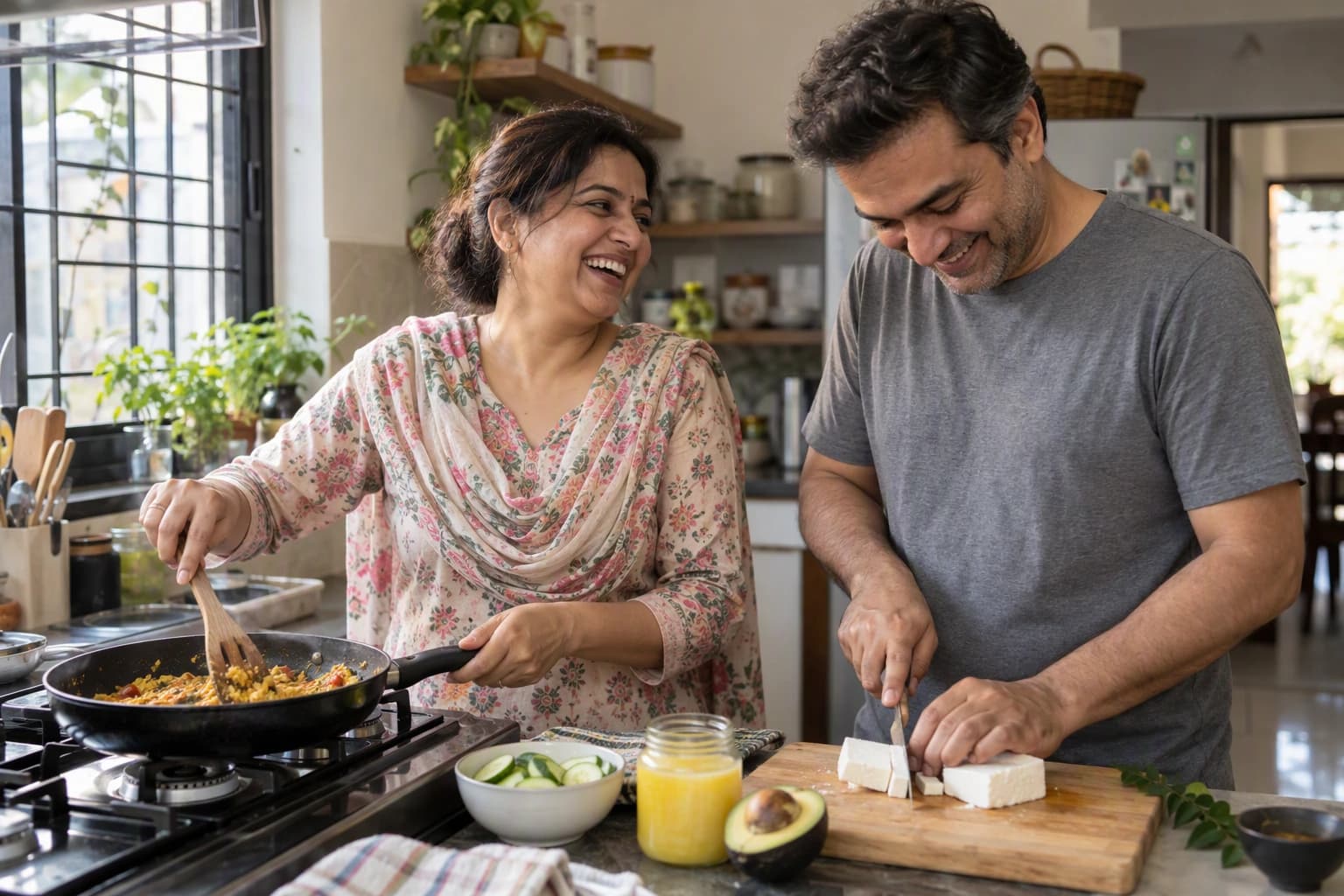
A couple laugh while cooking an egg bhurji and paneer breakfast together

100 g of raw skinless chicken breast has 21.8 g of protein and 168 kcal, per IFCT 2017. That is 13 g of protein per 100 kcal, more than paneer or eggs, which makes chicken breast one of the most efficient proteins for a weight-loss plan, ideal while you eat less.

Chicken breast nutrition, per serving and per 100 g

Chicken breast: IFCT 2017 figures
NutrientPer servingPer 100 g
Energy168 kcal168 kcal
Protein21.8 g21.8 g
Carbohydrate (available)——
Dietary fibre——
Fat9 g9 g

Serving: 100 g raw, skinless, weighed raw as IFCT reports it. IFCT 2017 food code N003, "Chicken, poultry, breast, skinless", the mean of 5 regions sampled. IFCT does not report glycaemic index, so this page prints none.

The verdict on chicken breast

Protein anchor

Build a meal around it: it brings at least 6 g of protein for every 100 kcal.

  • 13 g of protein for every 100 kcal.
  • One serving gives 21.8 g of the roughly 58 g of protein a day ICMR-NIN's RDA sets for a 70 kg adult.

How chicken breast fits a plan that loses fat and keeps muscle

Protein is what protects muscle in a calorie deficit, and chicken breast delivers a lot of it for few calories. A 100 g serving is 21.8 g of the roughly 58 g a day ICMR-NIN's RDA sets for a 70 kg adult; trials of weight loss with higher protein often aim above that while calories are cut.

IFCT's figure for skinless breast includes 9 g of fat per 100 g, more than many international tables show, so trim visible fat and cook with a measured teaspoon of oil. Thigh is juicier but carries more fat and fewer grams of protein, as the table shows.

Chicken breast in an Indian kitchen

Ask the butcher for boneless, skinless breast and trim any visible fat at home. Marinate in hung curd, ginger-garlic paste, lemon and spices for an hour, then grill, air-fry or cook on a covered tawa; tandoori-style keeps it moist without butter. Shred leftover breast into a roll, a salad or a poha for a quick protein top-up. In curries, cook the masala first with a teaspoon of oil and simmer the chicken in it rather than frying the pieces separately.

Pair it, or swap it

Tandoori or grilled chicken with a big salad and one roti, or chicken in a clear soup with vegetables, is a lean, high-protein meal. Chicken with dal-rice spreads protein across the plate.

Worth knowing

Butter chicken, fried chicken and creamy gravies add more calories than the chicken. Raw weight shrinks by about a quarter when cooked, so 100 g raw is a smaller-looking piece on the plate.

Chicken breast against similar foods

Per 100 g, IFCT 2017
FoodEnergyProteinFibre
Chicken breast168 kcal21.8 g—
Chicken thigh, skinless200 kcal18.2 g—
Mutton (goat leg)160 kcal22.1 g—
Rohu fish102 kcal19.7 g—

Chicken breast: questions people ask

How much protein is in 100 g of chicken?

IFCT 2017 gives 100 g of raw skinless chicken breast 21.8 g of protein and 168 kcal. Skinless thigh has less protein and more fat.

How much protein is in 250 g of chicken?

Using IFCT 2017's breast figure, 250 g of raw skinless breast holds about two and a half times the 21.8 g in 100 g.

Is chicken breast good for weight loss?

Yes. It is one of the leanest, most protein-dense foods available, which helps keep muscle while calories are cut. Grill, roast or curry it with little oil.

Sources

  1. [1] Longvah T, Ananthan R, Bhaskarachary K, Venkaiah K. Indian Food Composition Tables 2017

    National Institute of Nutrition (ICMR), Hyderabad, 2017. Table 1, Proximate Principles and Dietary Fibre: energy, protein, fat, available carbohydrate and dietary fibre per 100 g edible portion, the mean of the regions sampled. Every figure on this page comes from it.

    Read the source
  2. [2] ICMR-National Institute of Nutrition. Dietary Guidelines for Indians

    ICMR-NIN, Hyderabad, 2024. Recommends combining cereals with pulses in a 3:1 ratio for protein quality, meeting vegetarian protein needs from pulses, beans and milk, keeping added sugar under 5% of energy and salt to 5 g a day, and slow, steady weight reduction.

    Read the source
  3. [3] ICMR-NIN Expert Group on Nutrient Requirements for Indians. Recommended Dietary Allowances and Estimated Average Requirements

    ICMR-NIN, Hyderabad (brief note), 2020. Sets the protein RDA for healthy Indian adults at 0.83 g per kg of body weight a day, and 1 g per kg for people on a cereal-based diet with lower-quality protein.

    Read the source
  4. [4] Wycherley TP, et al. Effects of energy-restricted high-protein, low-fat compared with standard-protein, low-fat diets: a meta-analysis of randomized controlled trials

    American Journal of Clinical Nutrition, 2012. In energy-restricted trials, higher-protein diets produced slightly greater fat loss and better preservation of fat-free mass than standard-protein diets.

    Read the source
  5. [5] Shukla AP, et al. Food Order Has a Significant Impact on Postprandial Glucose and Insulin Levels

    Diabetes Care, 2015. Eating vegetables and protein before carbohydrate in the same meal produced lower post-meal glucose and insulin than the reverse order, in a small crossover study.

    Read the source

Your plate, planned by a doctor and a dietitian.

The right portions depend on your blood sugar, thyroid, lipids and kidneys, which only a blood panel read by a doctor shows.

Book my health assessment

Then the home test, ₹999.

Takes 2 minutes to book. A doctor makes every decision with you.

Book my health assessment

Takes 2 minutes to book. A doctor makes every decision with you.