metaboliq
What changes in your body after 40
Two things change for most people in their forties: they carry a little less muscle each year, and they move less.
Read the full section
Metabolism, measured properly, changes very little until about 60.
Herman Pontzer's team at Duke University pooled measurements of daily energy use from 6,421 people aged 8 days to 95 years. All were made with doubly labelled water, which tracks the calories a person burns over one or two weeks of normal life. After allowing for body size, energy use held steady from about 20 to 60 and fell after that.
Ian Janssen's group in Canada scanned 468 adults with whole-body MRI. Muscle made up a smaller share of body weight from the third decade on, and the absolute amount fell noticeably from the end of the fifth decade, mostly from the thighs and calves. The men in the study carried about 33 kg of muscle and the women about 21 kg.
In practice this means the same rice and roti as at 30, fewer steps in a day spent at a desk or in a car, and a slow loss of muscle that lowers the calories burned at rest and makes blood sugar harder to control. Muscle can be built back at 45 or 65 with protein and strength work, which is where the rest of this page goes.
- 6,421people measured, ages 0 to 95
Weight loss after 40 for women: the menopause years
Sunita, 47, a bank cashier in Bhopal, is a composite of the women who write to us.
Sources: [3], [4], [5], [6], [7]
Read the full section
She has gained 7 kg since 42, almost all of it at the waist, which now measures 89 cm. Her periods have become irregular, and she sleeps badly.
Her timing is typical. An Indian Menopause Society survey across 21 chapters put the average age of menopause in India at 46.2, about five years earlier than in Western women. The SWAN study in the United States, which scanned women every year through this stage, found that fat built up twice as fast from the start of the transition, while lean mass began to fall, until about two years after the last period. Another four-year study found that only the women who became postmenopausal gained visceral fat, the deep belly fat tied to diabetes and heart disease.
The International Menopause Society's review adds one fair point: the menopause does not by itself make women heavier, but the change in hormones is linked with more fat, and more of it on the abdomen. That matches Sunita. Her weight has risen a little, and her waist has risen a lot.
So after 40 the tape measure tells a woman more than the scale. India's line for women is a waist of 80 cm. Sunita is 9 cm past it, and her doctor's first changes were protein at every meal and strength work twice a week, before any cut in food.
- BeforeSteady
Slow, even gain.
- TransitionFat gain doubles
Lean mass starts to fall.
- 2 years afterSettles
Belly fat stays.
- 46.2average menopause age in India
How much protein you need after 40
More than most Indian plates give.
Read the full section
Experts advise at least 1.0 to 1.2 g of protein per kilo of body weight a day for people over 65, and building the habit in your forties makes that easier later.
The PROT-AGE study group, a panel of geriatric and nutrition specialists, set those figures for people over 65, with 1.2 g or more for those who are active or exercising. People with severe kidney disease who are not on dialysis may need less, which is one reason a kidney test comes before any change.
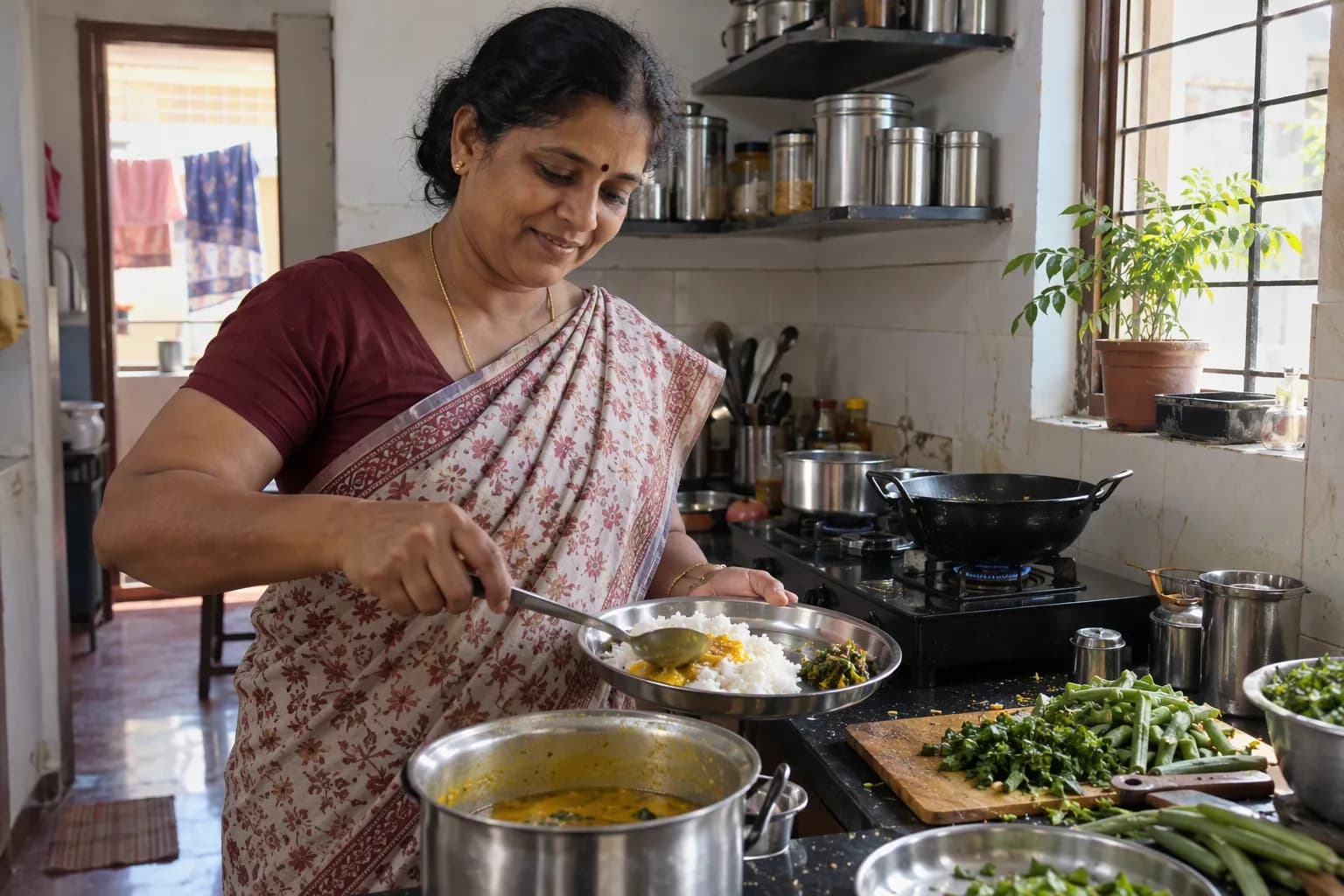
At 76 kg, Sunita's target at 1 g per kilo would be about 76 g a day. Her old day of biscuits, poha, roti-sabzi, namkeen and dal-chawal fell well short of it, mostly because the dal was a thin half-katori and nothing else on the plate carried much protein. Two eggs at breakfast, a full katori of dal with a bowl of curd at lunch, roasted chana at 5 and paneer at dinner close most of the gap.
The chart shows how much protein a usual serving of each food carries, read from the Indian Food Composition Tables. Sunita spreads hers across three meals and a snack rather than leaving it all for dinner.

Intermittent fasting for women over 40: what the trial showed
In a 12-week trial of adults with an average age of 46, eating only between noon and 8 pm took off barely more weight than three meals a day, and it took more muscle from the arms and legs.
Sources: [10]
Read the full section
Ethan Weiss's team at the University of California ran the TREAT trial with 116 adults carrying extra weight. Half ate freely between noon and 8 pm, the classic 16:8 pattern, and half ate three structured meals. After 12 weeks the fasting group had lost 0.94 kg against 0.68 kg, a difference that was not significant. In the 50 people scanned in person, the fasting group lost more lean mass from the arms and legs.
That does not make fasting harmful for everyone. Some people find a shorter eating window helps them stop late-night snacking. But for women over 40, who are already losing muscle, a long fast that pushes protein into one or two meals works against the goal.
If you like an eating window, keep it to about 10 to 12 hours, put protein in the first meal, and pair it with strength work. Anyone with diabetes on sugar-lowering treatment should talk to their doctor before fasting at all.

Strength training after 40
Sunita's doctor asked her to start strength work before she cut a single roti, and the trials support that order.
Read the full section
Women who lifted while losing weight kept their muscle and their resting calorie burn.
Gary Hunter's team at the University of Alabama put 94 women on the same diet until each had lost about 12 kg. In the group that did resistance training, fat-free mass went from 46.9 kg to 47.2 kg. In the aerobic group it fell from 45.4 to 44.4 kg, and in the diet-only group from 47.9 to 46.4 kg. Only the lifting group kept its strength and its resting energy use.
Losing muscle while carrying extra fat has a clinical name, sarcopenic obesity, defined in 2022 by the European clinical nutrition and obesity societies. People with it are weaker and less mobile than people with either problem alone, and years of crash diets after 40 are a common way to get there.
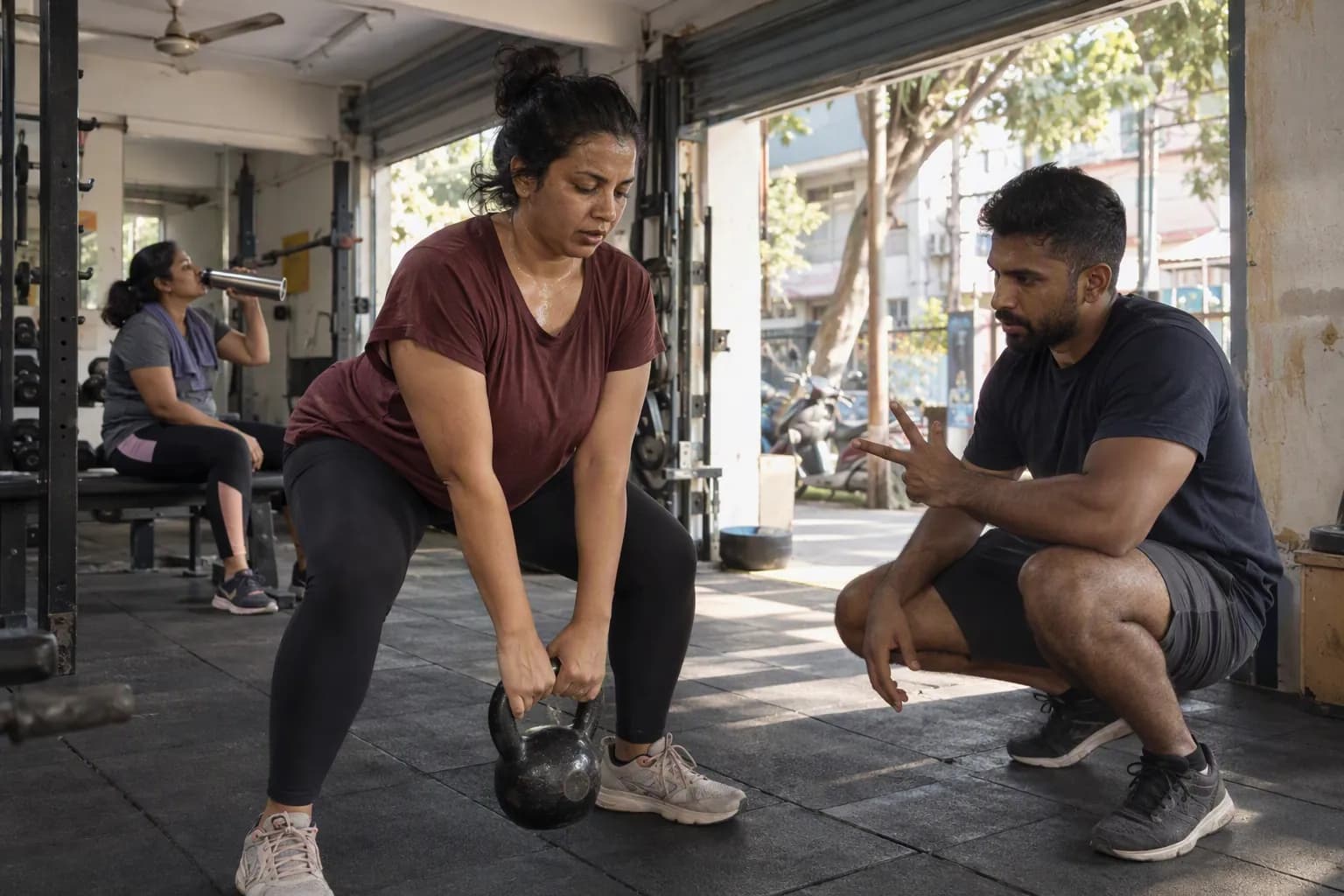
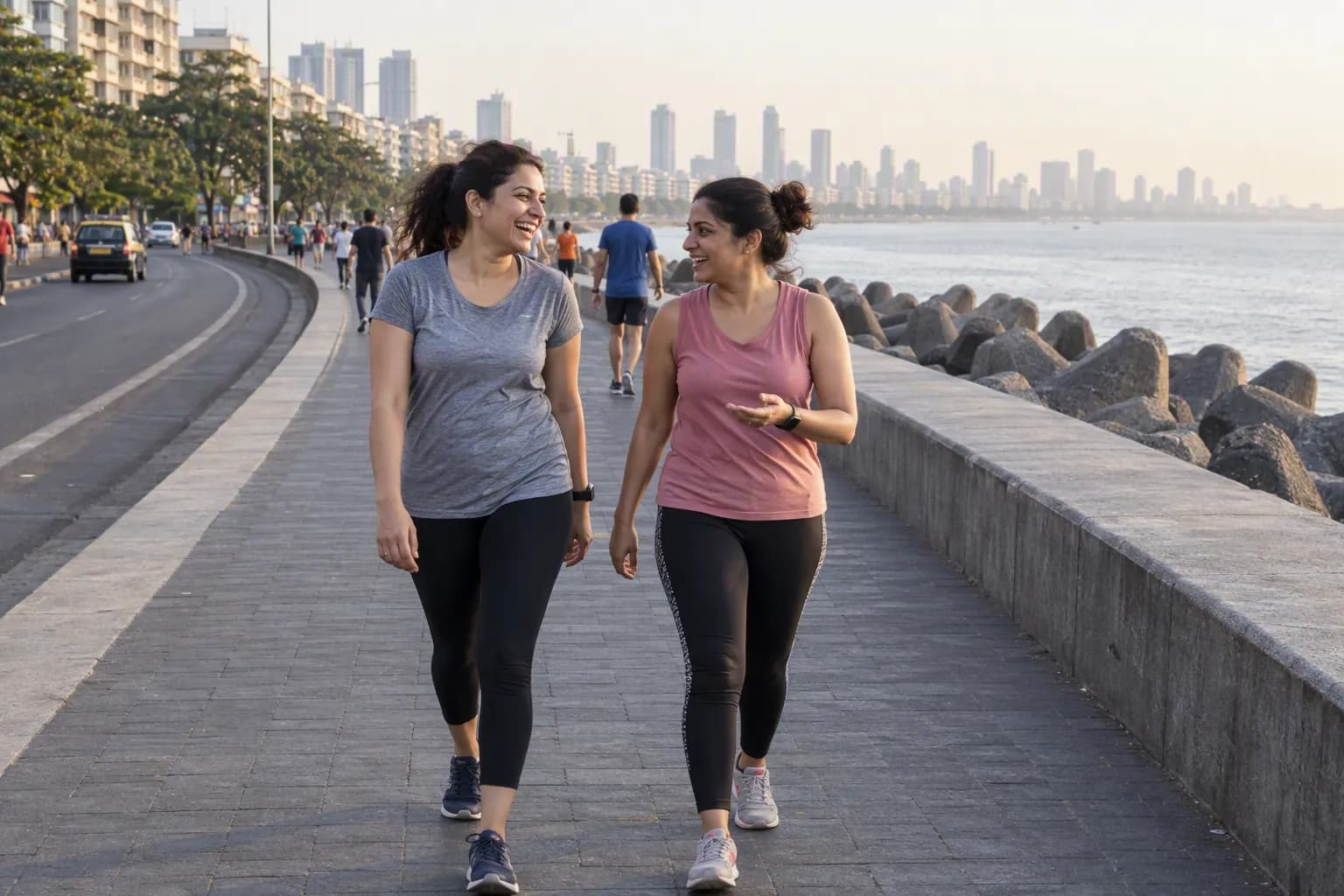
Sunita started at home, twice a week, with chair squats, push-ups against the kitchen wall, step-ups on the bottom stair and rows with a resistance band tied to a door handle. When 12 repetitions felt easy, she added a school bag with a few books in it. She still walks after dinner, which helps her sugar, but the lifting is what protects her muscle.
| Start | End | |
|---|---|---|
| Weights | 46.9 kg | 47.2 kg |
| Aerobic only | 45.4 kg | 44.4 kg |
| Diet only | 47.9 kg | 46.4 kg |
- 2-3strength sessions a week
A day of Indian meals after 40
Sunita's old day was tea with biscuits, poha, three rotis with sabzi at lunch, namkeen at 5 and rice with dal at 9.30.
Read the full section
Her new day keeps the same kitchen and changes the amounts and the order.
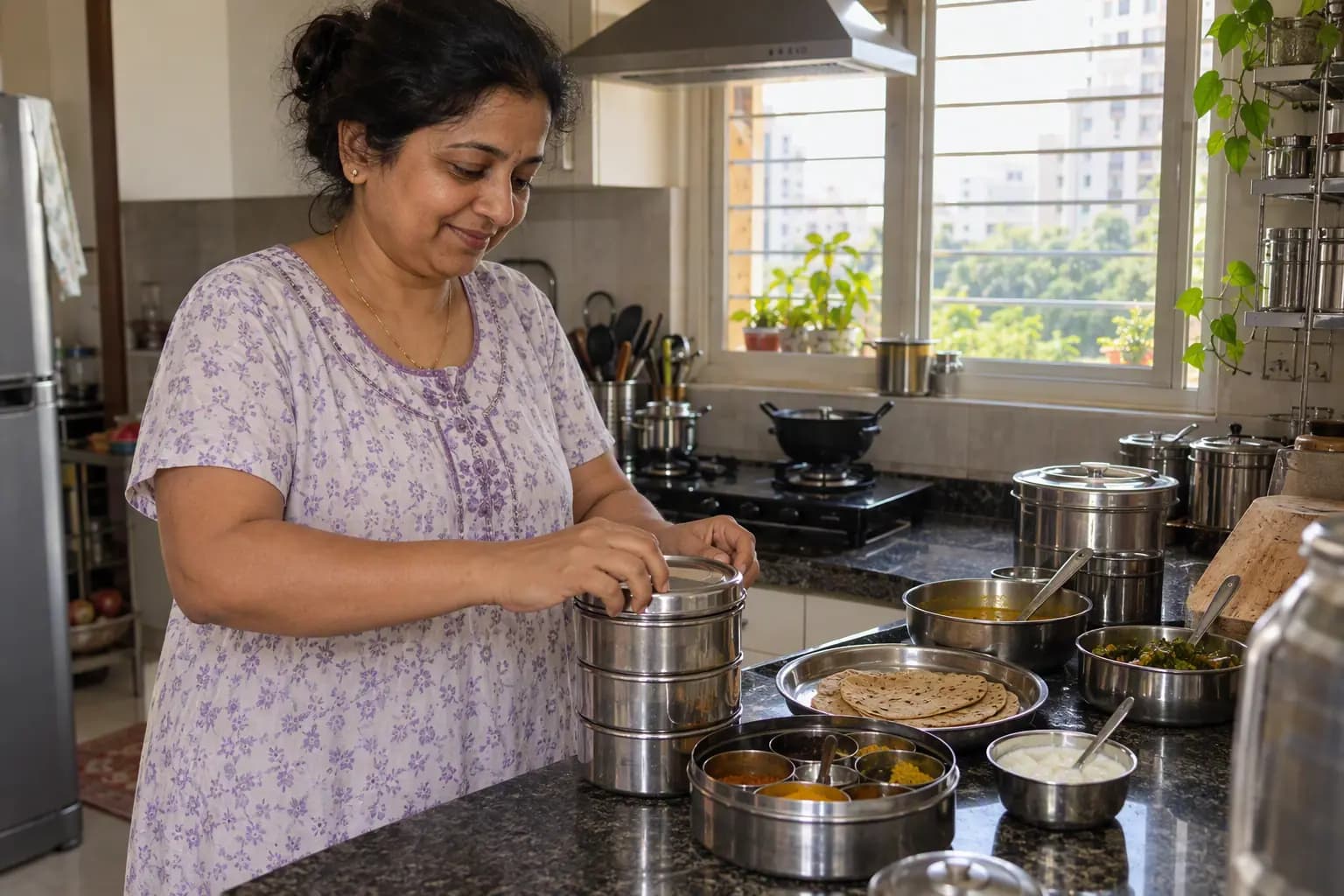
Breakfast is two eggs or a moong dal chilla, with tea she now drinks without sugar. Lunch is two rotis, a full katori of dal, sabzi and a bowl of curd. At 5 pm she has roasted chana or a fruit with a few almonds. Dinner, by 8.30, is paneer or chicken with sabzi and one roti or a small bowl of rice. She walks for 20 minutes after dinner.
None of this needs special food. In three large cohorts followed for years, weight gain tracked chips, potatoes and sugary drinks, and went the other way with vegetables, whole grains, nuts and yoghurt. Sleep counts too: on the same diet, people sleeping 5.5 hours lost less fat and more muscle than when they slept 8.5, so the earlier dinner also gets Sunita to bed earlier.
A plan like Sunita's is the kind Metaboliq's doctors build, and the aim we set with members is "Lose up to 20% of your body weight — and keep your muscle". Results vary; your doctor decides what is right for you. It starts with a home blood test, read with you by a doctor.
| Meal | Protein in it | |
|---|---|---|
| 8 am | Eggs or moong chilla | Eggs, moong |
| 1 pm | 2 rotis, dal, curd | Dal, curd |
| 5 pm | Roasted chana | Chana |
| 8.30 pm | Paneer or chicken | Paneer, chicken |

Hormones, thyroid and the tests to do after 40
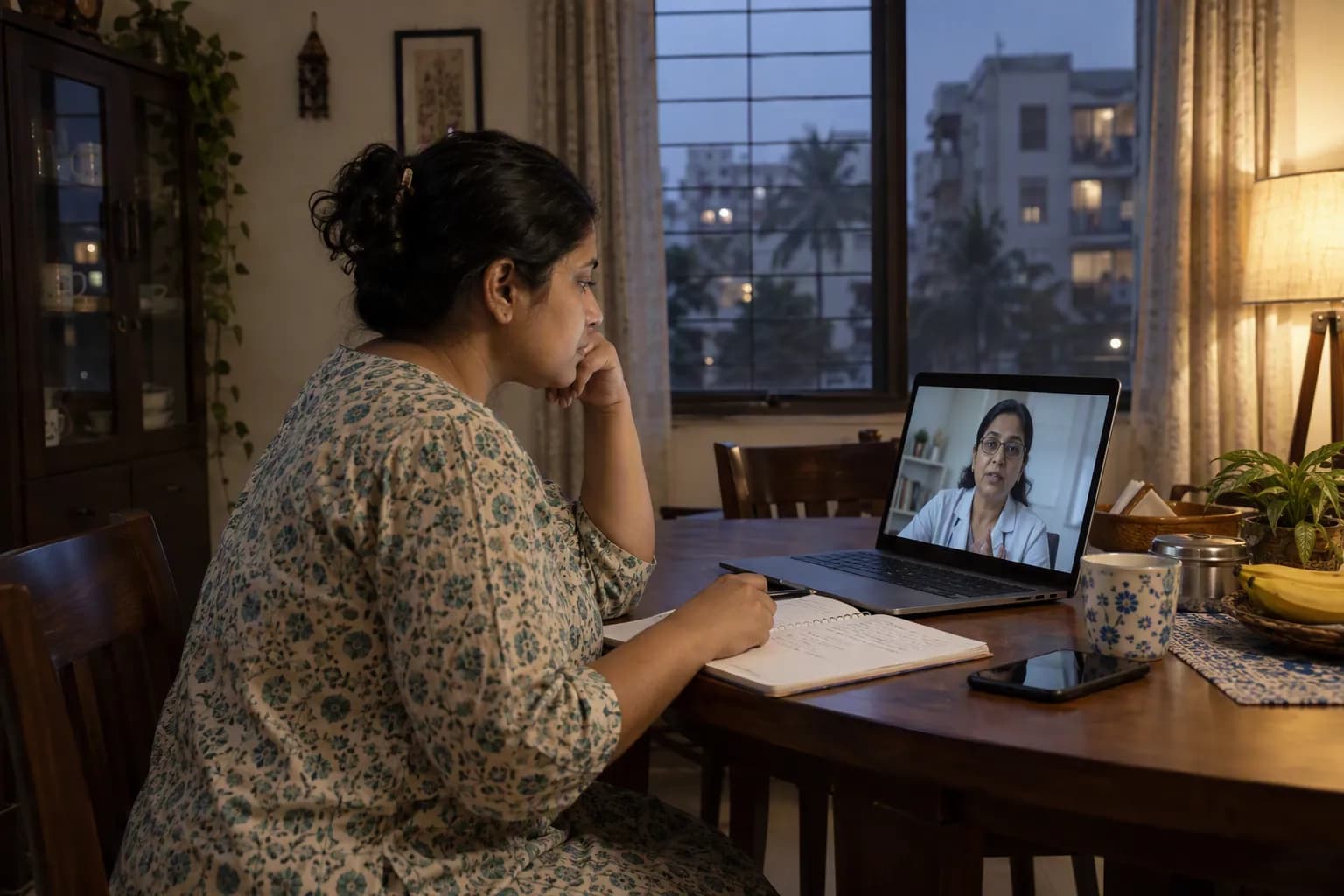
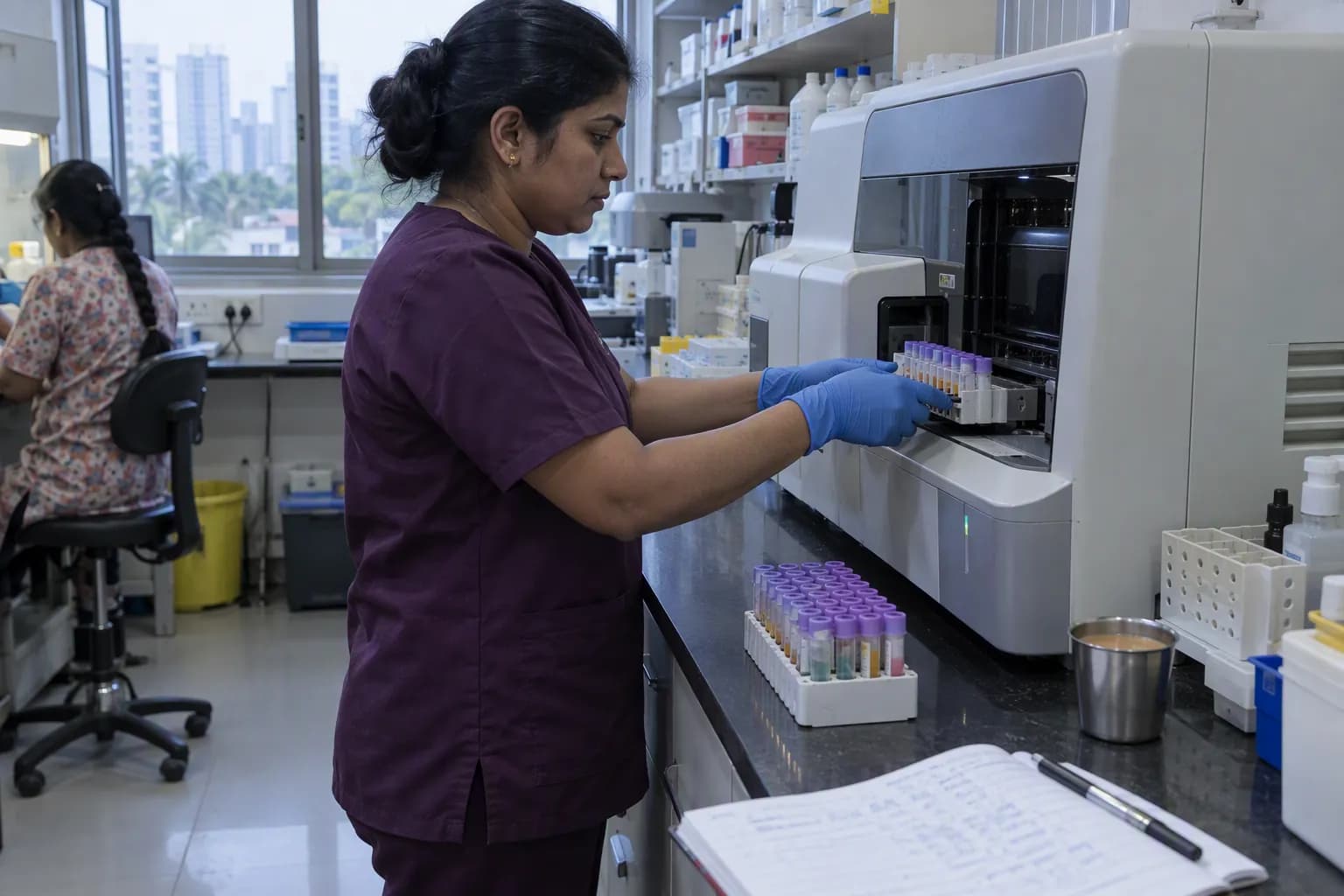
Sunita's first step was a blood test, before any change to her food.
Read the full section
After 40, thyroid, sugar, cholesterol and vitamin D often start to drift, and each of them can change the plan.
She suspected her thyroid, as many women do. A study of 5,360 adults in eight Indian cities found an underactive thyroid in 15.9% of women and 5% of men, and about a third of them did not know. It adds a modest amount of weight, and treating it has only a modest effect on weight. Her test was normal, so the plan went back to her plate, her sleep and her muscle.
Her HbA1c was 5.9, in the prediabetes range, which made cutting rice and sugar more urgent than she had thought. Her vitamin D was low, and her doctor treated it.
Her doctor also kept the pace slow. In Priya Sumithran's study in Melbourne, people who lost an average of 13.5 kg on a very-low-calorie diet still had lower leptin, higher ghrelin and a bigger appetite a year later. A loss of about half a kilo a week, with protein and lifting, is easier to hold on to.
45+ markers, one home blood test
- HbA1c
- Thyroid test
- Fasting insulin
- HOMA-IR
- Fasting blood sugar
- Lipid profile
- Liver function test
- Kidney function test
- 15.9%Indian women with low thyroid
Every source, in full (17)
[1] Pontzer H, et al. Daily energy expenditure through the human life course
Science, 2021. In 6,421 people measured by doubly labelled water from 8 days to 95 years of age, size-adjusted energy use peaks about 50% above adult values at around one year, declines to adult levels by about 20, stays stable from 20 to 60, even in pregnancy, then declines.
Read the source[2] Janssen I, et al. Skeletal muscle mass and distribution in 468 men and women aged 18-88 yr
Journal of Applied Physiology, 2000. Whole-body MRI of 468 adults found muscle as a share of body weight starting to fall in the third decade, and absolute muscle mass falling noticeably from the end of the fifth decade, mostly from the legs; men carried 33.0 kg of muscle against 21.0 kg in women.
Read the source[3] Greendale GA, et al. Changes in body composition and weight during the menopause transition
JCI Insight, 2019. In the SWAN cohort, the rate of fat gain doubled and lean mass began to decline at the start of the menopause transition, continuing until about two years after the final period, while weight rose steadily.
Read the source[4] Lovejoy JC, et al. Increased visceral fat and decreased energy expenditure during the menopausal transition
International Journal of Obesity, 2008. Over four years, only women who became postmenopausal showed a significant rise in visceral fat, alongside falls in sleeping energy expenditure and fat oxidation.
Read the source[5] Davis SR, et al. Understanding weight gain at menopause
Climacteric, 2012. The International Menopause Society's review: weight gain itself cannot be blamed on the menopause transition, but the hormonal change is associated with more total body fat and more abdominal fat.
Read the source[6] Ahuja M. Age of menopause and determinants of menopause age: a PAN India survey by IMS
Journal of Mid-life Health, 2016. An Indian Menopause Society survey across 21 chapters found the average age of menopause in Indian women was 46.2 years, against about 51 in Western women.
Read the source[7] Misra A, et al. Consensus statement for diagnosis of obesity, abdominal obesity and the metabolic syndrome for Asian Indians and recommendations for physical activity, medical and surgical management
Journal of the Association of Physicians of India, 2009. Set the Indian adult bands: BMI 18.0-22.9 normal, 23.0-24.9 overweight and 25 or more obesity, with abdominal obesity at a waist of 90 cm or more in men and 80 cm or more in women.
Read the source[8] Bauer J, et al. Evidence-based recommendations for optimal dietary protein intake in older people: a position paper from the PROT-AGE Study Group
Journal of the American Medical Directors Association, 2013. Recommends at least 1.0 to 1.2 g of protein per kilogram of body weight a day for people over 65 to keep muscle and function, 1.2 g or more for the active, with exercise; people with severe kidney disease not on dialysis may need to limit protein.
Read the source[9] Longvah T, Ananthan R, Bhaskarachary K, Venkaiah K. Indian Food Composition Tables 2017
National Institute of Nutrition (ICMR), Hyderabad, 2017. Table 1, Proximate Principles and Dietary Fibre: energy, protein, fat, available carbohydrate and dietary fibre per 100 g edible portion. Every food figure in this page's charts is computed from it for the serving shown.
Read the source[10] Lowe DA, et al. Effects of time-restricted eating on weight loss and other metabolic parameters in women and men with overweight and obesity: the TREAT randomized clinical trial
JAMA Internal Medicine, 2020. In 116 adults (average age 46.5) over 12 weeks, eating only between noon and 8 pm took off 0.94 kg against 0.68 kg with three meals a day, a difference that was not significant; in the 50 measured in person, the time-restricted group lost more lean mass from the arms and legs.
Read the source[11] Hunter GR, et al. Resistance training conserves fat-free mass and resting energy expenditure following weight loss
Obesity, 2008. In 94 women losing about 12 kg, those who did resistance training kept their fat-free mass (46.9 to 47.2 kg), resting energy expenditure and strength; those doing aerobic training (45.4 to 44.4 kg) or no exercise (47.9 to 46.4 kg) lost fat-free mass and resting energy use.
Read the source[12] Donini LM, et al. Definition and diagnostic criteria for sarcopenic obesity: ESPEN and EASO consensus statement
Obesity Facts, 2022. Defines sarcopenic obesity as excess body fat together with low muscle mass or function, a condition that worsens patient outcomes.
Read the source[13] Nedeltcheva AV, et al. Insufficient sleep undermines dietary efforts to reduce adiposity
Annals of Internal Medicine, 2010. On the same reduced-calorie diet for 14 days, 5.5 hours of sleep instead of 8.5 cut the share of weight lost as fat by 55% (0.6 kg of fat against 1.4 kg), raised the loss of fat-free mass by 60% (2.4 kg against 1.5 kg) and increased hunger.
Read the source[14] Mozaffarian D, et al. Changes in diet and lifestyle and long-term weight gain in women and men
New England Journal of Medicine, 2011. In three large US cohorts, long-term weight gain was most strongly associated with potato chips, potatoes, sugar-sweetened drinks and red and processed meats, and inversely with vegetables, whole grains, fruits, nuts and yoghurt; activity, sleep and television time were also associated with weight change.
Read the source[15] Unnikrishnan AG, et al. Prevalence of hypothyroidism in adults: an epidemiological study in eight cities of India
Indian Journal of Endocrinology and Metabolism, 2013. Of 5,360 adults tested in eight Indian cities, 10.95% had hypothyroidism (15.86% of women, 5.02% of men), and 3.47% had it undetected until the study's blood test.
Read the source[16] Sanyal D, Raychaudhuri M. Hypothyroidism and obesity: an intriguing link
Indian Journal of Endocrinology and Metabolism, 2016. Overt hypothyroidism is linked with modest weight gain; a raised TSH can follow obesity rather than cause it; treating overt hypothyroidism has at most a modest effect on weight, and thyroid hormone has no supported role when the thyroid is normal.
Read the source[17] Sumithran P, et al. Long-term persistence of hormonal adaptations to weight loss
New England Journal of Medicine, 2011. Fifty adults who lost an average of 13.5 kg on a very-low-energy diet still had lower leptin, higher ghrelin and a higher appetite one year later than before the weight loss.
Read the source