 metaboliq
Weight loss after 40, where keeping your muscle matters most
After 40
Lose up to 20% of your body weight — and keep your muscle.
60,000+ trained and transformed by our team in the last 4 years
Results vary; your doctor decides what is right for you. Takes 2 minutes to book. A doctor makes every decision with you.

What really changes after 40
After 40, it is muscle that slips, more than metabolism

A large study of energy use found that metabolism changes surprisingly little between the ages of 20 and 60. What does change is muscle: it is lost slowly from the thirties onwards, and weight loss done badly speeds that up.
Read more
It is common to blame a slowing metabolism for weight after 40. A study published in Science in 2021, which measured the energy use of more than six thousand people, found that the body's energy use, adjusted for size, stays broadly stable from about 20 to 60. The weight that arrives after 40 is mostly about what changes around it: activity, sleep, stress and muscle.
Muscle is lost gradually from early adulthood, and faster with inactivity. Less muscle means less energy used at rest, less room to store sugar and weaker joints, which in turn means less movement. That cycle is what makes the forties and fifties feel different.
The trap is that cutting calories alone takes muscle with the fat. Reviews of weight loss in middle-aged and older adults find that a meaningful part of the weight lost on diet alone can be muscle, and that enough protein and resistance exercise protect most of it. Losing fat while keeping muscle is the whole point of the plan.
This is also the decade when blood numbers start to move: sugar, cholesterol, blood pressure, liver enzymes and vitamin D. Reading them before the plan starts makes it safer and tells you which changes will matter most for you.

A fuller panel for the decade when the numbers start to move
What the doctor reads
HbA1c, fasting insulin and lipids show sugar and heart risk. Kidney and liver function show how the body is coping. Vitamin D and B12 affect muscle and energy. Thyroid and hs-CRP complete the picture. A doctor reads them together.
What each test shows
HbA1c and fasting insulin show whether insulin resistance or prediabetes has started, which becomes much more common after 40. A lipid profile shows LDL, triglycerides and HDL, the cholesterol pattern that matters for heart risk.
Kidney function matters because it changes how much protein suits you, and protein is central to keeping muscle. Liver enzymes show whether fat has reached the liver. Vitamin D and B12, often low in Indian adults, affect muscle strength, energy and nerves.
TSH is read because thyroid problems become more common with age and can look like ordinary tiredness. hs-CRP, where your panel carries it, adds a measure of inflammation. The doctor reads every result with you on video and agrees the first target with you.

What the plan changes
Protein at every meal and strength work every week

The plan raises protein at each meal, adds two or three short strength sessions a week, keeps you walking daily and brings calories down gently. The aim is the one this programme is built on: lose fat, keep your muscle.
How the plan works, week by week
Protein is spread across the day. Many people over 40 eat little at breakfast and lunch and most of their protein at dinner, if at all. Your nutritionist adds curd, dal, paneer, eggs, fish or chicken to each meal, in amounts that suit your kidneys and your weight.
Strength work is the centre of the plan. Your coach starts with two or three short sessions a week, at home or in a gym, chosen for your joints, and builds slowly. Walking stays every day, but walking alone does little to keep muscle.
Calories come down gently rather than sharply, because a steep cut takes more muscle with it. Your coach tracks your waist and your strength as well as your weight, so you can see that what is leaving is fat.
Sleep, stress and alcohol are planned too, because each gets harder to absorb after 40. Your doctor reviews progress every month and repeats the key blood markers at sensible intervals.
From your door to your plan
Four steps after you book, with a real person at every one.
 A morning slot
Home collection
One fasting sample at your door, in a morning slot.
 About day 2
Your report in about two days
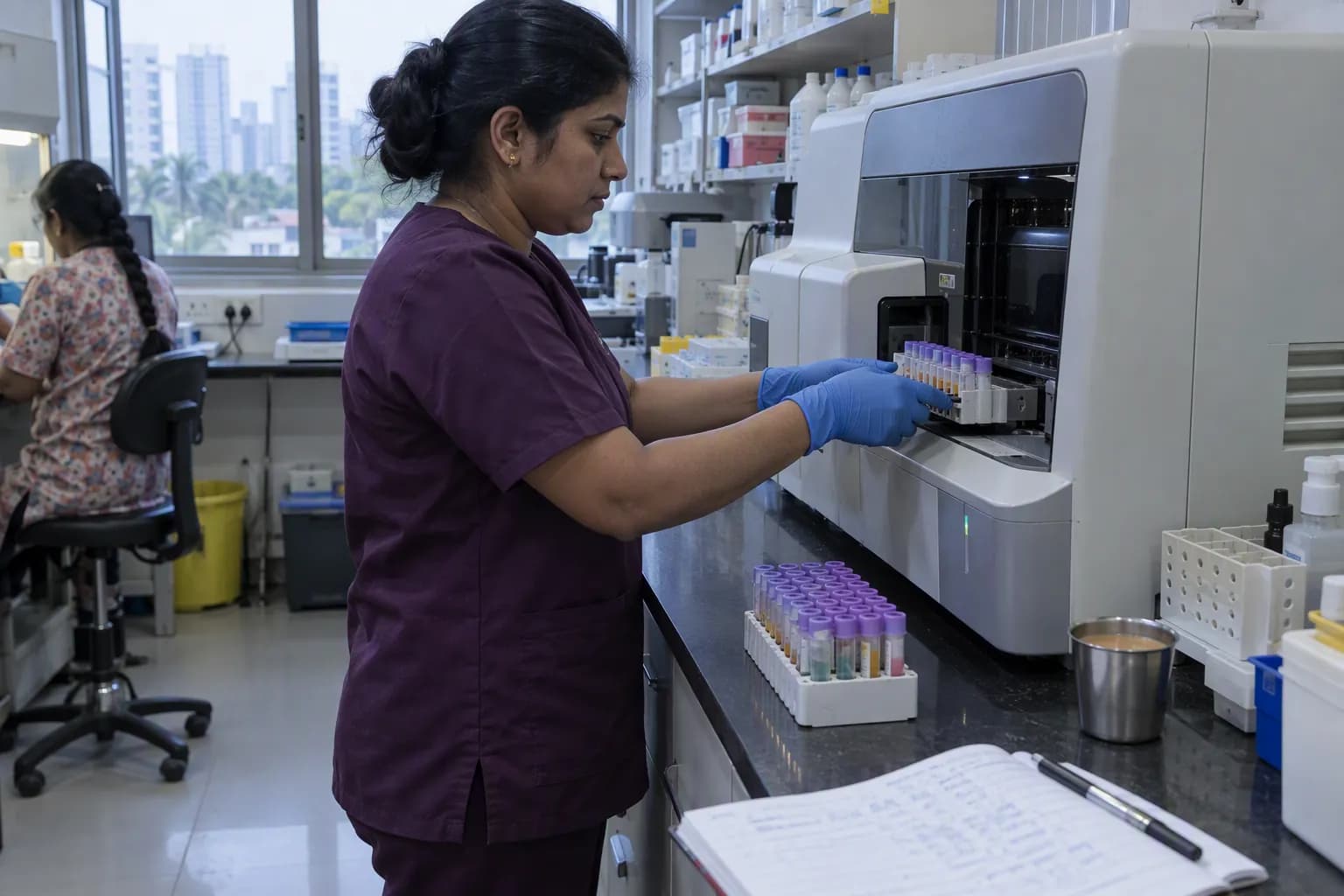
A partnered NABL-accredited laboratory runs your panel.
 Around day 3
A doctor reads it with you
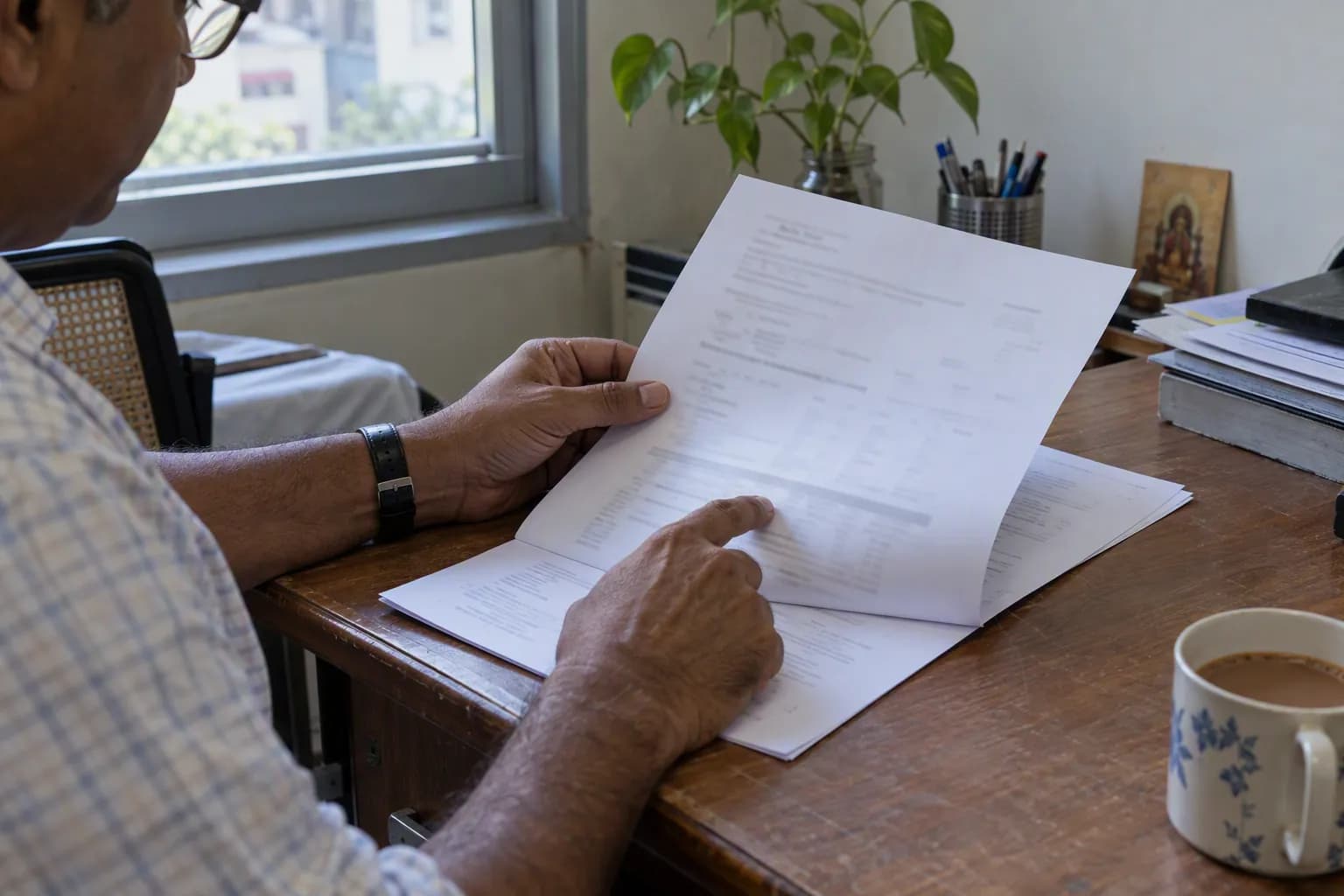
Around day 3, on video, every result against your history.
 Every week after
Your plan, around your week
Food, movement and sleep, planned from your own report.
Led by doctors. Planned around you.
Every plan starts with one doctor-led health assessment. Your doctor reads your results; your care advisor helps you choose.

Original price
₹3,999, now ₹999Health assessment
45+ markers collected at home, read by a doctor, with your plan around day 3.
Book my health assessment
6 months
Metaboliq Core
Your doctor, nutritionist and two coaches, a blood panel at home each quarter, and two smart scales to keep.
Cost explained on a call before you choose
Start with the assessment
6 months
Metaboliq Premium
A doctor every week, a care manager, continuous glucose monitoring and two smart scales to keep.
Cost explained on a call before you choose
Begins after your assessment, once your doctor says it suits you.
Start with the assessment
Start with the test
Your plan starts with one home blood test
Health assessment, ₹999: a home blood test, a doctor who reads it with you, and your plan.
Takes 2 minutes to book. Results vary; your doctor decides what is right for you.


Questions people ask
Does metabolism slow down after 40?
Much less than most people think. A large study found the body's energy use, adjusted for size, stays broadly stable from about 20 to 60. Muscle loss, less activity and poorer sleep explain most weight gain after 40.
How do I lose weight after 40 without losing muscle?
Eat enough protein at every meal, do strength work two or three times a week and bring calories down gently. That is exactly what the plan is built around.
Is it safe to start strength training in my forties or fifties?
For most people, yes, starting light and building slowly. Your doctor reads your panel and asks about your joints and heart first, and your coach chooses exercises to suit you.
2 more questions
Why do I need a blood test before starting?
Because this is the decade when sugar, cholesterol, liver and kidney numbers start to move. Reading them first makes the plan safer and shows which changes matter most for you.
What does it cost to start?
The health assessment is ₹999: the home blood panel, a registered doctor reading every result with you, a health coach session and your personalised plan.
The research this page leans on
3 published sources
- Pontzer H et al., daily energy expenditure through the human life course, Science, 2021
- Volpi E, Nazemi R, Fujita S, muscle tissue changes with ageing, Current Opinion in Clinical Nutrition and Metabolic Care, 2004
- Weinheimer EM, Sands LP, Campbell WW, energy restriction, exercise and fat-free mass in middle-aged and older adults, a systematic review, Nutrition Reviews, 2010
Takes 2 minutes to book. A doctor makes every decision with you.
Book my health assessment