 metaboliq
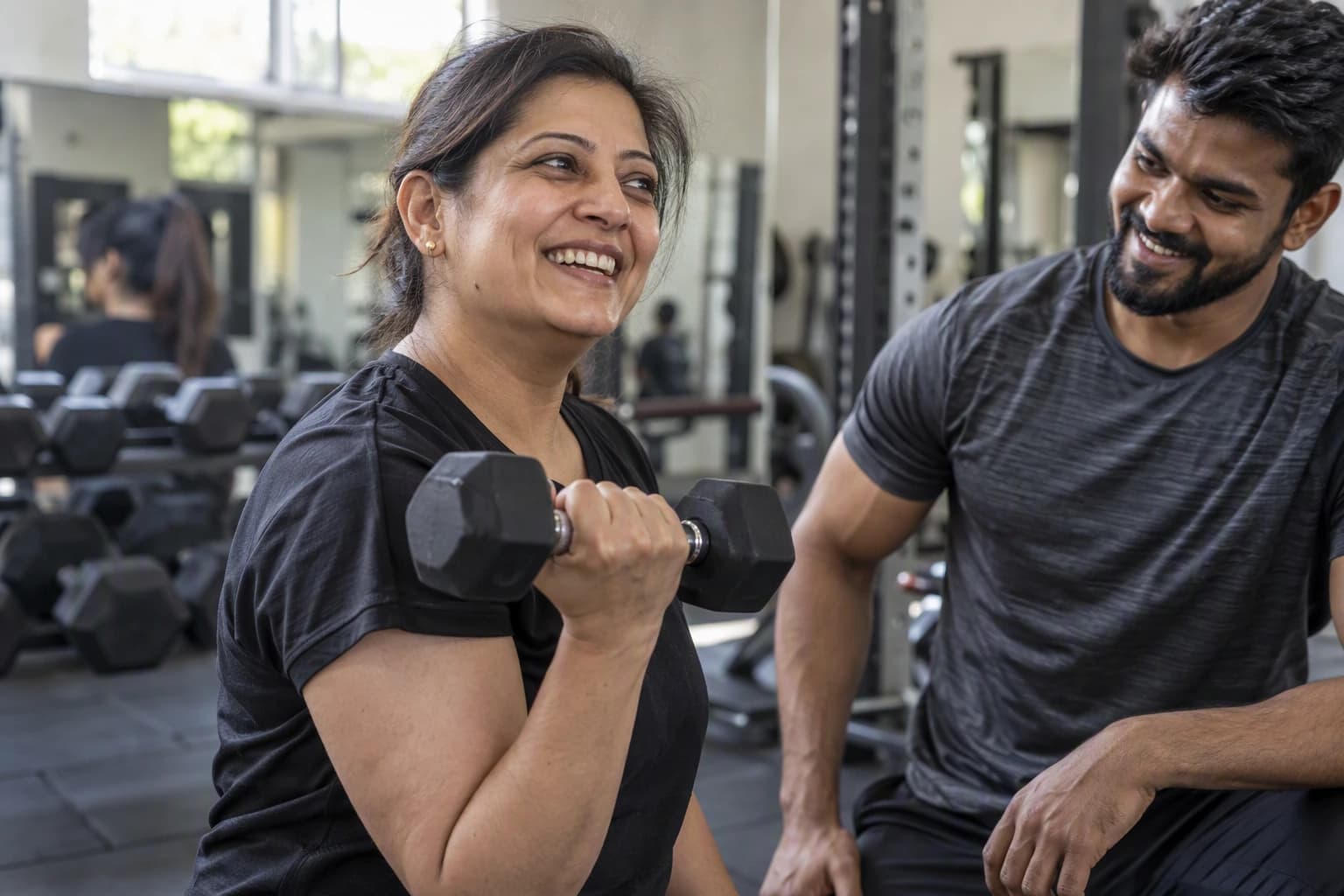
Why does weight loss take muscle with it?
When you eat less than you burn, your body makes up the gap from its stores, and part of what it uses is lean tissue, muscle included. You will often read that a quarter of diet weight loss is lean mass. Steven Heymsfield, who has spent decades measuring body composition, went back through the studies behind that figure and found an average hiding a wide spread. How much fat you start with, your age and sex, how hard you cut and whether you exercise all move it.
Part of that spread is in your hands. People who start heavier tend to lose a smaller share as lean tissue, and someone who lives on soup for a month, skips protein and sits at a desk all day loses a bigger one. A review by Eleonora Cava and colleagues in Advances in Nutrition reaches the same view: a little muscle loss is expected, a lot of it raises the risk of frailty in later years, and protein and resistance exercise have the strongest evidence for limiting it.
Why keeping muscle matters even more for Indians
Indian bodies tend to start with less muscle for the same weight. The best-known picture of this is a 2004 Lancet paper by Chittaranjan Yajnik and John Yudkin, the "Y-Y paradox": two men with the same BMI, one from Pune and one from London, and the Indian man carried far more body fat and less lean tissue. Doctors here call it the thin-fat Indian. It is why a BMI of 24 can still come with a fatty liver and a borderline HbA1c.
So a plan that strips away another slice of muscle leaves many Indians with less in reserve than the trials' Western volunteers had. The PURE study followed almost 140,000 adults in 17 countries, India among them, and found that weaker grip strength went with higher death rates from any cause, a stronger signal than blood pressure. Your muscle is what carries the gas cylinder, climbs the stairs when the society lift is out and gets you up off the floor after playing with your grandchild. It is worth guarding while the kilos come off.
How much protein do you need to keep muscle while losing fat?
The textbook minimum is 0.8 g per kilo, and it is too low for someone losing weight. The PROT-AGE group, writing for older adults, set at least 1.0 g per kilo a day and ideally 1.2 g, and 1.2 g or more for anyone who exercises. At 70 kg that is about 84 g a day, which is a long way above two rotis and a katori of dal.
The big numbers online come from trials such as one in young Canadian men eating 40% below their needs and training hard six days a week. On 2.4 g per kilo they gained a little lean mass and lost more fat than on 1.2 g. Unless your week looks like theirs, you do not need that much. A meta-analysis of 49 strength-training trials found that muscle stopped responding once total protein passed about 1.6 g per kilo a day.
For most adults losing weight, 1.2 to 1.6 g per kilo a day, split fairly evenly across breakfast, lunch and dinner, is the range to aim for. One caution belongs right here: if a blood report has ever flagged your creatinine or kidney function, ask a doctor before you push protein up. The PROT-AGE authors say people with kidney disease may need to keep it lower.
What a muscle-keeping day of Indian food looks like
Most Indian meals are built on roti or rice with dal on the side, so protein has to be added on purpose. Rough figures make it easier to plan. Take a 75 kg man aiming for 1.4 g per kilo, about 105 g a day. If his home is vegetarian, breakfast might be two besan chillas with a bowl of hung curd instead of poha. Lunch is dal, a soya chunk sabzi and two rotis. With evening chai he has roasted chana in place of biscuits, and dinner is paneer bhurji with dal. That gets him close. Add two eggs or a piece of chicken or fish and it is easy.
A protein powder is optional. It helps on days when meals fall short, but your muscles cannot tell a whey shake from a katori of dal, and the cheapest protein in most Indian kitchens is still dal, soya and curd.
- Paneer, 100 g: about 18 g of protein
- Soya chunks, 50 g dry: about 25 g
- Hung curd, one bowl (150 g): about 12 to 15 g; ordinary dahi about half that
- Two eggs: about 12 g
- Chicken breast or fish, 100 g cooked: about 25 to 30 g
- Cooked dal, one katori: about 7 g
- Roasted chana, a handful (30 g): about 6 g
- Besan chilla, one medium: about 6 g
Sources: [5]
Strength training does most of the work
If you change only one thing, start lifting. The clearest evidence comes from a 2017 trial in St. Louis. Dennis Villareal's team put 160 people over 65, all carrying a lot of extra weight, on the same diet and then split them at random. Some walked and cycled, some lifted, some did both, and some did nothing extra. All three exercise groups dropped about 9% of their weight. The walkers lost about 5% of their lean mass along the way. The lifters lost about 2%, the mixed group about 3%, and it was the mixed group who ended up moving best.
A smaller Dutch trial, in overweight people over 55, found that protein and lifting need each other. Only the group that ate more protein and did resistance exercise three times a week actually gained fat-free mass while losing weight. Doing one without the other made no real difference.
The World Health Organization asks every adult for muscle work on at least two days a week, and none of it needs a gym membership. Think chair squats, lunges with one hand on the back of a chair, push-ups against the kitchen counter, glute bridges on a yoga mat and rows with a band looped round a door handle. Two or three rounds of each, two or three times a week, is plenty to begin. Once ten clean reps feel easy, lower yourself more slowly, put your kid's school bag on your back, or buy a pair of adjustable dumbbells from the sports shop in the market.
How fast should you lose weight to keep muscle?
Slower than most people want to. A Norwegian trial put elite athletes on diets meant to take off either about 0.7% or about 1.4% of their body weight a week, while all of them kept up four strength sessions a week. Both groups ended up losing similar weight. The slower group gained lean mass and got stronger, and the faster group's lean mass did not move.
Athletes are not ordinary people, so read that as a direction. For most adults, half to one per cent of body weight a week is a sensible ceiling: about 0.4 to 0.8 kg a week at 80 kg. Faster than that, sustained for months, and the share of muscle in what you lose tends to rise, especially if protein and lifting slip. Your sister who wants eight kilos off before her son's wedding in March does better starting in October at half a kilo a week, eating enough to keep lifting, than starving through February.
Large losses and GLP-1 treatment: why muscle needs more attention
Large losses are where this gets practical. Since the GLP-1 class of treatments arrived, losses that once needed surgery have become common, and so has the worry about muscle. Ian Neeland and two colleagues reviewed the trials in 2024. In some, lean mass made up 40 to 60% of the weight lost; in others it was about 15% or less, depending on who was studied and how. They point out that lean mass on a scan also counts water, organs and bone, and that MRI studies often find the remaining muscle carries less fat and works better.
Caterina Conte, Kevin Hall and Samuel Klein argued in JAMA the same year that the muscle lost is mostly in proportion to the weight lost and seldom hurts day-to-day function by itself. Both papers flag older adults and anyone who starts with little muscle, a description that fits many thin-fat Indians. These treatments also dull hunger so well that protein intake can fall without anyone noticing.
Our own programme's goal is written with that in mind: "Lose up to 20% of your body weight — and keep your muscle". Results vary; your doctor decides what is right for you. Protein targets and strength sessions start in the first week for everyone on it, whether or not a doctor decides a GLP-1 treatment suits them.
How to tell if you are losing fat or muscle: a monthly check
The bathroom scale cannot tell fat from muscle, and the body-fat number on a smart scale shifts with how much water you drank. A few simple checks, done on the same day each month and written on the calendar, tell you far more. The strength cut-offs come from the Asian Working Group for Sarcopenia, which set them for Asian adults.
Read them together. Weight and waist going down while grip and chair-stand times hold steady or improve means you are losing mostly fat. If the scale is dropping fast and your strength numbers are slipping, slow the pace, raise protein toward 1.6 g per kilo and check that you are still lifting. A DEXA scan at the start and after six months is the precise answer, and the larger diagnostic chains offer one in most big Indian cities, but most people can manage without it.
- Weight: the average of three mornings in the week, after the toilet and before breakfast.
- Waist: a tape at the level of your navel, breathing out normally. This is the number that should fall steadily.
- Five chair stands: arms crossed, stand up fully and sit down five times as fast as you safely can, timed on your phone. Twelve seconds or more counts as low performance.
- Grip strength: a hand dynamometer costs about the same as a pair of running shoes, and many physiotherapists and gyms have one. Under 28 kg for men or 18 kg for women counts as low strength.
- Your strength log: the reps and weight in your squats, push-ups and rows. They should creep up, or at least hold.
- Protein: three days a month, add up roughly what you ate against your 1.2 to 1.6 g per kilo target.
| Check | How | What you want to see |
|---|---|---|
| Waist at the navel | Tape, breathing out, same day each month | Falling steadily |
| Five chair stands | Arms crossed, timed on your phone | Under 12 seconds, and holding |
| Grip strength | Hand dynamometer, best of three | 28 kg or more for men, 18 kg or more for women, and holding |
| Strength log | Reps and weight in your main exercises | Creeping up |
Who should see a doctor before raising protein or starting to lift
Your father, if his kidneys have ever come up on a report. He has had diabetes for fifteen years, and last year the lab printed his creatinine in bold, so the extra paneer and soya chunks wait for his doctor's go-ahead. The same goes for heart trouble, blood pressure that is not under control, a recent injury, or diabetes on treatment, before anything heavier than bodyweight work. None of that means sitting still. The morning walk and a few chair squats during the evening news are fine for most people while they wait.
If any of that sounds like your family, a blood test is the sensible place to start, and it is where Metaboliq starts too: a health assessment with a 45+ marker blood test at home, read by a registered doctor before anyone sets a protein number or a training plan. After that a nutritionist, a health coach and a fitness coach run the monthly check above with you.