metaboliq
Why belly fat needs a diet of its own
The fat you can pinch is only part of a belly.
Read the full section
The rest sits deeper, wrapped around the liver and intestines, and that visceral fat is the kind linked to diabetes, fatty liver and heart disease.
Indian doctors have their own lines for it. A consensus panel led by Dr Anoop Misra put abdominal obesity at a waist of 90 cm or more for men and 80 cm or more for women, well below the Western cut-offs, because Indians run into sugar and blood pressure trouble at smaller sizes. The ICMR-INDIAB survey, which measured 113,043 adults in 31 states and union territories, found abdominal obesity in 39.5% of them, more common than obesity by BMI at 28.6%.
Take Deepak, 41, a bank branch manager in Indore. His weight has crept up by only five kilos since his wedding, so he never thought of himself as heavy, yet his waist measures 99 cm and his last office health camp flagged a fasting sugar of 108. He is a composite of the readers who write to us, and his pattern is the common one: a modest scale number, a large waist and the first signs of trouble in the blood.
Deep belly fat responds to food and movement faster than the fat under the skin. In the CENTRAL trial from Israel, 18 months of moderate weight loss took visceral fat down 22% and liver fat 29%. That is why a belly fat diet is worth getting right.
What the typical Indian plate gets wrong
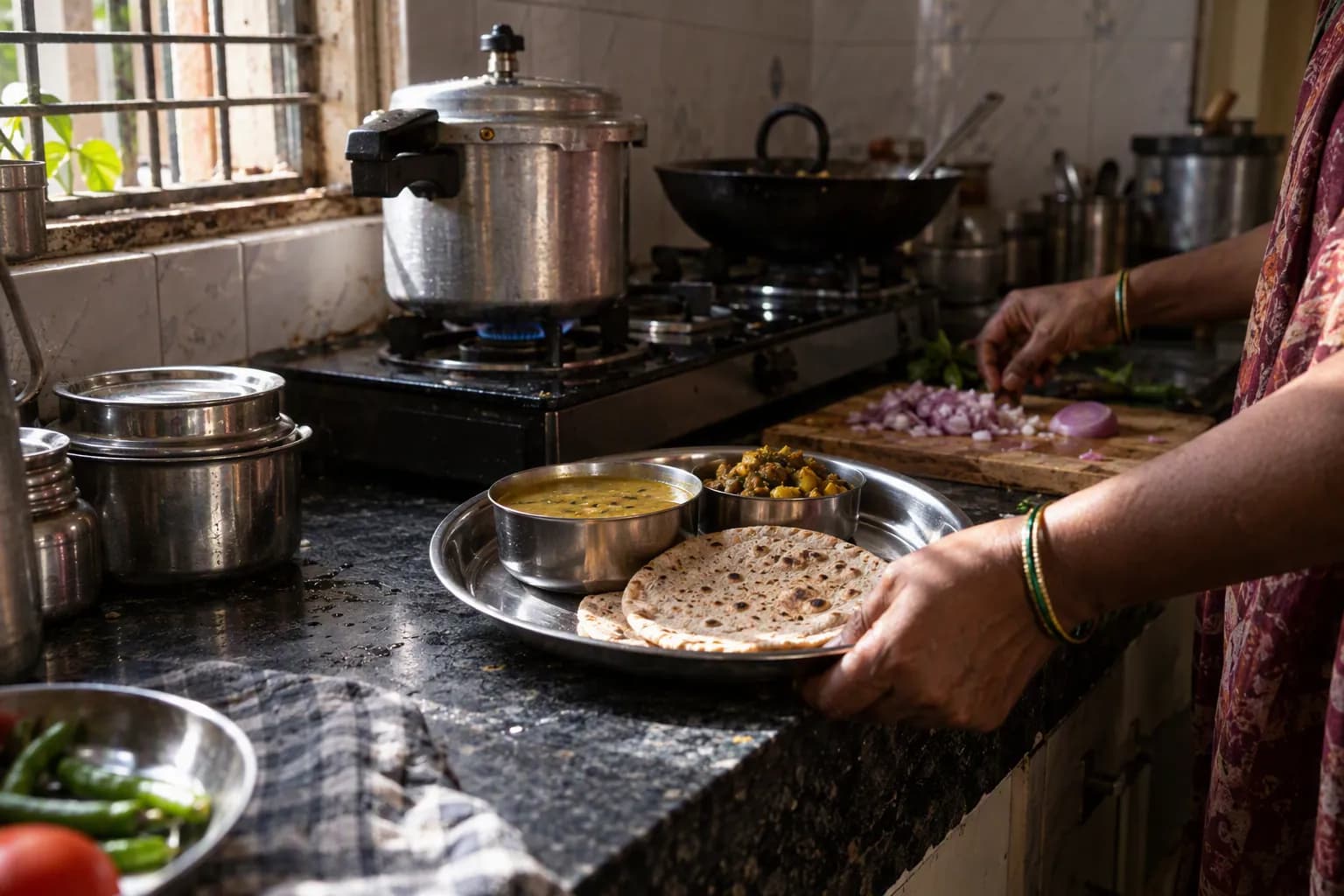
Most Indian meals are built on a large mound of rice or a stack of rotis, with a small katori of dal on the side.
Sources: [4]
Read the full section
The national data says that balance, more than any single food, is the problem.
ICMR-INDIAB looked at what 18,090 adults actually ate. Indian diets turned out to be heavy in low-quality carbohydrate (white rice, milled grains and added sugar) and light on protein. People eating the most carbohydrate were more likely to have abdominal obesity than those eating the least, and more likely to have diabetes.
One finding surprises people. Switching from refined cereal to whole wheat or millet atta, while eating the same amount, showed no benefit for belly fat or diabetes in that analysis. Swapping some of the carbohydrate for dal, curd, paneer, eggs or fish did go with lower odds of diabetes. So the multigrain atta Deepak's wife now buys is fine, but it will not do the job while he still eats four rotis at dinner.
The practical change is about proportion. Picture the plate in halves: one half sabzi and salad, a quarter dal, paneer, chicken or another protein, and a quarter rice or roti. For Deepak that means two rotis instead of four, a second katori of dal, and the raita he used to skip.
| Before | After | |
|---|---|---|
| Roti | 4 | 2 |
| Dal or chicken | 1 katori | 2 katoris |
| Sabzi and salad | 1 katori | 2 katoris |
| Curd or raita | None | 1 katori |
- 18,090adults in the diet survey
Protein at every meal keeps hunger and muscle in check
Protein is the part of a belly fat diet most Indian families underdo.
Read the full section
It keeps you fuller for longer, and while you are eating less it helps you hold on to muscle.
Heather Leidy's review in the American Journal of Clinical Nutrition gathered the trials on this. Meals higher in protein left people feeling fuller and eating less at the next meal than meals with the same calories and less protein. Thomas Wycherley's meta-analysis of weight-loss trials found that higher-protein diets took off slightly more fat and protected more lean mass than standard-protein diets.
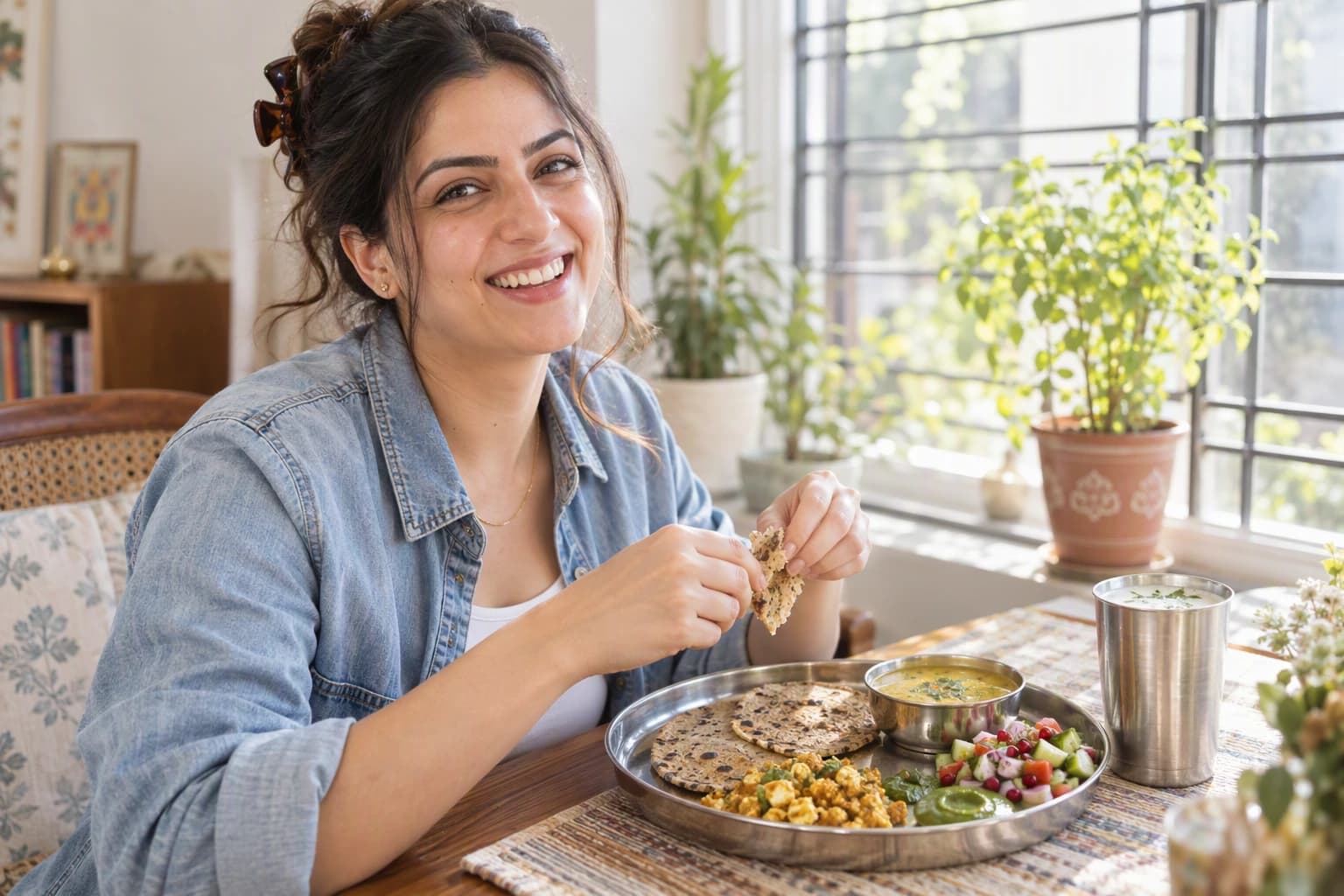
That second point matters for the belly. Lose weight on tea, biscuits and a small plate of rice, and part of what goes is muscle, which makes the weight easier to regain. It is also why Metaboliq's doctors plan protein before anything else: the aim we set with members is "Lose up to 20% of your body weight — and keep your muscle". Results vary; your doctor decides what is right for you. The second half of that sentence depends on the plate. Each meal should carry a protein you can see. Breakfast can be besan chilla or eggs instead of plain poha, lunch a proper katori of dal with curd, and dinner chicken, fish, paneer or a chana sabzi.
Vegetarians can get there, but it takes planning. Dal and chana in the main meals, a glass of milk or a bowl of curd, a few cubes of paneer and a handful of roasted chana as the evening snack together make a real difference. The chart shows how much protein a usual serving of each gives, from the Indian Food Composition Tables.
Soluble fibre: the rajma, oats and isabgol effect
Soluble fibre turns into a gel in the gut and slows how fast food is absorbed.
Read the full section
Rajma, chana, oats, barley, apples and isabgol husk are good everyday sources.
The best evidence linking it to belly fat comes from the IRAS Family Study in the United States, which scanned the abdomens of 1,114 adults with CT and repeated the scans five years later. For every extra 10 g of soluble fibre a day, visceral fat built up 3.7% more slowly, even after allowing for changes in weight. Moderate activity went with a 7.4% slower build-up. Fibre did nothing measurable for the fat just under the skin.
That is an observational finding, so it shows a link, and the effect is modest. Still, the foods that carry soluble fibre are also filling and cheap, and most Indian diets have room for more of them. Rajma or chole twice a week, a bowl of oats or dalia some mornings, a whole apple or guava instead of juice, and a teaspoon of isabgol in water at night if your doctor agrees, are easy places to start.
Go slowly if you are not used to it. A sudden jump in fibre brings gas and bloating, which puts many people off by the third day. Add one source a week and drink more water.
Sugary drinks and juices go first
If you change only one thing, change what you drink.
Sources: [9]
Read the full section
Sugar in a glass goes down without filling you up, and the evidence tying it to deep belly fat is unusually direct.
The Framingham Heart Study scanned 1,003 adults six years apart. People who almost never had sugary drinks gained 658 cubic centimetres of visceral fat over that time, and those who had one or more every day gained 852, even after accounting for changes in weight. Diet soda showed no such link.
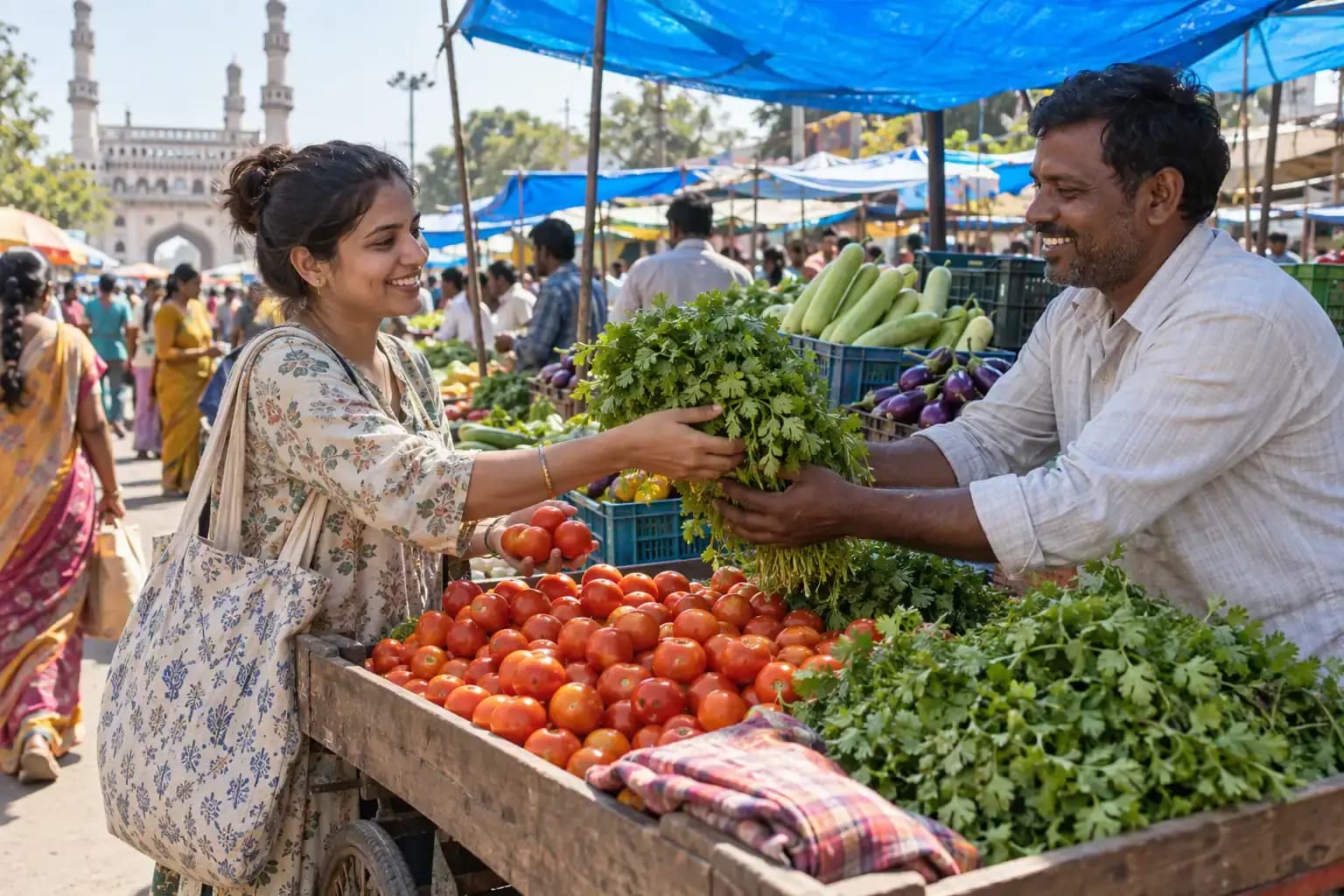
In Indian homes the sugar usually arrives in friendlier packaging: two or three cups of chai with two spoons each, a packaged fruit juice that sounds healthy, sweet lassi at lunch, a cold coffee from the office machine. Deepak worked out that his chai alone added about twelve spoons of sugar a day.
He did not stop drinking chai. He cut the sugar by half for two weeks and then by half again, and found by the end of the month that the old version tasted too sweet. Nimbu pani without sugar, buttermilk with roasted jeera, and plain water before meals took the place of the juice and the cold coffee.
Late dinners, short sleep and the evening snack
A belly fat diet fails most often between 7 pm and midnight.
Sources: [10]
Read the full section
Short sleep makes it worse, because a tired body asks for more food and stores more of it around the middle.
Jean-Philippe Chaput followed adults in Quebec for six years and found that those sleeping six hours or less a night gained more visceral fat than those sleeping seven to eight. People who moved from short sleep to adequate sleep gained less. That fits what most of us notice: after a late night, the craving for something fried or sweet is harder to ignore.
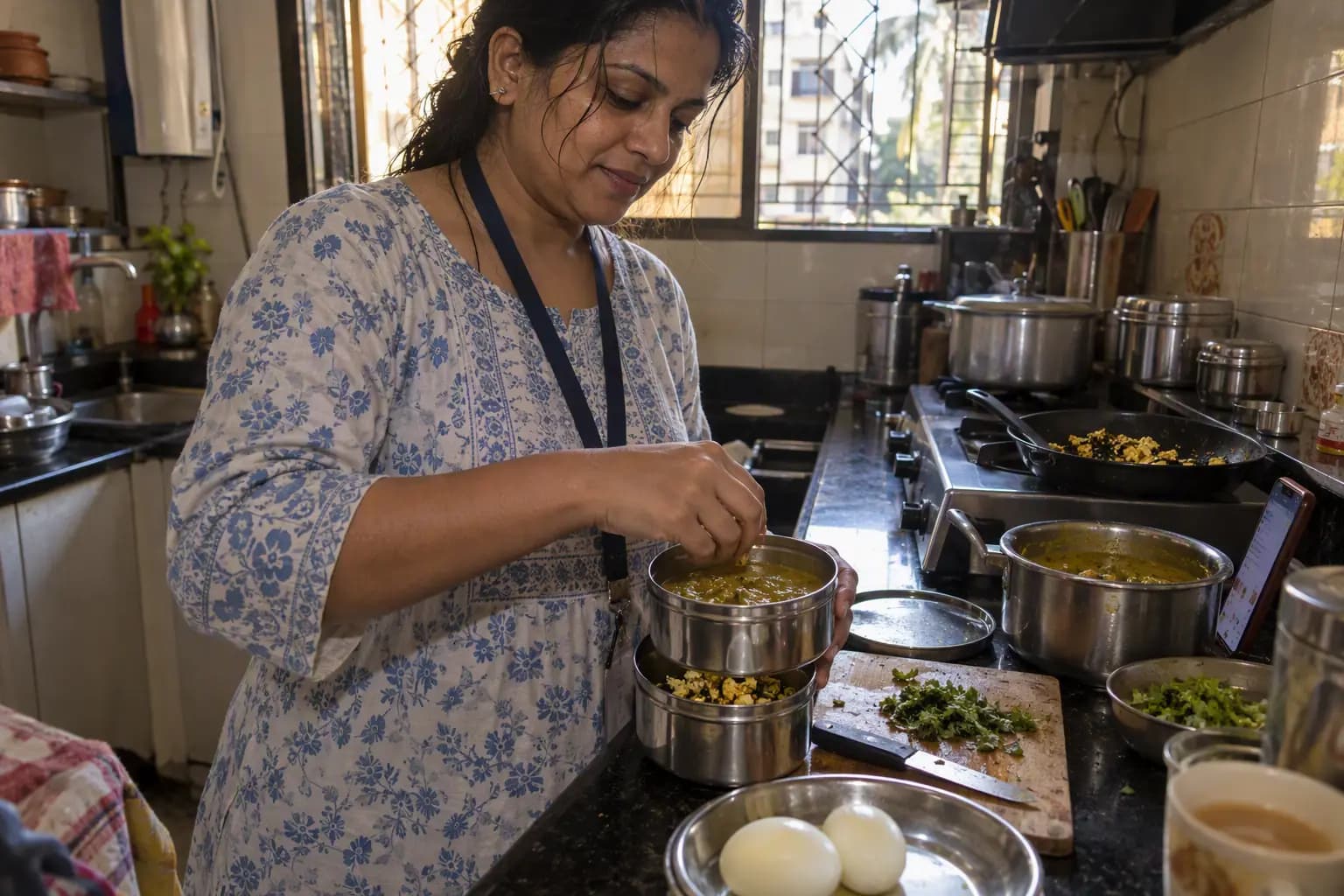
Deepak's evenings used to run like this. Tea and namkeen at 6.30 when he got home, a heavy dinner at 10.30 in front of the television, and bed after midnight with his phone. The changes were small and boring. Dinner moved to 8.30, the namkeen became roasted chana and a fruit, and the phone started charging in the living room at 11.
If your work runs late, eat the larger meal earlier and keep the late one light: dal and sabzi with one roti, or a bowl of curd with fruit. The aim is to go to bed neither stuffed nor starving.
| Before | After | |
|---|---|---|
| 6.30 pm | Namkeen, chai | Chana, fruit |
| Dinner | 10.30 pm | 8.30 pm |
| Phone away | After 12 | At 11 |
A sample belly fat diet plan for one day
Treat this as a template with no calorie target.
Read the full section
It shows the shape of an Indian day built on the rules above, and every item can be swapped for a regional favourite.
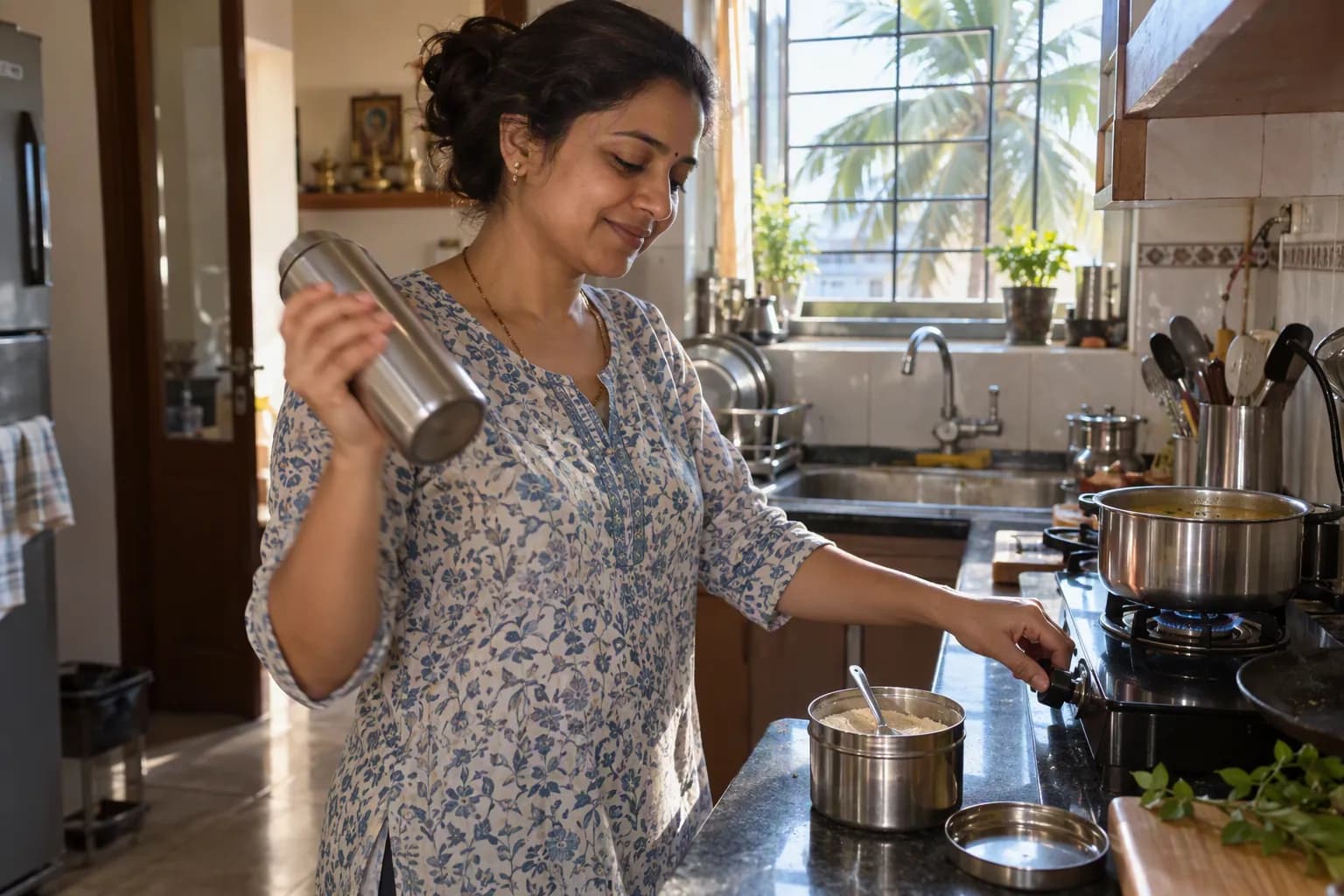
Early morning: water, and a cup of chai with half the usual sugar. Breakfast at 8: two besan chillas with mint chutney and a bowl of curd, or two eggs with one multigrain toast and a fruit. Mid-morning: a guava, an apple or a handful of roasted chana.
Lunch at 1: one katori of dal, one katori of sabzi, a big bowl of salad, one katori of rice or two rotis, and buttermilk. Evening at 5: tea without biscuits, with a small bowl of sprouts or a few cubes of paneer. Dinner by 8.30: chicken, fish, paneer or rajma with a vegetable and one roti, or a bowl of dalia khichdi with curd.
Two things make this plan work over months. The portions of rice and roti stay small even on weekends, and every meal has protein in it. Fried snacks, sweets and restaurant meals are kept to occasions instead of habits. A South Indian version swaps chillas for pesarattu or idli with sambar and an egg, and rice for a smaller helping with more kootu. Weigh nothing for the first fortnight; just measure your waist on the same morning each week.
| Time | On the plate | |
|---|---|---|
| Breakfast | 8 am | Besan chilla, curd |
| Snack | 11 am | Guava or chana |
| Lunch | 1 pm | Dal, sabzi, 2 rotis |
| Snack | 5 pm | Sprouts, tea |
| Dinner | 8.30 pm | Paneer or fish, 1 roti |
Why crunches won't do it, and what to add to the diet
You cannot exercise fat off one spot.
Read the full section
Walking, cycling and strength training take deep belly fat down, and they protect the muscle a diet can strip away.
Researchers at Southern Illinois University gave adults six weeks of daily abdominal exercises. Their stomach muscles got stronger, and their belly fat and waist size did not change compared with people who did no exercises. A meta-analysis of fifteen trials led by Dirk Vissers found that regular aerobic exercise reduced visceral fat even without dieting, with moderate or harder sessions doing most.
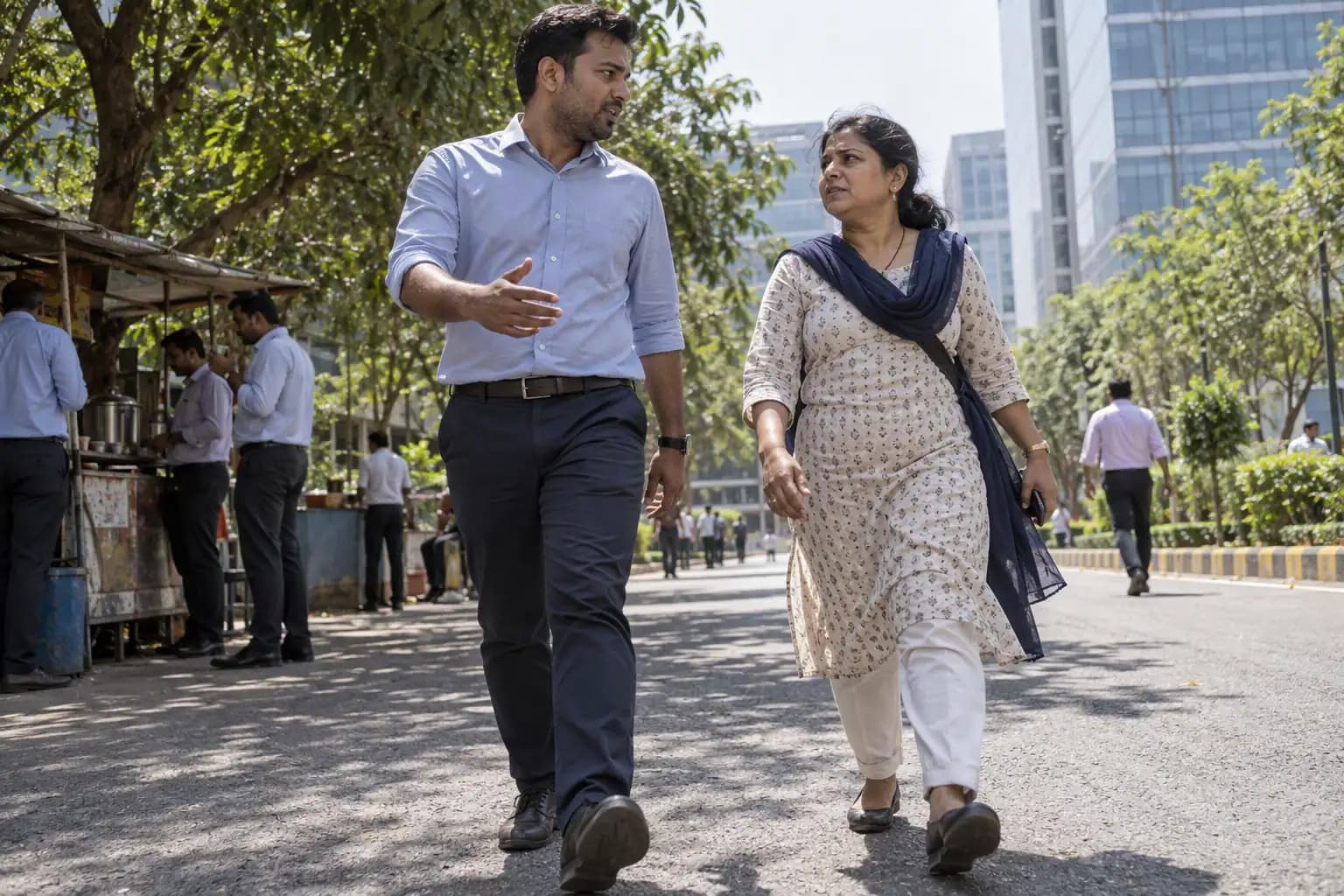
Deepak now walks for 40 minutes before the bank opens, five days a week, and does two short sessions of squats, push-ups against the wall and rows with a resistance band at home. In the CENTRAL trial, adding exercise to either diet took visceral fat down further than diet alone.
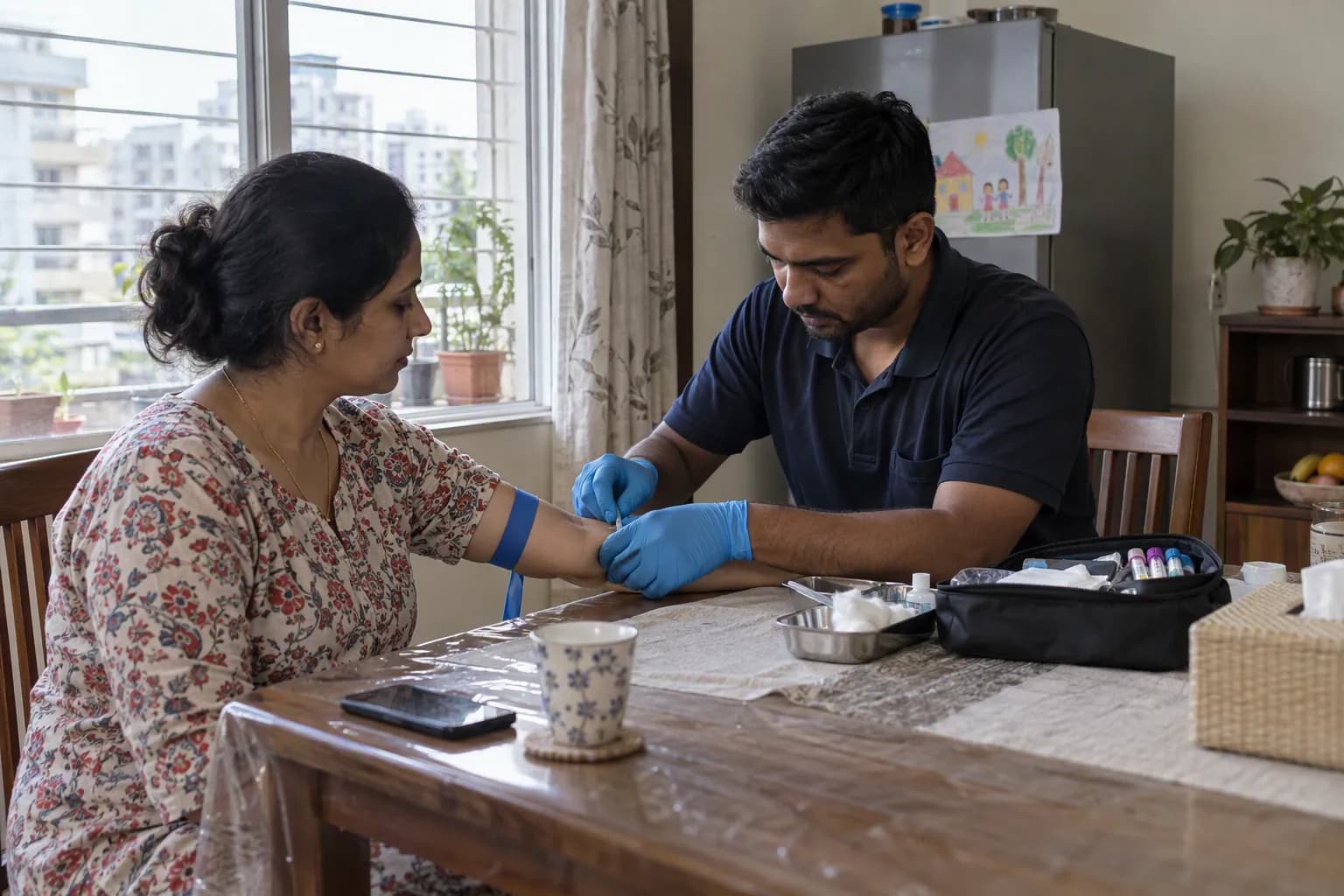
Then there is the question of what the belly has already done. A waist over the line, a parent with diabetes or a fatty liver on an old scan are reasons to check your blood as well as your belt, because visceral fat shows up in HbA1c, fasting insulin, triglycerides and liver enzymes years before it causes symptoms. Deepak's numbers decided how hard he needed to push. At Metaboliq the plan starts with a home blood test that a doctor reads with you, so the plan is built on your numbers and not on guesswork.
45+ markers, one home blood test
- HbA1c
- Thyroid test
- Fasting insulin
- HOMA-IR
- Fasting blood sugar
- Lipid profile
- Liver function test
- Kidney function test
- 6weeks of crunches, no change
Every source, in full (12)
[1] Misra A, et al. Consensus statement for diagnosis of obesity, abdominal obesity and the metabolic syndrome for Asian Indians and recommendations for physical activity, medical and surgical management
Journal of the Association of Physicians of India, 2009. Set the Indian adult bands: BMI 18.0-22.9 normal, 23.0-24.9 overweight and 25 or more obesity, with abdominal obesity at a waist of 90 cm or more in men and 80 cm or more in women.
Read the source[2] Anjana RM, et al. Metabolic non-communicable disease health report of India: the ICMR-INDIAB national cross-sectional study (ICMR-INDIAB-17)
The Lancet Diabetes & Endocrinology, 2023. Across 113,043 adults in 31 states and union territories, generalised obesity was 28.6%, abdominal obesity 39.5%, hypertension 35.5%, diabetes 11.4%, prediabetes 15.3% and dyslipidaemia 81.2% of those tested.
Read the source[3] Gepner Y, et al. Effect of distinct lifestyle interventions on mobilization of fat storage pools: CENTRAL magnetic resonance imaging randomized controlled trial
Circulation, 2018. In 278 sedentary adults over 18 months, moderate weight loss brought visceral fat down 22% and liver fat 29%; added exercise reduced visceral fat further with either diet, and the Mediterranean low-carbohydrate diet beat low-fat for liver and heart fat.
Read the source[4] Anjana RM, et al. Dietary profiles and associated metabolic risk factors in India from the ICMR-INDIAB survey-21
Nature Medicine, 2025. In 18,090 Indian adults, diets were high in low-quality carbohydrate (white rice, milled grains, added sugar) and low in protein; the highest carbohydrate intakes went with more abdominal obesity (odds ratio 1.15), swapping refined cereal for whole wheat or millet flour at the same quantity showed no benefit, and swapping carbohydrate for protein went with lower odds of diabetes.
Read the source[5] Leidy HJ, et al. The role of protein in weight loss and maintenance
American Journal of Clinical Nutrition, 2015. Reviews the evidence that higher-protein meals increase reported fullness and reduce later intake compared with meals matched for energy but lower in protein.
Read the source[6] Wycherley TP, et al. Effects of energy-restricted high-protein, low-fat compared with standard-protein, low-fat diets: a meta-analysis of randomized controlled trials
American Journal of Clinical Nutrition, 2012. In energy-restricted trials, higher-protein diets produced slightly greater fat loss and better preservation of fat-free mass than standard-protein diets.
Read the source[7] Longvah T, Ananthan R, Bhaskarachary K, Venkaiah K. Indian Food Composition Tables 2017
National Institute of Nutrition (ICMR), Hyderabad, 2017. Table 1, Proximate Principles and Dietary Fibre: energy, protein, fat, available carbohydrate and dietary fibre per 100 g edible portion. Every food figure in this page's charts is computed from it for the serving shown.
Read the source[8] Hairston KG, et al. Lifestyle factors and 5-year abdominal fat accumulation in a minority cohort: the IRAS Family Study
Obesity, 2012. Over five years of CT scans in 1,114 adults, each 10 g a day more soluble fibre went with a 3.7% lower rate of visceral fat gain, and moderate activity with a 7.4% lower rate, independent of change in BMI.
Read the source[9] Ma J, et al. Sugar-sweetened beverage consumption is associated with change of visceral adipose tissue over 6 years of follow-up
Circulation, 2016. In 1,003 Framingham adults scanned six years apart, visceral fat grew by 658 cm³ in people who rarely had sugary drinks and by 852 cm³ in daily drinkers, after adjusting for weight change; diet soda showed no such link.
Read the source[10] Chaput JP, et al. Change in sleep duration and visceral fat accumulation over 6 years in adults
Obesity, 2014. Adults sleeping six hours or less gained more visceral fat over six years than those sleeping seven to eight hours, and moving from short to adequate sleep was associated with less gain.
Read the source[11] Vispute SS, et al. The effect of abdominal exercise on abdominal fat
Journal of Strength and Conditioning Research, 2011. Six weeks of abdominal exercises improved abdominal muscular endurance but did not reduce abdominal fat, waist circumference or body fat compared with a control group.
Read the source[12] Vissers D, et al. The effect of exercise on visceral adipose tissue in overweight adults: a systematic review and meta-analysis
PLoS One, 2013. Across fifteen trials without calorie restriction, exercise reduced visceral fat, with moderate or high intensity aerobic training showing the greatest effect.
Read the source