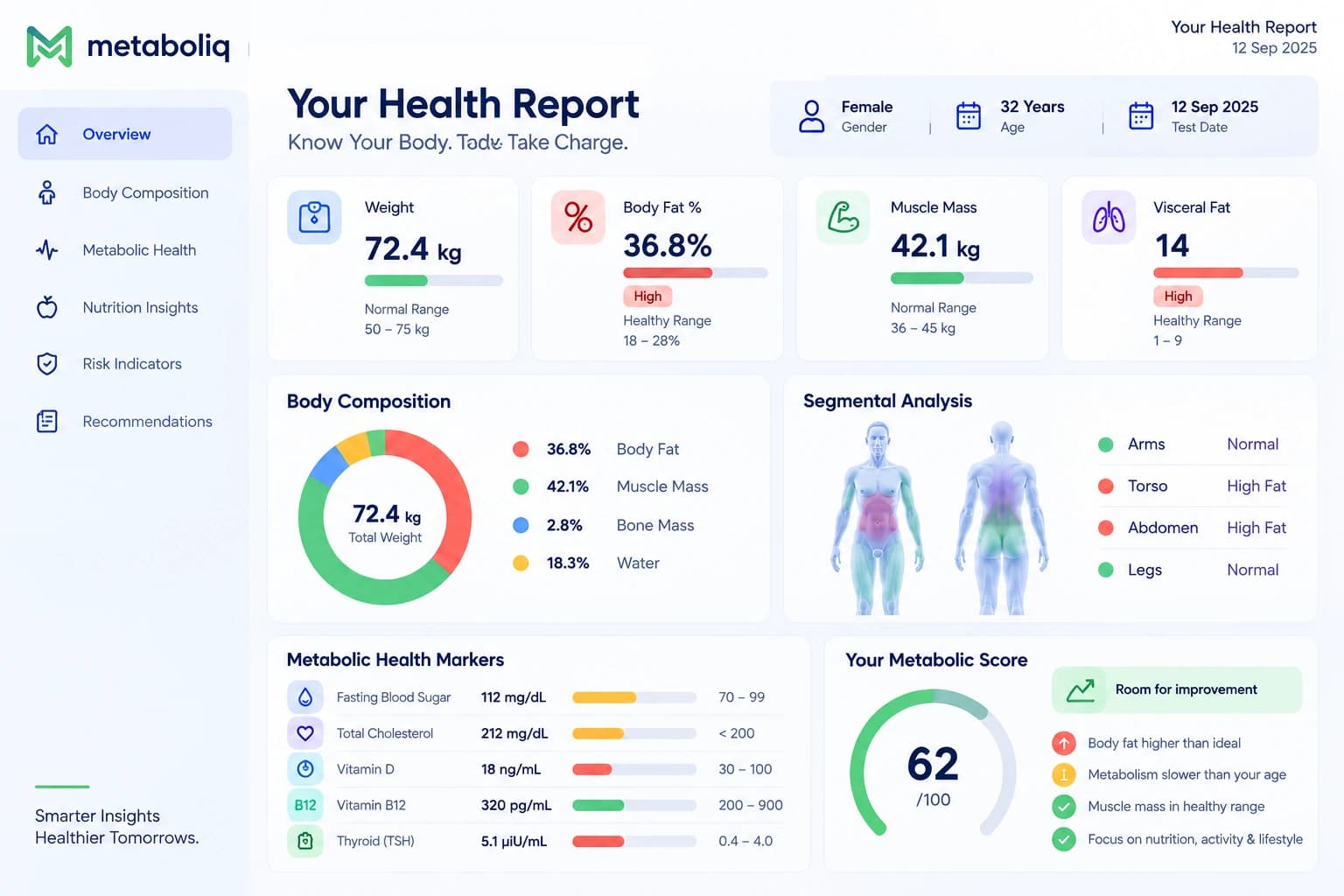
metaboliq

What PCOS treatment means today
There is no single cure for PCOS, so treatment is built around what bothers you most and what puts your health at risk.
Sources: [1]
Read the full section
For nearly everyone, that plan begins with lifestyle.
The 2023 international guideline, written by Helena Teede and a large international group, runs to 254 recommendations and practice points. Its centre of gravity is clear: healthy eating, regular activity and attention to weight come first for women with PCOS, alongside regular checks of weight, blood pressure and sugar.
After that the plan branches. A woman whose main worry is irregular periods needs her cycle protected. One troubled by acne and facial hair needs skin and hair care, and a woman who wants to conceive needs ovulation. Each of these has options a gynaecologist or endocrinologist can add, and the right choice depends on age, weight, blood results and plans for children.
Fatima, 27, a schoolteacher in Hyderabad, is a composite of the readers who write to us. She was diagnosed with PCOD at 22, given a three-month course of treatment for her periods, and told to lose weight. Nobody explained how. Her periods came back while the course lasted and stopped again afterwards, which is the most common story we hear.
| Start with | Doctor may add | |
|---|---|---|
| Irregular periods | 5% weight loss | Cycle treatment |
| Acne, facial hair | Insulin down | Skin treatment |
| Pregnancy | 5% weight loss | Ovulation help |
| Sugar, cholesterol | Diet, exercise | Yearly checks |

Why a 5% weight loss changes PCOS
A loss of around 5% of body weight is often enough to change PCOS hormones. For a woman of 75 kg, that is under four kilos.
Read the full section
In 1992 Kiddy, Franks and colleagues at St Mary's Hospital in London followed 24 women with PCOS on a lower-calorie diet for six to seven months. In the 13 who lost more than 5% of their weight, free testosterone fell and fasting insulin dropped sharply. Of the 11 among them with period problems, nine either conceived or became more regular, and facial hair lessened in 40%. In the women who lost less, nothing much changed.
A few years later Clark's group in Australia ran a weekly diet and exercise programme for overweight women who were not ovulating, the fertility problem PCOS most often causes. Over six months they lost 6.3 kg on average; 12 of the 13 began ovulating again and 11 became pregnant, five without any fertility treatment. These were small studies, and later trials have been more modest, but the direction has held.
For Fatima, at 78 kg, 5% means about four kilos. That is a target she can picture, and far less daunting than the 20 kilos a relative once told her to lose.
- 9 of 11improved periods or conceived
A PCOS diet for an Indian kitchen
No special PCOS diet beats the others in trials.
Read the full section
What works is a diet that lowers insulin and that you can keep up for years, and an Indian kitchen has everything it needs.
The 2023 guideline is explicit that no particular diet has been shown to be better for PCOS, and it warns against plans that are too strict to sustain. That rules out the keto challenge and the juice cleanse. It leaves a plate that most Indian families can cook without buying anything special.
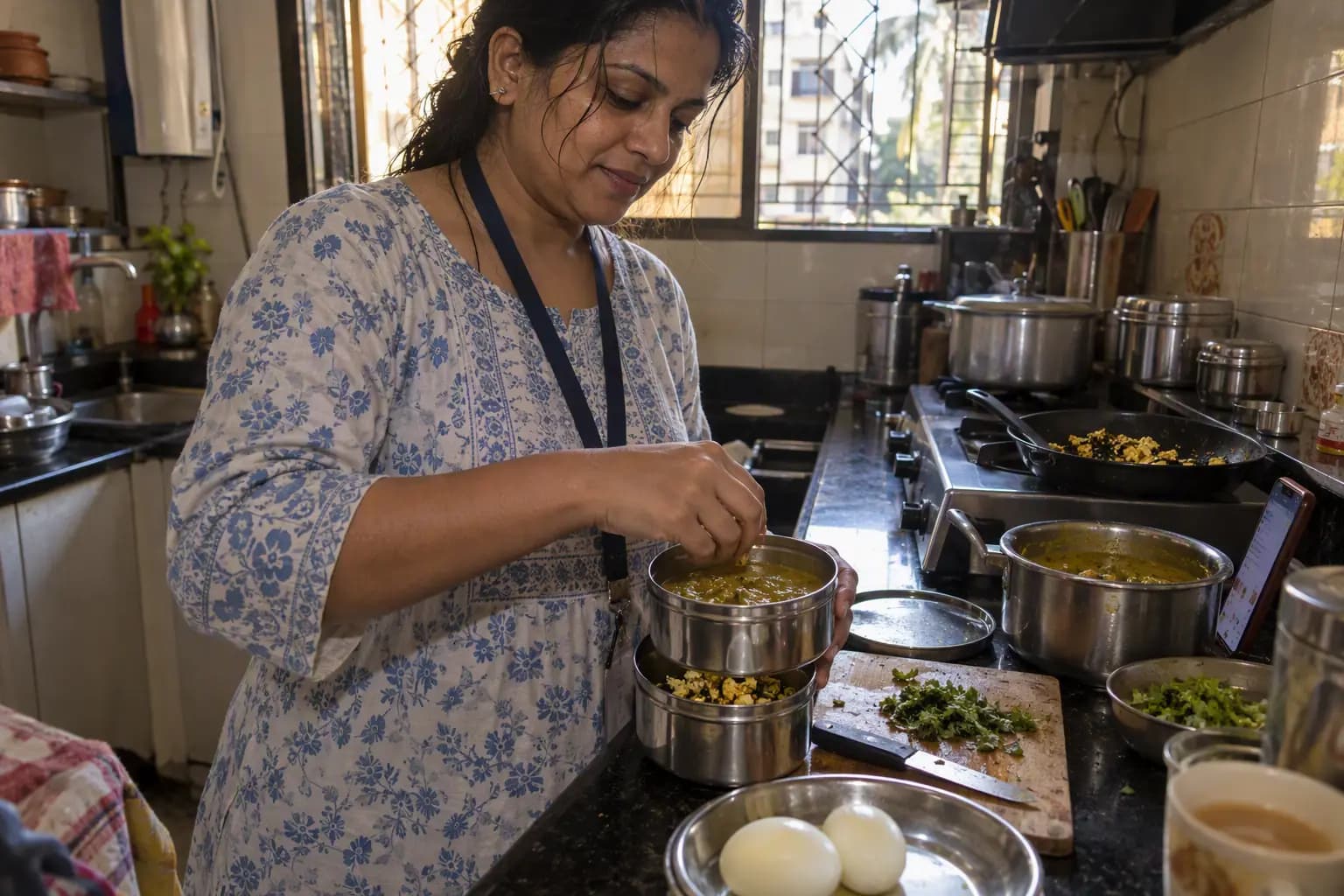
Build each meal around a protein you can see: dal, curd, paneer, eggs, chana, rajma, soya, fish or chicken. Keep rice or roti to a small share of the plate, and fill the rest with sabzi and salad. Swap sweet chai and biscuits for unsweetened chai with roasted chana. Fatima's school tiffin used to be two parathas with pickle. Now it is one paratha stuffed with paneer, a box of cucumber and a small bowl of curd, and she reaches the end of the school day less hungry than before.
Protein matters for a second reason: it protects muscle while you eat less, and muscle is where most blood sugar is used. The chart shows what a usual serving of common foods gives, from the Indian Food Composition Tables.

The best exercise for PCOS
Any regular, moderate exercise helps PCOS, and it starts helping before the weight moves.
Read the full section
The best kind is whatever you will still be doing in six months.
Cheryce Harrison's team at Monash University gathered every study that tested exercise on its own in women with PCOS. Most lasted 12 or 24 weeks. The steadiest benefits were better ovulation, insulin resistance down by between 9% and 30%, and weight down by 4.5% to 10%, and it did not seem to matter much whether women walked, cycled or lifted.
The 2023 guideline suggests at least 150 minutes a week of moderate activity, such as brisk walking, cycling or dancing, or 75 minutes of something harder, with muscle-strengthening on two days. The strength part is the one most women skip and the one that matters for insulin, because muscle is where most blood sugar ends up.
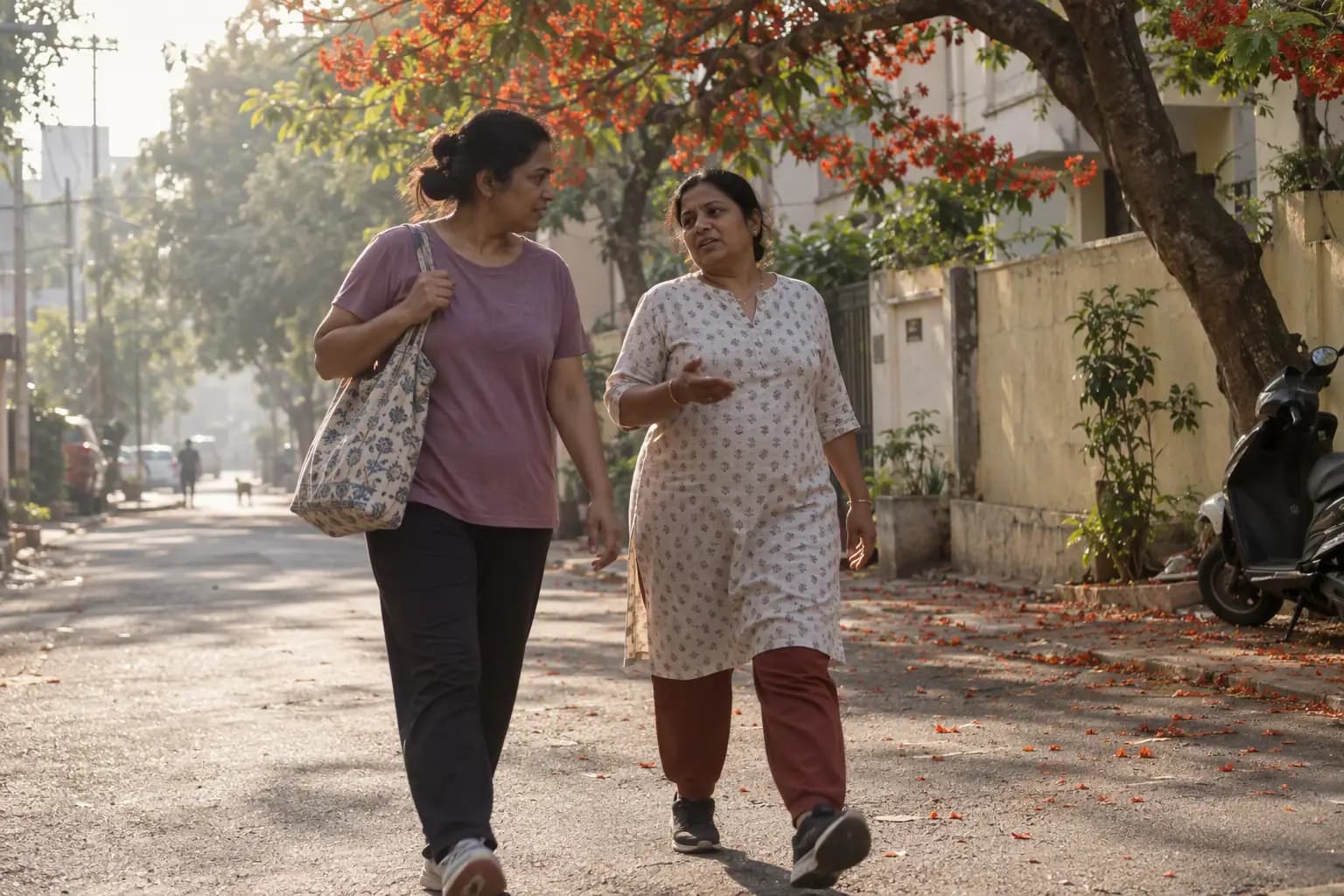
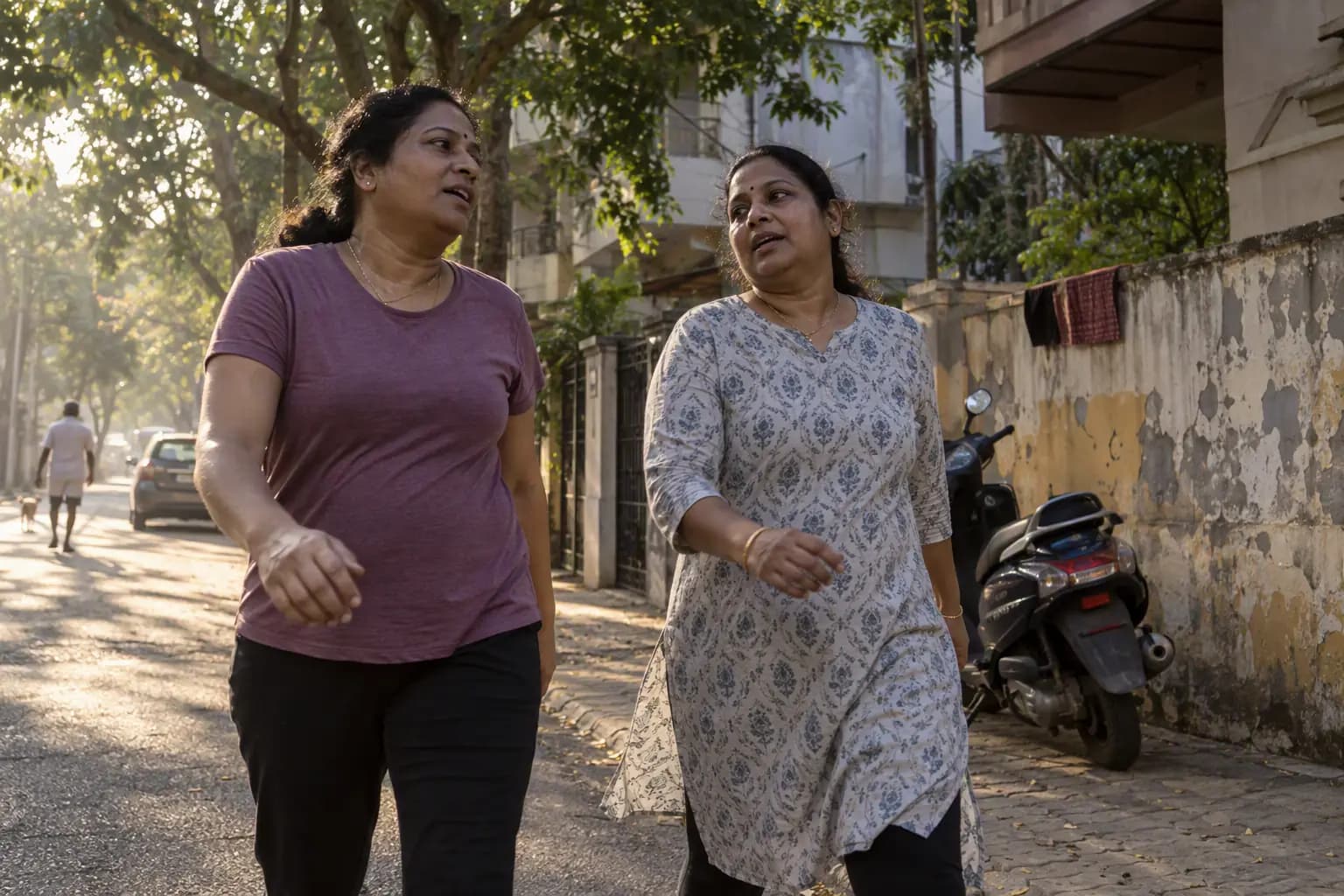
Fatima walks for 30 minutes after school with a colleague from the maths department, five days a week, past the Necklace Road lakefront when the traffic allows. On Saturday and Sunday mornings she does a 20-minute routine of squats, lunges, wall push-ups and band rows from a video. Her husband laughed at the resistance band until he started borrowing it.
- 150minutes of moderate activity weekly
What the trials honestly show about lifestyle treatment
Lifestyle change helps PCOS, but the trials behind that are smaller and messier than anyone would like, and it is fair to say so.
Read the full section
Siew Lim's Cochrane review, the most careful summary there is, pooled 15 randomised trials with 498 women. Compared with minimal care, lifestyle treatment lowered weight by 1.68 kg on average and improved the free androgen index, a measure of active testosterone. The reviewers rated the evidence low quality, and not one trial had measured live births.
Put that next to the older studies of women who did reach a 5% loss, with their big changes in periods and fertility, and the honest reading is this. Lifestyle change reliably helps weight, insulin and androgens. Whether an ordinary programme gets an ordinary woman to that 5% is the hard part, and it usually comes down to support: someone checking in each week, adjusting the plan, and getting her through the first plateau.
That is where Fatima's first attempt fell apart. She was handed a diet sheet and a target at 22, nobody asked how it was going, and when the scale stalled in week six she gave up. The second time she had a dietitian on WhatsApp and a blood test to aim at, and it went differently.
| Result | Evidence | |
|---|---|---|
| Weight | 1.68 kg lower | Low quality |
| Free androgen index | Improved | Low quality |
| Live births | Not measured | None |
- 1.68 kgaverage extra weight lost
PCOS treatment at home, and for unmarried women
Most PCOS treatment happens at home, in what you cook and how you spend your evenings.
Sources: [1]
Read the full section
And being unmarried is no reason to put off a doctor.
Many young Indian women are told, by relatives and sometimes by clinics, to deal with PCOS after marriage. It is bad advice. Irregular periods, rising weight and insulin resistance are much easier to turn round at 21 than at 31, and nothing in the first steps depends on whether you are married.
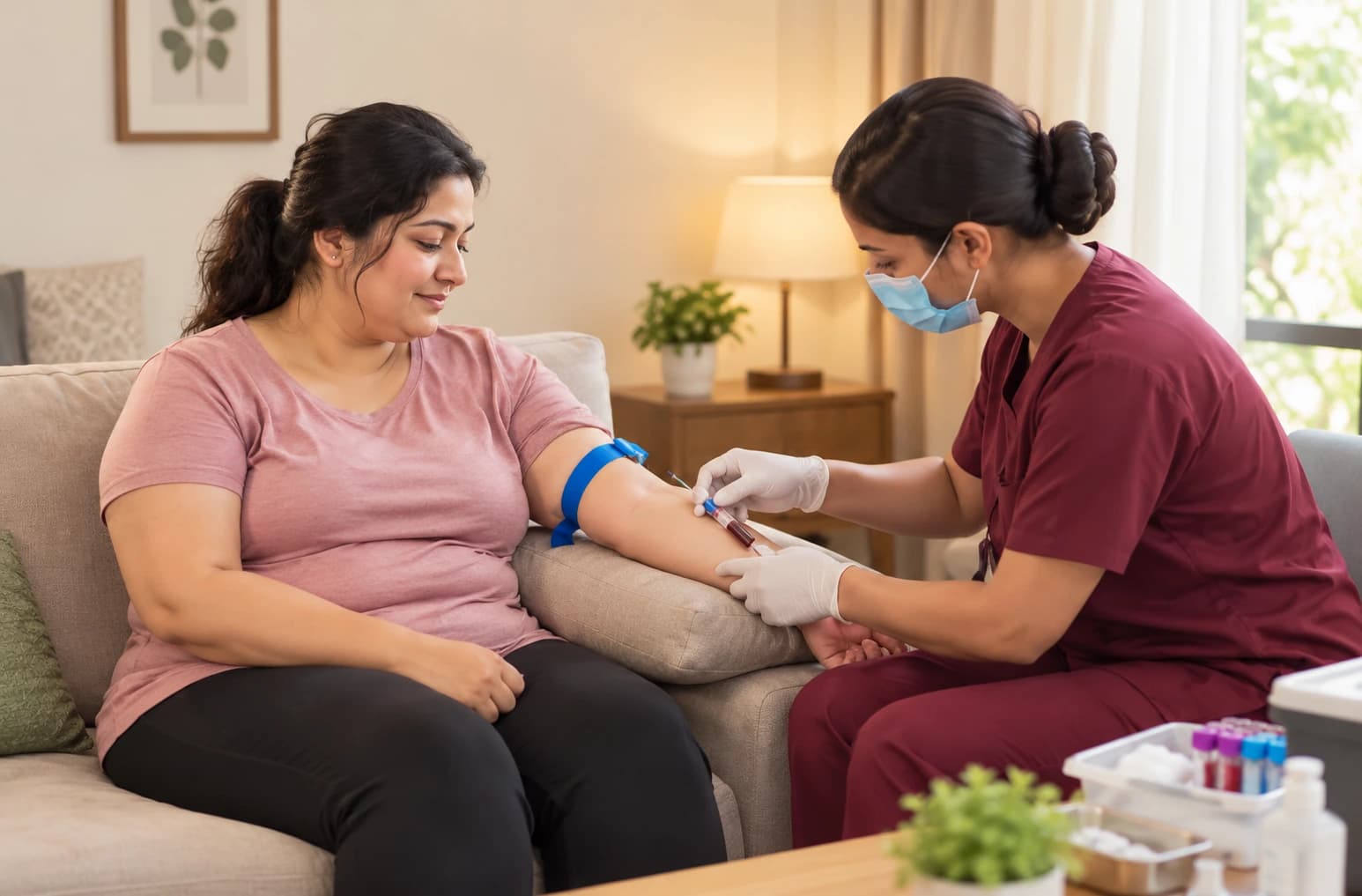
A gynaecologist can examine an unmarried woman without an internal examination, and if a scan is needed it can be done through the abdomen with a full bladder. Blood can be collected at home on a weekday morning before college or work. The home part is the plate, a daily walk, two strength sessions a week, and a bedtime that does not drift to 2 am with the phone.
Fatima's younger sister Sana, 20 and in her second year of BCom, was diagnosed last year. She walks with friends round the college ground after lectures, has swapped the canteen samosa for a bowl of chana chaat, and does a strength video with Fatima on Sunday mornings.
The methi water, cinnamon tea and seed-cycling packs sold for PCOD have little trial evidence. They are harmless in kitchen amounts, but they are no substitute for the steps above.
- Protein on every plate
- 30-minute walk, five days
- Strength work twice a week
- Lights out by 11 pm
When lifestyle is not enough
Six months after starting again, Fatima's periods were coming every 40 days or so and four kilos had gone.
Sources: [1]
Read the full section
The acne along her jaw, which she had had since college, had not changed at all. That is the usual moment for a doctor to add treatment on top of the lifestyle work.
What gets added depends on the goal. When periods have almost stopped, the doctor's first concern is the lining of the womb, and hormonal treatment that brings on regular bleeds protects it. Acne and facial hair respond to hormonal treatment from the inside, with laser or electrolysis for hair already grown, though both take months. For insulin resistance, the 2023 guideline supports adding insulin-sensitising treatment to lifestyle in adults with PCOS and a higher BMI. For weight, it says anti-obesity treatment can be considered in adults with PCOS as for anyone else, which now includes the GLP-1 class, always decided by a doctor who has your blood results in front of them.
Pregnancy is its own path, led by a fertility specialist, and losing a few kilos first tends to make every fertility treatment work better.
Fatima's doctor started treatment for the acne and booked a recheck of her sugar and lipids for the following year. The walking and the paneer paratha stayed.
- Periods stopProtect the lining
Regular bleeds.
- Skin, hairHormonal care
Laser for hair.
- InsulinSensitising care
With a higher BMI.
- WeightDoctor's choice
From your results.
Which doctor treats PCOS, and what to track
Most women start with a gynaecologist, who makes the diagnosis and looks after periods, scans and pregnancy.
Read the full section
An endocrinologist is worth seeing when weight, blood sugar or thyroid are the bigger worry, and a dietitian turns the advice into meals you will actually cook.
The best PCOS care is joined up, because the condition sits across all three. Fatima saw a gynaecologist for four years who managed her cycle well and never once checked her sugar. Her HbA1c, when an endocrinologist finally ordered it, was 6.0%, just inside the prediabetes range.
The guideline is clear that this should not happen. It asks for blood pressure at every visit and sugar at diagnosis and every one to three years afterwards, more often for women who are heavier or have diabetes in the family. A lipid profile belongs in the same blood draw. In India's national study 91.9% of women with PCOS had an abnormal cholesterol result, and 43.2% had obesity.
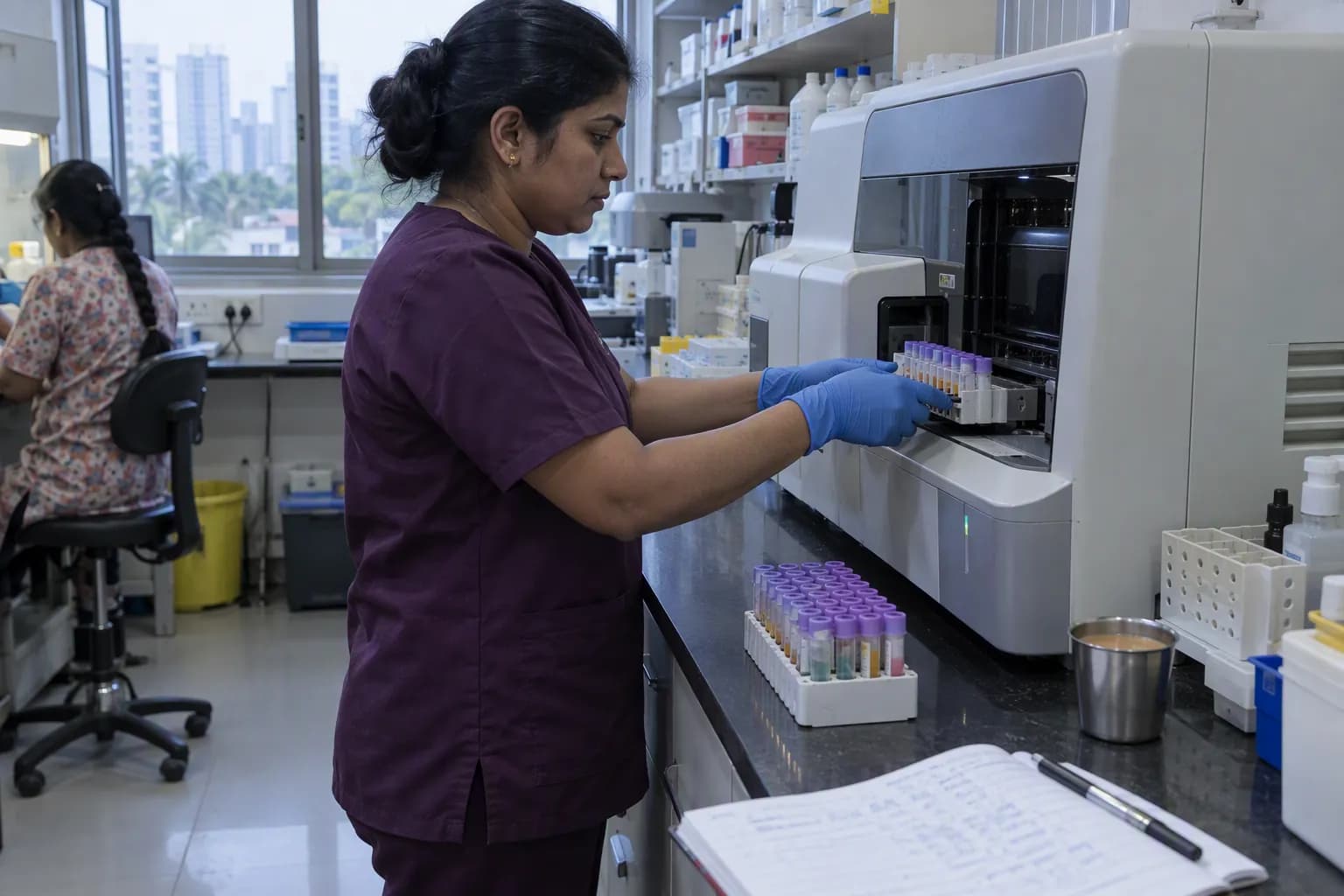
Metaboliq is set up as that kind of joined-up team, and the aim we set with members is "Lose up to 20% of your body weight — and keep your muscle". Results vary; your doctor decides what is right for you. With PCOS the muscle half matters most, because muscle is what soaks up blood sugar. It starts with a home blood test covering insulin, HbA1c, lipids and thyroid, which a doctor reads with you.
45+ markers, one home blood test
- HbA1c
- Thyroid test
- Fasting insulin
- HOMA-IR
- Fasting blood sugar
- Lipid profile
- Liver function test
- Kidney function test
Every source, in full (7)
[1] Teede HJ, et al. Recommendations from the 2023 International Evidence-based Guideline for the Assessment and Management of Polycystic Ovary Syndrome
Journal of Clinical Endocrinology & Metabolism, 2023. The international PCOS guideline, 254 recommendations and practice points, covering diagnosis, metabolic risk, weight and lifestyle care for women with PCOS.
Read the source[2] Kiddy DS, et al. Improvement in endocrine and ovarian function during dietary treatment of obese women with polycystic ovary syndrome
Clinical Endocrinology, 1992. Of 24 women with PCOS on a six-to-seven-month diet, the 13 who lost more than 5% of their weight saw free testosterone and fasting insulin fall; nine of the 11 with period problems among them conceived or became more regular, and hirsutism fell in 40%.
Read the source[3] Clark AM, et al. Weight loss results in significant improvement in pregnancy and ovulation rates in anovulatory obese women
Human Reproduction, 1995. After a six-month weekly diet and exercise programme, 13 women who were not ovulating lost 6.3 kg on average; 12 resumed ovulating and 11 became pregnant, while fasting insulin and testosterone fell.
Read the source[4] Longvah T, Ananthan R, Bhaskarachary K, Venkaiah K. Indian Food Composition Tables 2017
National Institute of Nutrition (ICMR), Hyderabad, 2017. Table 1, Proximate Principles and Dietary Fibre: energy, protein, fat, available carbohydrate and dietary fibre per 100 g edible portion. Every food figure in this page's charts is computed from it for the serving shown.
Read the source[5] Harrison CL, et al. Exercise therapy in polycystic ovary syndrome: a systematic review
Human Reproduction Update, 2011. Across eight studies of moderate exercise, mostly 12 or 24 weeks long, the most consistent gains were better ovulation, insulin resistance down 9-30% and weight down 4.5-10%, whatever the type of exercise.
Read the source[6] Lim SS, et al. Lifestyle changes in women with polycystic ovary syndrome
Cochrane Database of Systematic Reviews, 2019. Across 15 trials (498 women), lifestyle treatment lowered weight by 1.68 kg on average and improved the free androgen index against minimal care; the evidence was of low quality and no trial measured live births.
Read the source[7] Ganie MA, et al. Prevalence, phenotypes, and comorbidities of polycystic ovary syndrome among Indian women
JAMA Network Open, 2024. Among 8,993 women aged 18 to 40 across five zones of India, PCOS prevalence was 7.2% by the NIH criteria and 19.6% by the Rotterdam criteria; of the women with PCOS, 43.2% had obesity, 91.9% dyslipidaemia, 32.9% fatty liver and 24.9% metabolic syndrome.
Read the source