 metaboliq
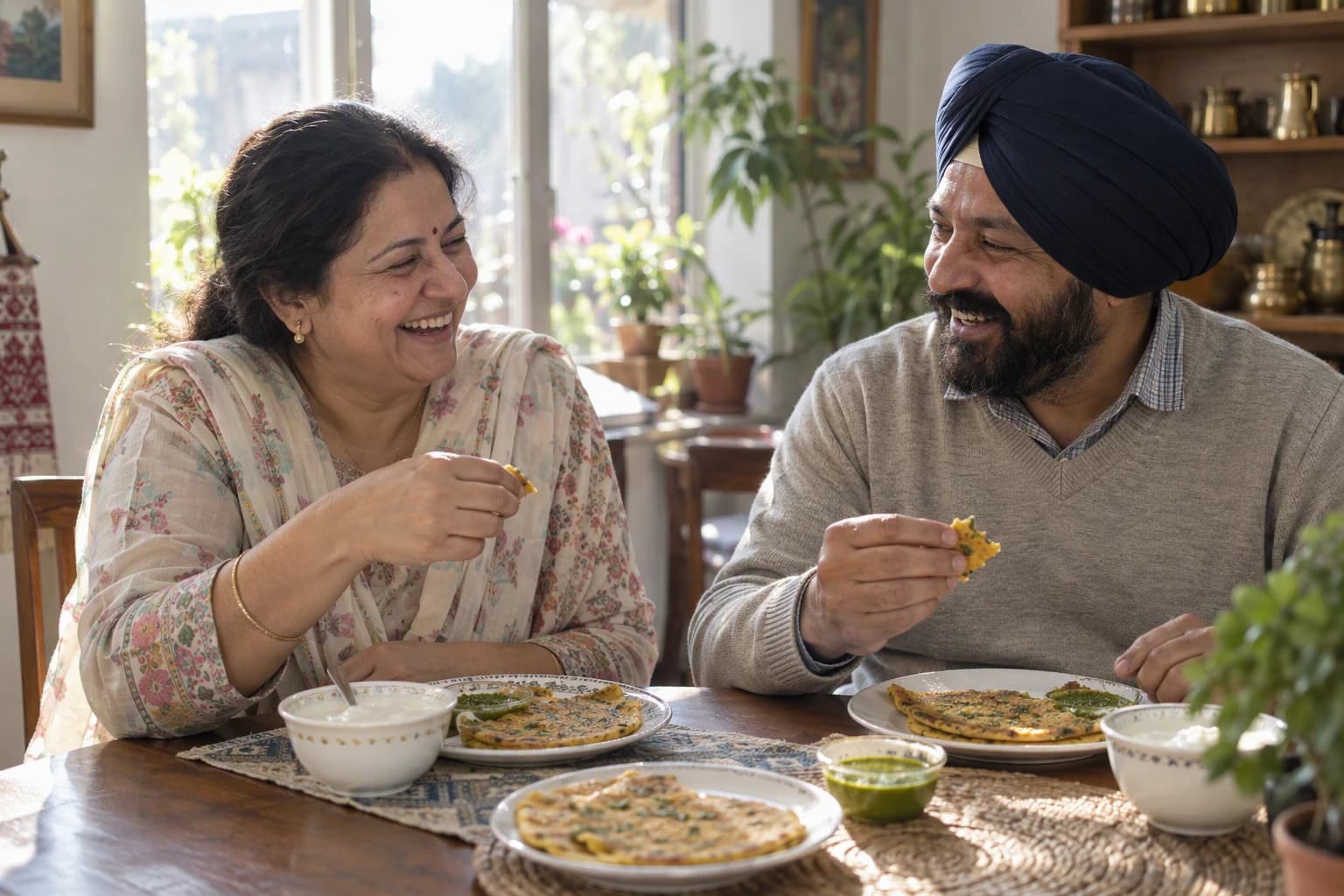
Gurpreet is 52 and runs a hardware store in Amritsar. In August his HbA1c came back at 7.6, his doctor started treatment, and the clinic handed him a printed chart: no rice, no potato, no sweets, no fruit except guava. His wife Manjit has cooked a separate pot for him every night since. Their son jokes that the house now runs two kitchens. Both of them would like one chart the whole family can eat from. Gurpreet and Manjit are composites of the readers who ask this, not real patients.
A good Indian diabetes diet chart keeps rice and roti to about a quarter of the plate. Half is vegetables, and the last quarter is dal, paneer, curd, eggs, fish or chicken. It spreads carbohydrate across the day, limits sugar and refined flour, and leaves room for small portions of favourite foods.
Is there one right diet for diabetes?
No single diet suits everyone with diabetes. The American Diabetes Association's consensus report, led by Alison Evert, reviewed the evidence and concluded that several eating patterns work. Reducing overall carbohydrate had the strongest evidence for improving blood sugar, and the best pattern is the one a person can keep up.
That is good news for Gurpreet and Manjit. The printed chart he was given tries to ban half of Punjabi cooking, and nobody in their house will follow it for long. A chart built on their own food, with smaller grain portions and more dal, sabzi and paneer, can work just as well for his sugar and keeps the family at one table.
Sources: [1]
How should a diabetic plate be divided?
Half vegetables, a quarter protein and a quarter grain. Ranjit Mohan Anjana's analysis of Indian diets found carbohydrate supplying most of the day's energy, largely from white rice and refined wheat, with too little protein. The plate method reverses that balance without banning anything.
In Gurpreet's thali that means a big katori of sarson da saag or mixed sabzi, a katori of dal or a piece of paneer, salad, and one or two phulkas instead of four. Manjit still makes makki di roti in winter; Gurpreet has one with extra saag instead of three. Eating the sabzi and dal first, and the roti last, helps too. Alpana Shukla's trial found that this order lowered the sugar rise after the meal.
What does a full day of meals look like?
Here is Gurpreet's weekday. At 7.30 he has tea with no sugar and a handful of roasted chana. Breakfast at 9 is two besan chillas with mint chutney and a bowl of curd. At 11.30, a guava or an apple. Lunch at 1.30, packed by Manjit for the shop, is rajma or chole, a big salad and two phulkas.
At 5 pm he has buttermilk and a few almonds instead of the samosa from the stall outside. Dinner at 8.30 is palak paneer or a vegetable with dal, one phulka, and curd. On some nights he swaps the phulka for a small katori of rice. A 15-minute walk round the market after dinner finishes the day. The meals are spread out so no single one carries all of his carbohydrate.
Sources: [1]
Can people with diabetes eat rice?
In small amounts, yes. Emily Hu's meta-analysis linked high white rice intake with a higher risk of type 2 diabetes, particularly in Asians, but that was about large daily quantities. A small katori eaten with dal and vegetables behaves very differently from a heaped plate on its own.
Gurpreet loves rajma chawal on Sundays. The new rule in his house is one small katori of rice, cooked a little firmer, with a full katori of rajma and a bowl of curd, and a salad eaten first. He checked his sugar two hours after that lunch with a finger prick on two Sundays and found it in the range his doctor wanted. That was enough to make rajma chawal a Sunday fixture again.
Sources: [3]
Are millet rotis better for diabetes?
They usually help. S. Anitha's systematic review found that most millets had a lower glycaemic index than milled rice or refined wheat, and regular millet intake lowered fasting sugar, after-meal sugar and HbA1c in the studies pooled.
Manjit has started mixing bajra and jowar flour into her atta, roughly one part millet to two parts wheat, so the whole family eats the same rotis. Gurpreet's father, who also has diabetes, says they taste like the rotis of his village childhood. Millet rotis are not a licence for more of them. Two millet rotis still count as two rotis on the plate.
Sources: [4]
Which fruits and snacks are fine with diabetes?
Whole fruit in sensible portions is fine for most people. Guava, apple, pear, orange, papaya and berries are good choices; a small banana or a few slices of mango in season are also manageable with a meal. Juices are the problem, because they deliver the sugar without the fibre.
For snacks, Gurpreet keeps roasted chana and makhana in a jar at the shop counter, and Manjit packs a box of sprouts chaat twice a week. The pinni and biscuits that customers bring at Diwali go home to the grandchildren. Packaged snacks labelled sugar-free often contain refined flour and fat, so they still raise sugar and add weight.
Sources: [1]
How do you eat at weddings and festivals with diabetes?
Plan the plate before you reach the buffet. Start with salad, paneer tikka, dal or a chicken dish, then take one roti or a small spoon of pulao, and choose one sweet rather than sampling all of them. Walking round the venue after eating, even for ten minutes, helps the sugar settle.
Punjabi weddings test this hard. At his niece's wedding in Jalandhar last month, Gurpreet ate the tandoori paneer and dal makhani first, had one butter naan instead of three, and shared a single gulab jamun with Manjit. He skipped the sugary drinks at the reception and danced the bhangra instead, which counted as his walk. His sugar the next morning was only a little above his usual, and nobody at the wedding noticed he was being careful.
Sources: [5]
Should someone with diabetes try a keto diet?
It can lower sugar, but it is hard to keep up and not clearly better than a balanced pattern. Christopher Gardner's trial compared a ketogenic diet with a Mediterranean-style diet in adults with prediabetes or type 2 diabetes. HbA1c improved similarly on both, while LDL cholesterol rose on the ketogenic diet.
Gurpreet's nephew in Canada swears by keto and has told him to give up roti altogether. For a Punjabi family, a diet with no roti and no dal is close to impossible, and dropping dal also drops one of the best protein sources in the house. Anyone on treatment for sugar who wants to cut carbohydrate sharply should talk to their doctor first, because the treatment may need adjusting.
Sources: [6]
How much does weight loss help diabetes?
More than any single food swap. In the US Diabetes Prevention Program, Richard Hamman's analysis found that weight loss was the strongest predictor of avoiding diabetes, with risk falling by about a sixth for every kilo lost. In people who already have diabetes, losing weight usually brings sugar down and can reduce how much treatment they need.
Gurpreet's son Harman, 30, is the one this matters most for now. He works in a bank in Ludhiana, has his father's build, a 98 cm waist and an HbA1c of 5.9 from the same family check-up. He is at the stage where losing the belly can stop diabetes from arriving at all. Harman has started eating from his mother's chart on weekends and walking to work, and he wants a proper plan that keeps his muscle while the fat comes off.
We should say where we stand, since you are reading this on our site. Metaboliq is a doctor-led weight programme, and the aim we set with members is "Lose up to 20% of your body weight — and keep your muscle". Results vary; your doctor decides what is right for you. It starts with a home blood test that a doctor reads, covering HbA1c, fasting sugar and insulin, so Harman starts from his own numbers.
Sources: [7]