 metaboliq
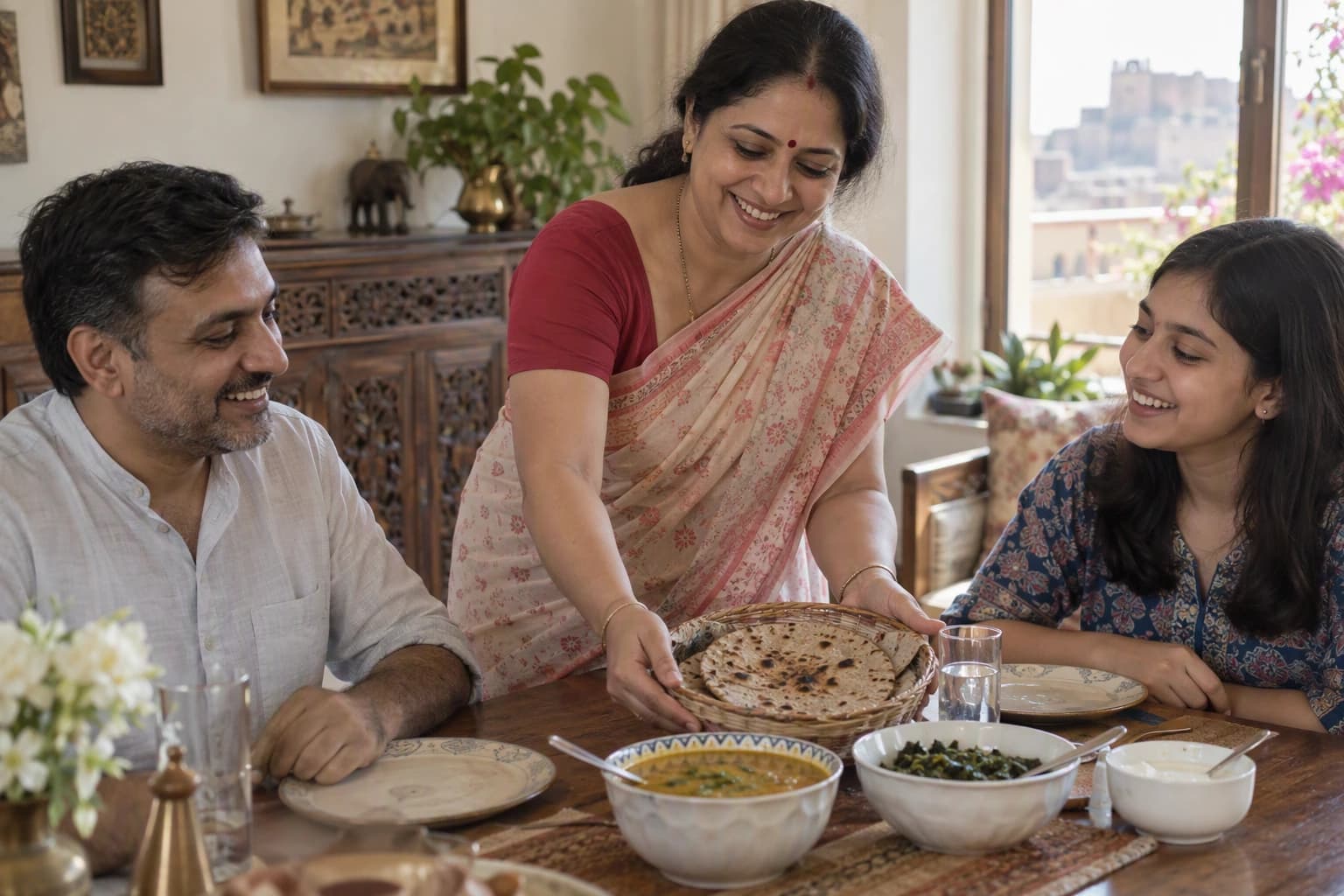
Kamala is 52, lives in Jaipur, and was told at her last check-up that her HbA1c of 6.1 puts her in the prediabetes range. Her niece sent her a glycemic index chart from the internet, and now Kamala is worried about everything on it. Is her bajra roti allowed? Is rice finished for ever? Why is watermelon in the red column when it is mostly water? She would like the chart explained in a way she can use in her own kitchen. Kamala is a composite of the readers who ask this, not a real patient.
The glycemic index ranks carbohydrate foods by how fast they raise blood sugar compared with pure glucose. A GI of 55 or below is low and 70 or above is high. Dals, curd, most fruit and millets sit lower. White rice, white bread and many packaged snacks sit higher. Portion size, what you eat alongside and the order of eating matter as much as the number.
What is the glycemic index, in plain terms?
It is a score out of 100 for how quickly a food's carbohydrate turns into sugar in the blood, measured against pure glucose at 100. Fiona Atkinson's international GI tables, the standard reference, group foods as low at 55 or below, medium in between, and high at 70 or above.
The score is measured in volunteers who eat a portion with a fixed amount of carbohydrate, and their blood sugar is tracked for two hours. That is why GI applies to carbohydrate foods only. Paneer, eggs, chicken and oil have no meaningful GI, because they barely raise blood sugar on their own. Kamala's chart left that out, which is why she was confused to find no paneer on it.
Sources: [1]
Which Indian foods have a low or high GI?
Most dals and pulses, such as chana, rajma, moong and masoor, have a low GI, because of their protein and fibre. Milk and curd are low. Most whole fruits, such as apple, guava, orange and pear, are low to medium. Barley and many millets sit lower than polished rice.
White rice, especially soft-cooked, sits high. So do white bread, cornflakes, puffed rice and most biscuits. Potatoes, particularly mashed or as fries, are high. Wheat roti varies with the flour and how it is made, and usually falls in the medium range. Idli and dosa batter, being fermented rice, tend to run medium to high. Kamala's bajra roti sits lower than her white rice, and her chana dal lower than both.
Is white rice really bad for blood sugar?
In large amounts, eaten every day, it adds to the risk. Emily Hu's meta-analysis at Harvard found that higher white rice intake was linked with a higher risk of type 2 diabetes, more strongly in Asian populations than in Western ones. In Chennai, V. Mohan's group found that refined grain intake and glycaemic load were associated with newly detected diabetes.
That does not make a small katori of rice a problem. Kamala's family eats rice with dal and kadhi at lunch on most days. Halving her own portion, adding a second katori of dal, and eating the rice after the dal and sabzi brings the effect down a long way. Cooling cooked rice and reheating it raises its resistant starch, which some people find gives a slower rise. Parboiled rice tends to run lower than fully polished.
Are millets better than wheat and rice?
Often, yes. S. Anitha's systematic review, from ICRISAT with Indian partners, found that most millets had a lower glycaemic index than milled rice or refined wheat. Eating them regularly over time lowered fasting and after-meal sugar and HbA1c in the studies pooled.
Bajra and jowar rotis are what Kamala grew up on in Rajasthan, before her family switched to wheat. Bringing back a bajra roti at dinner three or four nights a week, with methi or palak sabzi and a bowl of curd, fits her taste and her sugar. Ragi works well as a breakfast porridge. Millet products sold as cookies, chips or instant noodles are a different matter, because processing and added sugar erase much of the benefit.
Sources: [4]
What is glycemic load, and why does it matter more?
Glycemic load counts how much carbohydrate a normal portion carries, as well as how fast it acts. A food with a high GI can still have a small effect when a serving holds little carbohydrate.
Watermelon is why Kamala found it in the red column of her chart. Its GI is high, but a slice is mostly water with a modest amount of sugar, so its load is low and a slice on a hot May afternoon is fine. Her two heaped plates of poha on Sunday mornings are another matter. Poha's GI is only middling, yet two plates carry a lot of carbohydrate, so the load is high. One plate with peanuts and a bowl of curd brings it down by half without giving up the dish.
Sources: [1]
Does the order of eating change the sugar rise?
It does. Alpana Shukla's small trial at Weill Cornell served people the same meal in two orders. When they ate the vegetables and protein first and the carbohydrate last, their sugar after the meal rose clearly less than when they ate the carbohydrate first.
For an Indian thali this is easy. Kamala starts lunch with a bowl of salad and her dal or kadhi, then the sabzi, and only then the rice or roti. The food is identical. Her niece tried the same thing with a glucose meter. Two hours after lunch, her reading was lower on the days she ate in that order, which is a fair test for one person.
Sources: [5]
Which Indian snacks keep blood sugar steadier?
Snacks built on protein, fat or fibre raise sugar slowly. Roasted chana, a handful of peanuts or almonds, sprouts chaat, a bowl of curd, buttermilk, a guava or an apple with a few walnuts all fit. Biscuits, rusk, namkeen made from refined flour, puffed rice and packaged juice raise it fast.
Kamala's 5 pm habit was two Marie biscuits and a cup of tea with a spoon and a half of sugar, which she thought of as light. Her niece suggested roasted chana and tea with half a spoon, and the change was easy because the chana sits in the same steel dabba the biscuits used to. On weekends she makes a bowl of moong sprouts with lemon, onion and a pinch of chaat masala, which the whole family now eats.
Sources: [1]
Is a low-GI diet enough on its own?
Not by itself. In the OmniCarb trial, Frank Sacks's team fed adults a healthy diet with either high-GI or low-GI carbohydrate for five weeks each. Within that already healthy diet, switching to low-GI foods did not improve insulin sensitivity, cholesterol or blood pressure.
A group in Israel led by Eran Segal and Eran Elinav also found that people's sugar responses to the same meal varied widely, so a food that spikes one person can barely move another. Kamala's niece, who wears a glucose sensor, rises sharply after idli and hardly at all after rice with dal. Kamala should treat GI as one guide among several. Smaller starch portions, more dal and vegetables, the walk after dinner and a slowly falling weight will do more for her HbA1c than any chart.
How does muscle help with blood sugar?
Muscle takes up most of the sugar from a meal, so a body with more of it, and muscles that are used, sees a gentler rise. A ten-minute walk after eating helps in the moment, because working muscles pull sugar out of the blood without needing as much insulin.
Kamala walks to the temple near her house every evening, about fifteen minutes each way, and she has moved the walk to straight after dinner instead of before it. On Sundays and Wednesdays her niece shows her a few strength moves: rising from a chair without using her hands, wall push-ups, and lifting two filled water bottles. At 52, holding on to muscle is as useful for her sugar as anything she changes on her plate.
We should say where we stand, since you are reading this on our site. Metaboliq is a doctor-led weight programme, and the aim we set with members is "Lose up to 20% of your body weight — and keep your muscle". Results vary; your doctor decides what is right for you. It starts with a home blood test that a doctor reads, because Kamala's insulin and HbA1c results would change how her plate is built.
Sources: [4]