 metaboliq
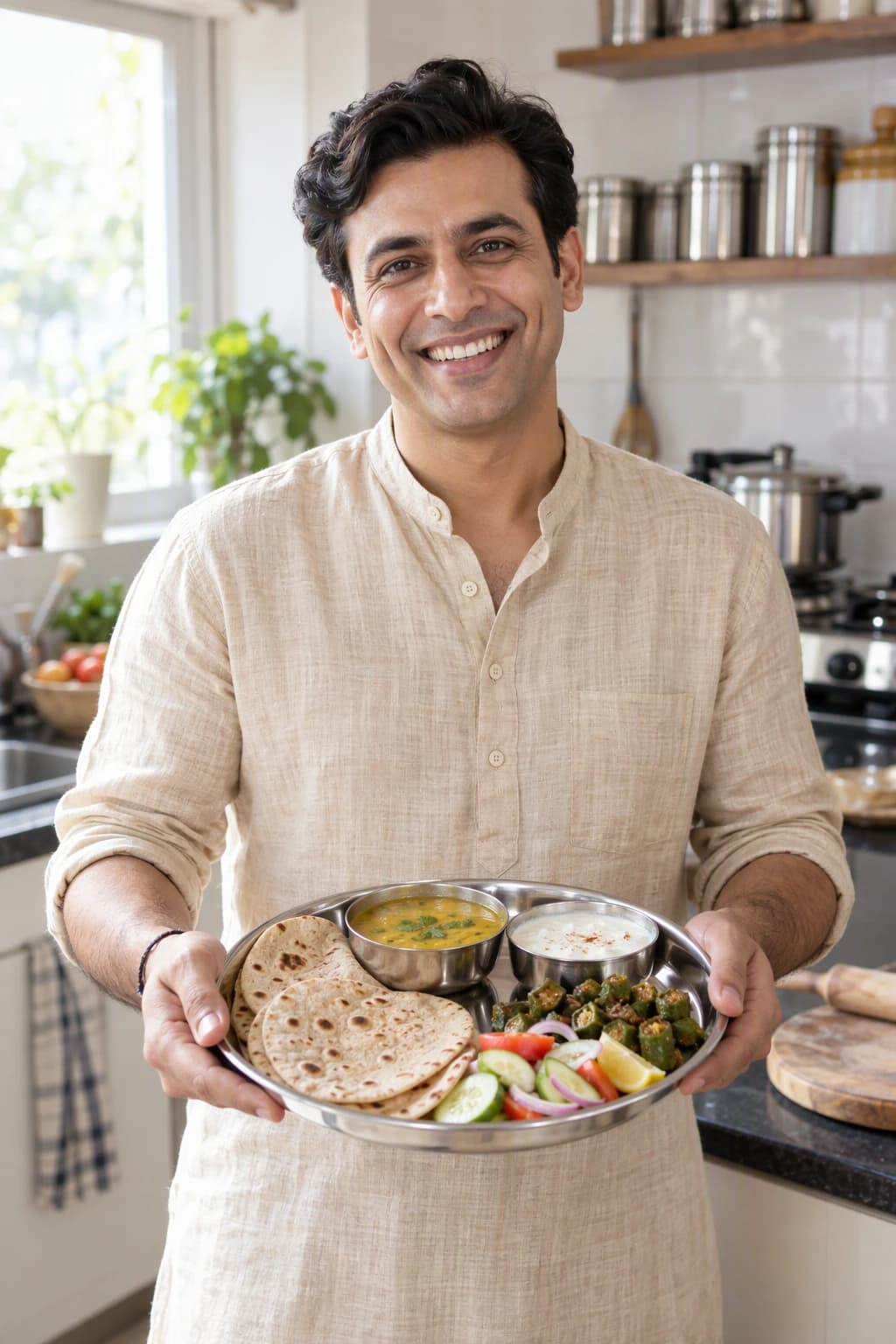
Khichdi can be a good weight loss meal once the usual ratio changes. The everyday version is mostly rice with a little dal. For weight loss, use about twice as much moong dal as rice, add a bowl of vegetables, keep the ghee to a teaspoon and serve it with curd. Made that way, the same soft bowl carries enough protein and fibre to last most people until breakfast.
A dal-heavy khichdi of one part rice or oats to two parts moong dal comes to roughly 150–200 calories a katori, with about 7 g of protein. One or two katoris with curd and salad make a full dinner. Extra ghee, papad and a rice-heavy pot are what undo it.
Is khichdi good for weight loss?
It can be, and it depends almost entirely on what goes into the pot. A khichdi made the way many homes make it, with a cup of rice to a handful of dal and a generous spoon of ghee, is a bowl of starch. It is comforting and easy on the stomach, and it leaves most people hungry again by bedtime.
Reverse the ratio and the bowl looks quite different. Moong dal carries far more protein than rice. Going by IFCT 2017, the Indian food composition tables, 30 g of raw moong dal gives about 7.2 g of protein, while 40 g of raw rice gives about 3.2 g. A dal-heavy khichdi roughly doubles the protein of a rice-heavy one for a similar number of calories.
Pulses also have a small, measured effect on weight. Kim and colleagues pooled 21 trials in which people added beans, lentils, chickpeas or peas to their diet, at a median of about one serving a day. Over around six weeks, the pulse diets led to a modest extra loss, about a third of a kilo, even in trials where calories were not being cut.
The effect is small. Dal's more practical value is that it makes the bowl more filling for the same calories.
Sources: [1]
How do you make a weight loss khichdi?
For two people, wash a quarter cup of rice and half a cup of yellow moong dal and soak them for twenty minutes. Chop about two cups of vegetables: carrot, beans, a few peas, bottle gourd, spinach or whatever is in the fridge.
Heat one teaspoon of ghee in a pressure cooker. Add jeera, a pinch of hing, grated ginger and a green chilli, then the vegetables for a minute. Tip in the rice and dal with turmeric, salt and about four cups of water. Cook for three or four whistles on medium heat, about 12 minutes, until the dal is soft. Let the pressure drop on its own.
The changes from the usual khichdi are the ratio of dal to rice, the amount of vegetables and the single teaspoon of ghee. A spoon of ghee carries about 45 calories, so the second and third spoons at the table are where many bowls go wrong.
Serve it with a katori of curd or cucumber raita and a plate of kachumber. Leave the papad and pickle for another day, or keep them small, because both add salt and the papad usually arrives fried.
Which is better for weight loss: oats, moong dal or rice khichdi?
Whether you use rice, oats, dalia or a millet, it is the moong dal and the vegetables that give the bowl its protein and bulk.
Oats khichdi is a good choice for anyone watching cholesterol. Whitehead and colleagues pooled 28 trials of oat beta-glucan, the soluble fibre in oats. At three grams a day or more, it lowered LDL cholesterol by about 0.25 mmol/L. Rolled oats cook in a few minutes, so add them to the dal near the end rather than pressure-cooking them from the start, or the khichdi turns gluey.
Rice khichdi is fine too, as long as the rice is the smaller part of the bowl. Brown rice or a hand-pounded rice adds a little fibre and takes longer to cook. Millets such as foxtail or little millet work the same way and suit people who prefer their taste.
Masoor dal and split moong with skin can replace yellow moong for variety. Chana dal makes a heavier, slower-cooking khichdi; soak it longer and use it in smaller amounts if it causes gas.
Sources: [3]
Does khichdi raise blood sugar?
Less than plain rice does, especially when the dal is generous. In an Indian study, Mani and colleagues fed people with type 2 diabetes several traditional Indian meals with the same amount of carbohydrate. Rice with green gram dal or red gram dal gave a lower glycaemic index than plain rice. Rice with peas did not.
A later trial by Winham and colleagues found the same pattern with chickpeas and black beans eaten with white rice. Blood sugar after the mixed meals stayed lower than after rice alone.
Rice itself is worth keeping in proportion. Hu and colleagues pooled cohort studies and found that, in Chinese and Japanese adults, those who ate the most white rice had a higher risk of type 2 diabetes. Many Indian homes eat rice in similar amounts, so a smaller rice share in khichdi is a sensible change.
There is one small kitchen trick with some evidence. Sonia and colleagues found that cooked white rice cooled in the fridge for 24 hours and reheated had more resistant starch and gave a smaller rise in blood sugar than fresh rice. Leftover khichdi warmed for lunch the next day is a reasonable use of that finding.
Is khichdi a good dinner for weight loss?
It is one of the easier dinners to get right. It cooks in one pot, it is gentle on the stomach late in the evening, and a dal-heavy bowl with vegetables carries a fair amount of protein for its calories.
The risk at dinner is portion. Soft food goes down fast, and khichdi is often eaten straight from the cooker with a ladle rather than measured into a bowl. Serve it in a katori, sit down, and eat the raita or salad first.
Eating earlier helps many people. If dinner is at ten and bedtime at eleven, a large bowl of anything sits heavily. Moving khichdi night to eight o'clock leaves room for a short walk afterwards, which also helps blood sugar after the meal.
Hunger an hour after dinner usually means the bowl was light on dal or missing the curd. Next time, add another quarter cup of dal rather than more rice.
Sources: [2]
How much khichdi should you eat to lose weight?
For most adults, one to two katoris of a dal-heavy khichdi, with a katori of curd and a plate of salad, is a full dinner. The recipe above makes about four katoris, enough for two people.
A rough calorie count helps you see where the numbers come from. The quarter cup of rice and half cup of dal in that pot add up to about 50 g of rice and 100 g of dal, raw. On the IFCT figures, that is roughly 180 calories of rice and 325 of dal, plus 45 for the ghee and perhaps 80 for the vegetables. Split two ways, each person gets about 315 calories and around 14 g of protein before the curd.
Those are estimates, and katoris differ. What they show is that the ghee, papad, pickle and second helping can easily add as much again.
Weigh it once. Ladle your usual portion into a bowl on a kitchen scale for a week. Many find their usual ladle holds more than they guessed, and serving one measured katori soon becomes a habit.
Sources: [1]
Why does a khichdi-only diet stall?
After Diwali, plenty of families switch to khichdi for every meal to undo the sweets. It feels virtuous and the scale moves for a few days. Then the evenings get hungry, a packet of biscuits appears, and by the second week most people have drifted back.
What the plan lacks is enough protein. Leidy and colleagues reviewed weight loss trials and found that diets higher in protein took off more fat and kept more lean mass than lower-protein ones, and left people a little fuller. Three bowls of khichdi a day, even a dal-heavy one, rarely reaches those levels.
That lean mass is mostly muscle, and muscle is what keeps the body's daily burn up after the diet ends. A day built around khichdi at dinner, eggs or paneer at breakfast and dal or chicken at lunch protects it far better.
This is the thinking in Metaboliq plans, which aim for a loss of up to 20% of body weight while keeping muscle. A doctor sets the pace after a home blood test, and khichdi with raita can easily be dinner three or four nights a week.
Sources: [2]
What does a week of khichdi dinners look like?
Neha, 36, is a software tester in Hyderabad. She is an illustration, not a patient. She cooks khichdi four nights a week and varies the grain and vegetables so the family does not tire of it.
Monday is moong dal and rice khichdi with spinach and carrot, with cucumber raita. Tuesday she has roti, dal and paneer sabzi instead. Wednesday is oats and moong khichdi with tomato and peas, the oats stirred in for the last five minutes, with a bowl of curd.
Thursday is grilled fish or chicken with salad. Friday is a masoor dal and foxtail millet khichdi with bottle gourd and a squeeze of lemon. On Saturday the family eats out. Sunday night is a light moong dal khichdi with lots of vegetables after a heavy lunch.
She serves one katori with a ladle kept for the purpose and uses one teaspoon of ghee for the whole pot. Leftovers go in the fridge and are reheated for the next day's lunch.