 metaboliq
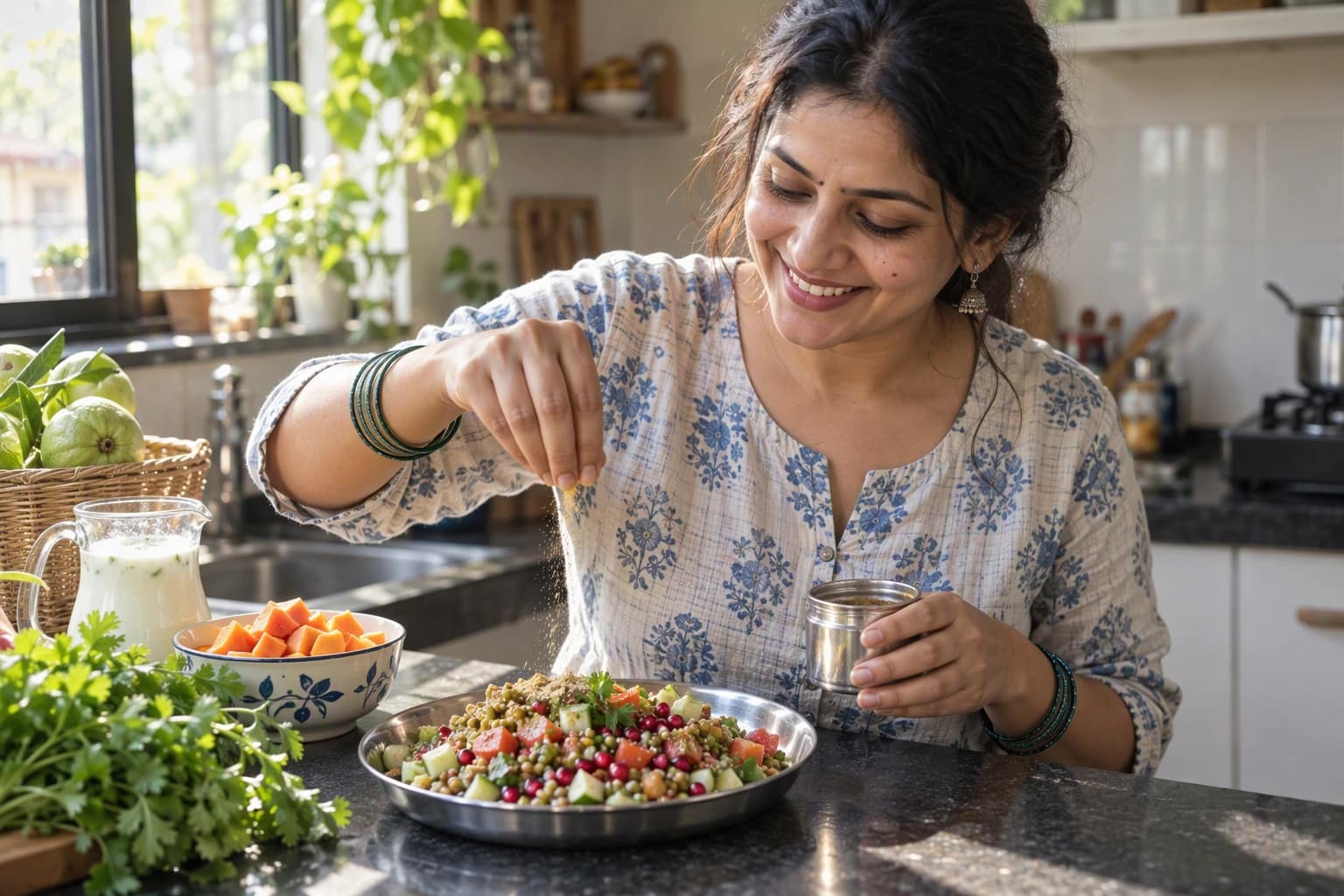
Meera is 45, teaches maths at a school in Nagpur, and two weeks ago started writing down what she eats in a notebook her daughter bought her. The notebook has already told her two things. The handful of chivda she has with evening tea comes to more calories than her lunch, and the 1,400 calories her daughter's app set for her leave her hungry by eleven every morning. Meera is a composite of the readers who ask this, not a real patient.
The Indian foods lowest in calories for their size are vegetables, clear soups, buttermilk, curd, sprouts, thin dals, papaya, guava and egg whites. They fill the stomach with water and fibre, so you eat less of the dense foods around them. Pair them with protein at each meal and hunger stays manageable.
What makes a food low in calories but filling?
Water and fibre, mostly. Barbara Rolls at Penn State has spent decades on what she calls energy density, the number of calories packed into each bite. Her studies show that people tend to eat a fairly steady weight of food, so a plate built from low-density foods lets them feel satisfied on fewer calories.
Meera's notebook shows the idea plainly. A full katori of lauki sabzi cooked in one teaspoon of oil comes to roughly 80 calories. The same katori filled with chivda is closer to 450. Both fill the bowl, and only one fills the stomach for long. Once she sees her food this way, the job gets simpler. More of the watery, fibrous foods go on the plate, and they crowd out some of the dense ones.
Sources: [1]
Which Indian vegetables are lowest in calories?
Most of the gourds and leafy greens. Lauki, tori, tinda, karela, cucumber, cabbage, cauliflower, spinach, methi, bhindi, capsicum and tomato are all low in calories per katori when they are cooked with a little oil. Potato, sweet potato, arbi and peas carry more energy and are best treated as part of the grain share of the plate.
In Meera's kitchen the change is in the cooking more than the shopping. Her mother's style of sabzi starts with three tablespoons of oil in the kadhai, which adds over 300 calories to a family dish before a single vegetable goes in. Cutting that to one tablespoon for the whole family, and finishing with a squeeze of lemon or a spoon of fresh coriander for flavour, keeps the taste her husband expects. Steamed or pressure-cooked vegetables with a tadka poured on at the end use less oil again.
Sources: [1]
Are dals and pulses low-calorie foods?
Cooked dal is moderate in calories and very high in usefulness, because it brings protein and fibre with it. Heather Leidy's review found that meals higher in protein left people fuller and eating less later. A thin moong or masoor dal is one of the most filling foods per calorie in an Indian kitchen.
The trap is the tadka and the cream. A bowl of dal makhani at a dhaba can carry several hundred calories of butter and cream on top of the lentils. Meera's yellow moong dal with a single spoon of ghee in the tadka keeps most of the protein for a fraction of the cost. Sprouted moong and chana are better still for a snack, eaten as a chaat with onion, tomato, lemon and chaat masala. Her daughter now packs a box of sprouts for the 5 pm hunger that used to mean a packet of chips.
Sources: [3]
Which low-calorie snacks work in an Indian home?
Roasted chana, makhana roasted with a pinch of salt, a bowl of curd, buttermilk, cucumber and carrot sticks, a fruit such as guava or papaya, and sprouts chaat all fit. What they share is fibre, protein or water, which is what keeps the next meal from turning into a feast.
Kevin Hall's inpatient trial at the US National Institutes of Health is a warning about the opposite kind of snack. On an ultra-processed diet, volunteers ate about 500 calories a day more than on a minimally processed one, without trying to. Meera's chivda, bhujia and cream biscuits sit squarely in that first group. She has kept the tin of chivda for Sunday guests and moved a jar of roasted chana to the spot on the counter where it used to sit. It is a small move that has done more for her evening hunger than any rule in the notebook.
Sources: [2]
Do low-calorie drinks help with hunger?
Water before meals may help a little, and swapping sweet drinks helps a lot. Elizabeth Dennis and Brenda Davy studied older adults on a reduced-calorie diet. Those who drank about half a litre of water before each main meal lost more weight over twelve weeks.
Sweet drinks are the other side of it. In Richard Mattes's laboratory at Purdue, people who took extra calories as a drink did not eat less at their next meals to make up for it. Meera drinks four cups of chai a day with two spoons of sugar in each. Halving the sugar saves well over a hundred calories a day without changing the ritual. Salted chaas at lunch and a glass of water before dinner are both close to zero calories, and both leave her a little fuller sitting down to eat.
What does a low-calorie Indian breakfast look like?
One that leads with protein and vegetables instead of refined flour. A besan chilla stuffed with grated vegetables works, and so do two idlis with a thick sambar. Vegetable poha with curd, or egg bhurji with one roti, also carry most people to lunch.
Meera used to eat two aloo parathas with butter and pickle on most mornings, and her notebook told her that breakfast alone was close to 700 calories. Her new rotation is a besan chilla with curd on weekdays and one paratha with curd on Sundays, when the whole family eats together. The difference to her day is several hundred calories, and she says the chilla keeps her full longer, which matches what the protein research would predict.
Sources: [3]
Should rice and roti be cut on a low-calorie diet?
Reduced, not removed. Ranjit Mohan Anjana's analysis of Indian diets found that carbohydrate, largely from white rice and refined wheat, supplies most of the day's energy, while protein is low. That pattern is what to shift.
In practice the grain moves from the centre of the plate to a quarter of it. For Meera that means one roti less at lunch and a small katori of rice at dinner, eaten after the dal and sabzi rather than first. Andrew Reynolds's large review linked more fibre and whole grain with lower rates of diabetes and heart disease. So a whole-wheat phulka or a millet roti beats a white-flour naan. Brown rice, bajra and jowar are not low in calories, but they bring more fibre with each bite.
Why can eating only low-calorie foods backfire?
Because a plate of cucumber and lauki with no protein leaves you hungry, and some of the weight you lose will be muscle. Meera tried a week of salads and clear soup before the notebook. On the fourth night she was standing at the fridge at 11 pm eating her daughter's leftover pasta straight from the box, and she had a headache through most of her Friday classes.
Her plate now has a katori of dal or a piece of paneer at the centre, with the low-calorie vegetables around it. She is losing more slowly than in that salad week and has not had a fridge raid since.
We should say where we stand, since you are reading this on our site. Metaboliq is a doctor-led weight programme, and the aim we set with members is "Lose up to 20% of your body weight — and keep your muscle". Results vary; your doctor decides what is right for you. It starts with a home blood test that a doctor reads, because Meera's thyroid and sugar results would change how her plate should be built.
Sources: [3]