 metaboliq
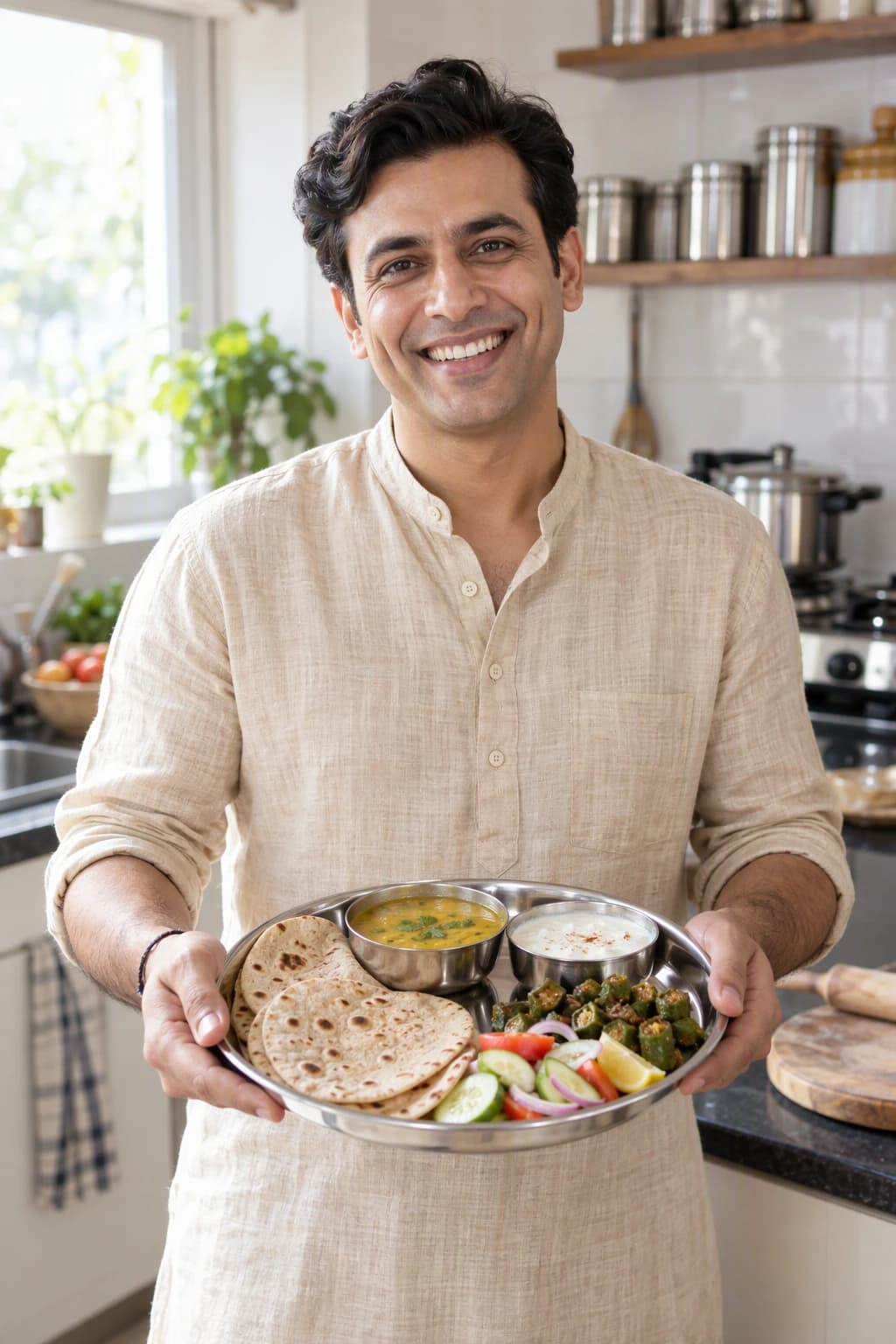
Most weeknight dinners can be turned into weight-loss dinners with small changes: more sabzi, less rice, a proper portion of dal, paneer, eggs or chicken, and a teaspoon of oil instead of three. The twelve recipes below are built that way. Moong dal chilla with curd, paneer bhurji with a phulka and egg bhurji with one roti are the quickest, at 10–15 minutes. Soya chunk stir-fry, tawa chicken tikka, a light fish curry and a chana chaat bowl are close behind. Each recipe serves one and lands at roughly 300–400 calories with 15–35 g of protein.
Pick three or four and cook them on rotation, changing the masala when you get bored. If the scale stalls, shrink the rice or roti first. Where you can, eat dinner two or three hours before bed rather than just before it.
Which quick vegetarian dinners work for weight loss?
Moong dal chilla. Soak 50 g of yellow moong dal for two hours or overnight, then grind it with ginger, green chilli and salt. Spread two thin chillas on a non-stick tawa with a teaspoon of oil in total. Fill them with 30 g of grated paneer, onion and capsicum, and eat with 100 g of curd. About 360 calories and 21 g of protein; 15 minutes at the stove once the dal is soaked.
Paneer bhurji with one phulka. Cook onion, tomato and capsicum in a teaspoon of oil with jeera and haldi, then crumble in 100 g of low-fat paneer for two minutes. Serve with one phulka and a plate of cucumber, carrot and tomato. About 380 calories and 22 g of protein in 15 minutes. Regular paneer adds roughly 70 calories.
Masoor dal with lauki sabzi. Pressure cook 40 g of masoor dal for three whistles; it needs no soaking. Temper it with a teaspoon of ghee, jeera and garlic while the lauki cooks with a teaspoon of oil and a pinch of hing. One roti and a small bowl of curd complete it. About 400 calories and 17 g of protein; 10 minutes of work, 25 in all.
Soya chunk stir-fry. Boil 40 g of dry soya chunks for five minutes and squeeze out the water. Toss them in a teaspoon of oil with onion, beans, capsicum, a splash of soy sauce and black pepper. Eat with half a cup of cooked rice. About 330 calories and 24 g of protein in 15 minutes, which makes it the best protein-for-effort dinner on the vegetarian list.
Vegetable dalia khichdi. Pressure cook 30 g of broken wheat with 30 g of moong dal, peas, carrot and beans, and finish with a teaspoon of ghee. Eat it with 150 g of curd. About 380 calories and 17 g of protein; 10 minutes of work, 25 in all. It freezes well in single portions for tired evenings.
Which quick dinners with eggs, chicken or fish work best?
Egg bhurji with one roti. Scramble two whole eggs and two egg whites with onion, tomato, green chilli and coriander in a teaspoon of oil, adding a handful of spinach if there is some in the fridge. With one roti and a salad, it comes to about 350 calories and 23 g of protein in 12 minutes.
Pan-grilled chicken tikka. Marinate 150 g of boneless chicken breast in 50 g of curd, ginger-garlic paste, lemon and tikka masala for at least 20 minutes. Cook on a hot tawa with a teaspoon of oil for eight to ten minutes, turning once. Serve with mint chutney, onion rings and sauteed vegetables. About 380 calories and 37 g of protein; 15 minutes of work.
Light fish curry. Simmer 150 g of rohu or pomfret in a thin gravy of onion, tomato, mustard seeds, curry leaves and three tablespoons of coconut milk. Eat it with half a cup of cooked rice. About 400 calories and 27 g of protein in 20 minutes.
Chicken and vegetable soup. Boil 120 g of chicken with ginger, garlic, pepper, carrot and beans for 20 minutes. Shred the meat back into the pot, add lemon, and eat with one slice of whole-wheat toast. About 300 calories and 30 g of protein, and the most filling of the twelve on a cold night.
What are good light dinners for summer?
Hot evenings are a good time to lean on water-rich food. Rolls's work found that a large first course of salad or soup reduces the total eaten at the meal, and these three dinners are built mostly from that kind of food.
Chana chaat bowl. Toss a cup of boiled kala or white chana with onion, tomato, cucumber, raw mango, lemon, chaat masala and coriander, then crumble in 30 g of paneer. About 360 calories and 20 g of protein; 10 minutes if the chana was boiled earlier in the week.
Curd with sprouts. Mix 200 g of plain curd with grated cucumber, roasted jeera and mint. On the side, saute 150 g of moong sprouts in a teaspoon of oil and top them with a spoon of roasted chana. About 290 calories and 16 g of protein in 10 minutes.
Grilled paneer salad. Grill 100 g of low-fat paneer cubes with salt and pepper, then toss with lettuce, cucumber, tomato and two tablespoons of sweet corn. Dress it with curd, lemon and mint. About 320 calories and 22 g of protein in 15 minutes.
Sources: [1]
What makes these dinners work for weight loss?
The calorie and protein figures above are estimates from typical nutrition labels and food tables, so treat them as a guide. All twelve recipes follow the same pattern. Protein takes a palm-sized portion, vegetables fill half the plate, and the grain portion stays small.
That pattern leans on what Rolls at Pennsylvania State University calls energy density, the calories in each gram of food. Water-rich food such as vegetables, dal and soup has few calories per bite, while fried snacks and rich gravies have many. When researchers made people's meals less energy-dense, they ate fewer calories without feeling they had eaten less.
Fibre is the other reason for the extra sabzi. Reynolds and colleagues reviewed 185 cohort studies and 58 trials for The Lancet. People eating 25–29 g of fibre a day had the lowest rates of heart disease and diabetes, and trials of higher-fibre diets showed lower body weight. Whole dals, vegetables and millets at dinner cover a good share of that.
Does the time you eat dinner matter for weight loss?
Total calories across the day matter most, but timing seems to add something, mainly in small trials. Jakubowicz and colleagues in Israel put women with obesity on the same 1,400 calories a day for 12 weeks. One group ate 700 calories at breakfast and 200 at dinner, and the other ate the reverse. The big-breakfast group lost more weight and waist, and their blood sugar and insulin fell further.
In Spain, Garaulet's team followed 420 adults through a 20-week weight-loss programme. Those who ate their main meal after 3 pm lost weight more slowly, although calories and activity were similar. In an American laboratory trial by Gu and colleagues, the same dinner eaten at 10 pm instead of 6 pm left blood sugar higher overnight and burned less dietary fat during sleep.
Many Indian families eat at 9 or 10 at night, and moving dinner to 7 is not always possible. A workable middle path is to keep the late dinner small and have a proper evening snack at 5 or 6. Then dinner itself can be a bowl of dal and sabzi rather than a full thali.
Why eat the sabzi before the roti?
The order of food on your plate changes what your blood sugar does after the meal. Shukla and colleagues at Weill Cornell in New York gave adults with type 2 diabetes the same meal on two days. When they ate the vegetables and chicken first and the bread fifteen minutes later, blood sugar after the meal came out clearly lower.
Imai and colleagues in Japan tested young healthy women with a meal of vegetables, fish and white rice. Starting with the vegetables lowered the rise in blood sugar and insulin compared with starting with the rice. The effect held even when the women ate fast.
Neither study measured weight, so this is a habit for steadier blood sugar rather than a weight-loss method. It is also how a traditional thali is often eaten, with the vegetables and dal tasted before the rice. Try eating the salad and a few spoons of sabzi or dal before you tear the first roti. Many people find they stop at one.
How does dinner help you keep muscle while losing weight?
In many vegetarian homes dinner is the meal lowest in protein: a roti or two, some thin dal, a vegetable. When you eat less overall, that gap starts to cost muscle. Wycherley and colleagues pooled 24 trials that compared higher-protein and standard-protein diets at the same calories. Over about 12 weeks the higher-protein groups kept around 0.4 kg more lean mass and lost slightly more fat.
Most of the dinners above carry 15–35 g of protein, which covers a main meal's share. Keeping muscle is what stops the resting calorie burn from sliding as the weight comes off, and it is a big part of why some people keep their weight down and others regain it.
That is the reasoning behind Metaboliq's plans, which aim for up to 20% of body weight off with muscle kept. Doctors there start with a home blood test and the food a person already eats, then set a daily protein figure and add strength work. Paneer or egg bhurji with sabzi is a typical dinner in those plans.
Sources: [8]
How do you plan quick dinners for a busy week?
Cook the slow parts once a week. On Sunday, boil a batch of chana or rajma and soak and grind moong dal batter; both keep about three days in the fridge. Chop onions and tomatoes for two or three days at a time. Marinate chicken no more than a day ahead, or freeze it in portions.
Repeat dinners rather than inventing new ones every night. A short list of three or four, written on a sheet on the fridge, means the decision is made before you are hungry. Change the masala to stop boredom: the same paneer works as bhurji, tikka or salad.
Swaps are easy. Tofu replaces paneer for a dairy-free plate, and leftover dal thinned with water becomes a soup. Leftover rice can go into a vegetable pulao with extra peas and beans. When ordering in, tandoori dishes, dal and salad fit far better than butter gravies or biryani.