 metaboliq
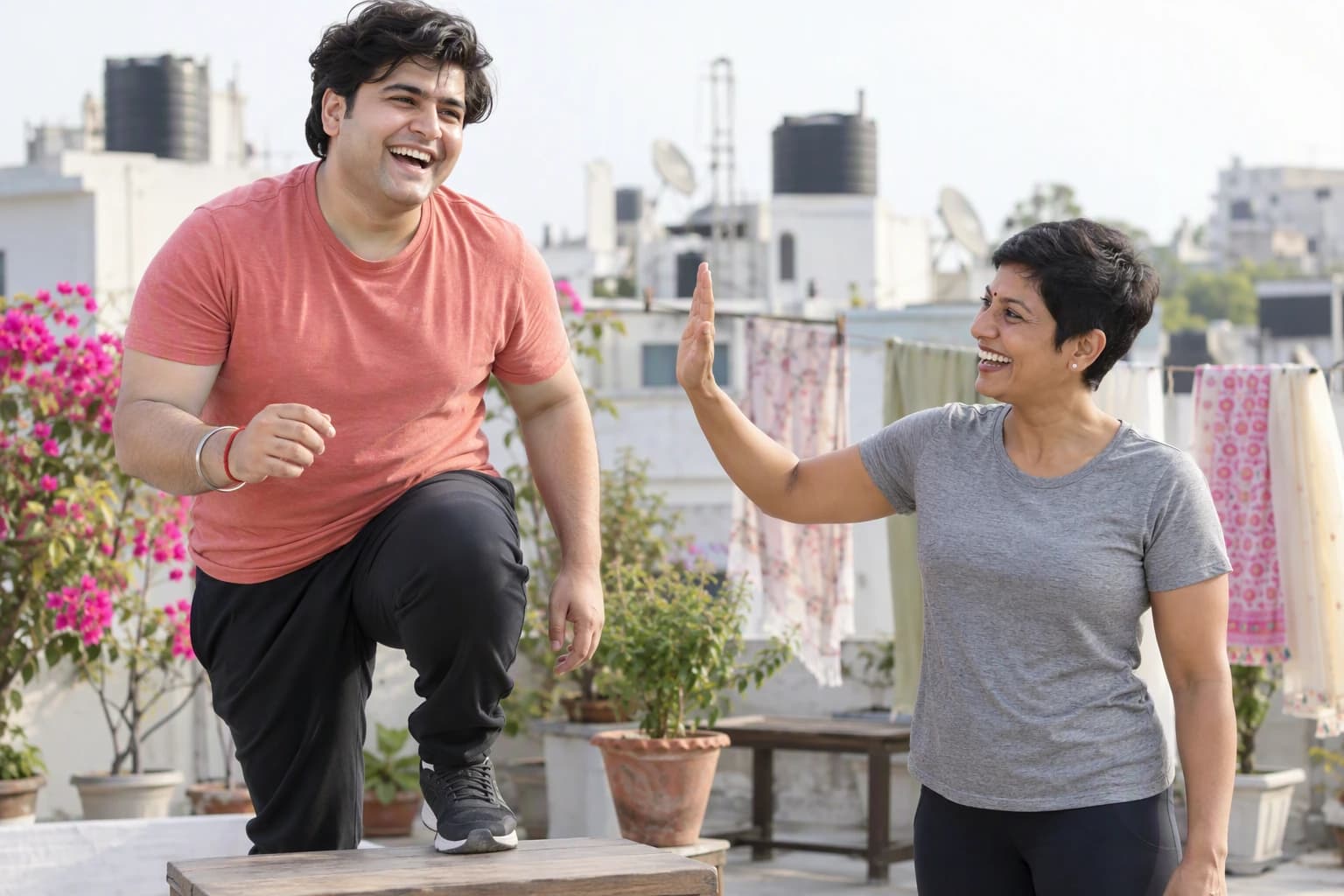
Dumbbells will help you lose fat, though in the first month the scale may suggest otherwise. When Wewege's group in Sydney pooled 54 trials, strength training alone took about 1.5 percentage points off body fat and trimmed the fat around the organs. Body weight barely moved, because the lifters put on some muscle as the fat went. On a diet the benefit is larger. People who lift while eating less hold on to their muscle, so more of every kilo they lose is fat.
A workable week is two or three half-hour dumbbell sessions, a brisk walk on most other days and slightly smaller meals. Choose a weight you can lift 10–15 times with good form, where the last two reps are hard. Add a kilo or a few reps every week or two.
Can dumbbells help you lose weight?
Yes, though the scale is the slowest place to see it. Wewege and colleagues in Sydney pooled 54 trials in which healthy adults did full-body strength training for at least four weeks without changing their diet. The lifters lowered their body fat by about 1.5 percentage points and lost around half a kilo of fat, including some of the visceral fat around the liver and gut.
Many of them gained a little muscle at the same time, so weight barely moved while waists got smaller. For the first two months, a tape measure around the navel and the fit of a favourite pair of trousers are better judges than the bathroom scale. Measure on the same morning each fortnight, before breakfast.
The WHO counts dumbbell work as the strength training every adult needs. Its 2020 guidelines, written by a group led by Bull, ask for muscle-strengthening on two or more days a week on top of 150–300 minutes of moderate activity such as brisk walking.
Are dumbbells or cardio better for fat loss?
Cardio, if you only count kilos. Over eight months at Duke University, Willis's team had sedentary adults walk or jog, lift, or do both. The walkers and joggers lost more weight and fat than the lifters. Only the lifters, though, came out with more lean mass than they started with.
Most people end up doing both, and it takes less time than it sounds. Forty minutes of brisk walking after dinner on most days, plus three half-hour dumbbell sessions a week, is plenty. The plans that ask for an hour of each, every day, tend to be abandoned by week six.
You can also blur the line. Do the dumbbell routine as a circuit, squats then rows then presses, with 20–30 seconds between moves, and your heart rate climbs like it does on a jog. Slower sets with a minute's rest build strength faster. A simple split is circuits on Monday and Friday and slower sets on Wednesday.
Sources: [3]
How heavy should your dumbbells be for fat loss?
Lighter than most people expect, provided the last few reps are hard. Schoenfeld and colleagues compared 21 studies of light loads, at 60% or less of what a person could lift once, against heavy loads. When every set was taken close to failure, muscle grew by about the same amount. The heavy groups got stronger on a one-rep test, which matters to powerlifters and hardly at all to someone trying to lose fat.
That is good news for a flat in Pune or Chennai with one pair of dumbbells and no rack. Pick a weight you can lift 10–15 times with clean form, where reps 12 and 13 slow down. For many women starting out that is 2–5 kg per hand, and for many men 5–10 kg. Squats and Romanian deadlifts usually take more weight than shoulder presses.
If your dumbbells feel too light, slow down before you buy more. Take three seconds to lower each squat, row or press, pause at the bottom, and switch to one-leg moves such as split squats or step-ups onto a sturdy stool. The same 5 kg pair gets a lot harder that way.
Sources: [4]
Which dumbbells should you buy for home?
An adjustable pair that goes up to about 12.5 kg per hand lasts most beginners a year or more, and it fits under a bed in a small flat. Spin-lock sets with loose plates are the cheapest type. Dial or pin types change weight faster, which helps in a circuit, but cost more.
Fixed dumbbells are simpler and tougher. If you go that way, buy two pairs rather than one: a light pair for presses and rows and a heavier pair for squats, lunges and deadlifts. Rubber-coated heads protect the floor and are quieter for neighbours below, which matters in most Indian apartment blocks.
Skip vinyl-filled or sand-filled dumbbells above a few kilos. They are bulky for their weight and hard to grip for a goblet squat.
What is a good dumbbell workout for fat loss at home?
You need about 30 minutes, one pair of dumbbells and a mat or a rug. Spend five minutes warming up: march on the spot, swing your arms, and do ten slow squats with no weight. Then work through six moves, 10–12 reps each, with about a minute's rest between them. Do three rounds, resting two minutes after each.
Start with a goblet squat, holding one dumbbell upright against your chest and sitting down between your heels until your thighs are roughly level with the floor. Follow it with a Romanian deadlift. Hold a dumbbell in each hand, keep a slight bend in the knees, and push your hips back with a flat back until the hamstrings pull, then stand tall. The third move is a bent-over row, leaning forward from the hips and pulling both dumbbells towards your lower ribs.
The second half moves to the upper body and one leg at a time. Lie on the mat for a floor press, pushing the dumbbells up from your chest with elbows at about 45 degrees. Stand for reverse lunges, stepping one foot back and lowering the back knee towards the floor, alternating sides. Finish with an overhead press, standing tall with your ribs down so your lower back doesn't arch.
After the last round, walk slowly around the room for 30–40 seconds holding the heaviest dumbbells you own, twice. This farmer's carry trains grip and the trunk, and it is the easiest move to load up over the months.
Of the six moves, the squat and the deadlift carry the most weight and the most room for error. In the first week, prop your phone against a wall and film one set of each, or ask a trainer at a local gym to watch once. A rounded back on the deadlift is the fault to look for, and it usually means the weight is too heavy for now.
How many days a week should you train with dumbbells?
Three days with a rest day between each, Monday, Wednesday and Friday for example, suits most beginners. Two days meets the WHO minimum. Wewege's review found that the amount of training made no difference to how much fat came off, so a two-session week during Diwali or a work trip still counts.
Walk on the days in between, either 30–45 minutes at a pace where talking takes some effort or 8,000–10,000 steps across the day. In the first two months keep one day fully easy. Tendons in the knees and elbows adapt more slowly than muscle, and a sore knee is the commonest reason beginners stop.
After each session, write one line per move in your phone's notes: the weight and the reps. When all three rounds of a move reach 15 clean reps, add a kilo or two, or a fourth round. On weeks when the scale does not budge, those notes show the strength still climbing.
Why do dumbbells matter most when you are dieting?
On a diet without exercise, a surprising share of the weight lost is not fat. Weinheimer's review of 52 studies in adults over 50 found that in 81% of diet-only groups, at least 15% of the loss was fat-free mass, which includes muscle. When exercise was added, that happened in 39% of groups. The scans in those studies measure lean tissue as a whole, so water and organ tissue are counted too, but muscle is the part that matters most for strength and daily calorie burn.
Sardeli and colleagues pooled six trials of older adults with obesity on calorie-restricted diets, all using machines or free weights three times a week. Lifting prevented almost all of the lean mass loss, and the fat loss was no smaller. Villareal's trial of 160 dieting older adults found the same pattern, with the combined aerobic and strength group doing best on tests of walking, rising from a chair and climbing stairs.
These trials were in people over 60, where muscle loss is steepest. Younger adults lose muscle more slowly, but the direction is the same.
The stakes rise with the size of the loss. If a 90 kg man loses 18 kg and 15% of it is lean tissue, he gives up nearly 3 kg of it. That is the reasoning behind Metaboliq's plans, which aim for up to 20% of body weight off with muscle kept. Doctors there start with a home blood test and a review, then set a daily protein figure and build in two or three strength sessions a week.
Is a dumbbell workout different for women?
Not really. The routine above works as written. In Wewege's review, men and women lost about the same amount of body fat from strength training. Most women start with 2 kg or 3 kg dumbbells for presses and rows, then find within a few weeks that squats and Romanian deadlifts want something heavier. That's another reason an adjustable pair pays for itself.
And no, lifting won't make you bulky. Big muscles take years of heavy training and a lot of extra food, which is the opposite of a fat-loss diet. What you'll usually notice first is that kurtas sit differently across the shoulders, jeans loosen at the hips, and the stairs at the metro station stop feeling like a climb.
After menopause, strength training earns its keep twice over, because muscle and bone both thin faster from then on. Anyone with osteoporosis or a history of back pain should get a physiotherapist to look at their squat and deadlift once before going heavier.
Sources: [1]
What should you eat around dumbbell training?
Protein across the day matters far more than a shake straight after the session. Muscle rebuilds over the following day or two, so what counts is a protein food at each meal: dal, curd, paneer, eggs, chicken or fish. Vegetarian Indian meals often run short here, especially at breakfast and dinner, and a bowl of curd or a besan chilla closes much of the gap.
If your next meal is hours away, a glass of buttermilk with a handful of roasted chana, or two boiled eggs, is enough after training. There is no need for supplements to start with.
Keep the calorie deficit moderate, around 500 calories a day for most adults. A steep cut makes sessions feel heavy and costs muscle however hard you lift. If you feel faint or weak mid-workout, eat something small an hour before, such as a banana or a slice of toast with peanut butter, and check whether the deficit has crept too far.
A vegetarian day might run like this. Besan chilla and curd for breakfast, dal with paneer bhurji at lunch, buttermilk and roasted chana after training, then rajma or tofu with vegetables at dinner.