 metaboliq
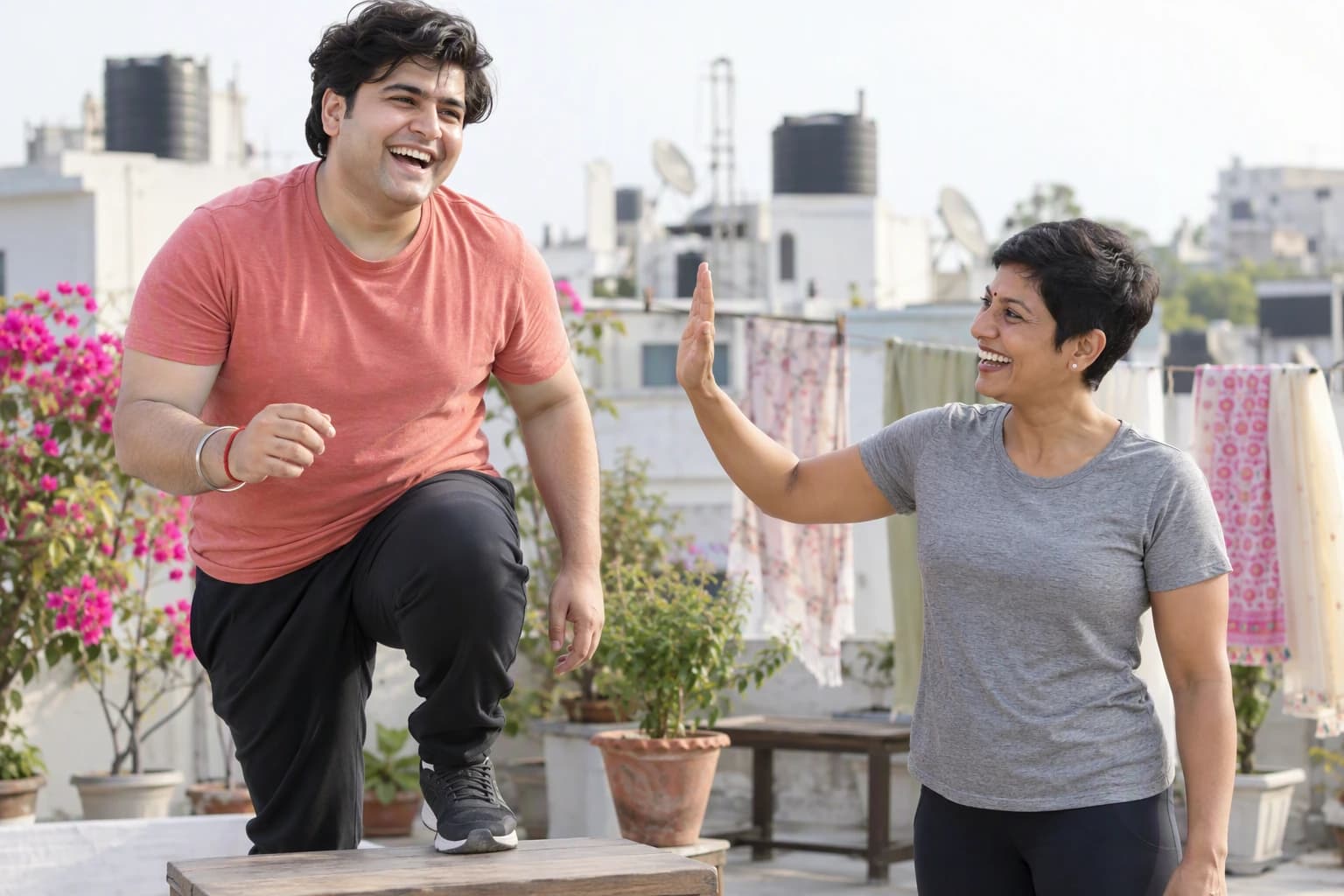
If you are starting from zero, a weight loss workout plan only needs two things. Walk briskly, or do some other cardio, on most days, building from about 100 minutes a week to 200 or more over two months. Then add two or three short strength sessions a week. At home that means chair squats and wall push-ups; in a gym, a few simple machines. Walking takes off the most fat for the time it costs you, and the strength work makes sure the weight you lose is not muscle.
Begin smaller than feels worthwhile: 20 minutes of walking on five days and two 20-minute strength sessions. Add about ten minutes a week after that. Exercise on its own takes weight off slowly, so eat a little less as well, and judge the plan by your waist and weekly weight at eight weeks.
What should a beginner's weight loss workout plan include?
Two kinds of exercise, done most weeks, matter more than any clever routine. The World Health Organization's 2020 guidelines ask adults for 150–300 minutes a week of moderate activity, such as brisk walking. They also ask for muscle-strengthening work on at least two days. Moderate means you can talk but would struggle to sing.
Indian doctors went a step further. A consensus group led by Anoop Misra wrote physical activity guidelines specifically for Asian Indians, who tend to develop diabetes at lower body weights. They recommend 60 minutes of activity every day. That includes at least 30 minutes of moderate aerobic activity, 15 minutes of work-related activity and 15 minutes of muscle-strengthening exercise.
Sixty minutes a day sounds like a lot when you are starting from nothing, and nobody begins there. Think of it as the place the plan below is heading. The work-related part counts too: climbing stairs at the office, carrying the vegetables home, sweeping the house. For many people that adds up to more than they expect.
How many minutes of exercise a week does it take to lose weight?
More than most people hope. The American College of Sports Medicine reviewed the trials and found that 150–250 minutes a week of moderate activity gives only modest weight loss on its own. Above 250 minutes a week, the losses become large enough to matter clinically.
The same review found that 150–250 minutes a week does improve weight loss when people also cut their food moderately. That is the useful finding for a beginner. Walking 30–40 minutes on five or six days, along with eating a little less, works far better than either alone.
Cardio is what moves the scale. In an eight-month Duke University trial of 119 inactive adults, people who did aerobic exercise lost more weight and fat than people who only lifted weights. The lifters, though, gained more lean mass. Doing both took twice as long and burned no more fat than cardio alone.
Take Deepak, 38, an accountant in Pune who weighs 88 kg and drives to work. A brisk 30-minute walk burns roughly 150–200 calories for someone his size, less than one samosa. Walking alone would take him months to see much change. Walking plus one less roti at dinner and no sugar in his chai adds up much faster.
Weeks 1–4: the plan at home
In weeks one and two, walk briskly for 20 minutes on five days. A park, a society compound or the corridor of a building all work. On two other days, do this strength circuit: sit-to-stand squats from a chair, wall push-ups, glute bridges on a mat, and rows with a filled water bottle in each hand. Do 8–10 slow repetitions of each, rest a minute, and repeat once.
In weeks three and four, make the walks 30 minutes. Add a few one-minute stretches of faster walking, quick enough that talking gets hard. For strength, go to three rounds of the circuit and add a plank, on your knees if needed, held for 15–20 seconds.
Stiffness the next day is normal in the first fortnight and fades. Pain in a joint is different, and it is a reason to make the move easier. Raise the chair, do push-ups against a higher surface, or shorten the walk. Chest pain, unusual breathlessness or feeling faint means stop and see a doctor.
Deepak's first fortnight might look like this. He walks after dinner on weekdays, does the circuit on Saturday and Sunday mornings, and takes the stairs to his third-floor office. That is about 100 minutes of walking, two strength sessions and a fair amount of everyday movement.
Sources: [1]
Weeks 5–8: building up, at home or in the gym
From week five, walks go up to 40 minutes on five days, which is 200 minutes a week. In week seven or eight, add one long Sunday walk of an hour to get near 250. If the flat road starts to feel easy, find a slope, a flyover footpath or the stairs of your building. A cycle or a swim works just as well. Try to fit in a third strength session each week.
At home, make each strength move harder rather than doing more of it. Squat to a lower chair, then to no chair at all. Move push-ups from the wall to the kitchen counter. Do bridges on one leg. For rows, fill a school backpack with books and pull it up with one arm at a time. Once 12 slow repetitions feel easy, step it up again.
In a gym, the same plan uses machines, which are easier to learn safely. Use the leg press, chest press, seated row and lat pulldown, with a plank to finish. Do two or three sets of 10–12 at a weight you could lift two or three more times. For cardio, an incline walk on the treadmill or the cycle works well. Ask a trainer to check your form in the first week.
What changes in a beginner workout plan for women?
The plan itself stays the same: the walks, the chair squats, the push-ups and the rows. Many women start with less upper-body strength, so wall push-ups may last a few weeks longer before moving to the counter. Lighter water bottles are fine for rows at first.
What tends to differ is the day around it. If walking alone after dark is not practical, a morning walk with a neighbour or a 20-minute walk inside a mall or society compound works. The strength circuit needs only a mat and a chair, and fits into the time it takes for dal to finish in the pressure cooker.
The research supports strength work for women in particular. Gary Hunter's team at the University of Alabama put 140 women, all still having periods, on an 800-calorie diet until each had lost about 11 kg. Some did cardio three times a week, some did ten strength exercises three times a week, and some did no exercise.
Once the weight was off, the women who had not exercised were burning less each day, even in ordinary movement. Both exercise groups held their daily burn steady. And beginner weights will not make you bulky while you are eating less. They protect muscle, which is what helps the weight stay off.
Sources: [5]
Why keep the strength sessions once the weight starts coming off?
Most people drop the strength work first. The walks feel like they are doing the job, and squats in the living room start to feel optional around week six. A review of 52 studies in adults over 50 shows why that is a mistake. In 81% of the groups who only dieted, at least 15% of the weight lost was fat-free mass, which includes muscle. Where people also exercised, that fell to 39% of groups.
Lose muscle and your daily burn drops a little, so holding your new weight means eating less still. Stairs, carrying shopping and getting up off the floor also get harder with age. Two 20-minute sessions a week cost very little against that.
Sometimes the walks and the strength work are steady, meals are smaller, and the scale still stays flat for a month or more. Then it is worth looking at thyroid, blood sugar and insulin, which no workout plan will show. At Metaboliq that starts with a home blood test and a doctor going through the results. The plan built from them aims to lose up to 20% of body weight while keeping muscle.
How many steps a day should a beginner aim for?
Most phones already count steps, so check your weekly average before you start. A large analysis led by Amanda Paluch pooled 15 studies of daily steps and death from any cause. The benefit levelled off at about 6,000–8,000 steps a day for adults over 60, and about 8,000–10,000 for younger adults.
Those numbers come from lifespan research, not weight loss, but they make a useful target. If you average 3,000 steps now, aim for 5,000 a day by the end of week four and 7,000 by week eight. A 30-minute brisk walk adds roughly 3,000 steps for most adults, so the walks in this plan get you most of the way.
The rest comes from small habits. Take the stairs for three floors or fewer, get off the auto a little early, walk to the vegetable vendor instead of calling him up, and pace during long phone calls. Desk workers can set an alarm to stand and walk for two minutes every hour. The Indian guideline counts this kind of work-related movement as 15 of its 60 daily minutes.