 metaboliq
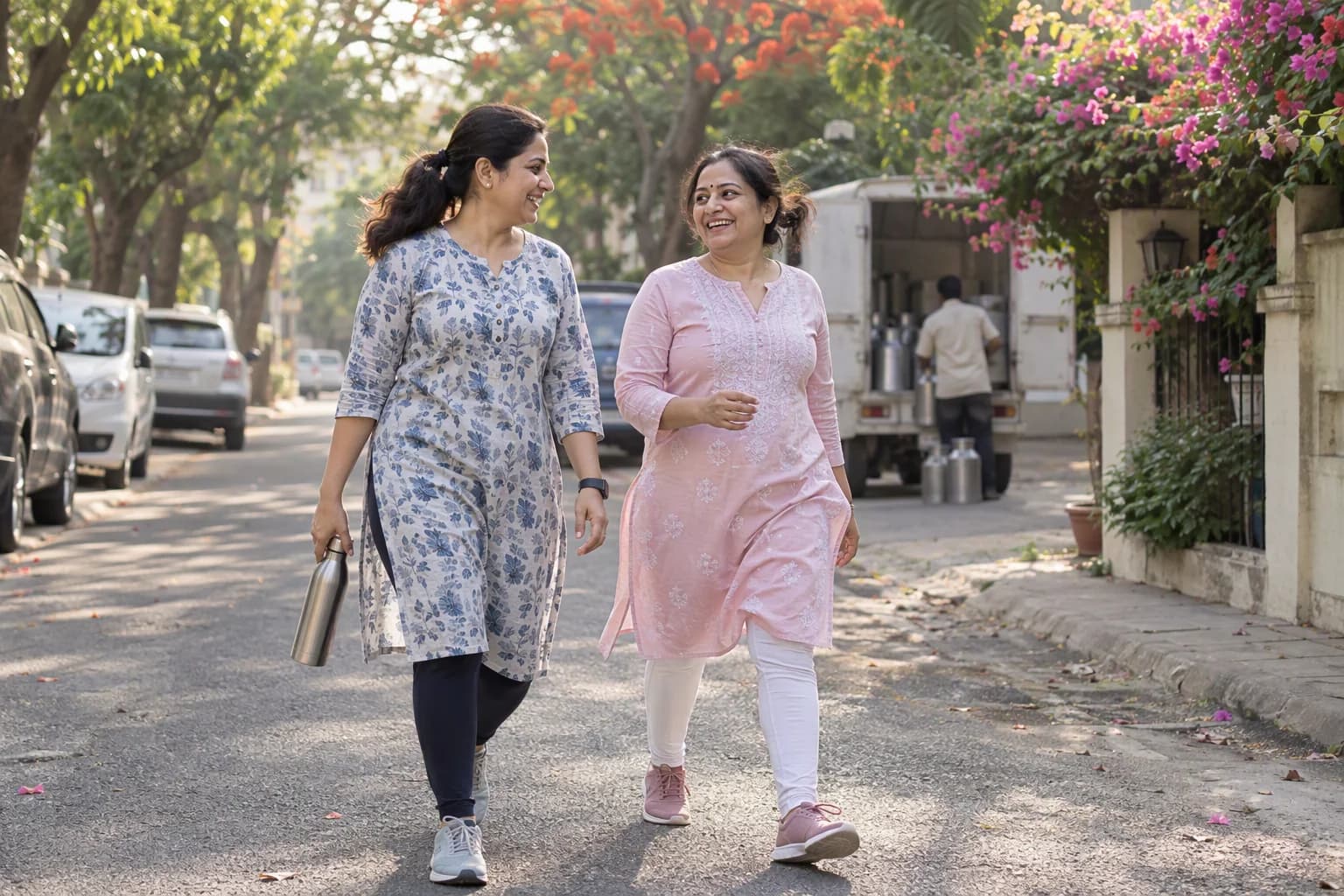
Most people asking how to lose weight have already done it once. Ritu, say, a 38-year-old teacher in Lucknow, dropped six kilos on boiled vegetables before her brother's wedding in February. By Diwali the six were back, with two more. She does not need another strict month. She needs a way of eating and moving that still works in the second year, and the research on that is clearer than the forwards on her phone.
To lose weight you need to eat a little less energy than you burn, week after week, for several months. Protein and vegetables at each meal make that bearable, and cutting sweet drinks and fried snacks makes it easier still. Walking and two short strength sessions a week protect your muscle. The loss usually slows after about six months, which happens to almost everyone.
What actually makes the body lose weight?
Fat comes off when the body spends more energy than it takes in, over weeks rather than days. Keto, intermittent fasting and a plain thali with less rice all work through that same gap. The real argument between diets is which one you can keep eating in month five.
Kevin Hall's modelling at the US National Institutes of Health explains why progress slows. A lighter body burns less energy, so the same meals produce a smaller loss each month. Ritu's first three kilos took four weeks; her next three may take ten, on exactly the same plan. Knowing that in advance is what stops most people from abandoning a plan that is still working.
Sources: [1]
How much weight can you realistically expect to lose?
Less than the advertisements suggest, and enough to matter. Marion Franz's team pooled weight-loss trials with at least a year of follow-up. People on diet and exercise programmes lost most of their weight in the first six months, then reached a plateau, and kept part of the loss for years afterwards.
The Look AHEAD trial in the United States followed adults with type 2 diabetes for eight years. About half of those in the intensive lifestyle group were still at least five per cent lighter at the end. For a 90-kilo man that is four and a half kilos, which sounds small until you see his blood sugar, blood pressure and knees respond to it.
So set your first target in those terms. Say your uncle in Kanpur weighs 88 kilos and wants to be 70. A first goal of about 82, held for six months, is a better plan than chasing 70 by Holi and giving up in March.
What should you change on your plate first?
Start with protein, because the Indian plate usually has too little of it. Heather Leidy's review of the feeding trials found that higher-protein meals left people fuller and led them to eat less afterwards than meals with the same calories and less protein.
For Ritu that means a katori of dal or rajma at lunch, curd with dinner, and a besan chilla instead of plain toast in the morning. The grain shrinks rather than disappears: half the plate sabzi or salad, a quarter protein, a quarter rice or roti.
Fried snacks come next. A plate of pakoras with evening tea, five days a week, can cancel the morning walk outright. Keep them for Sundays and the rest of the plan gets easier.
Sources: [3]
Why do drinks matter more than people think?
Because the body does not count them properly. In Richard Mattes's laboratory at Purdue, when volunteers took extra calories as a drink, they did not eat less at their next meals to make up for it, and their weight rose. The same calories as solid food were largely balanced out.
In an Indian day the drinks add up fast. Two or three cups of sweet chai, a packaged juice for the children that the parents finish, a cold drink with lunch, a lassi on a hot afternoon. Picture a 35-year-old sales manager in Pune on four sweet teas a day. Halving the sugar in each, and switching the afternoon cold drink to nimbu pani without sugar, removes a meaningful amount of energy without touching a single meal. For many people this is the easiest first month of weight loss there is.
Sources: [4]
Do you need exercise to lose weight?
You can lose weight on food changes alone, but some of what you lose will be muscle. Cava and colleagues reviewed the trials and found that people who ate enough protein and did resistance exercise kept more of their muscle while the weight came down.
Picture Suresh, 46, an accountant in Indore who lost eight kilos last year by skipping dinner. He is lighter, and climbing to his third-floor flat now leaves him puffing more than before. Two short sessions a week of chair squats and wall push-ups, with a filled water can for weight, would have kept his legs strong while the fat went.
Walking adds to the energy gap and steadies blood sugar after meals. Suresh's wife has asked him to join her evening walk round the colony for a year. Ten minutes after each meal would count, and so would the full forty minutes with her.
Sources: [5]
How does sleep change your appetite?
Short nights make you hungrier, and hungry for the wrong things. Karine Spiegel's team kept healthy young men to about four hours in bed for two nights. Their appetite hormones shifted, hunger went up, and the extra craving was mostly for sweets, salty snacks and bread.
Think of Arjun, a 29-year-old in a Gurgaon call centre who works nights and eats biscuits from the pantry at 3 am. His diet chart is fine on paper. What would help him most is a blackout curtain and a fixed sleeping slot in the day, so that he gets seven hours most days and stops eating to stay awake.
Sources: [6]
Why does the weight come back for so many people?
Because appetite climbs as the kilos fall. Corby Polidori's team, working from a long trial, estimated that people eat about 100 calories a day more for every kilo they lose. Ritu, ten kilos down, is fighting roughly a thousand extra calories of hunger a day that she never felt at the start.
That pull explains why the last stretch of a diet feels harder than the first, and why stopping the plan brings the weight straight back. The fix is to plan for it. Keep the protein high, keep the strength sessions after the target, and accept that the new portions are permanent. For Ritu, that means the dal-and-curd lunch stays even after the wedding photos are taken.
Sources: [7]
How do you lose fat without losing muscle?
Take Neha, 41, a bank officer in Jaipur who weighs 74 kilos and would like to reach 64. Suppose she eats a katori of dal at lunch, paneer or eggs at dinner and curd twice a day. If she also does squats and lunges on two evenings a week, most of what she loses should be fat. If she crash-diets on soup and fruit instead, a good share of the ten kilos will be muscle, and she will feel it on the stairs and see it in her arms.
Her pace matters too. About half a kilo to a kilo a week gives the body enough food to keep building muscle while the fat comes off.
We should say where we stand, since you are reading this on our site. Metaboliq is a doctor-led weight programme, and the aim we set with members is "Lose up to 20% of your body weight — and keep your muscle". Results vary; your doctor decides what is right for you. It starts with a home blood test that a doctor reads, because thyroid, sugar and insulin results change how hard the fat is to move. A plan for Neha should start from hers.
Sources: [5]
What if you are doing everything right and nothing moves?
Then the blood tests are worth doing before another diet. Say Ritu follows the plate, walks daily and sleeps well for two months, and her waist hardly changes. Her mother had a thyroid problem, and Ritu's periods have become irregular. A low-working thyroid, PCOS and insulin resistance can each make weight stubborn, and a simple panel of bloods would show whether one of them is in the way.
Sources: [5]