Skip to content
metaboliq

Is papaya good for weight loss? The cup, measured

  • 36 kcal in 1 cup cubes, about 150 g.
  • 0.6 g protein per serving, from IFCT 2017.
  • Whole fruit on a plate built to lose fat and keep muscle.
Book my health assessment

Takes 2 minutes to book. A doctor makes every decision with you.

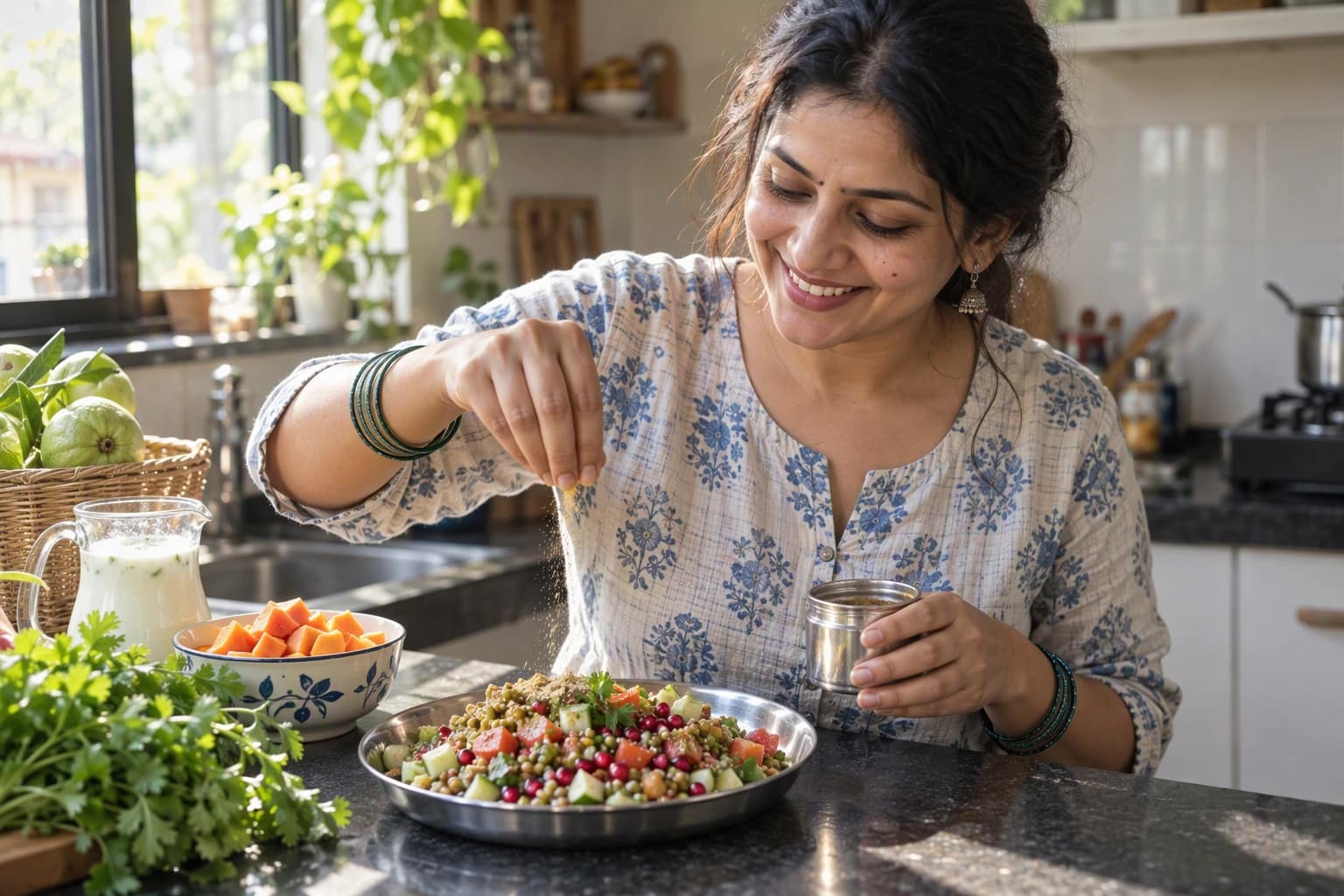
A woman smiles as she arranges a plate of sprouts, cucumber and fruit chaat

Yes, papaya is good for weight loss. A cup of ripe papaya (150 g) gives only 36 kcal with 4.2 g of fibre. It is soft, sweet and low in calories, which makes it one of the easiest breakfast fruits on a fat-loss plan.

Papaya nutrition, per serving and per 100 g

Papaya: IFCT 2017 figures
NutrientPer servingPer 100 g
Energy36 kcal24 kcal
Protein0.6 g0.4 g
Carbohydrate (available)6.9 g4.6 g
Dietary fibre4.2 g2.8 g
Fat0.2 g0.2 g

Serving: 1 cup cubes, about 150 g. IFCT 2017 food code E049, "Papaya, ripe (Carica papaya)", the mean of 6 regions sampled. IFCT does not report glycaemic index, so this page prints none.

The verdict on papaya

Whole fruit

One counted fruit in place of a sweet or a packet snack.

  • 1.7 g of protein for every 100 kcal.
  • One serving gives 0.6 g of the roughly 58 g of protein a day ICMR-NIN's RDA sets for a 70 kg adult.
  • 4.2 g of fibre in a serving.

How papaya fits a plan that loses fat and keeps muscle

IFCT 2017 lists ripe papaya at 24 kcal and 2.8 g of fibre per 100 g, among the lowest-calorie fruits we list. A full bowl costs few calories, which is useful at breakfast when you want volume.

Papaya on its own is light on protein. On a muscle-keeping plan, have it beside eggs, curd or a besan chilla rather than as the whole breakfast.

Papaya in an Indian kitchen

A ripe papaya has yellow-orange skin and gives slightly; scoop out the black seeds. A bowl of chilled cubes with lime and black salt is a common breakfast fruit across India. Raw green papaya is a vegetable: grated into a salad or cooked in a thoran or sabzi, it is crunchy and very light. Pregnant women are often told to avoid raw or semi-ripe papaya; ask your doctor if that applies to you.

Pair it, or swap it

Papaya with curd and a sprinkle of flaxseed, or papaya after an egg breakfast, makes a balanced start.

Worth knowing

Papaya with sugar or in a shake changes the numbers. Raw papaya is cooked as a vegetable and is in the table below.

Papaya against similar foods

Per 100 g, IFCT 2017
FoodEnergyProteinFibre
Papaya24 kcal0.4 g2.8 g
Papaya, raw24 kcal0.5 g2.3 g
Muskmelon28 kcal0.5 g1.5 g
Apple62 kcal0.3 g2.6 g

Papaya: questions people ask

Is papaya good for weight loss?

Yes. A cup gives about 36 kcal and 4.2 g of fibre per IFCT 2017.

Can people with diabetes eat papaya?

Many can, in a measured cup. If you have diabetes, ask your doctor how fruit fits your plan.

When is the best time to eat papaya?

Whenever it fits. Many people like it at breakfast beside a protein; timing matters far less than the total.

Sources

  1. [1] Longvah T, Ananthan R, Bhaskarachary K, Venkaiah K. Indian Food Composition Tables 2017

    National Institute of Nutrition (ICMR), Hyderabad, 2017. Table 1, Proximate Principles and Dietary Fibre: energy, protein, fat, available carbohydrate and dietary fibre per 100 g edible portion, the mean of the regions sampled. Every figure on this page comes from it.

    Read the source
  2. [2] ICMR-National Institute of Nutrition. Dietary Guidelines for Indians

    ICMR-NIN, Hyderabad, 2024. Recommends combining cereals with pulses in a 3:1 ratio for protein quality, meeting vegetarian protein needs from pulses, beans and milk, keeping added sugar under 5% of energy and salt to 5 g a day, and slow, steady weight reduction.

    Read the source
  3. [3] ICMR-NIN Expert Group on Nutrient Requirements for Indians. Recommended Dietary Allowances and Estimated Average Requirements

    ICMR-NIN, Hyderabad (brief note), 2020. Sets the protein RDA for healthy Indian adults at 0.83 g per kg of body weight a day, and 1 g per kg for people on a cereal-based diet with lower-quality protein.

    Read the source
  4. [4] Wycherley TP, et al. Effects of energy-restricted high-protein, low-fat compared with standard-protein, low-fat diets: a meta-analysis of randomized controlled trials

    American Journal of Clinical Nutrition, 2012. In energy-restricted trials, higher-protein diets produced slightly greater fat loss and better preservation of fat-free mass than standard-protein diets.

    Read the source
  5. [5] Shukla AP, et al. Food Order Has a Significant Impact on Postprandial Glucose and Insulin Levels

    Diabetes Care, 2015. Eating vegetables and protein before carbohydrate in the same meal produced lower post-meal glucose and insulin than the reverse order, in a small crossover study.

    Read the source

Your plate, planned by a doctor and a dietitian.

The right portions depend on your blood sugar, thyroid, lipids and kidneys, which only a blood panel read by a doctor shows.

Book my health assessment

Then the home test, ₹999.

Takes 2 minutes to book. A doctor makes every decision with you.

Book my health assessment

Takes 2 minutes to book. A doctor makes every decision with you.