 metaboliq
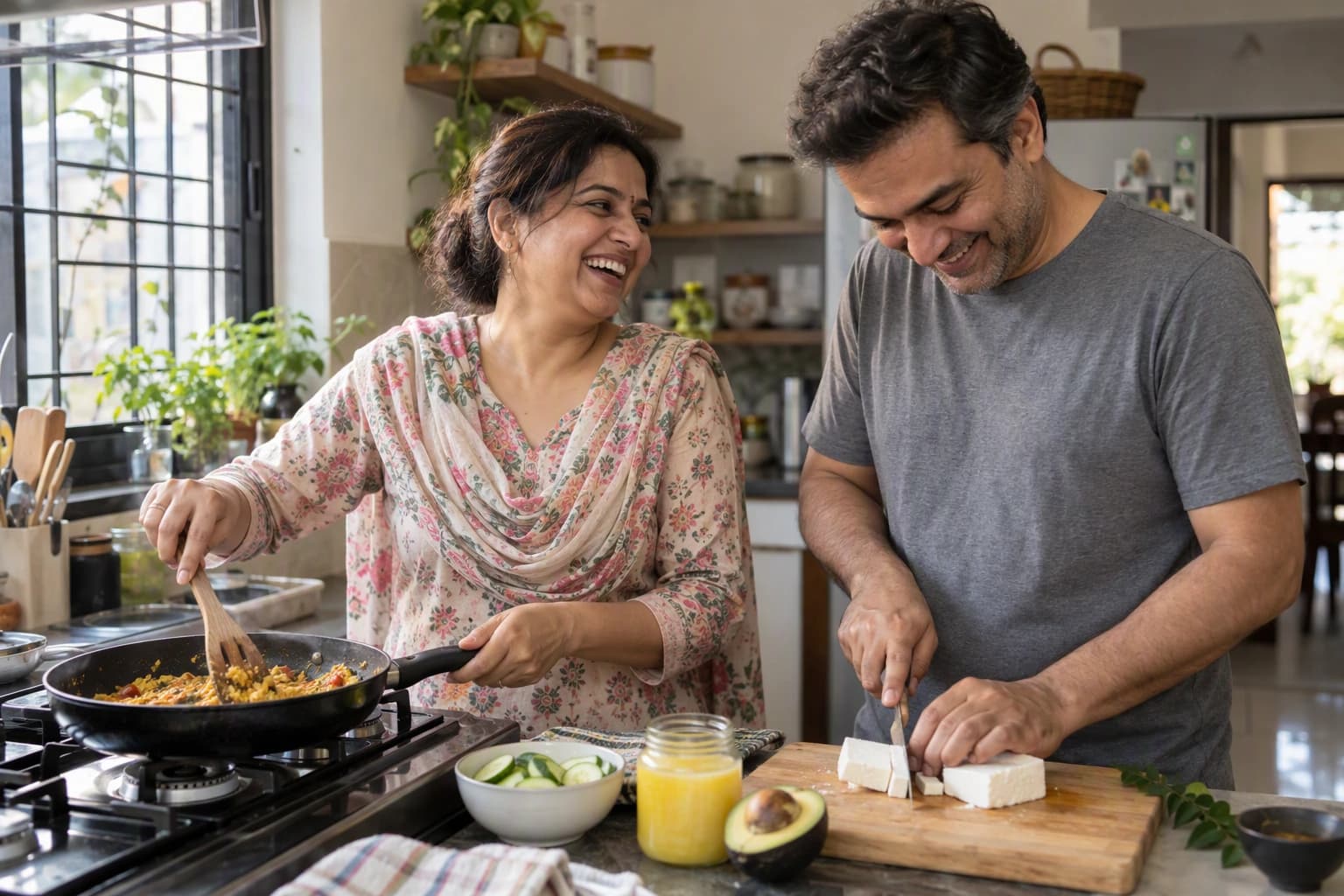
Keto usually arrives through a colleague who dropped eight kilos before Diwali and now orders paneer tikka for breakfast in the office canteen. The results look dramatic, the rules sound simple, and the first week usually delivers. What happens after that is a different story, and the research on it is better than most people realise.
A keto diet cuts carbohydrate so low that the body switches to burning fat and making ketones. In trials it produces weight loss similar to other diets over a year, with a little extra early on, mostly water. It is hard to keep up on Indian food, and it can raise LDL cholesterol.
What is a keto diet, in plain terms?
It is a very low-carbohydrate, high-fat way of eating. Carbohydrate is usually kept under about 50 grams a day, often closer to 20, which is less than two rotis. With so little glucose coming in, the liver turns fat into ketones, and the body runs on those instead.
That is a big change for an Indian diet. Ranjit Mohan Anjana's analysis of Indian eating found carbohydrate supplying most of the day's energy, from rice, wheat, pulses, fruit, milk and sugar. A strict keto plan removes almost all of these at once, including dal and most fruit, which is what makes it so hard to sustain here.
Sources: [6]
What does an Indian keto day look like?
Breakfast might be an egg bhurji cooked in ghee or butter, or paneer with sautéed vegetables. Lunch could be grilled chicken or tandoori paneer with a large salad and a cauliflower rice pulao. Snacks are nuts, cheese or seeds, and dinner is a fish curry or palak paneer with no roti and no rice.
For vegetarians the menu narrows fast. Dal, chana and rajma are too high in carbohydrate in normal portions, so protein has to come from paneer, tofu, cheese and a few seeds. Most fruit goes, and so does milk in any quantity. Many vegetarians who try keto end up eating a great deal of paneer and very few vegetables, which is a long way from what the trials tested.
Picture a 29-year-old software tester in Pune who lives on dal-chawal at the office canteen. Going keto means carrying a tiffin of paneer and cauliflower every day, skipping the evening chai and biscuits, and explaining at every family dinner why she won't touch the rice. Plenty of people can do that for a month. The real question is whether she can still do it in month seven, and when she stops, whether she brings dal and fruit back slowly or lets the parathas return all at once.
Why does keto take weight off so fast at the start?
The first week's drop is mostly water leaving with stored carbohydrate. Your muscles and liver keep carbohydrate as glycogen, and every gram of glycogen is stored with about three grams of water. Cut carbohydrate to almost nothing and those stores run down within days, taking the water with them.
So a 38-year-old in Gurugram who starts keto on a Monday can easily see the scale fall by a kilo and a half by Sunday. It feels like proof. Kevin Hall's metabolic ward work suggests very little of it is fat, and the same water floods back after one plate of biryani at a Saturday wedding. Judge keto by your waist and your weekly average after a month, never by the first week.
Sources: [2]
Does keto burn more fat than other diets?
Controlled studies say it doesn't, at least not in any way that matters. Kevin Hall's team at the US National Institutes of Health kept men in a metabolic ward and switched them from a standard diet to keto with identical calories. Body fat loss actually slowed a little after the switch, and energy use rose only slightly.
Longer trials point the same way. Nassib Bueno's meta-analysis found that very-low-carbohydrate diets beat low-fat diets at a year by roughly a kilogram on average. In Christopher Gardner's DIETFITS trial, healthy low-carb and healthy low-fat diets ended level at twelve months. If keto suits your appetite, it works because you eat less on it, and a plan you'd rather follow would do the same.
What happened when keto was tested against a high-carb plant diet?
In 2021 Hall's group let volunteers eat as much as they liked of either an animal-based keto diet or a plant-based low-fat diet, for two weeks each. On the low-fat plant diet people ate about 700 fewer calories a day, without feeling hungrier. On keto, insulin and blood sugar were lower, which is the trade-off keto supporters point to.
So each side gets something. The low-fat plant diet led people to eat less of their own accord, and keto produced the flatter glucose curve. For someone with insulin resistance, that second point is real. It is also achievable without going fully keto, by cutting refined carbohydrate and sugar and leaning on vegetables, pulses and protein.
Sources: [3]
Is keto good for blood sugar and insulin resistance?
It lowers blood sugar while you follow it, but so do gentler options. In Gardner's Keto-Med trial, adults with prediabetes or type 2 diabetes ate a keto diet and a Mediterranean-style diet for twelve weeks each. HbA1c improved by a similar amount on both. Keto raised LDL cholesterol, cut fibre and some vitamins, and most people drifted back towards more carbohydrate once the study stopped feeding them.
Andrew Reynolds' reviews for the World Health Organization found that diets rich in fibre and whole grains were linked to lower rates of type 2 diabetes and heart disease. Strict keto removes most of those foods. Say your uncle with borderline sugar is tempted to go keto before a check-up. A plate that keeps the dal and sabzi, swaps white rice for a little millet or brown rice, and drops the sweets will move his numbers too. He can also still eat it next year.
Who should not start keto without a doctor?
If you take anything that lowers blood sugar, talk to your doctor before you go keto, because a sudden cut in carbohydrate can drag glucose too low. The same caution applies with kidney or liver disease, past gallstones, very high cholesterol, an eating disorder, or a pregnancy.
Expect the first week to feel rough. Headache, tiredness, irritability and leg cramps are common as the body sheds water and salt, and people call it keto flu. A pinch more salt in food, extra water and a bowl of clear dal soup in the evening usually ease it. If you still feel ill after ten days, that is your cue to stop rather than push through.
Book a lipid profile before day one and another a few months in, since LDL rises steeply in some people on keto. Dizziness that won't settle, palpitations or vomiting are not part of adapting, and they need a doctor that same week.
Is there a middle path for Indian food?
For most families there is, and it looks like a lower-carbohydrate Indian plate rather than strict keto. Keep the dal, curd, paneer, eggs and vegetables. Cut sugar, maida and fried snacks hard. Shrink the rice and roti to a quarter of the plate instead of banning them. That captures much of keto's effect on blood sugar, keeps the fibre, and survives a Sunday lunch with your in-laws.
Imagine a 45-year-old accountant in Chennai with borderline sugar who loves his curd rice. Going keto would mean giving it up entirely. Keeping a small portion after a bowl of sambar, a vegetable poriyal and some paneer is a plan he can follow at home, in the office canteen and at his daughter's wedding.
Let us be plain about our own position, since you are reading this on our site. Metaboliq is a doctor-led weight programme, and the aim we set with members is "Lose up to 20% of your body weight — and keep your muscle". Results vary; your doctor decides what is right for you. We begin with a home blood test that a doctor reads, including sugar, insulin and lipids, so the carbohydrate level is chosen for your body rather than borrowed from a colleague.
Sources: [6]