 metaboliq
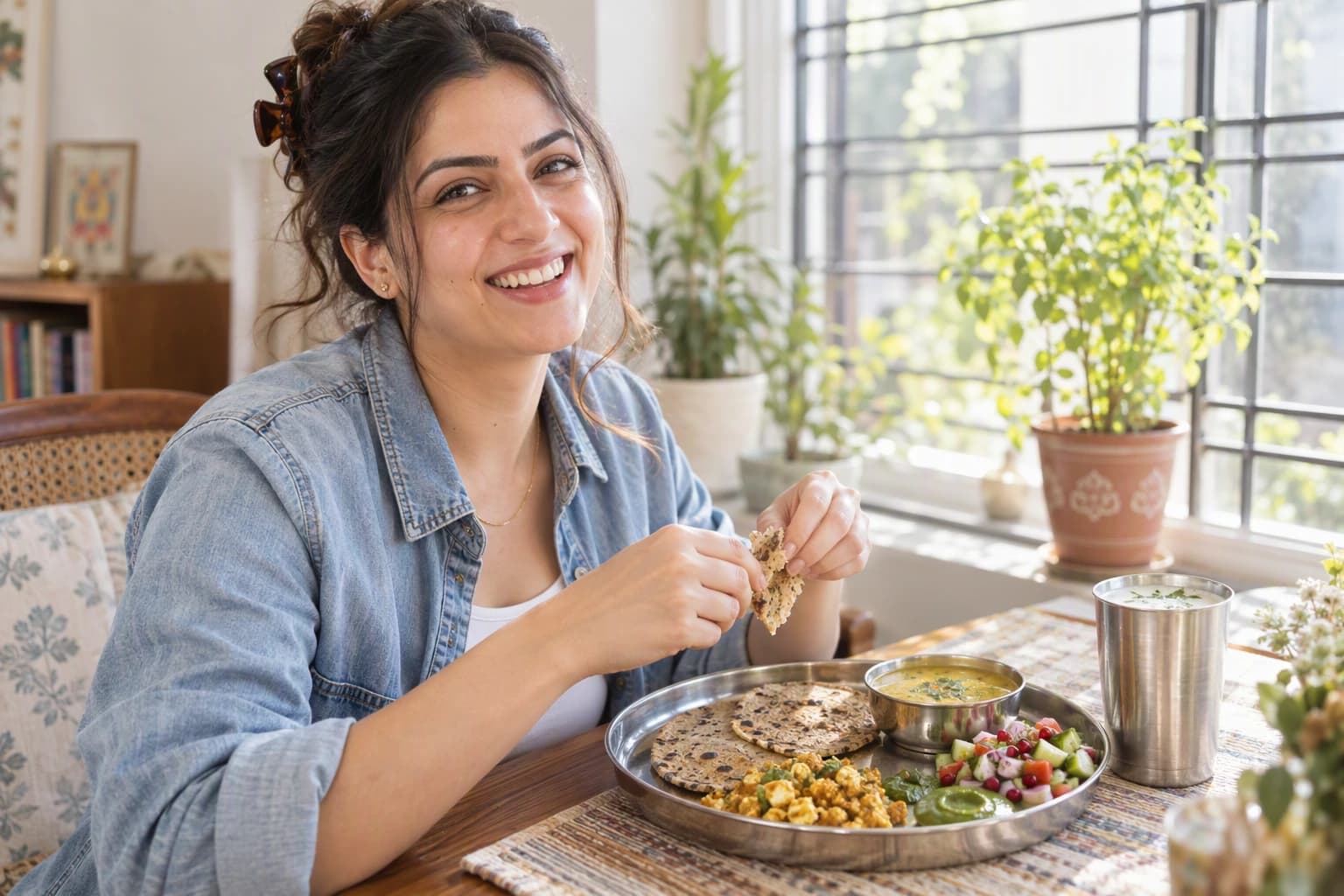
Weight loss after gallbladder removal usually comes early and does not last. While the wounds heal, most people live on khichdi and toast, and the scale dips a kilo or two. Then the old food returns, this time without the pain that used to follow it. A year on, plenty of people weigh more than they did on the day of the operation. Small follow-up studies have measured BMI rising by about two points over three years. You can still lose weight without a gallbladder. The liver goes on making all the bile you need. It reaches the gut as a slow, steady flow instead of one squeeze at mealtime.
Once your surgeon is happy with the healing, eat about 500 calories a day less than you burn. Keep fat to a spoon or so at each meal and put protein on every plate. Add two strength sessions a week, and aim for a quarter to half a kilo a week.
What does the gallbladder do, and what changes without it?
The gallbladder is a pear-shaped pouch tucked under the liver, about the length of a finger. It makes no bile of its own. The liver makes bile all day, and between meals the gallbladder stores it, concentrates it, and then squeezes a strong dose into the gut when food, especially fatty food, arrives.
After the operation the liver keeps making the same amount, but it drips into the intestine around the clock. For an ordinary plate of dal, rice and sabzi, that steady drip copes well. A wedding lunch of puris, paneer makhani and gulab jamun is a bigger ask, because there is no stored bile to send down all at once.
Bile acids also carry messages to the liver, gut, muscle and fat. Agostino Di Ciaula's group at the University of Bari has reviewed how losing the mealtime pulse may change those messages. They help set blood sugar, insulin, blood fats and how much fat the liver keeps. It is one reason doctors now watch weight and metabolism for years after a gallbladder comes out, long after the stitches are forgotten.
Sources: [5]
Do you lose weight after gallbladder removal?
Most people lose a little in the first few weeks. Appetite is poor after an anaesthetic, the discharge sheet usually says light food, and anyone who spent months dreading the next attack eats warily for a while. Loose stools early on take some water weight off as well.
Take Rekha, 44, who teaches maths in Lucknow; she is an illustration, not a patient. She lost two kilos in the month after her operation, mostly on khichdi, toast and coconut water. By Diwali she had them back. That is the usual shape: the early drop comes from eating less, the operation itself burns no fat, and once meals return to normal the scale follows.
Weight that keeps falling without effort deserves a call to the surgeon or a gastroenterologist, especially with pain, fever, vomiting, yellow eyes or dark urine. Go the same day if the pain is severe or getting worse. A stone left in the bile duct or a bile leak can look like easy weight loss at first, and a blood test and an ultrasound will usually sort it out.
Why do so many people gain weight after the operation?
Surgeons at Waterford Regional Hospital in Ireland followed 42 adults for three years after keyhole gallbladder removal and compared them with 42 adults of the same age and sex who had other operations. The gallbladder group's BMI went up by 1.8 points on average, and women's by 2.1. On a woman of 155 cm, 2.1 points is about five kilos.
An Iranian surgical team looked at why. They recorded what 48 adults ate before surgery and again six months later. By then they were eating more fat and carbohydrate and less protein, their BMI had risen, and their blood fats had worsened. Most of it is relief. Samosas and fried fish stop causing pain, and after months of fear they come back with enthusiasm.
Diet does not explain all of it. In a Korean cohort of 76,485 adults who had the operation, each matched with a control, the odds of developing metabolic syndrome were about 20% higher afterwards. Waist, triglycerides, blood pressure and sugar all moved the wrong way, and good cholesterol fell. These studies show a link rather than proof of cause, but the link turns up again and again.
Is it harder to lose weight without a gallbladder?
A little, for some people, though the arithmetic has not changed. You still lose fat by eating slightly less energy than you use, week after week. What changes is the ground around it. Fried food stops hurting, so the extra helping comes back. A heavy meal can mean an urgent dash to the toilet, and some people start skipping meals to avoid that, then overeat at night.
Rekha's gallbladder came out after three attacks of pain in one monsoon. Over the ten years before that she had tried four crash diets, and each time the weight came back with interest.
That history is common among people who end up in surgery. The Nurses' Health Study followed 47,153 American women. Those who had lost and regained 20 pounds or more several times were 68% more likely to have their gallbladder removed than women who stayed steady. Stones are frequent in parts of north and north-east India as well: a 2026 survey found them in roughly one adult in ten in Mullanpur, Punjab, and in Guwahati. So Rekha's next attempt needs to be slow and boring. Another month of soup and fasting would only restart the loop.
How do you start losing weight after gallbladder surgery?
Begin when the surgeon is happy with the wounds and your stools have settled, often a few weeks after keyhole surgery and longer after an open operation. The 2013 American obesity guideline suggests eating 500–750 calories a day below what you burn. For most women that works out to 1,200–1,500 calories a day, and 1,500–1,800 for men.
Fat is fine now; the timing is what needs care. With no bile in store, a spoonful of ghee spread through the day goes down far better than one fried lunch. A typical day for Rekha: vegetable poha or two besan cheelas with curd at eight. Two phulkas, a katori of dal, a big serving of sabzi cooked in one teaspoon of oil, and salad at one. Roasted chana and less-sugar tea at five. Grilled fish or paneer bhurji with sautéed vegetables by eight at night.
Fibre earns its place twice. It keeps her full, and soluble fibre can firm up loose stools. She adds it gradually, through oats, more vegetables, or isabgol if her doctor agrees. Puris, pakoras and cream gravies are kept for weddings and festivals, in small portions, eaten after something lighter.
Sources: [10]
Why does keeping muscle matter more than the number on the scale?
When weight comes off through eating less alone, a good share of it can be muscle. Weinheimer's review of 52 studies in adults over 50 found that in 81% of diet-only groups, at least 15% of the weight lost was fat-free mass. Where the volunteers also exercised, that happened in 39% of groups.
Muscle soaks up much of the sugar from a meal. Lose it, and the triglyceride and blood sugar drift that tends to follow gallbladder removal gets harder to turn round. Rekha does twenty minutes on Tuesday and Saturday mornings: chair squats, wall push-ups, rows with a resistance band tied to the door handle, and the school stairs twice over. A katori of dal or a bowl of curd goes with every meal, and two eggs or a piece of paneer with breakfast.
Her reports also shape the plan. At Metaboliq, Rekha's first step would be a home blood test, with a doctor reading her fasting sugar, insulin, lipids, liver enzymes and thyroid with her. A plan built on those numbers aims to take off up to 20% of her body weight while she keeps her muscle, at a pace her digestion can live with.
What should you eat if fatty food still upsets your stomach?
In a Dutch analysis of 820 adults from two trials, surgery ended gallstone pain in 94.8% of those who had classic attacks. Some new complaints appeared, though. Six months on, 9.6% had more frequent bowel movements, 8.5% had urgency and 8.4% had new diarrhoea. Wind was the symptom that most often stayed.
If that sounds familiar, keep a food and symptom diary for two weeks. Write down what you ate, roughly how much oil went into it, and when the loose stool or bloating came. Most people find a pattern: a large fatty meal, a late dinner, strong tea or coffee on an empty stomach, or full-fat milk sweets.
Smaller meals, lean protein, cooked vegetables and fat in small amounts with food usually help. Many people find curd and buttermilk sit well. If diarrhoea goes on for more than a few weeks, see your doctor instead of eating less and less. Bile acid diarrhoea is a known problem with treatment that works, and drinking enough water and salt matters while it settles. Starving yourself to avoid it costs muscle.
Sources: [3]
How fast is it safe to lose weight after gallbladder removal?
Once you've healed, a quarter to half a kilo a week suits most people. The first week or two often goes faster, mostly water. After that, if the weekly average is dropping by more than a kilo, add a roti or a bowl of curd back in. Cutting too hard takes muscle along with the fat.
Keep a tape measure next to the scale. Measure at the navel every second Sunday morning, before breakfast. The Korean figures tie the operation to a growing waist, rising triglycerides and higher sugar, so a waist that shrinks a centimetre or two a month says more than any single weighing. A study from Coventry, in Britain, also found triglycerides climbing after gallbladder removal and not after other keyhole operations.
Three or four months in, repeat the lipid profile and fasting sugar, especially if either was borderline before surgery. When those numbers improve alongside the waist, the plan is working where it counts.