metaboliq
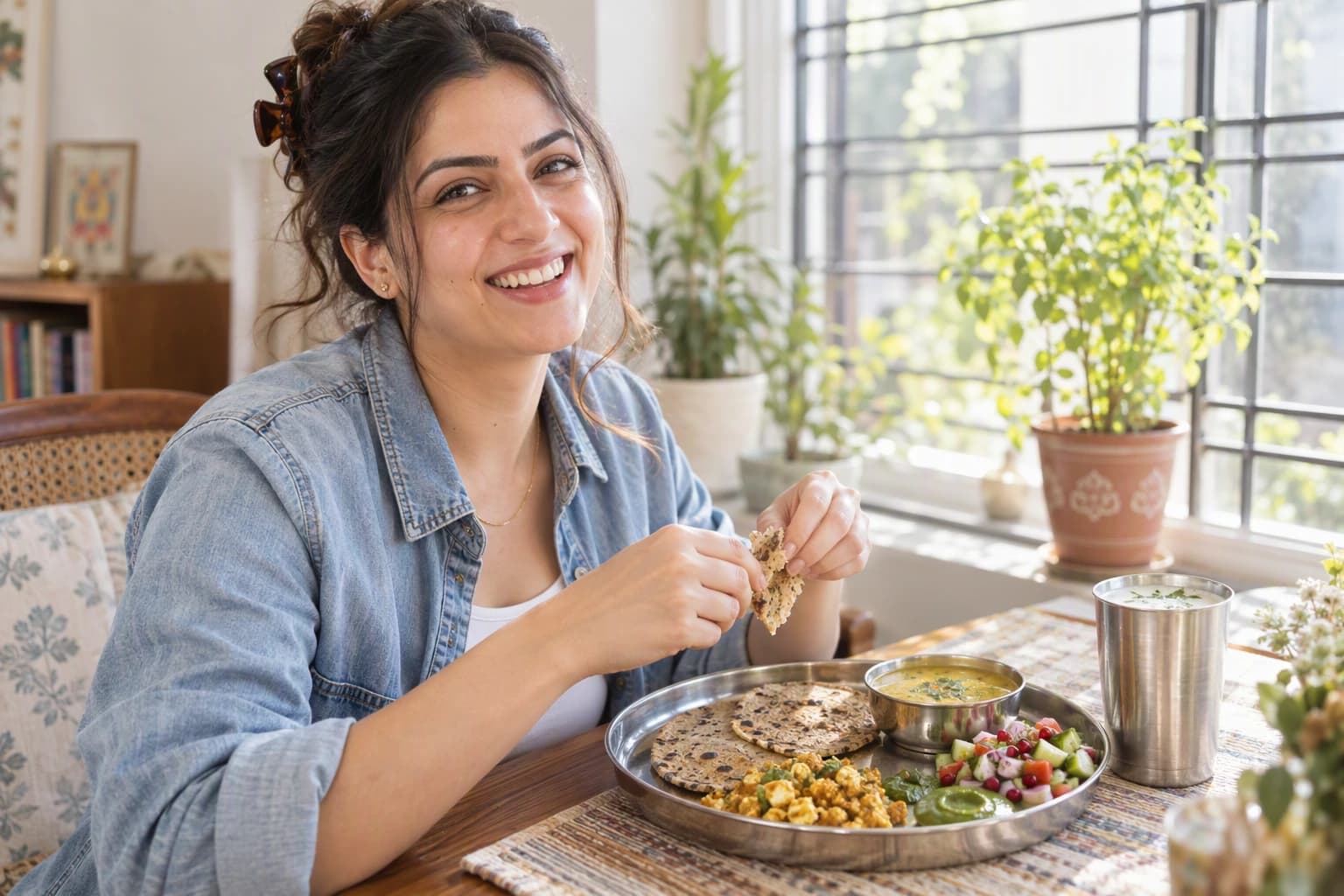
Can a vegetarian diet help you lose weight?
Yes, and if anything the research tilts slightly your way.
Read the full answer
One meta-analysis pooled 12 randomised trials covering 1,151 adults, followed for a median of 18 weeks. People put on vegetarian diets lost 2.02 kg more than people on non-vegetarian ones, and vegans lost a little more again. The gap narrowed in the trials that ran past a year. That is the pattern in almost every diet study: what you can keep eating matters more than the label on it.
For an Indian family this is good news, because nothing in the kitchen has to change. The dals, millets and sabzis are already in the cupboard. Fat comes off a vegetarian plate the same way it comes off any other, by eating a bit less than you use for months on end. A full plate of sabzi and dal just makes that easier to live with, since it fills you up without packing in many calories.
- 12trials, 1,151 adults
- 2.02 kgmore lost on vegetarian diets
Sources: [1]
| Extra weight lost | |
|---|---|
| All trials | 2.02 kg |
| Followed under a year | 2.05 kg |
| Followed a year or more | 1.13 kg |
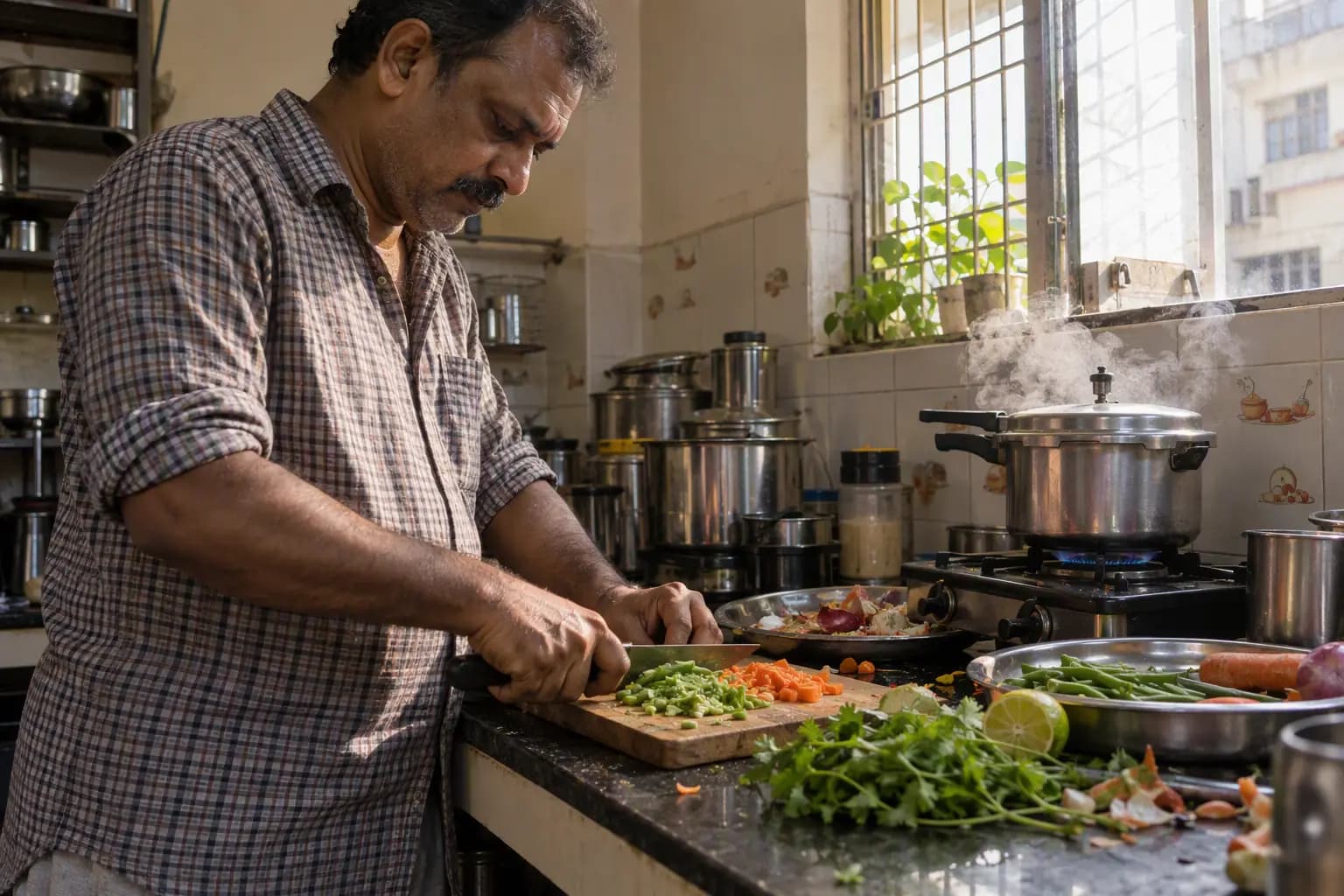
The vegetarian plate: where the protein comes from
On a vegetarian plate the protein comes from four places: dals and whole pulses, besan, soya, and milk with paneer.
Read the full answer
India's RDA is 0.83 g of protein per kg of body weight, about 58 g for a 70 kg adult. A vegetarian can reach that easily, and go past it while losing weight, if each meal has one of those four. Dal with lunch and dinner, besan or moong for breakfast, a glass of milk and a fistful of roasted chana gets most people there.
The ICMR-NIN guidelines add one useful habit: eat cereals and pulses together, in about a 3:1 ratio. Rice with dal and roti with chana are old Indian combinations for a reason, since the two fill each other's gaps in amino acids. Soya beans carry the most protein for their calories, though more fat than any dal, and a handful in a rajma or a pulao lifts the protein without changing the dish much; paneer is rich too but carries much more fat, so measure it.
A 7-day vegetarian diet plan for weight loss
Here is the whole week on one table. Each row is a day, and every day falls between 1,519 and 1,606 kcal with 60.5 to 67.9 g of protein.
Read the full answer
Monday opens with moong dal chilla, Tuesday with poha and peanuts, Wednesday with besan chilla, Thursday with vegetable upma, and Sunday with a paneer-stuffed roti, each with a glass or cup of milk. Lunch is always a grain beside a dal or pulse: rajma, toor, moong, chana, urad, rajma again, toor again. Around five o'clock there is fruit with roasted chana, peanuts, soya or sprouted moong. Dinner keeps to paneer, besan or a lighter dal, a jowar or ragi roti, and lauki, turai, palak or gobhi.
Every ingredient is sold at an ordinary sabzi market, and the week is a worked example of the plate rather than a plan written for you. No day drops below the energy tool's floor of 1,200 kcal for women and 1,500 kcal for men. A tall man, or anyone doing hard physical work, may be told by their doctor or dietitian to add a roti or a bigger katori of dal.
| Day | kcal | Protein |
|---|---|---|
| Monday Moong for breakfast, rajma at lunch, paneer at night. | 1523 | 67.9 g |
| Tuesday Poha and milk, a rice-and-dal lunch, sprouts in the evening. | 1606 | 61.5 g |
| Wednesday Besan for breakfast, moong dal at lunch, paneer and ragi at night. | 1530 | 66.7 g |
| Thursday Upma and milk, chana at lunch, masoor dal at night. | 1530 | 66 g |
| Friday Moong again for breakfast, jowar and rajma at lunch, paneer tikka at night. | 1522 | 67.4 g |
| Saturday Poha with sprouts, urad dal at lunch, besan and ragi at night. | 1519 | 60.5 g |
| Sunday Paneer rotis for breakfast, rice and toor dal at lunch, moong at night. | 1592 | 64 g |
Monday, item by item
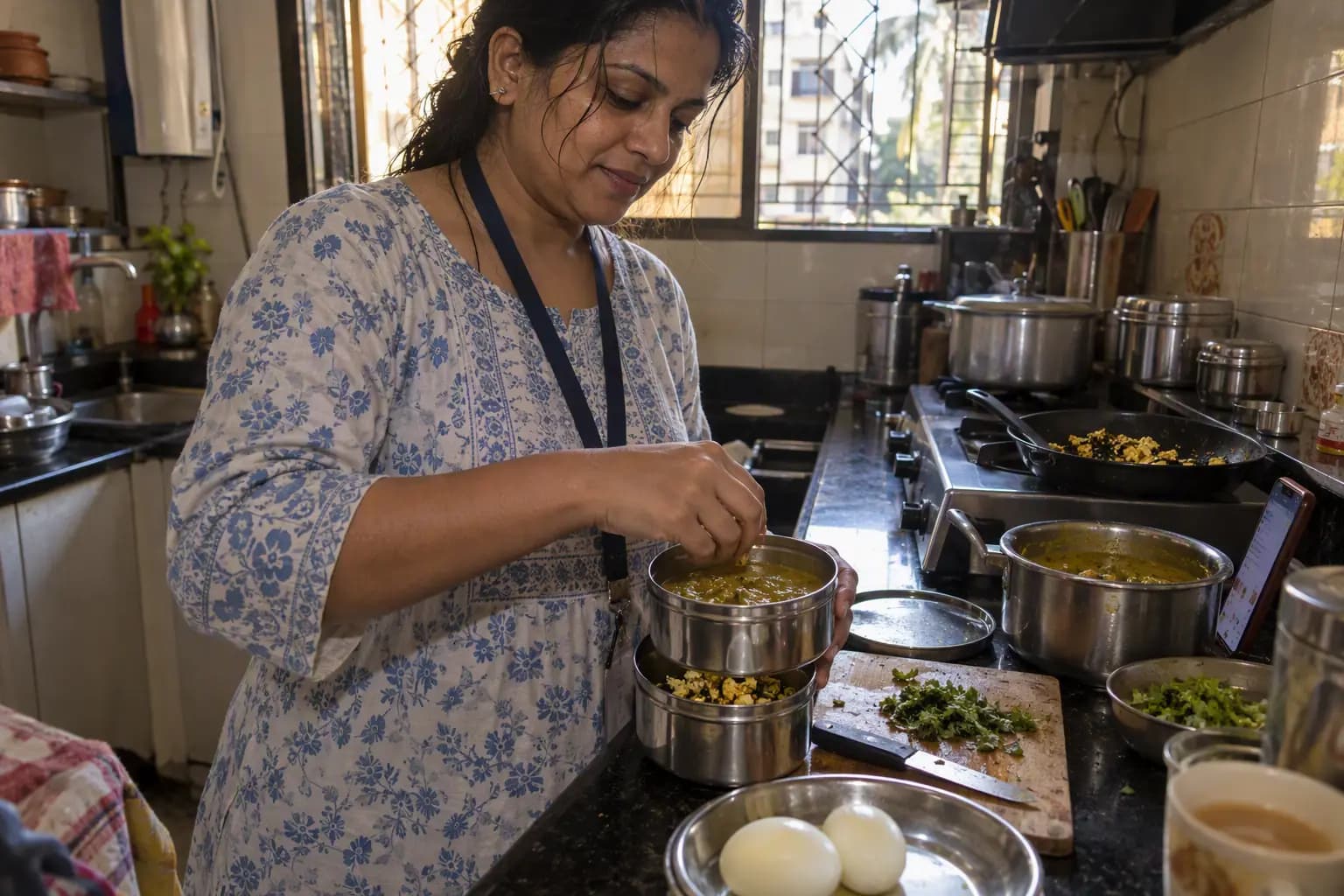
To show how each day was counted, here is Monday in full: about 1,523 kcal and 67.9 g of protein.
Read the full answer
Breakfast is moong dal chilla with onion and tomato, cooked in one teaspoon of oil, and a glass of milk. A guava mid-morning. Lunch is two rotis with rajma and a cucumber salad. The evening snack is roasted kala chana, a few peanuts and an apple. Dinner is palak paneer with a jowar roti.
Open "every item" under the table to see each food's weight and calories. Dal and grains are weighed raw, because that is how the food tables measure them and because cooked weights vary so much. After weighing a day like this once or twice, you will know what 40 g of rajma or 60 g of atta looks like, and the scale can go back in the drawer.
Sources: [4]
| Meal | kcal | Protein |
|---|---|---|
| Breakfast Moong dal chilla with onion and tomato, and a glass of milk | 369 | 19 g |
| Mid-morning A guava | 48 | 2.2 g |
| Lunch Two rotis, rajma and a cucumber salad | 393 | 15.7 g |
| Evening Roasted kala chana, a few peanuts and an apple | 231 | 8.4 g |
| Dinner Palak paneer with a jowar roti | 482 | 22.6 g |
| The day | 1523 | 67.9 g |
Every item, weighed
- Breakfast: moong dal, raw weight, 50 g (163 kcal); onion, 20 g (10 kcal); tomato, 30 g (6 kcal); 1 teaspoon oil or ghee (44 kcal); 1 glass cow's milk, 200 g (146 kcal)
- Mid-morning: guava, 150 g (48 kcal)
- Lunch: 2 medium rotis (atta), 60 g (192 kcal); rajma, dry weight, 40 g (120 kcal); onion, 20 g (10 kcal); tomato, 40 g (8 kcal); cucumber, 100 g (20 kcal); 1 teaspoon oil or ghee (44 kcal)
- Evening: kala chana, dry weight, 30 g (86 kcal); peanuts, 10 g (52 kcal); apple, 150 g (93 kcal)
- Dinner: paneer, 75 g (229 kcal); spinach (palak), 150 g (36 kcal); 1 jowar roti, 50 g (167 kcal); tomato, 30 g (6 kcal); 1 teaspoon oil or ghee (44 kcal)
57.1 g of fibre across the day; 3 teaspoons of oil or ghee counted. Grains and dals weighed raw; every figure from its IFCT 2017 row.
Swaps that keep a vegetarian week from getting boring
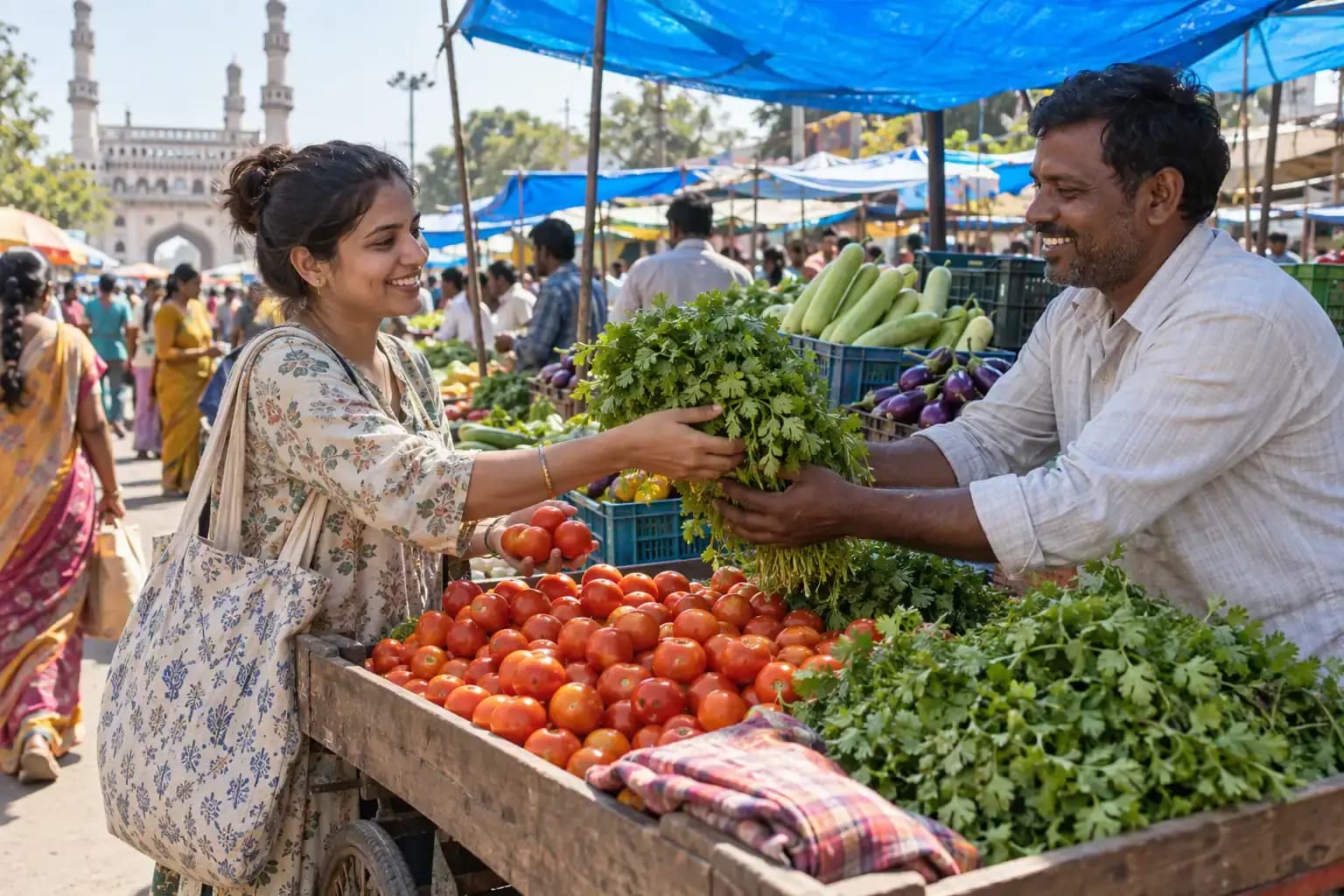
A plan you get bored of by Thursday is a plan you stop, so the week is built to be swapped.
Read the full answer
Within each meal, swap like for like: one dal for another, one millet roti for another, one fruit for another. The calories barely move. The swaps that do move them are the ones that change the type of food, such as soya beans in place of paneer, or a katori of rice in place of a roti, so the table gives each food's numbers for its usual serving.
Watch the hidden swaps too. A paratha instead of a phulka, a creamy restaurant paneer instead of a home bhurji, or packaged namkeen instead of roasted chana each add more than they look. The rule that holds the plan together is simple: keep a protein food in every meal, keep the oil counted, and let the rest follow what is in season.
Sources: [4]
| Swap | One serving | |
|---|---|---|
| Moong dal | Masoor or toor dal | 98 kcal, 7.2 g protein |
| Wheat atta roti | Jowar or ragi roti | 96 kcal, 3.2 g protein |
| Paneer | Soya beans | 153 kcal, 9.4 g protein |
| Guava | Apple or papaya | 48 kcal, 2.2 g protein |
Vitamin B12, iron and the other gaps to check
The one nutrient a vegetarian plate reliably runs short of is vitamin B12, and no amount of dal fixes it.
Read the full answer
B12 comes almost only from animal foods. Milk and paneer carry some, but a review of 18 studies found B12 depletion or deficiency common among vegetarians of every age and wherever they lived, and more so among those vegetarian since birth, which describes many Indian families. A low B12 never shows on the scale; only a blood test finds it.
So a vegetarian losing weight should have B12 checked, along with haemoglobin and iron. The ICMR-NIN guidelines add two kitchen habits for iron: a vitamin C food such as lemon or guava with a dal meal, and tea or coffee kept away from mealtimes. If B12 is low, a doctor will tell you how to bring it up.
| Rate reported | |
|---|---|
| Pregnant women | 62% |
| Children | 25% to 86% |
| Adolescents | 21% to 41% |
| Older adults | 11% to 90% |
What a 7-day plan can and cannot do
Type "vegetarian diet" into a search box and the promises start: 10 kg in 7 days, a flat stomach by next week. Food does not work that fast.
Read the full answer
Kevin Hall's group at the US National Institutes of Health built a model of how body weight responds when people eat less, then tested it against real trials. Weight, it turns out, follows a change in calories slowly, with a half-time of about a year. The quick drop some people see in the first week of a harsh plan usually comes back within days of stopping, since fat itself leaves at a far gentler pace.
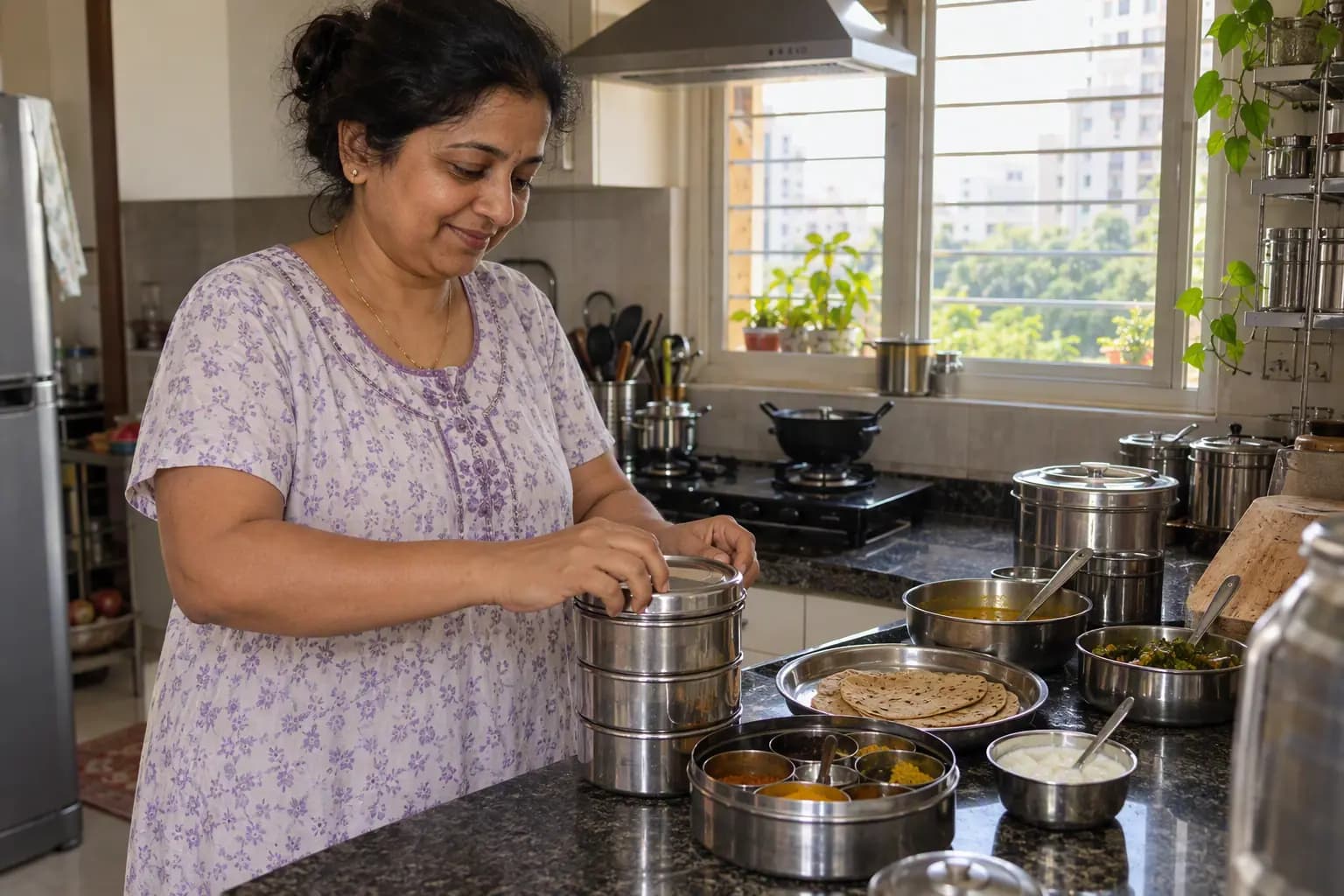
So treat this week as a pattern to repeat. Week one is for learning what 40 g of rajma and 60 g of atta look like. By week four the dishes feel normal. Somewhere around the second or third month, the waistband starts to tell you something the scale was too noisy to show. A plan that stays above 1,500 kcal and keeps protein up is one you can still be eating six months from now.
Sources: [6]
- Week 1Learn the portions
Weigh, count the oil, note the drinks.
- Weeks 2–4Repeat and swap
Same structure, foods in season.
- Month 3Measure
Waist, weight and strength together.
Keeping your muscle on a vegetarian plate
A vegetarian who loses muscle on a diet is often not short of food at all, just short of dal at breakfast.
Read the full answer
Diet-led weight loss takes some muscle along with the fat, and two things slow that down: enough protein, and two or three sessions a week of strength work, whether that is a gym, resistance bands or squats in the living room. When you eat the protein matters too. In a small study at the University of Texas, eight adults ate about 30 g of protein at each of three meals for a week, and their muscles built protein 25% faster than when the same total came mostly at dinner. Tea and two biscuits is breakfast in plenty of homes; a moong chilla and a glass of milk does far more for you.
We wrote our own programme's goal with this in mind: "Lose up to 20% of your body weight — and keep your muscle". Results vary; your doctor decides what is right for you. For a vegetarian, that means a home blood test first, vitamin B12 included, read with you by a registered doctor, and then a week like the one on this page, built around your own results.
- BreakfastMoong, besan or paneer
Not just poha or bread.
- Lunch and dinnerA full katori of dal
Or chana, rajma or soya.
- 2–3 times a weekStrength work
Weights or bodyweight exercise.
Every source, in full (8)
[1] Huang RY et al. Vegetarian diets and weight reduction: a meta-analysis of randomized controlled trials
Journal of General Internal Medicine, 2016. Across 12 trials (1,151 adults, a median of 18 weeks), people put on vegetarian diets lost 2.02 kg more than those on non-vegetarian diets; the gap was smaller after a year.
Read the source[2] Recommended Dietary Allowances and Estimated Average Requirements for Indians
ICMR-NIN Expert Group, 2020. Protein for healthy Indian adults: 0.83 g per kg of body weight a day.
Read the source[3] Dietary Guidelines for Indians
ICMR-National Institute of Nutrition, 2024. The Indian plate for the day: vegetables and greens as the largest share, whole grains and millets, pulses, eggs, meat or fish, milk or curd, nuts and seeds; cereals and pulses in a 3:1 ratio; slow, steady weight reduction.
Read the source[4] Longvah T, Ananthan R, Bhaskarachary K, Venkaiah K. Indian Food Composition Tables 2017
National Institute of Nutrition (ICMR), Hyderabad, 2017. The energy, protein and fibre per 100 g of every food in the day plans and tables on this page, measured across India's regions.
Read the source[5] Pawlak R et al. How prevalent is vitamin B12 deficiency among vegetarians?
Nutrition Reviews, 2013. Across 18 studies, vitamin B12 depletion or deficiency was common in vegetarians of every age and place, more so in vegans and in those vegetarian since birth.
Read the source[6] Hall KD et al. Quantification of the effect of energy imbalance on bodyweight
The Lancet, 2011. A model of adult metabolism, checked against trials: the body's weight responds slowly to a change in calories, with a half-time of about a year, and the body burns less as it shrinks.
Read the source[7] Cava E, Yeat NC, Mittendorfer B. Preserving healthy muscle during weight loss
Advances in Nutrition, 2017. Diet-induced weight loss takes some muscle with it; a high protein intake and both endurance and resistance exercise help keep muscle mass, and resistance exercise also improves strength.
Read the source[8] Mamerow MM et al. Dietary protein distribution positively influences 24-h muscle protein synthesis in healthy adults
The Journal of Nutrition, 2014. In eight adults, the same daily protein split evenly (about 30 g at each of three meals) built muscle protein 25% faster over 24 hours than when most of it came at dinner.
Read the source