metaboliq
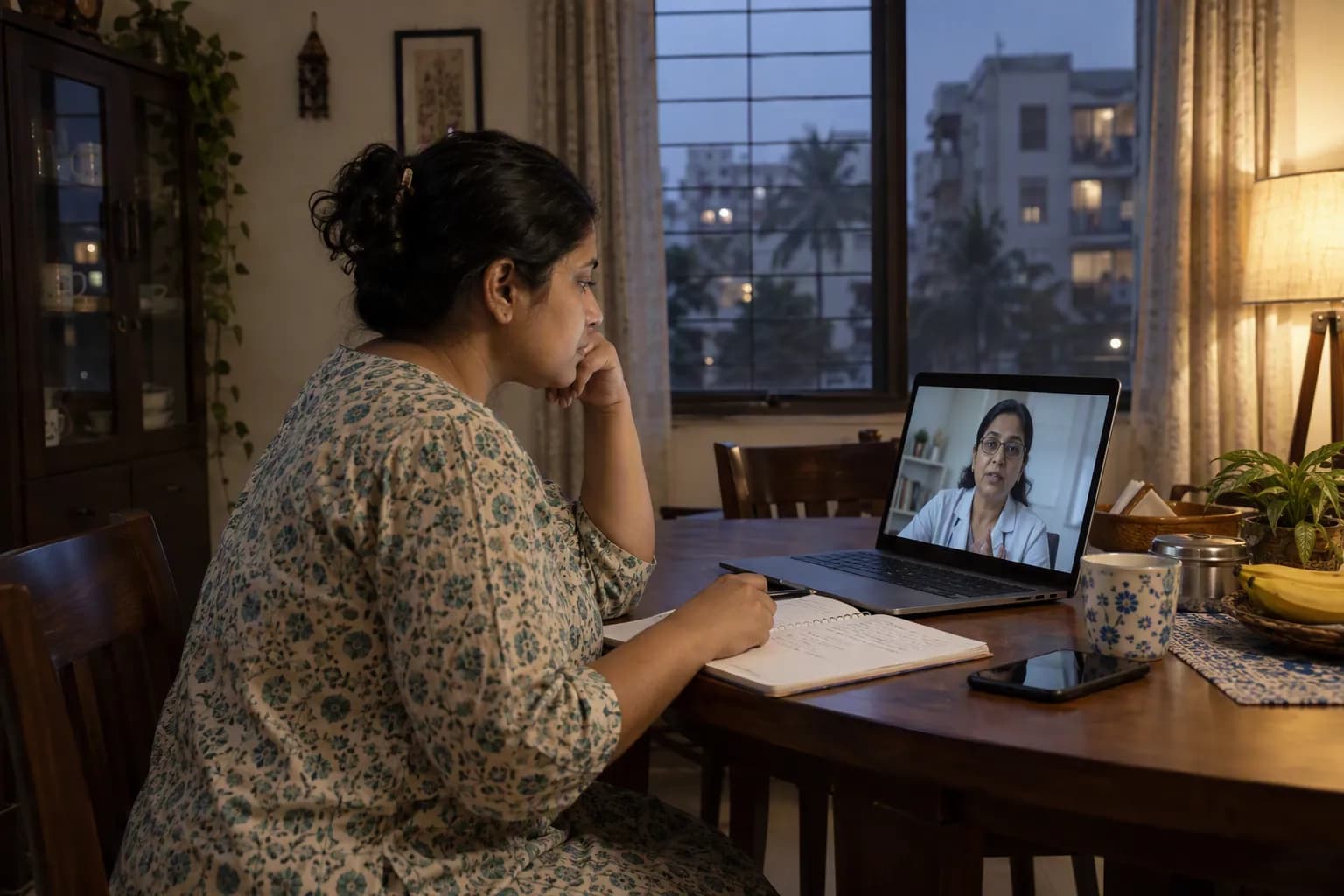
How many calories you need, and why we set no target
Your calorie needs depend on your height, weight, age, sex and how much you move, so a number that suits your neighbour may be wrong for you.
Read the full answer
Our energy-needs tool takes those details and estimates what your body uses in a day. Then it stops, on purpose. The next decision, how far below that to eat, controls how fast you lose and how much of the loss is muscle. A doctor or dietitian should make it, ideally with your thyroid, blood sugar and lipid results on the table.
It also helps to know how slowly a body responds. Kevin Hall's team at the US National Institutes of Health built a model of human metabolism and checked it against real trials. Weight, they found, answers a change in calories with a half-time of about a year, and the body burns a little less as it gets smaller. So the first month usually looks better than the third. A plan you can stick to for a year beats one that looks quick on paper.
Sources: [1]
- Step 1What your body uses
The energy-needs tool estimates it.
- Step 2Blood results
Thyroid, sugar and lipids, read by a doctor.
- Step 3How far under
Set by a doctor or dietitian, not a chart.
- Every monthCheck and adjust
Waist, weight and strength together.
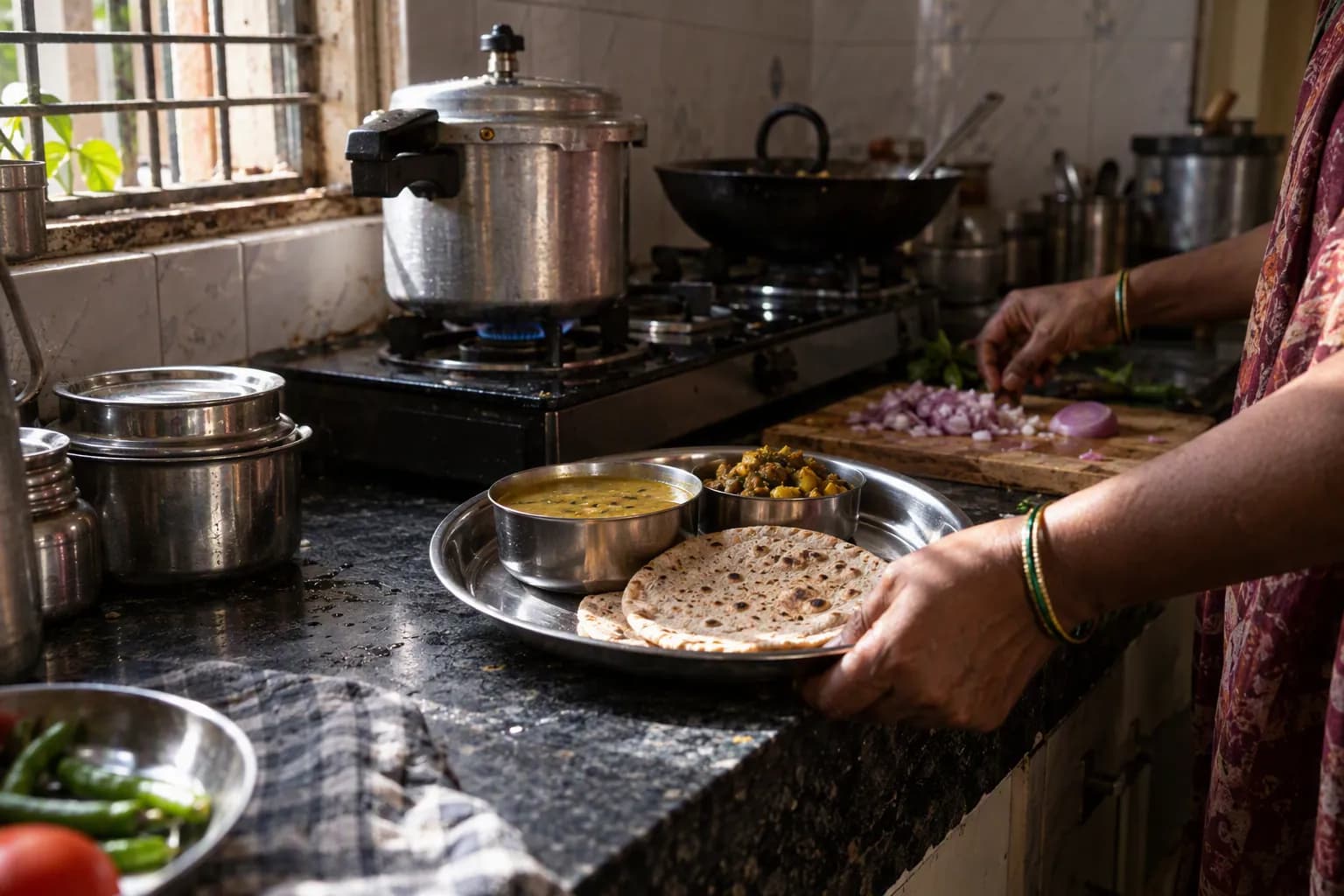
Indian food calorie chart: everyday foods per serving
A calorie chart is only as good as its numbers, and every number in this one comes from IFCT 2017, the tables the National Institute of Nutrition in Hyderabad measured from food sampled across India.
Read the full answer
Each food is listed for one ordinary serving, the same serving its own page uses, so you can add up a plate without dividing by 100. Grains and dals are given raw, because that is how they were measured. A katori of cooked rice can hold very different amounts of water depending on who cooked it, so the raw weight is the one to trust.
Two things jump out once you start adding. Most of an Indian plate's calories sit in the rice or roti, and most of the hidden ones sit in the oil: each teaspoon of oil or ghee adds about 44 kcal, and a restaurant gravy can carry several. Lauki, bhindi and palak barely register, which is why a plate can look full and still add up to very little.
- 44kcal in a teaspoon of oil
Sources: [2]
| Food, one serving | kcal | Protein |
|---|---|---|
| White rice 40 g | 142 | 3.2 g |
| Wheat atta 30 g | 96 | 3.2 g |
| Poha 40 g | 142 | 3 g |
| Moong dal 30 g | 98 | 7.2 g |
| Rajma 30 g | 90 | 6 g |
| Paneer 50 g | 153 | 9.4 g |
| Egg 50 g | 74 | 6.7 g |
| Chicken breast 100 g | 168 | 21.8 g |
| Milk 200 g | 146 | 6.5 g |
| Banana 100 g | 105 | 1.2 g |
| Peanuts 30 g | 156 | 7.1 g |
| Bhindi 100 g | 27 | 2.1 g |
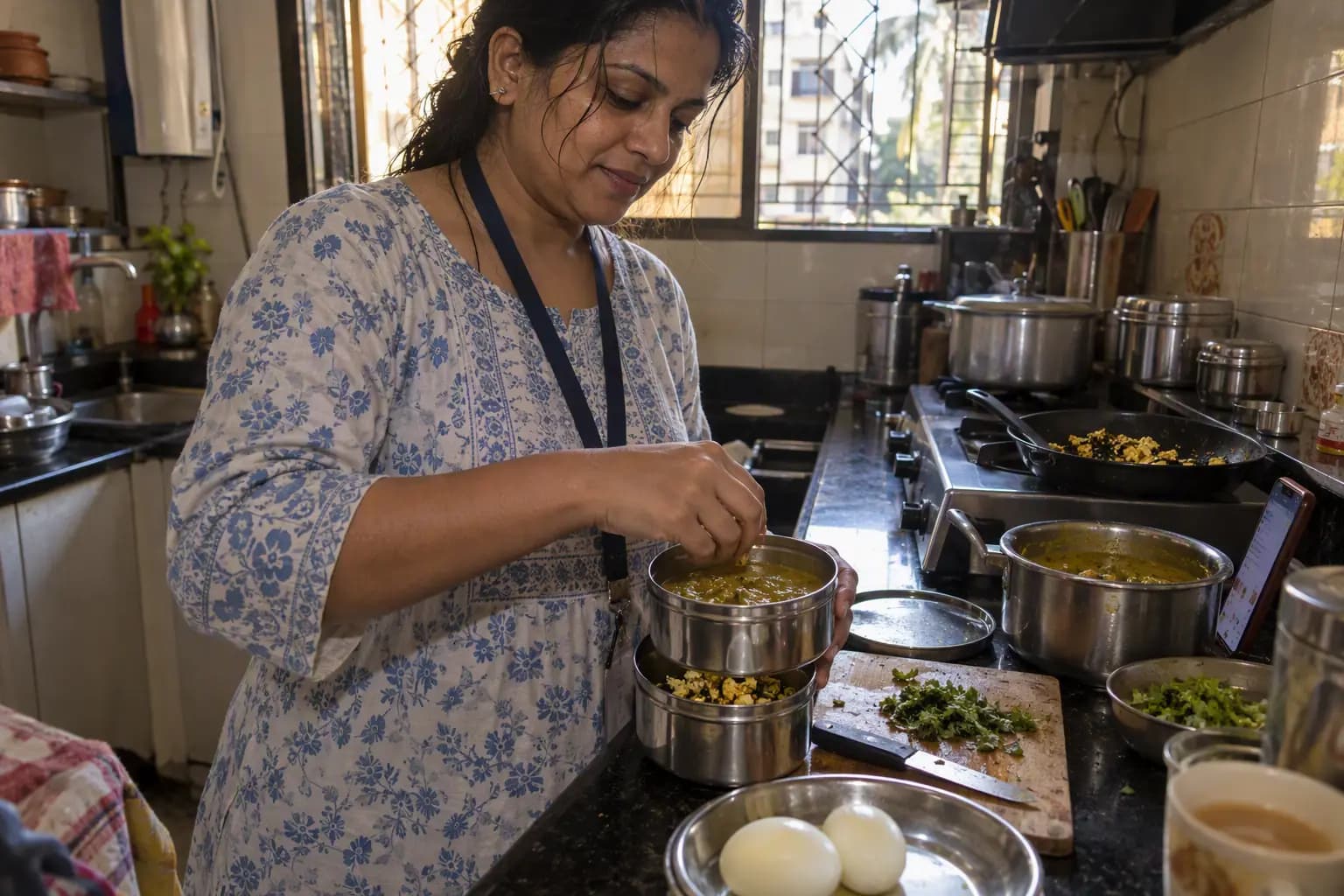
Why there is no 1,200 calorie diet plan on this page
Of all the calorie numbers people in India type into a search box, 1,200 comes up most, and it is the one plan we will not print, because a number that low is a treatment decision, not a recipe.
Read the full answer
Our energy tool refuses to show any daily figure under 1,200 kcal for women and 1,500 kcal for men, and every day on our diet pages sits at or above 1,500. Below those lines it gets hard to fit enough protein, iron and calcium into the day, the loss tilts towards muscle, and hunger makes the plan hard to keep.
Going lower does not buy much in the long run either. Six randomised trials compared diets under 800 kcal with ordinary low-calorie diets. The very-low diets lost more at first, 16.1% of body weight against 9.7%, but a year or more later the difference had gone: 6.3% against 5.0%. Those very-low diets were run under medical supervision. A 1,000-calorie day copied from a chart has neither the supervision nor the advantage.
Sources: [3]
| Under 800 kcal | Low-calorie | |
|---|---|---|
| Weight lost at first | 16.1% | 9.7% |
| A year or more later | 6.3% | 5.0% |
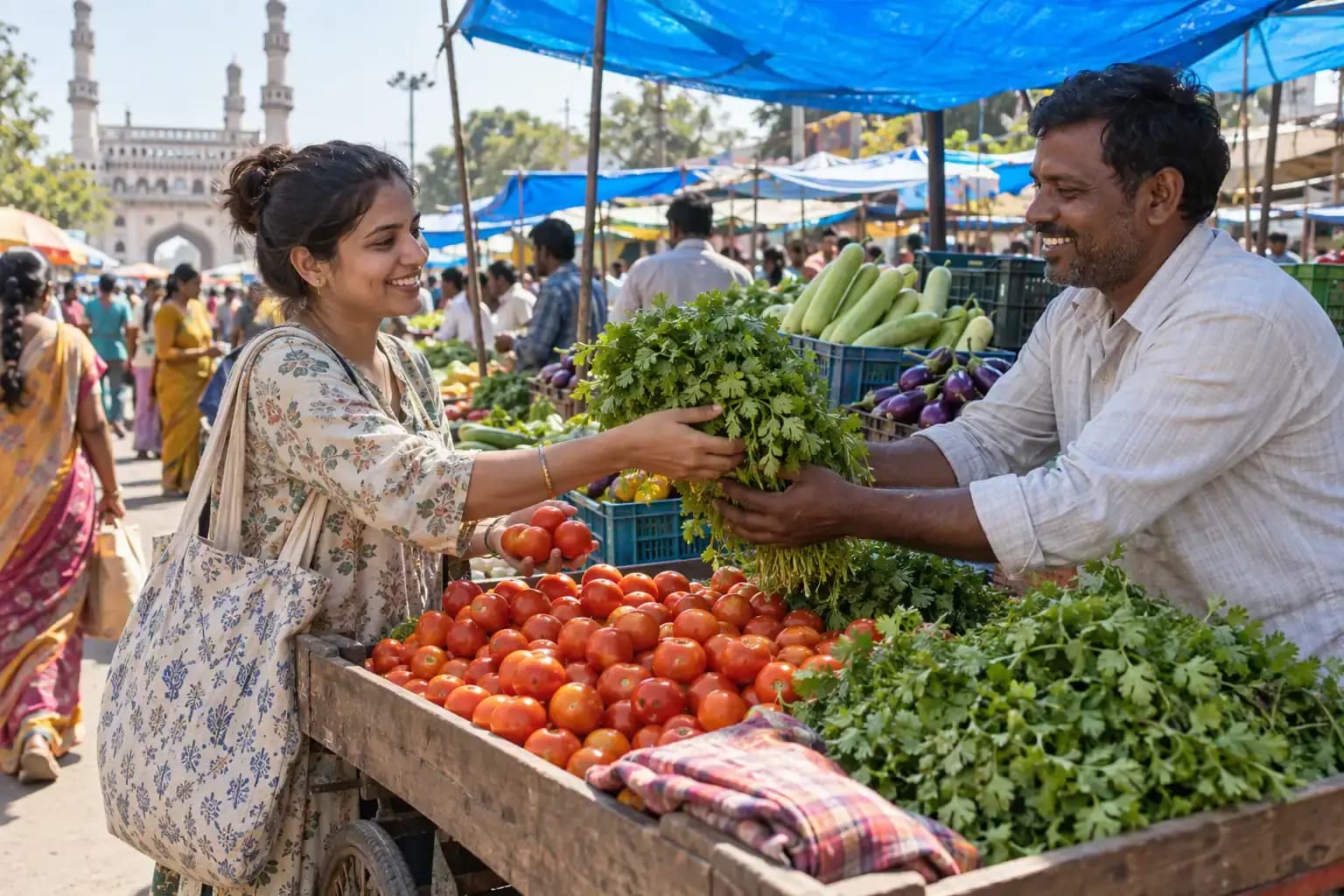
A 1,500-calorie Indian day, worked out
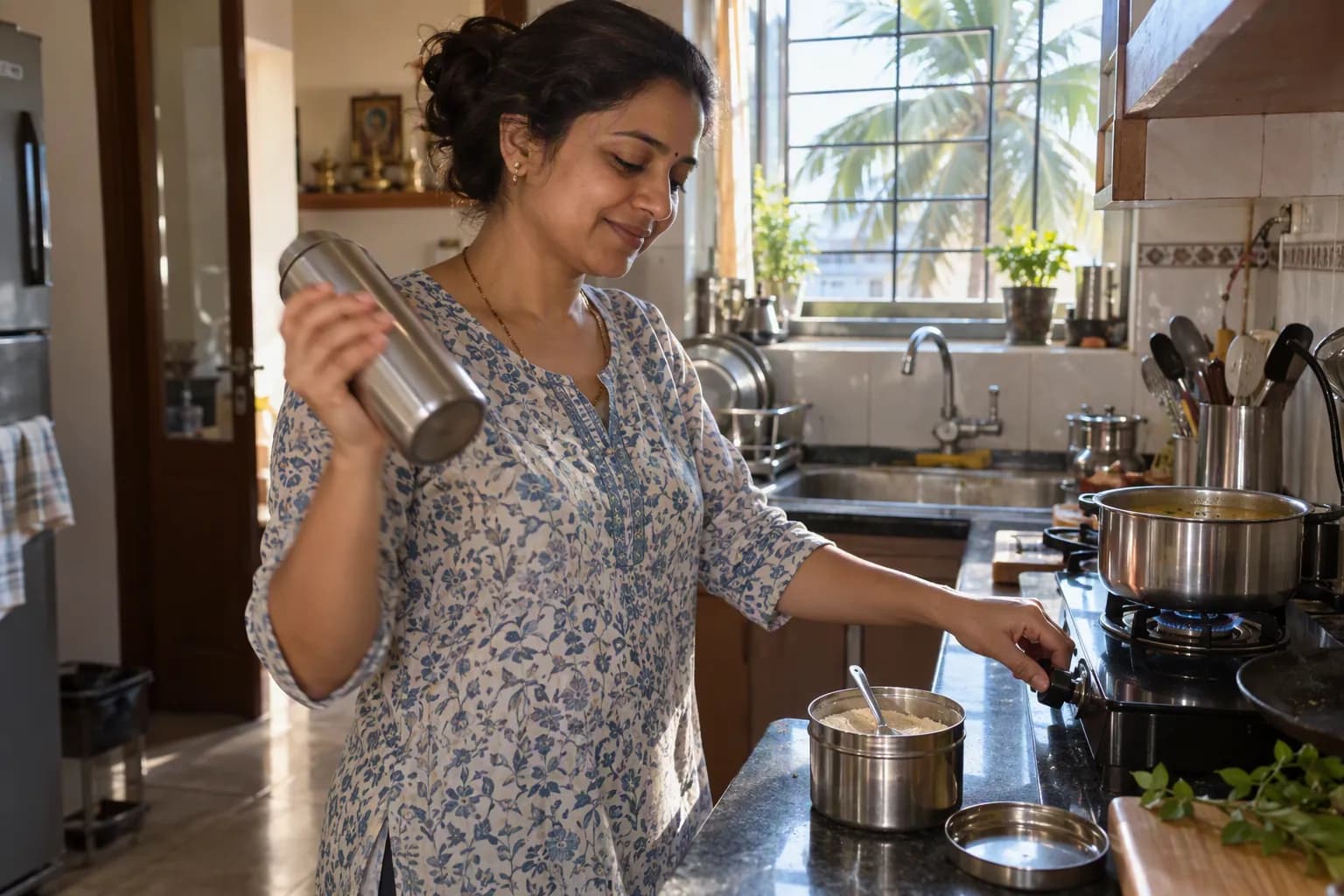
Here is an ordinary Indian day, weighed and counted, that comes to about 1,552 kcal with 64.9 g of protein.
Read the full answer
Breakfast is poha with a few peanuts and a glass of milk. A guava mid-morning. Lunch is two rotis with toor dal, bhindi and a cucumber salad. In the evening, kala chana chaat and a small apple, and dinner is palak paneer with a little rice and a small katori of moong dal. There is nothing to buy that a family kitchen does not already have.
Three teaspoons of oil are counted across the day, one per cooked meal. That is tighter than most homes cook, and it is where a real day usually drifts: an extra tadka here, a paratha instead of a roti there. If you want to follow this day, measure the oil for one week and you will see where your own calories go.
| Meal | kcal | Protein |
|---|---|---|
| Breakfast Poha with peanuts and onion, and a glass of milk | 393 | 12.2 g |
| Mid-morning A guava | 48 | 2.2 g |
| Lunch Two rotis, toor dal, bhindi and cucumber | 421 | 18.2 g |
| Evening Kala chana chaat and a small apple | 164 | 6.5 g |
| Dinner Palak paneer, a little rice and moong dal | 526 | 25.9 g |
| The day | 1552 | 64.9 g |
Every item, weighed
- Breakfast: poha, dry weight, 40 g (142 kcal); peanuts, 10 g (52 kcal); onion, 20 g (10 kcal); 1 teaspoon oil or ghee (44 kcal); 1 glass cow's milk, 200 g (146 kcal)
- Mid-morning: guava, 150 g (48 kcal)
- Lunch: 2 medium rotis (atta), 60 g (192 kcal); toor dal, raw weight, 40 g (132 kcal); bhindi, 120 g (32 kcal); cucumber, 100 g (20 kcal); 1 teaspoon oil or ghee (44 kcal)
- Evening: kala chana, dry weight, 30 g (86 kcal); onion, 20 g (10 kcal); tomato, 30 g (6 kcal); apple, 100 g (62 kcal)
- Dinner: paneer, 75 g (229 kcal); rice, raw weight, 40 g (142 kcal); moong dal, raw weight, 25 g (82 kcal); spinach (palak), 120 g (29 kcal); 1 teaspoon oil or ghee (44 kcal)
50.8 g of fibre across the day; 3 teaspoons of oil or ghee counted. Grains and dals weighed raw; every figure from its IFCT 2017 row.
One menu, two sizes: how portions move the total
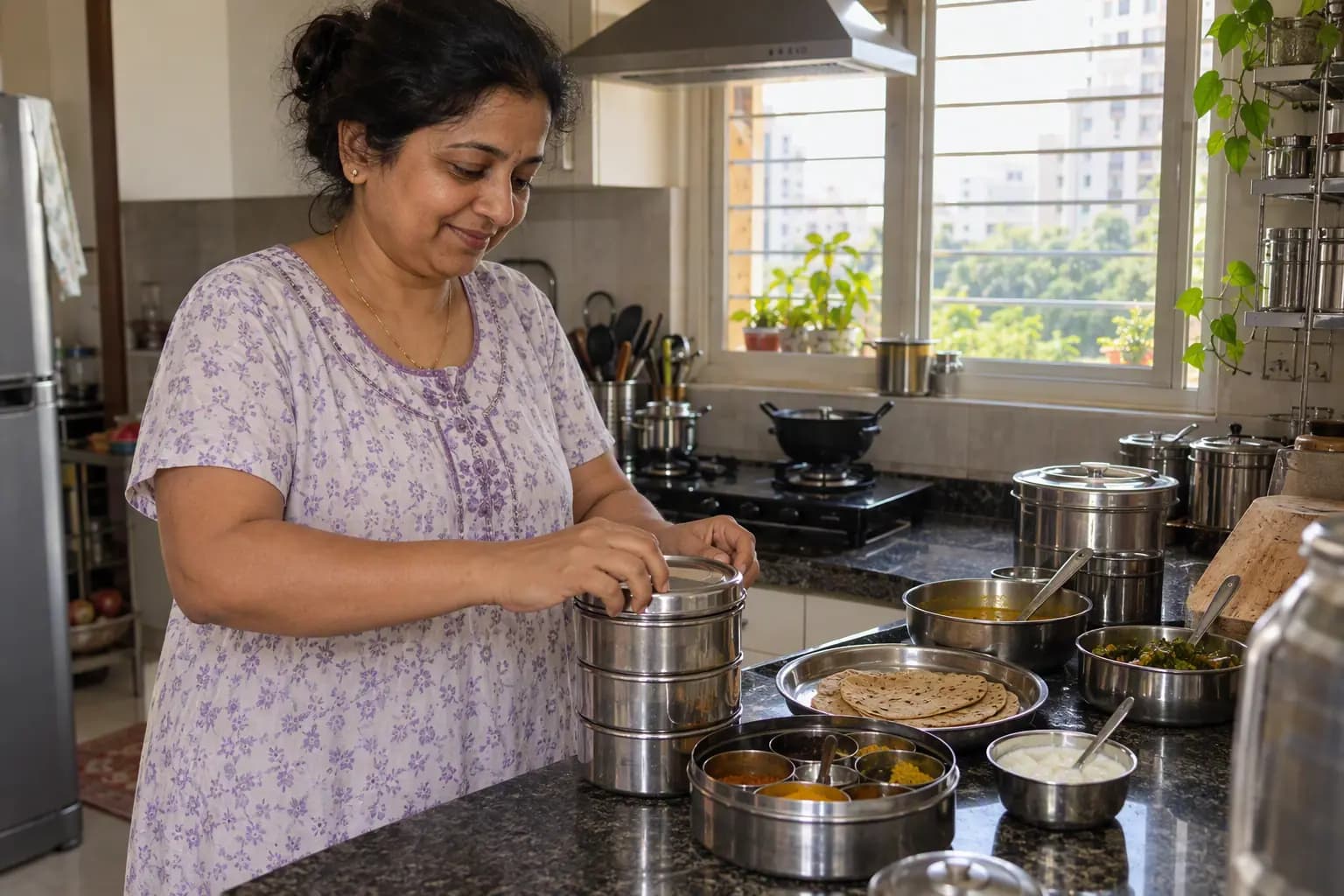
Now the same menu with bigger katoris and one more teaspoon of oil: about 1,995 kcal, roughly 443 more than the smaller day, with not a single dish changed.
Read the full answer
Look at what moved. The poha went from 40 g dry to 60 g. Lunch gained a third roti and a fuller katori of toor dal. The paneer, the chana and the fruit each grew a little, and an extra spoon of oil went into the tadka. At the table, nobody would notice any one of those. Added together, they come to more than a whole meal.
For most Indian homes, that is the real calorie diet plan. You rarely need different food. You need to know which two things to measure, the grain and the oil, while keeping the dal and the protein generous and letting sabzi fill whatever room is left on the plate.
Sources: [2]
| Meal | kcal | Protein |
|---|---|---|
| Breakfast Poha with peanuts and onion, and a glass of milk | 490 | 14.8 g |
| Mid-morning A large guava | 64 | 2.9 g |
| Lunch Three rotis, toor dal, bhindi and cucumber | 594 | 23.6 g |
| Evening Kala chana chaat and an apple | 223 | 8.5 g |
| Dinner Palak paneer, rice and moong dal | 623 | 30.7 g |
| The day | 1995 | 80.5 g |
Every item, weighed
- Breakfast: poha, dry weight, 60 g (212 kcal); peanuts, 15 g (78 kcal); onion, 20 g (10 kcal); 1 teaspoon oil or ghee (44 kcal); 1 glass cow's milk, 200 g (146 kcal)
- Mid-morning: guava, 200 g (64 kcal)
- Lunch: 3 medium rotis (atta), 90 g (288 kcal); toor dal, raw weight, 50 g (166 kcal); bhindi, 120 g (32 kcal); cucumber, 100 g (20 kcal); 1 teaspoon oil or ghee (44 kcal); 1 teaspoon oil or ghee (44 kcal)
- Evening: kala chana, dry weight, 40 g (115 kcal); onion, 20 g (10 kcal); tomato, 30 g (6 kcal); apple, 150 g (93 kcal)
- Dinner: paneer, 90 g (275 kcal); rice, raw weight, 50 g (178 kcal); moong dal, raw weight, 30 g (98 kcal); spinach (palak), 120 g (29 kcal); 1 teaspoon oil or ghee (44 kcal)
65.2 g of fibre across the day; 4 teaspoons of oil or ghee counted. Grains and dals weighed raw; every figure from its IFCT 2017 row.
| Smaller | Larger | |
|---|---|---|
| Breakfast | 393 | 490 |
| Mid-morning | 48 | 64 |
| Lunch | 421 | 594 |
| Evening | 164 | 223 |
| Dinner | 526 | 623 |
Counting calories without an app
Calorie counting usually goes wrong when you write things down, not when you add them up.
Read the full answer
A 1992 study looked at people who said they could not lose weight despite eating under 1,200 calories. When researchers measured them properly, their metabolism was normal. They had written down 47% less food than they really ate, and reported 51% more exercise than they really did. Portions are hard to judge by eye, for anyone.
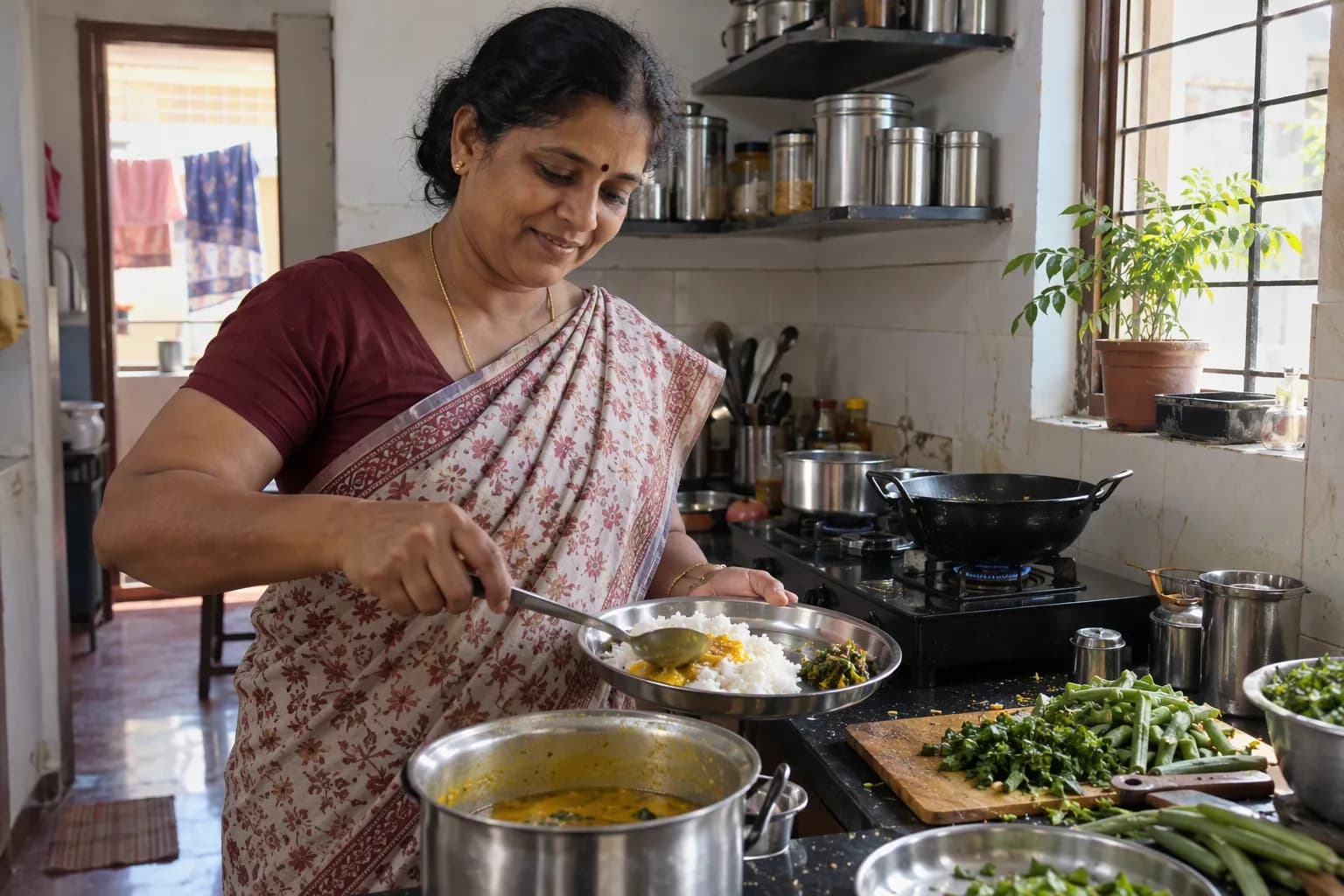
You do not need an app to fix that. A cheap kitchen scale for two weeks teaches more than a year of guessing. Weigh rice, atta and dal raw, count oil by the teaspoon, and write down what you drink, because sweet chai and packaged juice are where uncounted calories pile up fastest. After a fortnight of that, judging a katori by eye gets much easier, and the scale can go back in the drawer.
Sources: [5]
| Gap | |
|---|---|
| Food eaten | Under-reported by 47% |
| Activity | Over-reported by 51% |
| Metabolism | Within 5% of predicted |
Low-carb, low-fat or high-protein: which calorie split works?
Once the calories are right, whether they come mostly from carbohydrate or fat matters far less than diet books suggest.
Read the full answer
Two big trials settle most of the argument. In Boston and Baton Rouge, 811 adults were put on four diets with different mixes of fat, protein and carbohydrate. Two years later they had lost about the same, and the people who kept turning up to their group sessions had lost the most. At Stanford, 609 adults spent a year on either a healthy low-fat or a healthy low-carbohydrate diet. They lost 5.3 kg and 6.0 kg, too close to call.
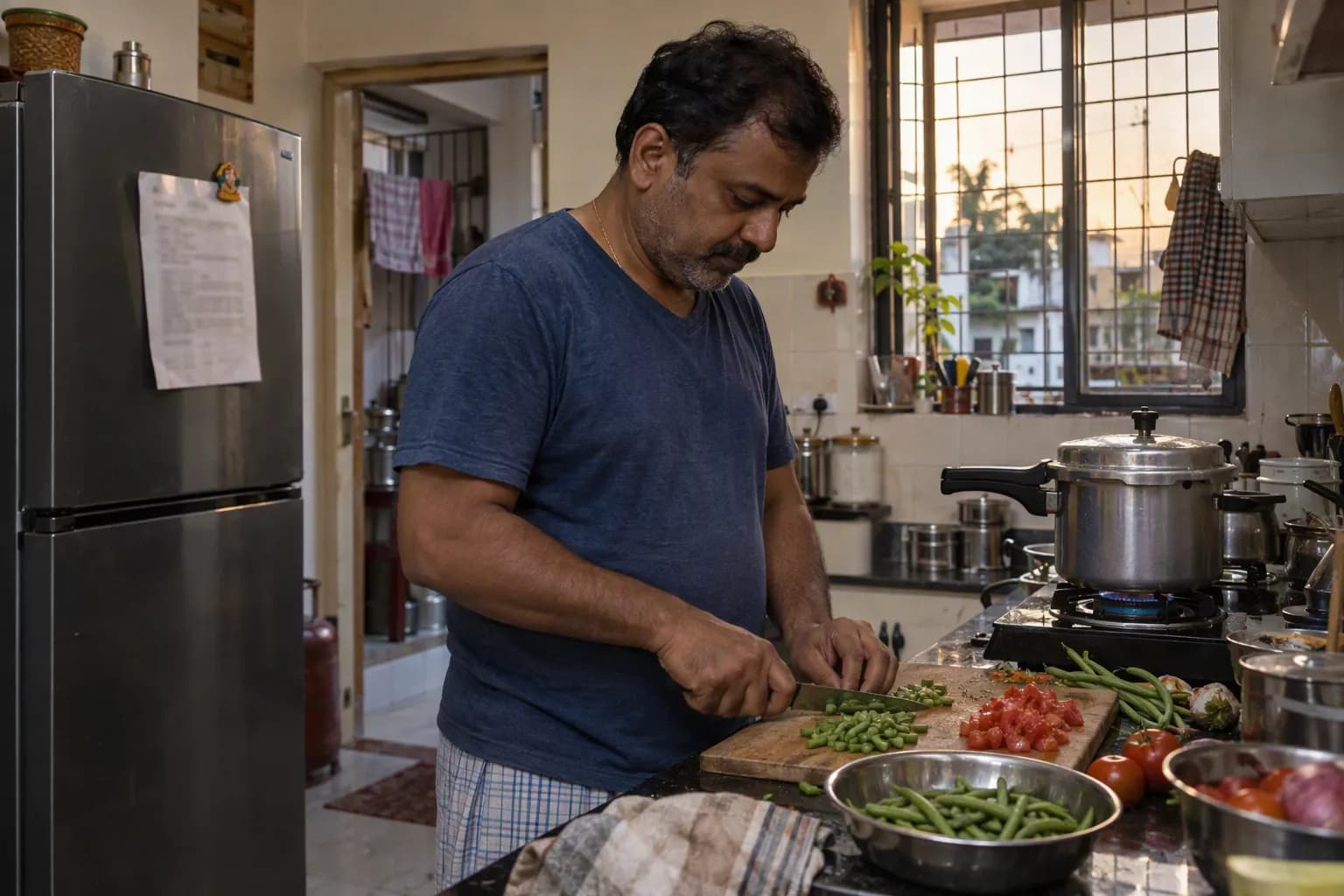
So choose the mix your family will actually eat. India's own consensus guidance for Asian Indians leans towards fewer refined carbohydrates, more fibre and slightly more protein, which is roughly the plate on this page. Keep protein up for your muscle, keep the grain measured, and let your kitchen decide the rest.
| People | Result | |
|---|---|---|
| 4 diets, 2 years | 811 | About the same loss |
| Low-fat vs low-carb, 1 year | 609 | 5.3 kg vs 6.0 kg |
Calories and muscle: why the number is not the whole story
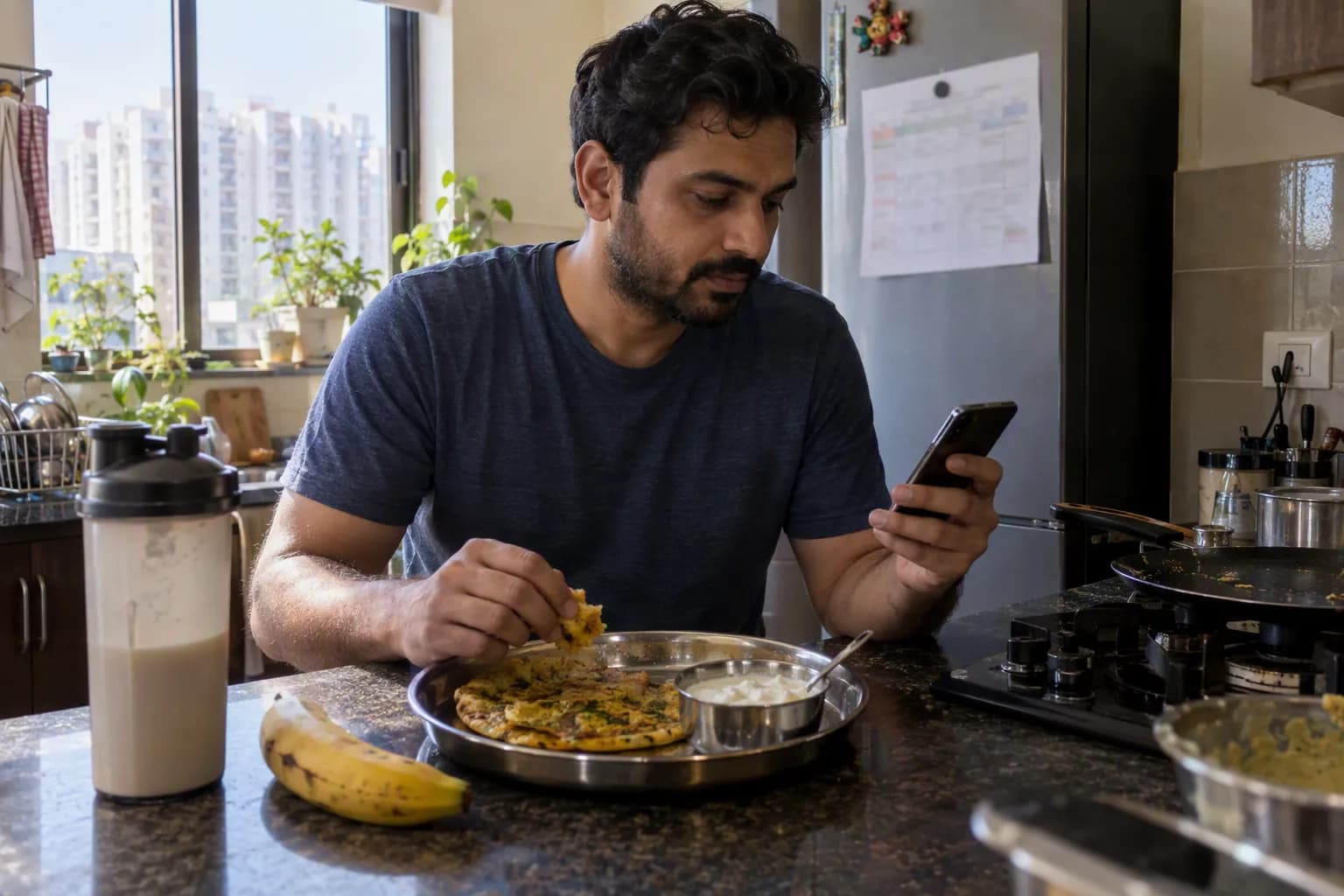
Two people can eat exactly the same calories and end up with very different bodies. The difference is protein, and whether either of them lifts anything heavier than a shopping bag.
Read the full answer
When weight comes off on calories alone, some muscle goes with it. More protein and regular strength work keep more of it; in trials where calories were matched, the higher-protein groups kept more lean mass and lost a little more fat. Keeping that muscle is what lets you climb stairs, carry your children and stay active enough to hold the new weight.
So when we wrote our programme's goal, we put muscle in it: "Lose up to 20% of your body weight — and keep your muscle". Results vary; your doctor decides what is right for you. It begins with a home blood test that a doctor reads with you, and your calorie number and protein target come out of that conversation, set for your body rather than borrowed from a chart.
- DailyProtein at each meal
Dal, paneer, eggs, chicken or fish.
- 2–3 times a weekStrength work
Weights or bodyweight exercise.
- MonthlyMeasure the waist
Not only the number on the scale.
Every source, in full (10)
[1] Hall KD et al. Quantification of the effect of energy imbalance on bodyweight
The Lancet, 2011. A model of adult metabolism, checked against trials: the body's weight responds slowly to a change in calories, with a half-time of about a year, and the body burns less as it shrinks.
Read the source[2] Longvah T, Ananthan R, Bhaskarachary K, Venkaiah K. Indian Food Composition Tables 2017
National Institute of Nutrition (ICMR), Hyderabad, 2017. The energy, protein and fibre per 100 g of every food in the day plans and tables on this page, measured across India's regions.
Read the source[3] Tsai AG, Wadden TA. The evolution of very-low-calorie diets: an update and meta-analysis
Obesity, 2006. In six randomised trials, diets under 800 kcal lost more at first (16.1% of body weight against 9.7%) but no more a year or more later (6.3% against 5.0%) than ordinary low-calorie diets.
Read the source[4] Dietary Guidelines for Indians
ICMR-National Institute of Nutrition, 2024. The Indian plate for the day: vegetables and greens as the largest share, whole grains and millets, pulses, eggs, meat or fish, milk or curd, nuts and seeds; cereals and pulses in a 3:1 ratio; slow, steady weight reduction.
Read the source[5] Lichtman SW et al. Discrepancy between self-reported and actual caloric intake and exercise in obese subjects
The New England Journal of Medicine, 1992. People who said they could not lose weight on under 1,200 kcal had normal metabolisms; measured, they had under-reported their food by 47% and over-reported their exercise by 51%.
Read the source[6] Sacks FM et al. Comparison of weight-loss diets with different compositions of fat, protein, and carbohydrates
The New England Journal of Medicine, 2009. 811 adults on four diets with different fat, protein and carbohydrate splits lost about the same at two years; turning up to the group sessions was what tracked with weight lost.
Read the source[7] Gardner CD et al. Effect of low-fat vs low-carbohydrate diet on 12-month weight loss in overweight adults (DIETFITS)
JAMA, 2018. In 609 adults over a year, a healthy low-fat diet lost 5.3 kg and a healthy low-carbohydrate diet 6.0 kg, a difference that was not significant.
Read the source[8] Misra A et al. Consensus dietary guidelines for healthy living and prevention of obesity, the metabolic syndrome, diabetes, and related disorders in Asian Indians
Diabetes Technology & Therapeutics, 2011. India's consensus guidance for Asian Indians: fewer carbohydrates and more of them complex, more fibre, slightly more protein, less saturated fat, salt and sugar.
Read the source[9] Cava E, Yeat NC, Mittendorfer B. Preserving healthy muscle during weight loss
Advances in Nutrition, 2017. Diet-induced weight loss takes some muscle with it; a high protein intake and both endurance and resistance exercise help keep muscle mass, and resistance exercise also improves strength.
Read the source[10] Wycherley TP et al. Effects of energy-restricted high-protein, low-fat compared with standard-protein, low-fat diets: a meta-analysis
The American Journal of Clinical Nutrition, 2012. In 24 trials (1,063 adults, about 12 weeks), a higher-protein diet at the same calories lost 0.79 kg more weight and 0.87 kg more fat, and kept 0.43 kg more lean mass, than a standard-protein diet.
Read the source