metaboliq
The weight losing foods chart: 50 Indian foods, ranked
Three numbers decide how useful a food is on a plate meant to lose fat: protein per 100 kcal, fibre per 100 g, and calories per 100 g.
Read the full answer
Protein per 100 kcal tells you how much protein you buy with a given amount of energy. Fish, chicken, soya and moong sit near the top; rice, poha and most fruit sit near the bottom. That does not make rice a bad food. It makes it a food you measure, and pair with a protein that does the heavy lifting.
Fibre per 100 g shows which grains and pulses slow a meal down. Calories per 100 g, the energy density, shows which foods let you eat a big plate cheaply: a katori of lauki carries almost no energy, while a handful of cashews carries a lot. Every figure in the chart is the food's own row in IFCT 2017, and IFCT measured no fibre in milk, eggs, meat or fish, so those cells are blank rather than guessed.
Sources: [1]
| Food | |||
|---|---|---|---|
| Rohu fish | 19.3 | – | 102 |
| Mutton | 13.8 | – | 160 |
| Chicken breast | 13.0 | – | 168 |
| Soya bean | 10.0 | 22.6 | 377 |
| Moringa leaves | 9.6 | 8.2 | 67 |
| Egg | 9.1 | – | 148 |
| Bhindi | 7.7 | 4.1 | 27 |
| Moong dal | 7.3 | 9.4 | 326 |
| Rajma | 6.7 | 16.6 | 299 |
| Besan | 6.6 | 15.2 | 329 |
| Kala chana | 6.5 | 25.2 | 287 |
| Paneer | 6.2 | – | 305 |
| Beetroot | 5.4 | 3.3 | 36 |
| Bottle gourd | 4.8 | 2.1 | 11 |
| Guava | 4.5 | 8.6 | 32 |
| Milk | 4.5 | – | 73 |
| Peanuts | 4.5 | 10.4 | 520 |
| Sweet corn | 4.3 | 3.3 | 97 |
| Flaxseed | 4.2 | 26.2 | 444 |
| Sesame seeds | 4.2 | 17.0 | 520 |
| Quinoa | 4.0 | 14.7 | 328 |
| Jackfruit | 3.8 | 3.6 | 72 |
| Barley | 3.5 | 15.6 | 316 |
| Suji (rava) | 3.4 | 9.7 | 334 |
| Wheat atta | 3.3 | 11.4 | 320 |
| Cashew | 3.2 | 3.9 | 583 |
| Onion | 3.1 | 2.5 | 48 |
| Jowar | 3.0 | 10.2 | 334 |
| Watermelon | 3.0 | 0.7 | 20 |
| Carrot | 2.9 | 4.2 | 33 |
| Brown rice | 2.6 | 4.4 | 354 |
| Pomegranate | 2.4 | 2.8 | 55 |
| Potato | 2.2 | 1.7 | 70 |
| Ragi | 2.2 | 11.2 | 321 |
| White rice | 2.2 | 2.8 | 356 |
| Poha | 2.1 | 3.5 | 354 |
| Avocado | 2.0 | 6.7 | 144 |
| Muskmelon | 1.9 | 1.5 | 28 |
| Litchi | 1.8 | 1.3 | 54 |
| Papaya | 1.7 | 2.8 | 24 |
| Amla | 1.4 | 7.8 | 24 |
| Chikoo | 1.3 | 9.6 | 73 |
| Banana | 1.2 | 1.9 | 105 |
| Sweet potato | 1.2 | 4.0 | 109 |
| Grapes | 1.1 | 1.3 | 54 |
| Mango | 1.0 | 2.0 | 55 |
| Coconut | 0.9 | 10.4 | 409 |
| Pear | 0.9 | 4.5 | 38 |
| Dates | 0.8 | 9.1 | 311 |
| Apple | 0.5 | 2.6 | 62 |
Protein foods: the ones that keep you full and keep your muscle
If one food group decides how a diet goes, it is protein, because it keeps you full and protects muscle while the weight comes off.
Read the full answer
In a study at the University of Washington, 19 adults moved from 15% to 30% of their calories from protein and were free to eat as much as they liked. They ate about 440 fewer calories a day without trying, and lost 4.9 kg over 12 weeks, most of it fat. A meta-analysis of 24 trials found the same direction at equal calories: a higher-protein plan lost a little more fat and kept more lean mass than a standard one.
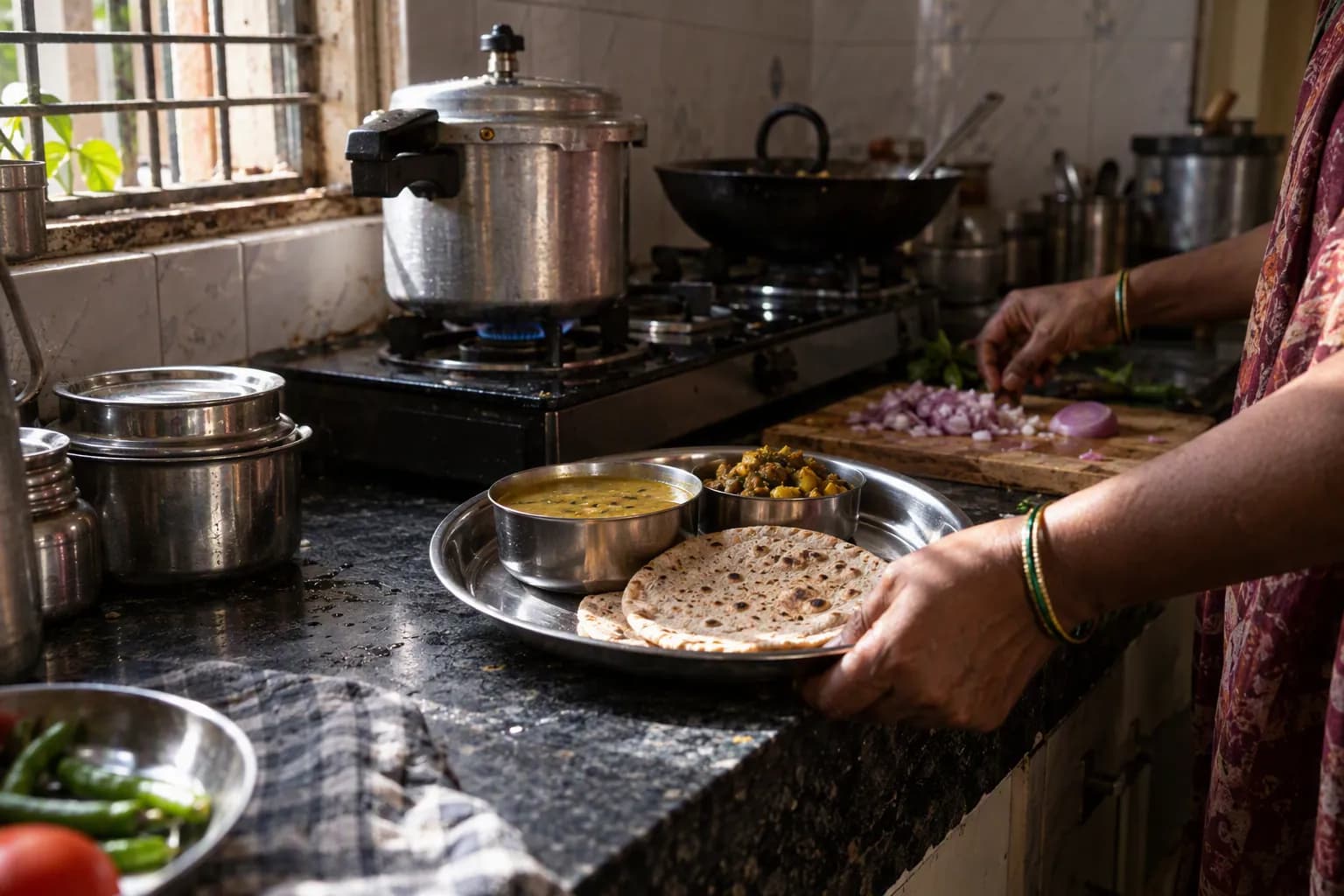
In an Indian kitchen the protein comes from dal, besan, chana, rajma, soya, paneer and milk, and for many families from eggs, chicken and fish. One katori of moong dal brings 98 kcal and 7.2 g of protein; a boiled egg brings 74 kcal and 6.7 g of protein. Paneer is rich in protein but also in fat, so it sits lower on the per-calorie chart than dal or soya. Use it, and weigh it.
| Food, one serving | kcal | Protein |
|---|---|---|
| Chicken breast 100 g | 168 | 21.8 g |
| Rohu fish 100 g | 102 | 19.7 g |
| Egg 50 g | 74 | 6.7 g |
| Soya bean 30 g | 113 | 11.3 g |
| Moong dal 30 g | 98 | 7.2 g |
| Paneer 50 g | 153 | 9.4 g |
| Kala chana 30 g | 86 | 5.6 g |
| Milk 200 g | 146 | 6.5 g |
High fibre foods for weight loss
Fibre rarely gets the credit, but it may be doing more of the work than anything else on the plate.
Read the full answer
Researchers went back through POUNDS Lost, a trial that put 345 adults on calorie-reduced diets for six months, and asked a simple question: what about the way people ate best predicted how much they lost? It was not the split of fat, protein and carbohydrate. It was fibre. The people who ate more of it lost more, and they were also the ones still following their diet.
You do not need to buy anything new. Kala chana has 25.2 g of fibre in 100 g and rajma 16.6 g, which is why a bowl of chole or rajma keeps you going till evening. Barley has 15.6 g and atta 11.4 g; white rice has 2.8 g. A guava or a pear eaten whole beats any glass of juice. One warning from experience: go up slowly over a week or two, and drink more water, or your stomach will complain.
| Serving | Fibre | |
|---|---|---|
| Kala chana | 30 g dry, about three quarters of a katori boiled | 7.6 g |
| Rajma | 30 g dry, about one katori cooked | 5 g |
| Barley | 30 g raw barley (jau), about half a katori cooked | 4.7 g |
| Guava | 1 medium guava, about 150 g | 12.9 g |
| Pear | 1 medium pear, about 150 g | 6.7 g |
| White rice | 40 g raw, which cooks to about one small katori | 1.1 g |
Vegetables: weight reducing foods you can eat by the plateful
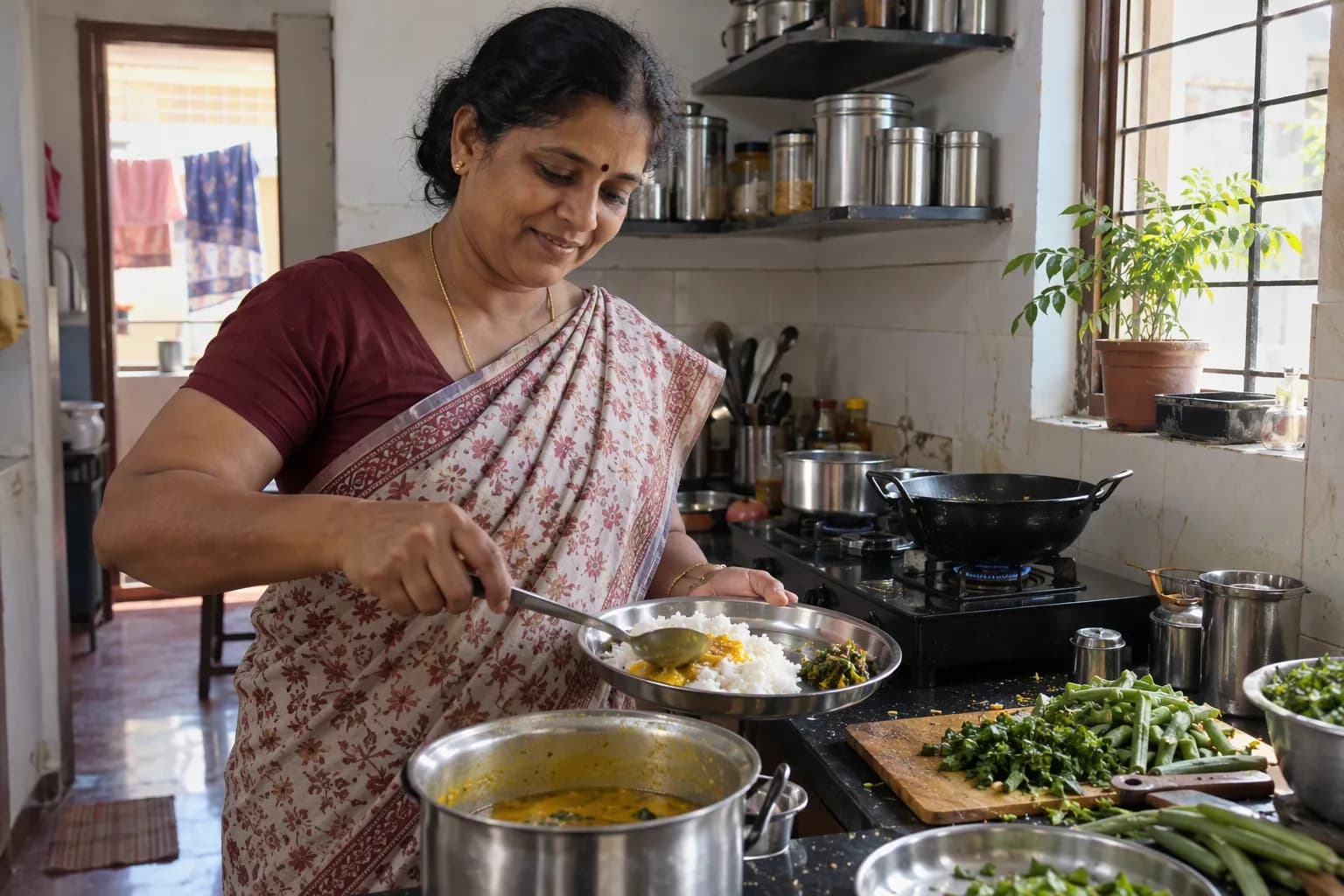
The foods that come closest to the idea of weight reducing foods are the watery vegetables, because they let you eat a lot for very little.
Read the full answer
A year-long trial at Penn State asked 97 women to cut fat, and asked half of them to eat more water-rich fruit and vegetables as well, with no calorie goal at all. The fruit-and-vegetable group ate a bigger weight of food, said they felt less hungry, and lost 7.9 kg against 6.4 kg.
In Indian terms that means lauki, turai, tinda, bhindi, gobhi, palak, cucumber and tomato. Bottle gourd has 11 kcal in 100 g and bhindi 27; rice, by comparison, has 356 kcal in 100 g before it is cooked. The ICMR-NIN guidelines make vegetables the largest share of the Indian plate, and that is the simplest rule on this page: fill half of it with sabzi, then add the rest. The catch is the tadka. A sabzi cooked in four teaspoons of oil is no longer a light food, so count the oil by the spoon.
| Food, one serving | kcal | Protein |
|---|---|---|
| Bottle gourd 150 g | 17 | 0.8 g |
| Bhindi 100 g | 27 | 2.1 g |
| Carrot 80 g | 26 | 0.8 g |
| Beetroot 100 g | 36 | 1.9 g |
| Onion 100 g | 48 | 1.5 g |
| Moringa leaves 50 g | 34 | 3.2 g |
Rice, roti and millets: which grain for weight loss
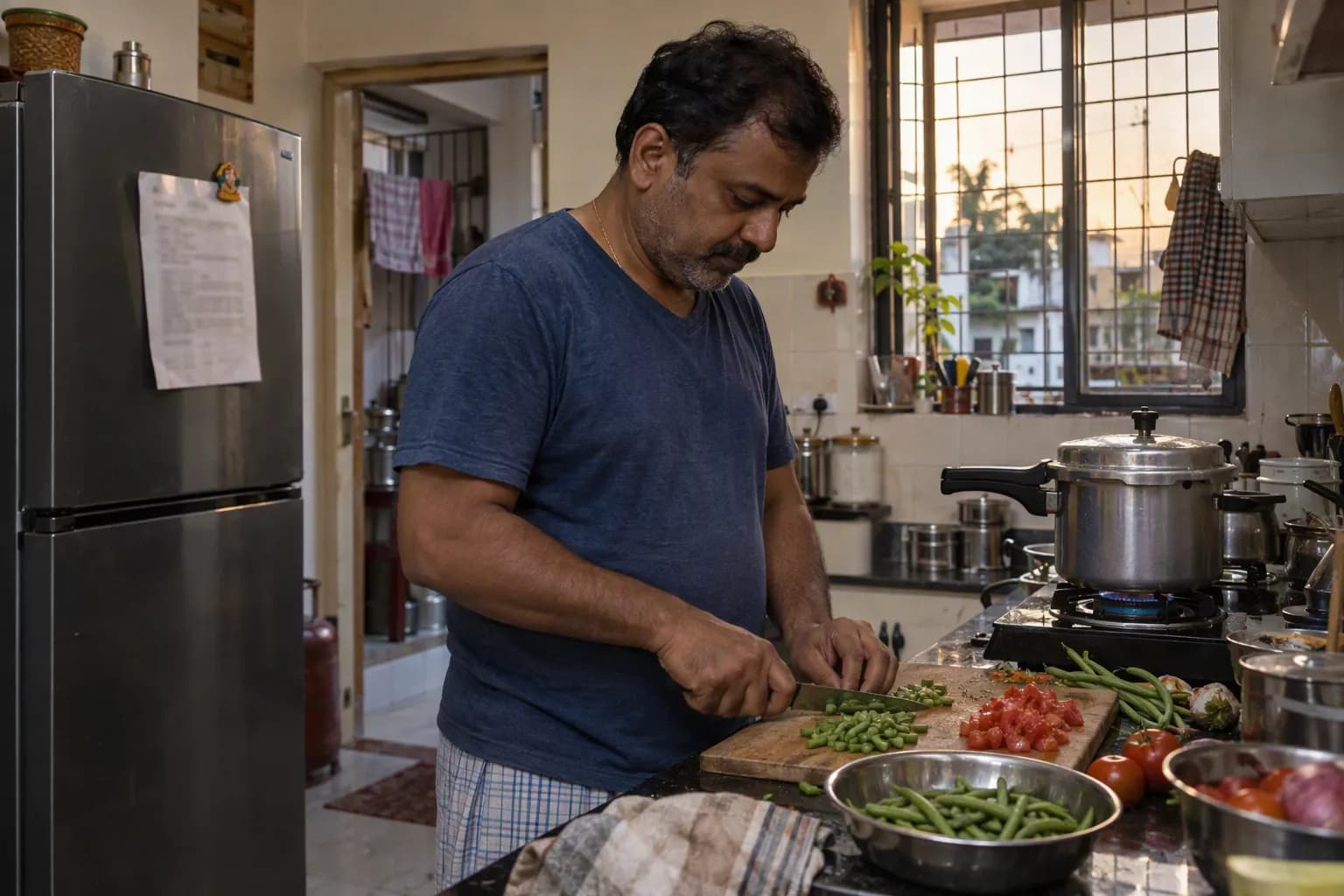
Every few months a grain gets blamed. First it was rice, then wheat; now millets are the heroes. The plate does not care that much.
Read the full answer
Weigh them raw and the everyday grains are close cousins: rice, atta, jowar, ragi and barley all fall between about 310 and 360 kcal in 100 g. The real difference is fibre. Barley, atta, jowar and ragi carry three to six times what white rice does, and brown rice lands in the middle. In kitchen terms, one roti from 30 g of atta is 96 kcal and 3.2 g of protein, and a small katori of rice cooked from 40 g is 142 kcal and 3.2 g of protein.
So the question is less which grain and more how much, and what it sits beside. India's consensus guidance for Asian Indians asks for fewer and more complex carbohydrates with more fibre, and the ICMR-NIN guidelines pair cereals with pulses in about a 3:1 ratio. Two rotis or one measured katori of rice, with a full katori of dal, is that ratio on a steel plate. If you enjoy jowar or ragi rotis, rotate them in. They are good food. They are not magic.
| Serving | kcal | Fibre | |
|---|---|---|---|
| Barley | 30 g raw barley (jau), about half a katori cooked | 95 | 4.7 g |
| Wheat atta | 30 g atta, about one medium roti | 96 | 3.4 g |
| Jowar | 30 g jowar flour, about one jowar roti | 100 | 3.1 g |
| Ragi | 30 g ragi flour, about one roti or a bowl of ragi malt | 96 | 3.4 g |
| Brown rice | 40 g raw, which cooks to about one small katori | 142 | 1.8 g |
| White rice | 40 g raw, which cooks to about one small katori | 142 | 1.1 g |
Chia seeds for weight loss: what the trials found
Chia seeds are the most searched weight-loss food in India, and the honest answer is that they help a little at best, and only inside a diet.
Read the full answer
Two trials point in different directions. In one, 76 adults with excess weight took 25 g of chia stirred into water twice a day for 12 weeks, and lost no more weight than people given a placebo. In the other, 77 adults with type 2 diabetes and excess weight followed a calorie-reduced diet for six months; those given chia lost 1.9 kg and 3.5 cm off the waist, against 0.3 kg and 1.1 cm in the group given oat bran.
So chia is a fibre-rich seed that can sit inside a plan, not a plan of its own. Chia is not among the foods in the chart, but flaxseed, another small oil seed eaten the same way, is: one tablespoon carries 44 kcal and 2.6 g of fibre. Seeds and nuts are calorie-dense, so measure them by the spoon. Chia water with lemon is harmless, and it will not replace a katori of dal.
| Serving | kcal | |
|---|---|---|
| Flaxseed | 1 tablespoon, about 10 g | 44 |
| Sesame seeds | 1 tablespoon, about 10 g | 52 |
| Peanuts | 30 g, a small handful | 156 |
| Cashew | about 10 cashews, 15 g | 87 |
Fruit for weight loss: whole, counted, in place of a sweet
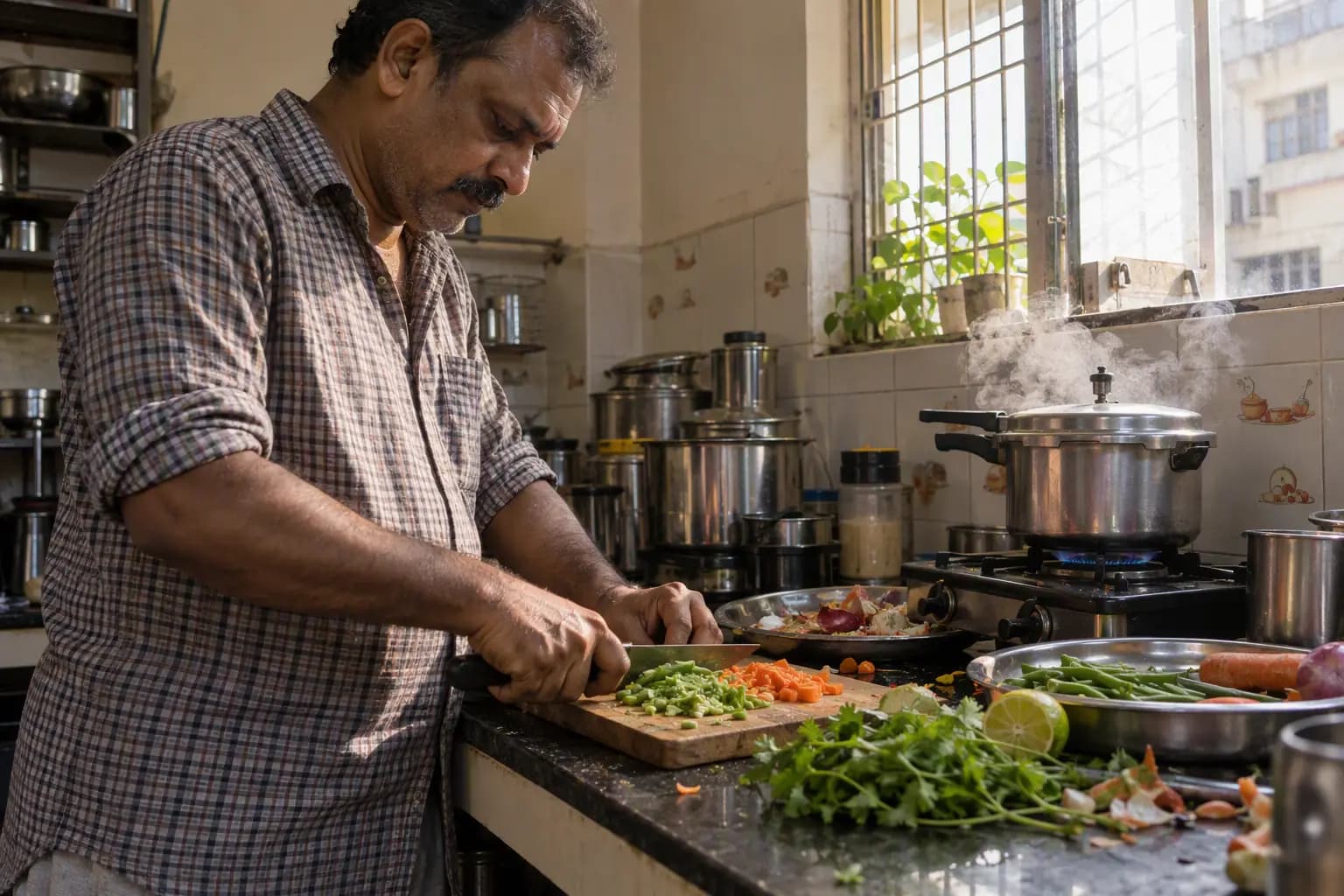
Nobody in India got fat on guavas. Fruit has a place on a weight-loss plate, as long as it is whole and you count it.
Read the full answer
Guava is the quiet champion: one medium guava is 48 kcal and 12.9 g of fibre. Papaya, watermelon and muskmelon are mostly water. Banana, mango and chikoo are sweeter, and still fine as one portion; a medium banana is 105 kcal, close to a roti. Where fruit goes wrong is the glass. A mango shake or a banana smoothie with sugar gives you the fruit's sugar, often plus more, and none of the chewing that tells your body it has eaten.
Remember the Penn State women from the vegetable section? The extra produce they ate was fruit as well as sabzi, and they felt less hungry for it. A portion or two a day works well, as the 4 o'clock snack in place of biscuits, or after lunch in place of mithai. Leave the skin on apples and guavas.
Putting the foods on one plate
A list of good foods only helps once it becomes meals, so here is one vegetarian day built from the top of the chart.
Read the full answer
Breakfast is a besan chilla stuffed with paneer and a glass of milk. Mid-morning is roasted kala chana with a guava. Lunch is two rotis with rajma cooked with a handful of soya beans, and cucumber. Dinner is palak paneer, moong dal and a jowar roti. Every item is weighed and added up from IFCT 2017, and the oil is counted by the teaspoon.
The order you eat it in can help too. In a small crossover study, people with type 2 diabetes who ate the vegetables and protein of a meal before the carbohydrate had lower blood sugar and insulin afterwards than when they ate the same food the other way round. At an Indian thali that is easy: sabzi and dal first, roti or rice after. Swap like for like across the week, one dal for another, one millet for another, and the numbers barely move.
| Meal | kcal | Protein |
|---|---|---|
| Breakfast Besan chilla stuffed with paneer, and a glass of milk | 423 | 21.1 g |
| Mid-morning Roasted kala chana and a guava | 134 | 7.8 g |
| Lunch Two rotis, rajma cooked with a handful of soya beans, and cucumber | 432 | 20.7 g |
| Evening A glass of milk | 146 | 6.5 g |
| Dinner Palak paneer, moong dal and a jowar roti | 556 | 29.5 g |
| The day | 1691 | 85.5 g |
Every item, weighed
- Breakfast: besan (chana dal flour), 40 g (132 kcal); paneer, 30 g (92 kcal); onion, 20 g (10 kcal); 1 teaspoon oil or ghee (44 kcal); 1 glass cow's milk, 200 g (146 kcal)
- Mid-morning: kala chana, dry weight, 30 g (86 kcal); guava, 150 g (48 kcal)
- Lunch: 2 medium rotis (atta), 60 g (192 kcal); rajma, dry weight, 40 g (120 kcal); soya bean, dry weight, 15 g (57 kcal); cucumber, 100 g (20 kcal); 1 teaspoon oil or ghee (44 kcal)
- Evening: 1 glass cow's milk, 200 g (146 kcal)
- Dinner: paneer, 80 g (244 kcal); moong dal, raw weight, 30 g (98 kcal); 1 jowar roti, 40 g (134 kcal); spinach (palak), 150 g (36 kcal); 1 teaspoon oil or ghee (44 kcal)
56.4 g of fibre across the day; 3 teaspoons of oil or ghee counted. Grains and dals weighed raw; every figure from its IFCT 2017 row.
Losing fat, not muscle: what the foods are for
Most of us know someone who lost ten kilos on fruit and soup before a wedding, and looked tired rather than fit by the time the photos were taken.
Read the full answer
Some of what they lost was muscle. Eating less always takes a share of muscle along with the fat. A review from Washington University in St. Louis found two things that protect it: plenty of protein, and exercise, with strength training also keeping you strong. Trials that held calories steady and simply raised protein saw a little more fat lost and more lean mass kept. That is why protein foods head the chart, and why squats, a resistance band or a pair of dumbbells, two or three times a week, deserve a place beside the dal.
Our programme is built around exactly this. Its goal is "Lose up to 20% of your body weight — and keep your muscle". Results vary; your doctor decides what is right for you. It begins with a home blood test that a registered doctor goes through with you, because your sugar, thyroid, lipids and kidneys decide which of the foods on this page your plate should lean on.
- Every mealA protein food
Dal, paneer, eggs, fish or chicken.
- Half the plateVegetables
Lauki, bhindi, palak, gobhi.
- 2–3 times a weekStrength work
Weights, bands or bodyweight.
Every source, in full (11)
[1] Longvah T, Ananthan R, Bhaskarachary K, Venkaiah K. Indian Food Composition Tables 2017
National Institute of Nutrition (ICMR), Hyderabad, 2017. The energy, protein and fibre per 100 g of every food in the day plans and tables on this page, measured across India's regions.
Read the source[2] Weigle DS et al. A high-protein diet induces sustained reductions in appetite, ad libitum caloric intake, and body weight despite compensatory changes in diurnal plasma leptin and ghrelin concentrations
The American Journal of Clinical Nutrition, 2005. When 19 adults moved from 15% to 30% of calories from protein and could eat as much as they liked, they ate about 440 fewer calories each day and lost 4.9 kg over 12 weeks, 3.7 kg of it fat.
Read the source[3] Wycherley TP et al. Effects of energy-restricted high-protein, low-fat compared with standard-protein, low-fat diets: a meta-analysis
The American Journal of Clinical Nutrition, 2012. In 24 trials (1,063 adults, about 12 weeks), a higher-protein diet at the same calories lost 0.79 kg more weight and 0.87 kg more fat, and kept 0.43 kg more lean mass, than a standard-protein diet.
Read the source[4] Miketinas DC et al. Fiber intake predicts weight loss and dietary adherence in adults consuming calorie-restricted diets: the POUNDS Lost study
The Journal of Nutrition, 2019. In 345 adults on calorie-reduced diets for six months, fibre intake was the strongest single predictor of weight lost, independent of calories and of the diet's fat, protein and carbohydrate, and went with sticking to the diet.
Read the source[5] Ello-Martin JA, Roe LS, Ledikwe JH, Beach AM, Rolls BJ. Dietary energy density in the treatment of obesity: a year-long trial comparing 2 weight-loss diets
The American Journal of Clinical Nutrition, 2007. 97 women with obesity, counselled to eat less fat, or less fat and more water-rich fruit and vegetables, with no calorie goal: after a year the fruit-and-vegetable group lost 7.9 kg against 6.4 kg, ate a greater weight of food and reported less hunger.
Read the source[6] Dietary Guidelines for Indians
ICMR-National Institute of Nutrition, 2024. The Indian plate for the day: vegetables and greens as the largest share, whole grains and millets, pulses, eggs, meat or fish, milk or curd, nuts and seeds; cereals and pulses in a 3:1 ratio; slow, steady weight reduction.
Read the source[7] Misra A et al. Consensus dietary guidelines for healthy living and prevention of obesity, the metabolic syndrome, diabetes, and related disorders in Asian Indians
Diabetes Technology & Therapeutics, 2011. India's consensus guidance for Asian Indians: fewer carbohydrates and more of them complex, more fibre, slightly more protein, less saturated fat, salt and sugar.
Read the source[8] Nieman DC et al. Chia seed does not promote weight loss or alter disease risk factors in overweight adults
Nutrition Research, 2009. 76 adults with excess weight took 25 g of chia seed or a placebo in water twice a day for 12 weeks: body weight and body composition did not differ between the groups.
Read the source[9] Vuksan V et al. Salba-chia (Salvia hispanica L.) in the treatment of overweight and obese patients with type 2 diabetes: a double-blind randomized controlled trial
Nutrition, Metabolism and Cardiovascular Diseases, 2017. 77 adults with type 2 diabetes and excess weight on a calorie-reduced diet for six months: those given chia lost 1.9 kg and 3.5 cm of waist, against 0.3 kg and 1.1 cm on an oat-bran control.
Read the source[10] Shukla AP et al. Food order has a significant impact on postprandial glucose and insulin levels
Diabetes Care, 2015. In a small crossover study, eating the vegetables and protein of a meal before its carbohydrate gave lower blood sugar and insulin after the meal than the reverse order.
Read the source[11] Cava E, Yeat NC, Mittendorfer B. Preserving healthy muscle during weight loss
Advances in Nutrition, 2017. Diet-induced weight loss takes some muscle with it; a high protein intake and both endurance and resistance exercise help keep muscle mass, and resistance exercise also improves strength.
Read the source